


Categories
- 3d CGI
- Amusements
- Animation
- Anime & Manga
- Art Materials
- Art Videos
- Blogroll
- Cartoons
- Color
- Comics
- Concept & Visual Dev.
- Creativity
- Digital Art
- Digital Painting
- Displaying Art on the Web
- Drawing
- Eye Candy for Today
- Gallery and Museum Art
- High-res Art Images
- Illustration
- Motion Graphics & Flash
- Museums
- Online Museums
- Outsider Art
- Painting
- Painting a Day
- Paleo Art
- Pastel, Conté & Chalk
- Pen & Ink
- Prints and Printmaking
- Reviews
- Sc-fi and Fantasy
- Sculpture & Dimensional
- Site Comments
- Sketching
- Storyboards
- Tools and Techniques
- Uncategorized
- Vector Art
- Videos & Podcasts
- Vision and Optics
- Watercolor and Gouache
- Webcomics
Archives
- August 2026
- July 2026
- June 2026
- May 2026
- April 2026
- March 2026
- February 2026
- January 2026
- December 2025
- November 2025
- October 2025
- September 2025
- August 2025
- July 2025
- June 2025
- May 2025
- January 2025
- December 2024
- November 2024
- October 2024
- September 2024
- August 2024
- June 2024
- April 2024
- March 2024
- February 2024
- January 2024
- December 2023
- November 2023
- October 2023
- September 2023
- August 2023
- July 2023
- May 2023
- April 2023
- March 2023
- February 2023
- January 2023
- December 2022
- November 2022
- September 2022
- August 2022
- July 2022
- June 2022
- May 2022
- April 2022
- March 2022
- February 2022
- January 2022
- December 2021
- November 2021
- October 2021
- September 2021
- August 2021
- July 2021
- June 2021
- May 2021
- April 2021
- March 2021
- February 2021
- January 2021
- December 2020
- November 2020
- October 2020
- September 2020
- August 2020
- July 2020
- June 2020
- May 2020
- April 2020
- March 2020
- February 2020
- January 2020
- December 2019
- November 2019
- October 2019
- September 2019
- August 2019
- July 2019
- June 2019
- May 2019
- April 2019
- March 2019
- February 2019
- January 2019
- December 2018
- November 2018
- October 2018
- September 2018
- August 2018
- July 2018
- June 2018
- May 2018
- April 2018
- March 2018
- February 2018
- January 2018
- December 2017
- November 2017
- October 2017
- September 2017
- August 2017
- July 2017
- June 2017
- May 2017
- April 2017
- March 2017
- February 2017
- January 2017
- December 2016
- November 2016
- October 2016
- September 2016
- August 2016
- July 2016
- June 2016
- May 2016
- April 2016
- March 2016
- February 2016
- January 2016
- December 2015
- November 2015
- October 2015
- September 2015
- August 2015
- July 2015
- June 2015
- May 2015
- April 2015
- March 2015
- February 2015
- January 2015
- December 2014
- November 2014
- October 2014
- September 2014
- August 2014
- July 2014
- June 2014
- May 2014
- April 2014
- March 2014
- February 2014
- January 2014
- December 2013
- November 2013
- October 2013
- September 2013
- August 2013
- July 2013
- June 2013
- May 2013
- April 2013
- March 2013
- February 2013
- January 2013
- December 2012
- November 2012
- October 2012
- September 2012
- August 2012
- July 2012
- June 2012
- May 2012
- April 2012
- March 2012
- February 2012
- January 2012
- December 2011
- November 2011
- October 2011
- September 2011
- August 2011
- July 2011
- June 2011
- May 2011
- April 2011
- March 2011
- February 2011
- January 2011
- December 2010
- November 2010
- October 2010
- September 2010
- August 2010
- July 2010
- June 2010
- May 2010
- April 2010
- March 2010
- February 2010
- January 2010
- December 2009
- November 2009
- October 2009
- September 2009
- August 2009
- July 2009
- June 2009
- May 2009
- April 2009
- March 2009
- February 2009
- January 2009
- December 2008
- November 2008
- October 2008
- September 2008
- August 2008
- July 2008
- June 2008
- May 2008
- April 2008
- March 2008
- February 2008
- January 2008
- December 2007
- November 2007
- October 2007
- September 2007
- August 2007
- July 2007
- June 2007
- May 2007
- April 2007
- March 2007
- February 2007
- January 2007
- December 2006
- November 2006
- October 2006
- September 2006
- August 2006
- July 2006
- June 2006
- May 2006
- April 2006
- March 2006
- February 2006
- January 2006
- December 2005
- November 2005
- October 2005
- September 2005
- August 2005
Relevant Blogs
Art, Painting & Sketch
- Gurney Journey
- Underpaintings
- Art and Influence
- Painting Perceptions
- Oil Painters of America
- Vasari Paint POV
- Flying Fox
- Urban Sketchers
- Bento (Smithsonian)
- Art Inconnu
- The Hidden Place
- Still Life
- Making a Mark
- The Art of the Landscape
- Exploring Color & Creativity
- Art Contrarian
- Artist A Day
- beinArt Surreal Art Collective
- Eye Level
- David Dunlop
- p.i.g.m.e.n.t.i.u.m
- CultureGrrl
- Joaquín Sorolla blog
- Artists in Pastel
“Painting a Day”
- A Painting a Day (Keiser)
- On Painting (Keiser)
- Julian Merrow-Smith
- Karen Jurick
- Jeffrey Hayes
- Carol Marine
- Abbey Ryan
- Daily Paintworks
Other Painting Blogs
- Virtual Gouache Land
- Neil Hollingsworth
- Marc Hanson
- Kevin Menck
- Marc Dalessio
- Larry Seiler
- Stapleton Kearns
- Colin Page
- Roos Schuring
- Hans Versfelt
- Titus Meeuws
- Régis Pettinari
- René Plein Air
- Belinda Del Pesco
- Robin Weiss
- Nathan Fowkes (Land Sketch)
- William Wray
- Frank Serrano
- Stephen Magsig
- Michael Chesley Johnson
- Twice a Week
- Sarah Wimperis
- Rob Adams
- Michael Cole Manley
- The Dirty Palette Club
- Mike Manley’s Draw!
Gallery Art & Illustration mix
Illustration
- Howard Pyle
- 100 Years of Illustration
- BibliOdyssey
- Illustration Art
- Today’s Inspiration
- Illustration Mundo
- Little Chimp Society
- Danny Gregory
- R D (John Martz
- Illustration Friday blog
- Monster Brains
- Illustrators & Illustrations (RU)
- Elwood H. Smith
- DaniDraws.com
- Designers Who Blog
- iSpot Blog
Sci-Fi & Fantasy
Illustration & Comics
Comics & Cartoons
- Comics Beat
- Robot 6
- Newsarama Blog
- Comic Vine
- Comics Alliance
- Forbidden Planet Int.
- Paolo Rivera
- Bolt City
- Flight
- Scott McCloud
- The Comics Journal
- Comixpedia
- Funnybook Babylon
- James Baker
- Middleton’s Sketchbook
- Boneville
- The Hotel Fred
- Paul Rivoche
- Daily Cartoonist
- Mad About Cartoons (William Wray)
- Digital Strips
Illustration & Concept
Animation & Concept
- Cartoon Brew
- Animation Blog
- Cold Hard Flash
- Concept Art World
- The CAB
- FY Concept Art
- Concept Ships
- Concept Robots
- John Nevarez
- Armand Serrano
- Marcos Mateu-Mestre
- all kinds of stuff (Kricfalusi)
- Yacin the faun (Man Arenas)
- Kelsey Mann
- Cre8tivemarks Blog
- Ice-Cream Monster Toon Cafe
- AAU Character & Creature Design
- AAU Animation Notes
- Articles and Texticles
Paleo & Scientific
Tools & Techniques
Other
Lists of Art Blogs
Art Image Resource Links
Historic Art Images
- Wikimedia Commons: Paintings
- Wikimedia Commons: Drawings
- The Athenaeum
- WikiArt (WikiPaintings)
- Google Art Project: Artists
- Google Art Project: Collections (Museums)
- ArtCyclopedia
- Web Gallery of Art
- Art Renewal Center
- Web Gallery of Impressionism
Auction Consolidation sites
Auction sites
- Sotheby’s
- Bonham’s
- Christies
- Heritage Auctions: Fine Art
- Heritage Auctions: Illustration
- Freeman’s Auctions
- Bukowskis
- Shannon’s
Image Search
Reverse Image Search (search by image)
- Tin Eye
- RevImg
- Google Image Search (camera icon)
- Bing Image Search (camera icon)
Promoting some friends and some clients of my website design business
- Twin Willows T’ai Chi studio in Wilmington DE. Taiji classes with Bryan Davis.
- Ray Hayward, Inspired Teacher of T’ai Chi ( Taiji ) in Minneapolis, Founder of Mindful Motion Tai Chi Academy
- OldHead Tattoo studio and Art Gallery in Wilmington DE. Tattoos and paintings by Bruce Gulick
- Sharon Domenico Art, pet portrait oil paintings
- Platinum Paperhanging, wallpaper hanging, Main Line and Philadelphia, PA
- Lisa Stone Design, interior designer, Main Line and Philadelphia, PA
- Studio12KPT, original art, prints, calendars and other custom printed items by Van Sickle & Rolleri
-
James C. Christensen

James Christensen’s paintings range from straightforward portraits to fantasy tinged depictions of angels and Renaissance ladies to phantasmic tableaux of fantasy subjects that look as though the books in a children’s library had been run through a fan and reassembled by a cross-eyed surrealist.Christensen seems to swim in a rich sea of influences, from medieval, Renaissance and baroque art to Golden Age illustrators like Arthur Rackham, Edmund Dulac, Kay Neilsen, John Bauer, and Gustaf Tenggren. You can even see suggestions of the obsessively detailed fairy paintings of Richard Dadd.
At his most expansive, Christensen’s wonderfully detailed and brightly garbed fantasy world denizens parade across lavishly textured landscapes, awash in saturated colors, sprinkled with luminescent details, carrying with them a trove of references to literature and folklore.
Christensen was born in California and studied at Brigham Young University and UCLA. His work has been featured in a number of publications and books, including Voyage of the Basset, A Shakespeare Sketchbook, Rhymes & Reasons, A Journey of the Imagination: The Art of James Christensen and James Christensen: The Greenwich Workshop’s New Century Artists Series.
I don’t know if the artist has an “official” site; jameschristensen.com is associated with the Jerry W. Horn Gallery, and offers original art as well as reproductions. Unfortunately the images are small and the site is poorly organized, but it shows a broad range of Christensen’s work and styles.
Larger images can be found at the Greenwich Workshop’s online gallery, B&R Gallery and Swoyer’s Fine Art.
One of the best pages for a quick overview of his fantasy themed work is this unofficial page on 2photo.ru. I’ve listed other resources below.
[Via Monster Brains]
Categories:
-
The Haggin Museum Leyendecker Collection

The Haggin Museum in Stockton, California has the largest collection of works by the great American illustrator J.C. Leyendecker held by any museum.The collection had been on tour for some time and returned to the museum in May. Since then work has been completed on a newly remodeled gallery in which the collection will be on display until December 31, 2010 (just long enough for the next installment of my traditional Happy Leyendecker Baby New Year post).
Unfortunately, the museum has not matched the renovated gallery display with a much needed revision of their online image gallery, which still suffers from images with camera lens distortion and color aberration (I’ve straightened out a few of the above images with the Lens Correction filter in Photoshop).
The images are also frustratingly small, but you can get an idea of the breadth and depth of the collection, which contains some superb examples of Leyendecker’s work, as well as unique early pieces.
The museum’s website does include an article about the exhibit and a Leyendecker biography, which includes a history of the collection and of Earl Rowland, the museum’s former director who assembled the museum’s holdings of Leyerdecker and other noted illustrators.
As far as I know, there is not a printed catalog of the museum’s Leyendecker collection, but a new, long awaited book on Leyendecker was released in 2008, J.C. Leyendecker, by Laurence S. Cutler and Judy Goffman Cutler.
J.C. Leyendecker, for those who are unfamiliar with his work, was one of the finest illustrators in the history of the art form. His relative obscurity continues to amaze me; he should at least share the spotlight usually focused on Norman Rockwell, if not eclipsing him to some degree.
For a quick selection of large images, see these two articles on Golden Age Comic Book Stories. For more on Leyendecker, including additional links to large images and other resources, see some of my previous posts listed below.
[Addendum: Since publication of this article, the Haggin Museum has updated their online gallery with some higher quality images of 8 of the works.]
Categories:
-
MagCloud

As necessary is it is these days for artists to have a presence online, there are times when print is the medium of choice for showing one’s artwork, whether as a leave-behind for galleries, a sample book or portfolio for prospective clients or as a printed book for collectors.I wrote back in 2008 about Blurb, and other modern print-on-demand services that allow you to create and print a professional looking 8x 10″ book, up to 40 pages, in quantities as few a one copy, for as little as $20; providing a terrific alternative to traditional means of printing portfolios or sample sheets for presentation to galleries, potential clients or buyers.
These are printed on Hewlett Packard’s Indigo digital press, in a process that produces results close to the more expensive process of offset lithography. The pages are bright and crisp with rich color, well suited to inexpensively reproduce color artwork and photography.
Blurb books are bound like a book and have a minimum of 20 pages; nice if you have a fair bit of work to present.
For a smaller body of work, an alternative resource is MagCloud, a service from HP that uses the Indigo press to produce short run on-demand magazines. This allows you to not only create a short run magazine on a schedule if you like, but also to create magazine-like printings that you can order yourself to use as handouts, or gallery leave-behinds, that can be as few as 4 or as many as 100 pages.
For magazines with more pages, they also offer a “perfect bound” option (a square binding as opposed to the fold and staple, or “saddle stitched” binding used in thinner magazines). These can be from 20 to 384 pages.
Unlike Blurb, which offers a free software application to allow amateurs to easily layout a book, you’re kind of on your own with MagCloud; but all you need is any software that will allow you to create and output a PDF file of the appropriate dimensions.
Like Blurb, MagCloud has a online store that allows you to offer your publication for sale if you want. They have a base price of 20 cents U.S. per page, and you mark up your publication to whatever price you want to set beyond that. The website has a feature that allows you to provide a multi-page online preview of the printed piece.
In theory, you could even publish comics, but the size is limited to 8 1/2 x 11″, not a standard comics format in the U.S. or Europe. I don’t know to what degree the service is available outside the U.S.
The New York Times has a photo/audio essay about a group Making a Magazine with MagCloud, and Read Write Web reports that MagCloud is rolling out a new feature that lets you create an iPad optimized version of your magazine.
A friend of mine, photographer and 3D computer graphics animator Harry Saffren, has been publishing his series of photographs of food on plates (as sequential images of the progress of consuming a meal) as 16 page issues of Plate Magazine. I was impressed with the results. Though there is no “cover” of heavier stock on the shorter run magazines, the reproduction is very like a professional newsstand magazine, and the printing reproduced the the bright vibrant colors of his original photographs to a remarkable degree.
MagCloud has an introduction as well as a Help page to get you started.
(Images above, links are to MagCloud page for that publication: top 2: Harry Saffren’s Plate Magazine, Paintings of Lesley Deacon, The Artwork of Bonnie Gloris, Works, American Painter John Grazier, Concept Art by Josh Mongeau 2010, SLAM (Support Local Arts Magazine), Fire Mass, eatsleepdraw magazine, John Bell, Jr. Paintings & Prints)
Categories:
-
On Beauty and the Everyday: The Prints of James McNeill Whistler

I’ve written before about the beautiful etchings of James McNeill Whistler, whose work as an etcher is even less well known than his paintings.On Beauty and the Everyday: The Prints of James McNeill Whistler is a new exhibition opening this Saturday, August 21, 2010, at the University of Michigan Museum of Art, which has one of the most extensive collections of Whistler’s graphic work in the U.S.
The collection, which you can preview here, contains examples of some of Whistler’s finest and best known etchings.
Unfortunately, both the exhibition page preview (link for “More Images” at bottom) and the above images of the collection (meant to facilitate ordering slide sets) are small.
Etchings by their nature are subtle, with delicate lines against toned papers. This is part of their unique visual charm, but it makes them difficult to do justice in reproduction. There are some larger images on the site of the Frick Collection in New York. You can find impressions of some of the same etchings in both collections.
Some of the best online reproductions I’ve found are on the University of Glasgow’s site for James Mcneill Whistler: The Etchings, A Catalog Raisonne. Unfortunately the Catalog Raisonne mentioned is a book project, and the online resources are from from complete, but what is there is large enough to appreciate some of the subtlety of Whistler’s touch. You have to drill down a bit. Go to “Exhibition”, scroll down, click on the thumbnail to access the detail page, then click again on the image for the large version.
Next best may be the online images from the Freer Sackler Online Collections.
You will sometimes find the same etching in different “states”, impressions pulled form the plate at various stages of the artist’s work on the image.
Whistler was inspired by the etchings of Rembrandt, likely the finest practitioner of the art in history, and to a great degree revitalized the art in his time and placed himself high in the canon of the world’s great etchers and lithographers.
The exhibition at the University of Michigan Museum of Art continues to November 28, 2010.
For more information and links to resources, see my previous posts on James Abbott McNeill Whistler and Whistler’s Etchings. In the latter I give a brief overview of the process of creating an etching.
Etchings of James McNeill Whistler is wonderfully inexpensive Dover book.
I haven’t seen Etchings by Whistler: Sixty Photographs from Original Prints. It’s a facsimile of a book published in 1923 and I don’t know how well it’s fared in the reproduction.
Categories:
-
Sebastian Krüger

Well along in a successful career as a designer and illustrator, German artist Sebastian Krüger began focusing on painting highly exaggerated caricature portraits of pop and music stars, particularly the Rolling Stones who he had met early in his career.Since 2005 he has abandoned commercial work and devoted himself to gallery painting. As he has restlessly explored the boundaries of exaggeration possible in a recognizable face, he also began to work at large scale and in increasing degree of detail.
His large canvasses are now often highly realistic even when wildly exaggerated. Someare more straightforward, though often rendered with an intensity that makes them seem more exaggerated than they are.
I thought it was interesting that his portrayal of Jimi Hendrix, who went to lengths to present himself as an outlandish individual, is completely straightforward (and wonderfully realized).
I’m not familiar enough with his career to know if Kruger is moving more toward realism, but many of his recent pieces seem to be in that direction.
Krüger’s website is still in progress, but he has a current blog, and two additional blogs devoted to exhibitions and publications.
The artist occasionally leads workshops, and conducted his first in the U.S. early this year. Krüger works in acrylic on panels, at a scale you can see in the workshop image above.
There is a gallery site here that I think is unofficial, but it gives a nice range of his work and a fascinating tour through the degrees of exaggeration and intensity Krüger has brought to his “personality portraits” over time.
There is an article on Empty Kingdom that gives a good quick overview of his recent work.
Categories:
-
Illustration 30

I’ver written before about Illustration magazine, the beautiful quarterly periodical published by Dan Zimmer that showcases in-depth, lavishly illustrated articles on classic illustrators, both well known and undeservedly obscure, all presented with stunning production values.Illustration 30 is out, featuring articles on Ellen B. T. Pyle, one of Howard Pyle’s students who married his brother Walter (images above, top); the strikingly colorful works of Edwin Georgi (above, middle) and the bizarre egg tempera and scratchboard illustrations of Douglas Walters (above, bottom).
The Ellen Pyle article is particularly timely in that it coincides with an exhibit currently at the Delaware Art Museum, Illustrating Her World: Ellen B. T. Pyle, that runs until January 3, 2010. The museum participated in the preparation of the article.
The issue, which is 96 full color pages, also includes a nice In Memoriam to Frank Frazetta by Ralph Bakshi, a personal remembrance of Ernest Chiriaka by Zimmer, plus the usual letters, reviews, exhibition and event listings and ads of interest to those who love classic illustration.
But why just take my word for it when Zimmer has placed the entire Issue 30 online for you to flip through, not just in thumbnails but in full screen and zoomable (click on the preview at bottom or the “View the Digital Edition” link, when in the full screen version click on the pages to zoom).
In addition to the current issue, Zimmer has made a number of past issues available the in the same full screen zoomable format through the Issuu.com interface (see the related issue thumbnails in the right column).
These will give you a great idea of the beautiful art and incisive writing in the magazine. I’ll stress again, though, as I have often pointed out, that the onscreen versions of the images, not matter that they’re full screen, are low resolution compared to the way they appear in print, particularly with Illustration’s superb color and reproduction standards.
The print version of issue 30 can be ordered directly from the publisher for only $15 U.S., which includes shipping ($30 U.S. for international delivery); and a number of back issues are available for the same price. In addition there are special publications, books and DVDs of interest to fans of classic illustration, including the ability to pre order the the new H.J. Ward book shipping in November.
Zimmer is also now presiding over The Illustration Gallery, a new online gallery of illustration art originals for sale.
Categories:



Charley’s Picks
Bookshop.org
(Bookshop.org affilliate links; sales benefit independent bookshop owners; I get a small percentage to help support my work on Lines and Colors)
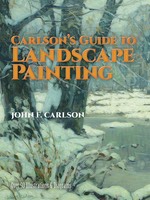
Carlson’s Guide to Landscape Painting

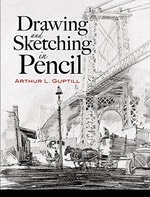
Drawing and Sketching in Pencil

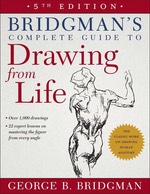
Bridgman’s Complete Guide to Drawing from Life
Charley’s Picks
Amazon
(Amazon.com affiliate links; sales go to a larger yacht for Jeff Bezos; but I get a small percentage to help support my work on Lines and Colors)
Carlson’s Guide to Landscape Painting
Drawing and Sketching in Pencil
Bridgman’s Complete Guide to Drawing from Life