


Categories
- 3d CGI
- Amusements
- Animation
- Anime & Manga
- Art Materials
- Art Videos
- Blogroll
- Cartoons
- Color
- Comics
- Concept & Visual Dev.
- Creativity
- Digital Art
- Digital Painting
- Displaying Art on the Web
- Drawing
- Eye Candy for Today
- Gallery and Museum Art
- High-res Art Images
- Illustration
- Motion Graphics & Flash
- Museums
- Online Museums
- Outsider Art
- Painting
- Painting a Day
- Paleo Art
- Pastel, Conté & Chalk
- Pen & Ink
- Prints and Printmaking
- Reviews
- Sc-fi and Fantasy
- Sculpture & Dimensional
- Site Comments
- Sketching
- Storyboards
- Tools and Techniques
- Uncategorized
- Vector Art
- Videos & Podcasts
- Vision and Optics
- Watercolor and Gouache
- Webcomics
Archives
- August 2026
- July 2026
- June 2026
- May 2026
- April 2026
- March 2026
- February 2026
- January 2026
- December 2025
- November 2025
- October 2025
- September 2025
- August 2025
- July 2025
- June 2025
- May 2025
- January 2025
- December 2024
- November 2024
- October 2024
- September 2024
- August 2024
- June 2024
- April 2024
- March 2024
- February 2024
- January 2024
- December 2023
- November 2023
- October 2023
- September 2023
- August 2023
- July 2023
- May 2023
- April 2023
- March 2023
- February 2023
- January 2023
- December 2022
- November 2022
- September 2022
- August 2022
- July 2022
- June 2022
- May 2022
- April 2022
- March 2022
- February 2022
- January 2022
- December 2021
- November 2021
- October 2021
- September 2021
- August 2021
- July 2021
- June 2021
- May 2021
- April 2021
- March 2021
- February 2021
- January 2021
- December 2020
- November 2020
- October 2020
- September 2020
- August 2020
- July 2020
- June 2020
- May 2020
- April 2020
- March 2020
- February 2020
- January 2020
- December 2019
- November 2019
- October 2019
- September 2019
- August 2019
- July 2019
- June 2019
- May 2019
- April 2019
- March 2019
- February 2019
- January 2019
- December 2018
- November 2018
- October 2018
- September 2018
- August 2018
- July 2018
- June 2018
- May 2018
- April 2018
- March 2018
- February 2018
- January 2018
- December 2017
- November 2017
- October 2017
- September 2017
- August 2017
- July 2017
- June 2017
- May 2017
- April 2017
- March 2017
- February 2017
- January 2017
- December 2016
- November 2016
- October 2016
- September 2016
- August 2016
- July 2016
- June 2016
- May 2016
- April 2016
- March 2016
- February 2016
- January 2016
- December 2015
- November 2015
- October 2015
- September 2015
- August 2015
- July 2015
- June 2015
- May 2015
- April 2015
- March 2015
- February 2015
- January 2015
- December 2014
- November 2014
- October 2014
- September 2014
- August 2014
- July 2014
- June 2014
- May 2014
- April 2014
- March 2014
- February 2014
- January 2014
- December 2013
- November 2013
- October 2013
- September 2013
- August 2013
- July 2013
- June 2013
- May 2013
- April 2013
- March 2013
- February 2013
- January 2013
- December 2012
- November 2012
- October 2012
- September 2012
- August 2012
- July 2012
- June 2012
- May 2012
- April 2012
- March 2012
- February 2012
- January 2012
- December 2011
- November 2011
- October 2011
- September 2011
- August 2011
- July 2011
- June 2011
- May 2011
- April 2011
- March 2011
- February 2011
- January 2011
- December 2010
- November 2010
- October 2010
- September 2010
- August 2010
- July 2010
- June 2010
- May 2010
- April 2010
- March 2010
- February 2010
- January 2010
- December 2009
- November 2009
- October 2009
- September 2009
- August 2009
- July 2009
- June 2009
- May 2009
- April 2009
- March 2009
- February 2009
- January 2009
- December 2008
- November 2008
- October 2008
- September 2008
- August 2008
- July 2008
- June 2008
- May 2008
- April 2008
- March 2008
- February 2008
- January 2008
- December 2007
- November 2007
- October 2007
- September 2007
- August 2007
- July 2007
- June 2007
- May 2007
- April 2007
- March 2007
- February 2007
- January 2007
- December 2006
- November 2006
- October 2006
- September 2006
- August 2006
- July 2006
- June 2006
- May 2006
- April 2006
- March 2006
- February 2006
- January 2006
- December 2005
- November 2005
- October 2005
- September 2005
- August 2005
Relevant Blogs
Art, Painting & Sketch
- Gurney Journey
- Underpaintings
- Art and Influence
- Painting Perceptions
- Oil Painters of America
- Vasari Paint POV
- Flying Fox
- Urban Sketchers
- Bento (Smithsonian)
- Art Inconnu
- The Hidden Place
- Still Life
- Making a Mark
- The Art of the Landscape
- Exploring Color & Creativity
- Art Contrarian
- Artist A Day
- beinArt Surreal Art Collective
- Eye Level
- David Dunlop
- p.i.g.m.e.n.t.i.u.m
- CultureGrrl
- Joaquín Sorolla blog
- Artists in Pastel
“Painting a Day”
- A Painting a Day (Keiser)
- On Painting (Keiser)
- Julian Merrow-Smith
- Karen Jurick
- Jeffrey Hayes
- Carol Marine
- Abbey Ryan
- Daily Paintworks
Other Painting Blogs
- Virtual Gouache Land
- Neil Hollingsworth
- Marc Hanson
- Kevin Menck
- Marc Dalessio
- Larry Seiler
- Stapleton Kearns
- Colin Page
- Roos Schuring
- Hans Versfelt
- Titus Meeuws
- Régis Pettinari
- René Plein Air
- Belinda Del Pesco
- Robin Weiss
- Nathan Fowkes (Land Sketch)
- William Wray
- Frank Serrano
- Stephen Magsig
- Michael Chesley Johnson
- Twice a Week
- Sarah Wimperis
- Rob Adams
- Michael Cole Manley
- The Dirty Palette Club
- Mike Manley’s Draw!
Gallery Art & Illustration mix
Illustration
- Howard Pyle
- 100 Years of Illustration
- BibliOdyssey
- Illustration Art
- Today’s Inspiration
- Illustration Mundo
- Little Chimp Society
- Danny Gregory
- R D (John Martz
- Illustration Friday blog
- Monster Brains
- Illustrators & Illustrations (RU)
- Elwood H. Smith
- DaniDraws.com
- Designers Who Blog
- iSpot Blog
Sci-Fi & Fantasy
Illustration & Comics
Comics & Cartoons
- Comics Beat
- Robot 6
- Newsarama Blog
- Comic Vine
- Comics Alliance
- Forbidden Planet Int.
- Paolo Rivera
- Bolt City
- Flight
- Scott McCloud
- The Comics Journal
- Comixpedia
- Funnybook Babylon
- James Baker
- Middleton’s Sketchbook
- Boneville
- The Hotel Fred
- Paul Rivoche
- Daily Cartoonist
- Mad About Cartoons (William Wray)
- Digital Strips
Illustration & Concept
Animation & Concept
- Cartoon Brew
- Animation Blog
- Cold Hard Flash
- Concept Art World
- The CAB
- FY Concept Art
- Concept Ships
- Concept Robots
- John Nevarez
- Armand Serrano
- Marcos Mateu-Mestre
- all kinds of stuff (Kricfalusi)
- Yacin the faun (Man Arenas)
- Kelsey Mann
- Cre8tivemarks Blog
- Ice-Cream Monster Toon Cafe
- AAU Character & Creature Design
- AAU Animation Notes
- Articles and Texticles
Paleo & Scientific
Tools & Techniques
Other
Lists of Art Blogs
Art Image Resource Links
Historic Art Images
- Wikimedia Commons: Paintings
- Wikimedia Commons: Drawings
- The Athenaeum
- WikiArt (WikiPaintings)
- Google Art Project: Artists
- Google Art Project: Collections (Museums)
- ArtCyclopedia
- Web Gallery of Art
- Art Renewal Center
- Web Gallery of Impressionism
Auction Consolidation sites
Auction sites
- Sotheby’s
- Bonham’s
- Christies
- Heritage Auctions: Fine Art
- Heritage Auctions: Illustration
- Freeman’s Auctions
- Bukowskis
- Shannon’s
Image Search
Reverse Image Search (search by image)
- Tin Eye
- RevImg
- Google Image Search (camera icon)
- Bing Image Search (camera icon)
Promoting some friends and some clients of my website design business
- Twin Willows T’ai Chi studio in Wilmington DE. Taiji classes with Bryan Davis.
- Ray Hayward, Inspired Teacher of T’ai Chi ( Taiji ) in Minneapolis, Founder of Mindful Motion Tai Chi Academy
- OldHead Tattoo studio and Art Gallery in Wilmington DE. Tattoos and paintings by Bruce Gulick
- Sharon Domenico Art, pet portrait oil paintings
- Platinum Paperhanging, wallpaper hanging, Main Line and Philadelphia, PA
- Lisa Stone Design, interior designer, Main Line and Philadelphia, PA
- Studio12KPT, original art, prints, calendars and other custom printed items by Van Sickle & Rolleri
-
William Holman-Hunt
 There are more dramatic images I could have chosen to represent Holman-Hunt, The Scapegoat, for example or The Hireling Shepherd, but this painting, Isabella and the Pot of Basil , has a personal connection for me because I’ve been visiting the original in the Delaware Art Museum since I was an adolescent.
The painting was personal for Holman-Hunt in a very different way. It was based on portraits of his first wife and painted shortly after her death. The rather macabre story it depicts is from a Renaissance poem in which Isabella discovers the body of Lorenzo, who her brothers have murdered because they want her to marry another. She severs his head and buries it in a pot of basil which she waters with her tears. Holman-Hunt also painted a larger version of the same composition, which is in the Laing Gallery in Newcastle, England.
The original painting is small (15×23″, 38x58cm) and has a gem-like quality when standing in front of it. It is rich with the extraordinary detail and luminescent color that make the Pre-Raphaelite works so appealing to many (except, of course, to art critics, who seem immune to visual pleasure). You can literally spend hours working your eye through Holman-Hunt’s paintings, luxuriating in the visual feast of his attention to the texture and color of physical objects.
The composition of this work seems oddly off-kilter, but Holman-Hunt was such a masterful painter that I have to assume that is intentional. I find myself leaning into the pot of Basil with isabella and perhaps feeling additionally unsettled as if sharing her disorienting grief.
Even though Holman-Hunt professed social and religious views that valued purity and piety and often portrayed religious subjects, his paintings seem to revel in the sensuality of the physical world; you want to run your hand across the polished wood, feel the embroidered fabrics with your fingers, smell the plants and be dazzled by the light that bathes objects in glowing warmth.
Holman-Hunt, along with Dante Gabriel Rosetti and John Everett Millais, who he met while they were students at the Royal Academy, was a founder of the Pre-Raphaelite Brotherhood. The Pre-Raphaelites were a group of English painters and writers who rejected the idealized academic painting of the day, as exemplified by Sir Joshua Reynolds, then head of the Royal Academy, and embraced a return to the rich color and detail of the early Renaissance (before Raphael and his contemporaries started their own kind of idealized painting).
They desired to be faithful to nature in their paintings an also infused them with romanticism, pulling their subject matter from Keats, Shakespeare and classical literature. They were aided by critic John Ruskin, one of the few art critics who actually seems to have made a contribution to the history of art, if only because he defended the Pre-Raphaelites against the harsh treatment they received from other critics (a practice that still seems necessary today.)
There is a good selection of Holman-Hunt’s paintings on the Art Renewal Center and the ARTchive (ad warning).
Categories:
-
Drawing on the Right Side of the Brain (Betty Edwards)
 I have long been a firm believer in the idea that drawing is a skill that can be taught and not a magical gift bestowed on some individuals and denied others.
We live in a culture (at least in America) that doesn’t value drawing as a worthwhile skill in the general sense. “Everybody can’t be an artist, why teach them drawing?” But everyone can’t be a writer, why teach them writing? Just like writing, drawing has applications and benefits that go beyond its use by professionals. Drawing is a method of understanding and dealing with information about the world around us, a means of solving problems and changing perceptions. Because we don’t value drawing in that way, most of us (who haven’t been told that we have “talent”) stop drawing at about age 9 or 10 and our drawing skills freeze at that level.
Not that I don’t believe in “talent”, I think I have just enough “talent” to know what it is and what it isn’t. I learned to play the guitar, but I will never play like Eric Clapton. I can write an essay, but I will never write like Tom Wolfe. My drawing skills, though, are probably beyond what they might be if I hadn’t always had an innate tendency to explore that avenue. I understand the difference between learning a skill in a creative area and having the “talent” to carry that skill further than you might otherwise.
So when someone admires my drawing ability and says “I wish I could draw…”, I’m quick to say “You can learn if you really want to.” and back it up by recommending Drawing on the Right Side of the Brain by Dr. Betty Edwards.
Edwards is professor emeritus of art at California State University. She was teaching drawing in the late 60’s, and struggling to convey what she also saw as a skill that should be teachable, when she had an impulse to have the students copy a drawing by Picasso up-side down. To her and the students’ surprise they did much better when drawing something they couldn’t recognize consciously.
Over the next few years she expanded on that idea and combined it with her fascination with a theory of brain usage that was popular at the time to create her signature method for teaching drawing. The fact that the right-brain/left-brain model is in dispute as a theory of brain physiology doesn’t devalue it as a useful metaphor for two different modes of thinking and perceiving. The “left brain” specializes in logic, speech, analytical thought and critical evaluation and is emphasized in our society largely to the exclusion of the “right brain”, which is intuitive, holistic and concerned with spatial perception and the creative process.
Edwards assumption is that the logical left brain, which is dominant, perceives in symbols and “recognizes” objects in the visual world as belonging to classes of those symbols; so it interferes with the right brain’s ability to simply see what things really look like when trying to draw them. Your left brain says “An eye is just an oval with two pointed ends.” and prevents your right brain from seeing that an eye is a much more complex and asymmetrical shape.
Her teaching system consists largely of methods of getting the left brain to shut up and let the right brain really see what the eyes receive. She uses exercises she’s developed as well as traditional drawing techniques that fit into her approach, like pure contour drawing (drawing without taking your eyes off the subject to look at the paper) and drawing the shape of a negative space instead of an object’s outlines.
The pairs of drawings above left (and more on the site for the book) testify to the effectiveness of her approach. They are “before” and “after” self-portrait drawings from students enrolled in her intensive course, a workshop consisting of 5 days, eight hours a day.
The process is also of great value to experienced artists and well worth the time it takes to do the exercises. (Obviously you can do them at a slower pace over a longer period.) The book has enlightening chapters on portrait drawings (and the common problem of perceiving the face as larger than it is in relation to the size of the head), perspective, shading and color.
My only caveat is that Edwards only really covers half of what drawing is, albeit the more important half when starting out. The book has long been lacking in the aspects of drawing that lift it into the realm of art: the nuances of line, tone, composition, and handling of the materials that make a drawing really come alive. She’s added more of this to recent editions, but I would still recommend a serious student supplement the book with one of the traditional drawing texts like Mendelowitz’s Guide to Drawing (expensive, look for it on Half.com or eBay). (If you’re really serious, also look for a copy of Kimon Nicolaides’ The Natural Way to Draw : A Working Plan for Art Study.)
Edwards also wrote a somewhat less successful (but worthwhile) book on enhancing creativity, Drawing on the Artist Within, and more recently created a companion workbook for for her original book: “New Drawing on the Right Side of the Brain Workbook: Guided Practice in the Five Basic Skills of Drawing”. The web site also has begun to milk the whole thing a bit by selling pre-packaged “Portfolios” of basic art materials. The original book, though, is well worth checking out for anyone interested in drawing at any level. You can usually find older editions in most libraries.
Categories:
-
Chris Turnham
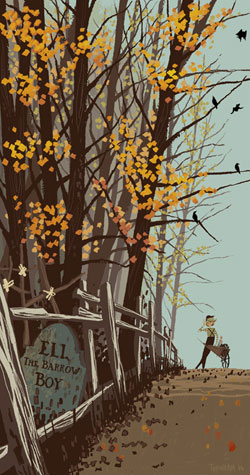 I came across Chris Turnham’s art pretty much by accident, (a link in one of the blog aggregators I think), so his work was a pleasant surprise. Turnham is an illustrator and gaming concept artist living in Washington state. There are examples on the site of some of his 3-D game design work for games like Evil Dead Regeneration, but what I found really appealing is his 2-D illustration.
His stylized images are sometimes in a 60’s modern vein, sometimes almost 19th century in feeling, but always have a beautifully controlled sense of color, value and spacial relationships. His judicious use of texture adds visual interest to open areas and he introduces atmospheric perspective with deceptively simple color and tone choices.
The result is a real visual pleasure. The site contains a variety of his illustrations. I found a mention somewhere that indicates the first four illustrations in the portfolio are part of a series that are interpretations of Decemberists songs.
I suspect he has been influenced by artists like Tadahiro Uesugi, but I don’t actually know that. The bio information in his site is slim, but indicates that he is young and just starting his career. I hope that means we’ll see a lot more from him.
Categories:
-
Henri Rousseau

For years, The Sleeping Gypsy (above), a painting by French artist Henri Rousseau, was one of the most widely reproduced images in the world. (It may still be, I don’t know.) When I was in college I marveled at the number of apartment and dorm room walls it appeared on. My own apartment at the time had a copy of Rousseau’s Carnival Night (below, left) on a prominent wall and I spent a fair bit of time in front of the original in the Philadelphia Museum of Art.A major exhibition of Rousseau’s jungle-themed paintings just closed a the Tate Gallery in London and his work is on prominent display in major museums around the world. Not bad for a self-taught “naive” artist who didn’t start painting seriously until he was 40.
Rousseau desparately wanted to paint like Bougereau or Gérôme, mainstream Academic Salon painters of his day. Fortunately for us, his own individualistic vision was stronger than that desire, and seemingly impervious to the influence of the impressionist style blooming around him, even though he associated with artists in that circle.
 Loosely classed as a “Post-Impressionist”, Rousseau stands unique, almost outside the flow of art history. Yes, you can find influences if you look hard enough (Gauguin, for one), but his style doesn’t really “fit” anywhere. The Surrealists adopted him as a precursor to Surrealism, admiring the dream-like quality of his images and the vertiginous lack of formal perspective (which he never mastered, perhaps a moot point since it was being intentionally abandoned by modernist painters at the time). He got the attention of many of the avant-garde artists and writers of the day, including Degas, Renoir, Gauguin and Aplloinaire. Many of them joined in a banquet organized by Picasso in Rousseau’s honor two years before his death.
Critics ridiculed Rousseau as not a serious artist (as critics will, being such a broad-minded, egalitarian and generous group as a whole), and called him Le Douanier, “the customs inspector”, after his day-job of many years. (Of course these same people would probably have called Einstein “the patent clerk”.) Rousseau was from a family of modest means and couldn’t afford to go to art school. Admittedly, he was eccentric; he considered himself one of the greatest artists of the age, seemed unable to distinguish sarcastic remarks from sincere compliments and sometimes bragged of accomplishments that were untrue.
His paintings, though, speak undeniably of their own power. His fantastic images of intense jungles and wild beasts (based on books and visits to the botanical gardens, he never left France) resonate with us on some instinctual level. He not only developed his own artistic style, but his own unconventional methods of painting, applying the colors one at a time, painting in layers of content (sky first, then other background elements, finishing with foreground subjects) and working the canvas methodically from the top down.
Here is a good bio on the Artelino Art Auction site. Here is a nice site devoted to Rousseau and his work, but the color of the reproductions is off. There are Rousseau links on the Artcyclopedia site
The sites I link to below are image collections on the WebMuseum and the ARTchive (pop-up and ad warning for the latter).
Categories:
-
B. Kliban

B. Kliban is quite possibly my favorite cartoonist, which is saying a lot, frankly. His ideosynchratic “drawings” (he didn’t always call them cartoons, perhaps rightly so) are not everyone’s idea of funny ha-ha cartoons.Occasionally his work is immensely funny and hits you like a lightning bolt. At other times you will look at a Kliban drawing in complete bemusement… there’s something there, something you can’t put your finger on that’s tickling you at the base of your brain, but it’s not a “gag cartoon” in the usual sense. Some of his cartoons are obvious and just overtly silly, he loved to stoop to outrageously dumb puns (which I’ll admit I’m a sucker for); but some of them are subtle and wonderful to the point of being sublime.
Like Saul Steinberg, who he apparently admired greatly, Kliban explored ideas in his drawings that make you stop and think and perhaps come away looking at the world just a little bit differently. Some of them are crass; Kliban was a regular contributor to Playboy for many years (and elevated the magazine’s level of cartooning considerably) and was unafraid to “draw what he thought”. He was also somewhat compelled by the marketplace to make sex a topic more often than he might have in another magazine.
Kliban achieved commercial success and recognition with the publication of his first book of cartoons, Cat. This is the Kliban that most people know, and cat lovers and cat haters everywhere think of him as a cat cartoonist. The book is actually quite good and contains some of Kliban’s more whimsical work, intermixed with actual drawings of his own cats. His cat drawings are clever and amusing but never “cute” in the cloying, saccharine Garfield sense. Kliban’s real genius, though, is in a series of “cartoon” books published after that, filled with his marvels of weird, “out of left field”, “pick your brain up and give it a twist” cartoon drawings.
Kliban is essentially responsible for the non-sequiter absurdist style of cartooning that most people think Gary Larson invented with his newspaper panel The Far Side. (I think Larson would be the first to say so and point to Kliban as a big influence.) Even more absurd and surreal than Larson, and at times even funnier that Larson at his best (which is pretty damn good), Kliban was a true original and some kind of bizarre artistic genius.
Unfortunately, inexplicably, unforgivably, most of his wonderful books are out of print and have remained out of print for years, even though his Cat calendars continue to be posthumously produced and marketed (right there that says something about America). However, you may still be able to acquire the books through eBay, aLibris, Amazon or other book search services.
Tiny Footprints, Never Eat Anything Bigger Than Your Head & Other Drawings, Whack Your Porcupine, and Other Drawings, The Biggest Tongue in Tunisia and Other Drawings, Advanced Cartooning and Other Drawings, Luminous animals and other drawings are out of print.
A couple of them remain in print: Two Guys Fooling Around with the Moon is the only one in print of the collections I’m talking about, CatDreams is a collection of his calendar drawings, and of course, Cat (Seventeenth Anniversary Edition) is still available (and certainly worthwhile).
And don’t get me wrong about the Cat calendars, they’re pretty cool, just not Kilban at his best and most bizarre. Here is the official Kliban Cats site (rather annoyingly done in Flash) which has a gallery of his postcard and calendar Cat drawings, and the Kliban.com merchandise site. Hopefully, his family is getting proceeds from these. Here is the Kliban Klubhouse fan site with links.
The site I’m linking to below is a fan tribute site with some of Kliban’s drawings (unfortunately not hi-res images) that may give you a taste of his work and links to articles.
Categories:
-
Christian Alzmann

Concept artist Christian Alzmann graduated with distinction from Art Center College of Design and went straight from an on-campus interview to a job with with Industrial Light and magic. He has worked as digital artist, visual effects art director or concept artist on films like Munich, War of the Worlds, The Village, Terminator 3, Star Wars II: Attack of the Clones, Men in Black II and Harry Potter and the Sorcerer’s Stone.Alzmann’s images are occasionally whimsical, but often dark or horrific. He uses careful control of texture, color and light to dark relationships to give his work and extra feeling of eerie power.
His work has appeared in several concept art collections including Star Wars Mythmaking: Behind the Scenes of Attack of the Clones, Van Helsing: The Making of the Legend, Inside Men in Black II, and several of the Spectrum Collections: Spectrum 9, Spectrum 10 and Spectrum 11.
Categories:



Charley’s Picks
Bookshop.org
(Bookshop.org affilliate links; sales benefit independent bookshop owners; I get a small percentage to help support my work on Lines and Colors)
Carlson’s Guide to Landscape Painting
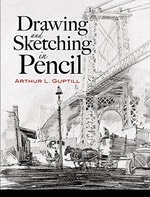
Drawing and Sketching in Pencil
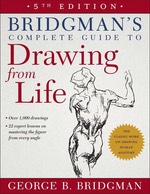
Bridgman’s Complete Guide to Drawing from Life

Charley’s Picks
Amazon
(Amazon.com affiliate links; sales go to a larger yacht for Jeff Bezos; but I get a small percentage to help support my work on Lines and Colors)
Carlson’s Guide to Landscape Painting
Drawing and Sketching in Pencil
Bridgman’s Complete Guide to Drawing from Life