


Categories
- 3d CGI
- Amusements
- Animation
- Anime & Manga
- Art Materials
- Art Videos
- Blogroll
- Cartoons
- Color
- Comics
- Concept & Visual Dev.
- Creativity
- Digital Art
- Digital Painting
- Displaying Art on the Web
- Drawing
- Eye Candy for Today
- Gallery and Museum Art
- High-res Art Images
- Illustration
- Motion Graphics & Flash
- Museums
- Online Museums
- Outsider Art
- Painting
- Painting a Day
- Paleo Art
- Pastel, Conté & Chalk
- Pen & Ink
- Prints and Printmaking
- Reviews
- Sc-fi and Fantasy
- Sculpture & Dimensional
- Site Comments
- Sketching
- Storyboards
- Tools and Techniques
- Uncategorized
- Vector Art
- Videos & Podcasts
- Vision and Optics
- Watercolor and Gouache
- Webcomics
Archives
- May 2026
- April 2026
- March 2026
- February 2026
- January 2026
- December 2025
- November 2025
- October 2025
- September 2025
- August 2025
- July 2025
- June 2025
- May 2025
- January 2025
- December 2024
- November 2024
- October 2024
- September 2024
- August 2024
- June 2024
- April 2024
- March 2024
- February 2024
- January 2024
- December 2023
- November 2023
- October 2023
- September 2023
- August 2023
- July 2023
- May 2023
- April 2023
- March 2023
- February 2023
- January 2023
- December 2022
- November 2022
- September 2022
- August 2022
- July 2022
- June 2022
- May 2022
- April 2022
- March 2022
- February 2022
- January 2022
- December 2021
- November 2021
- October 2021
- September 2021
- August 2021
- July 2021
- June 2021
- May 2021
- April 2021
- March 2021
- February 2021
- January 2021
- December 2020
- November 2020
- October 2020
- September 2020
- August 2020
- July 2020
- June 2020
- May 2020
- April 2020
- March 2020
- February 2020
- January 2020
- December 2019
- November 2019
- October 2019
- September 2019
- August 2019
- July 2019
- June 2019
- May 2019
- April 2019
- March 2019
- February 2019
- January 2019
- December 2018
- November 2018
- October 2018
- September 2018
- August 2018
- July 2018
- June 2018
- May 2018
- April 2018
- March 2018
- February 2018
- January 2018
- December 2017
- November 2017
- October 2017
- September 2017
- August 2017
- July 2017
- June 2017
- May 2017
- April 2017
- March 2017
- February 2017
- January 2017
- December 2016
- November 2016
- October 2016
- September 2016
- August 2016
- July 2016
- June 2016
- May 2016
- April 2016
- March 2016
- February 2016
- January 2016
- December 2015
- November 2015
- October 2015
- September 2015
- August 2015
- July 2015
- June 2015
- May 2015
- April 2015
- March 2015
- February 2015
- January 2015
- December 2014
- November 2014
- October 2014
- September 2014
- August 2014
- July 2014
- June 2014
- May 2014
- April 2014
- March 2014
- February 2014
- January 2014
- December 2013
- November 2013
- October 2013
- September 2013
- August 2013
- July 2013
- June 2013
- May 2013
- April 2013
- March 2013
- February 2013
- January 2013
- December 2012
- November 2012
- October 2012
- September 2012
- August 2012
- July 2012
- June 2012
- May 2012
- April 2012
- March 2012
- February 2012
- January 2012
- December 2011
- November 2011
- October 2011
- September 2011
- August 2011
- July 2011
- June 2011
- May 2011
- April 2011
- March 2011
- February 2011
- January 2011
- December 2010
- November 2010
- October 2010
- September 2010
- August 2010
- July 2010
- June 2010
- May 2010
- April 2010
- March 2010
- February 2010
- January 2010
- December 2009
- November 2009
- October 2009
- September 2009
- August 2009
- July 2009
- June 2009
- May 2009
- April 2009
- March 2009
- February 2009
- January 2009
- December 2008
- November 2008
- October 2008
- September 2008
- August 2008
- July 2008
- June 2008
- May 2008
- April 2008
- March 2008
- February 2008
- January 2008
- December 2007
- November 2007
- October 2007
- September 2007
- August 2007
- July 2007
- June 2007
- May 2007
- April 2007
- March 2007
- February 2007
- January 2007
- December 2006
- November 2006
- October 2006
- September 2006
- August 2006
- July 2006
- June 2006
- May 2006
- April 2006
- March 2006
- February 2006
- January 2006
- December 2005
- November 2005
- October 2005
- September 2005
- August 2005
Relevant Blogs
Art, Painting & Sketch
- Gurney Journey
- Underpaintings
- Art and Influence
- Painting Perceptions
- Oil Painters of America
- Vasari Paint POV
- Flying Fox
- Urban Sketchers
- Bento (Smithsonian)
- Art Inconnu
- The Hidden Place
- Still Life
- Making a Mark
- The Art of the Landscape
- Exploring Color & Creativity
- Art Contrarian
- Artist A Day
- beinArt Surreal Art Collective
- Eye Level
- David Dunlop
- p.i.g.m.e.n.t.i.u.m
- CultureGrrl
- Joaquín Sorolla blog
- Artists in Pastel
“Painting a Day”
- A Painting a Day (Keiser)
- On Painting (Keiser)
- Julian Merrow-Smith
- Karen Jurick
- Jeffrey Hayes
- Carol Marine
- Abbey Ryan
- Daily Paintworks
Other Painting Blogs
- Virtual Gouache Land
- Neil Hollingsworth
- Marc Hanson
- Kevin Menck
- Marc Dalessio
- Larry Seiler
- Stapleton Kearns
- Colin Page
- Roos Schuring
- Hans Versfelt
- Titus Meeuws
- Régis Pettinari
- René Plein Air
- Belinda Del Pesco
- Robin Weiss
- Nathan Fowkes (Land Sketch)
- William Wray
- Frank Serrano
- Stephen Magsig
- Michael Chesley Johnson
- Twice a Week
- Sarah Wimperis
- Rob Adams
- Michael Cole Manley
- The Dirty Palette Club
- Mike Manley’s Draw!
Gallery Art & Illustration mix
Illustration
- Howard Pyle
- 100 Years of Illustration
- BibliOdyssey
- Illustration Art
- Today’s Inspiration
- Illustration Mundo
- Little Chimp Society
- Danny Gregory
- R D (John Martz
- Illustration Friday blog
- Monster Brains
- Illustrators & Illustrations (RU)
- Elwood H. Smith
- DaniDraws.com
- Designers Who Blog
- iSpot Blog
Sci-Fi & Fantasy
Illustration & Comics
Comics & Cartoons
- Comics Beat
- Robot 6
- Newsarama Blog
- Comic Vine
- Comics Alliance
- Forbidden Planet Int.
- Paolo Rivera
- Bolt City
- Flight
- Scott McCloud
- The Comics Journal
- Comixpedia
- Funnybook Babylon
- James Baker
- Middleton’s Sketchbook
- Boneville
- The Hotel Fred
- Paul Rivoche
- Daily Cartoonist
- Mad About Cartoons (William Wray)
- Digital Strips
Illustration & Concept
Animation & Concept
- Cartoon Brew
- Animation Blog
- Cold Hard Flash
- Concept Art World
- The CAB
- FY Concept Art
- Concept Ships
- Concept Robots
- John Nevarez
- Armand Serrano
- Marcos Mateu-Mestre
- all kinds of stuff (Kricfalusi)
- Yacin the faun (Man Arenas)
- Kelsey Mann
- Cre8tivemarks Blog
- Ice-Cream Monster Toon Cafe
- AAU Character & Creature Design
- AAU Animation Notes
- Articles and Texticles
Paleo & Scientific
Tools & Techniques
Other
Lists of Art Blogs
Art Image Resource Links
Historic Art Images
- Wikimedia Commons: Paintings
- Wikimedia Commons: Drawings
- The Athenaeum
- WikiArt (WikiPaintings)
- Google Art Project: Artists
- Google Art Project: Collections (Museums)
- ArtCyclopedia
- Web Gallery of Art
- Art Renewal Center
- Web Gallery of Impressionism
Auction Consolidation sites
Auction sites
- Sotheby’s
- Bonham’s
- Christies
- Heritage Auctions: Fine Art
- Heritage Auctions: Illustration
- Freeman’s Auctions
- Bukowskis
- Shannon’s
Image Search
Reverse Image Search (search by image)
- Tin Eye
- RevImg
- Google Image Search (camera icon)
- Bing Image Search (camera icon)
Promoting some friends and some clients of my website design business
- Twin Willows T’ai Chi studio in Wilmington DE. Taiji classes with Bryan Davis.
- Ray Hayward, Inspired Teacher of T’ai Chi ( Taiji ) in Minneapolis, Founder of Mindful Motion Tai Chi Academy
- OldHead Tattoo studio and Art Gallery in Wilmington DE. Tattoos and paintings by Bruce Gulick
- Sharon Domenico Art, pet portrait oil paintings
- Platinum Paperhanging, wallpaper hanging, Main Line and Philadelphia, PA
- Lisa Stone Design, interior designer, Main Line and Philadelphia, PA
- Studio12KPT, original art, prints, calendars and other custom printed items by Van Sickle & Rolleri
-
The Art Department (Irene Gallo)

As in almost any field of endeavor, the quality and character of art directors runs the gamut. At their worst, they fulfill the cliché as a source of headaches and the butt of jokes for designers and illustrators.At their best, however, art directors play a significant role in the course of design and illustration, seeking out the finest artists, finding and nurturing upcoming talent, going to bat for illustrators in conflicts with their own employers and forging new directions in the types and styles of art presented to the public. As a whole, the contributions of art directors to the field of illustration are seldom acknowledged.
Irene Gallo is one of the best. She has been the art director at Tor/Forge Books since 1992 and Starscape Books since its launch in 2002. This has placed her directly in the center of contemporary science fiction illustration.
Books under her auspices have garnered numerous awards for art and design. Gallo has received the prestigious Chesley Award (named for renowned space artist Chesley Bonestell) for Best Art Director three times, most recently this year.
She has worked with many of the finest artists in the field, including several I’ve profiled here on lines and colors, like Donato Giancola, Todd Lockwood and Jon Foster, among others.
Gallo has recently started a terrific blog called The Art Department in which she talks about illustration and art direction, posts images of work in various stages by illustrators of many backgrounds, gives convention reports and comments on the state of the art from a point of view we don’t often hear, that of an experienced art director.
She also gives insights from that point of view that would be of interest to any beginning illustrator or illustration student, like: “How do I get my work in front of an art director?” and “What do I put in my portfolio?“.
Another feature on her blog is “Thumbnails: 30 Second Interviews”, with artists like Todd Lockwood, Vincent Di Fate and Bruce Jensen.
Last year, Gallo teamed up with Arnie and Cathy Fenner, authors of the Spectrum collections of contemporary fantastic art, and the Society of Illustrators to mount an exhibition of some of the best modern fantasy and science fiction illustration. There is an interview with Gallo on that topic on Sequential Tart.
Gallo is on the board of the Society of Illustrators and, along with Daniel Dos Santos, has created a series of illustration technique and painting demos called “Art Out Loud” that take place at the Society’s offices in New York. The next one is on October 7, 2006 and features Donato Giancola and Todd Lockwood. (I’ll post more details in a subsequent post.)
Link courtesy of Greg Manchess.
Categories:
-
Thomas Nast
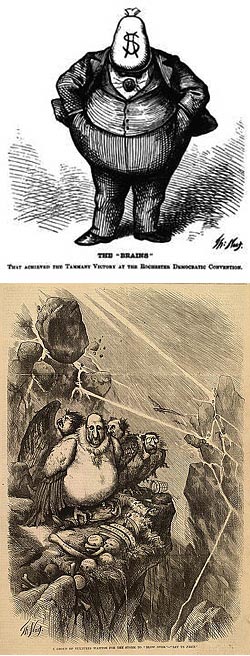 Thomas Nast has been called the father of American political cartooning, and rightly so. He is responsible for the initial portrayal of the Republican and Democratic parties as elephant and donkey and created the familiar image of Uncle Sam to represent the US as a whole (with a little help from English illustrator Sir John Tenniel, who added the beard). He also created the famous pen and ink image of a holly-crowned Santa Claus, with clay pipe and arm full of toys (including a sword), that is still used today.
Tenniel, creator of the definitive illustrations for Alice’s Adventures in Wonderland, had a major influence on Nast’s style, as did English illustrator and Punch cartoonist John Leech. Nast also probably took inspiration from the drawings and graphics of Gustave Doré. Nast’s drawings were often lavish, highly rendered pen and ink tableaux, with side drawings and additional panels.
Nast was also influential on other artists. Harper’s has a showcase site for his work, The World of Thomas Nast, that emphasizes the influence he had on Vincent Van Gogh (who also used to collect Howard Pyle illustrations) and Edgar Degas.
Nast had a distinct effect on the politics of his day and the course of American history. He was an active adversary of slavery during the Civil War and Abraham Lincoln is said to have credited Nast as “our best recruiting sergeant”.
Nast’s most famous and effective series of cartoons is directly credited with helping to bring down William “Boss” Tweed, the corrupt and enormously powerful political leader of New York City in the mid 1800’s. Nast did most of his work for Harper’s Weekly, which withstood intimidation by the Tweed organization and the loss of book contracts with the NY school system during the campaign. Nast himself turned down a bribe of $500,000, an enormous sum at the time and one hundred times his salary from Harper’s.
Boss Tweed was eventually ousted and fled to Spain, where officials reportedly used a Nast cartoon to identify him and return him to the US to face corruption charges.
Nast was also a pioneer in the use of exaggerated caricature in his cartoons, the tradition in English political commentary drawings had been straightforward portrayals of the individuals.
Nast was friends with Ulysses Grant and a strong supporter of the Republican party, but in 1884 he supported the Democratic candidate, Grover Cleveland and helped get him elected.
While he had a history of supporting the abolition of slavery and supporting Chinese Americans and American Indians, he exhibited overt bigotry in his treatment of Irish Americans, who he associated with Tweed’s power base, and expressed anti-Catholic sentiment in many of his cartoons.
Guess he just had a nasty streak.
Categories:
-
Matthias Grünewald
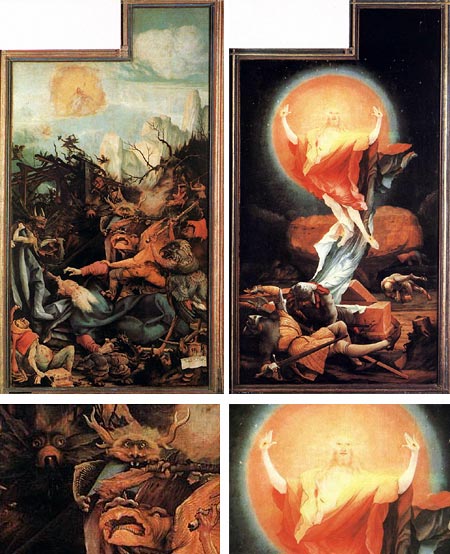
Little is known about German Renaissance painter Matthias Grünewald. Few of his paintings and drawings survive, and there is very little biographical information. His name, in fact is not even Matthias Grünewald, but Joachim von Sandrart, but his miss-identification as Grünewald by a writer in the 1600’s stuck.What is known, however, is the undeniable visual and emotional power of his work. At a time when the European artist’s role was largely in service to the church, and needed to visually impress the doctrine upon a congregation that could not read it for themselves, Grünewald’s emotionally charged images did so with a vengeance.
The images shown here are from Grünewald’s undeniable masterpiece, the Isenheim Alterpiece, originally done for the hospital chapel of Saint Anthony’s Monastery in Isenheim in the Alsace region of France, and now in the Musée d’Unterlinden in nearby Colmar near the current French German border.
The altarpiece is a multi-leveled construction, unfolding in three levels. I’ve seen it, and similar multi-leveled altarpieces, referred to as the Renaissance equivalent of hyper-media.
The top layer of 4 panels shows the crucifixion, concentrating on an agonizingly visceral portrayal of suffering. It opens into a striking series of panels portraying the nativity, some painted into a dramatically detailed trompe l’oiel architectural framework, and the stunning image of the resurrection shown above right, in which the holy aura is portrayed in almost psychedelic intensity, with the force of it hitting the soldiers in the foreground like a wave of special effects in a modern movie.
It often occurs to me that paintings like this were the equivalent of modern special effects spectacle, even more so, to a populace that often lived in harsh circumstances and would only be exposed to painted imagery in the churches.
When the second set of panels were opened, they revealed the innermost set, two panels and a sculpted relief in the center. The rightmost panel, directly under the panel of the resurrection, portrayed the temptation of St. Anthony (above, left) with an astonishing array of monstorous, demented figures that strongly recall the horrific visions of Hieronymous Bosch, another visionary artist about whom little is actually known.
Grünewald was a mystic and the symbolism and messages inherent in all of the panels are still a matter of much scholarly discussion. Ruth Mellinkoff has suggested, in fact, that Grünewald has painted Lucifer as one of the angels in attendance at the nativity. Weird and fascinating stuff.
Categories:
-
Frank Brangwyn
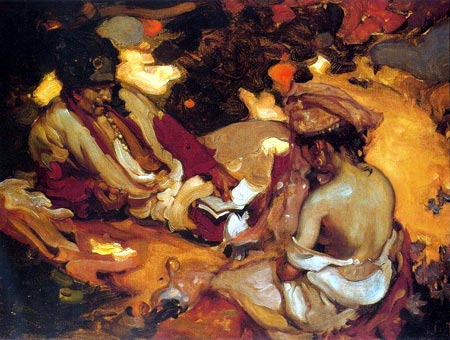
Frank Brangwyn was a unique and individualistic painter, water colorist, illustrator, muralist and graphic artist who is hard to categorize. Critics had difficulty classifying him while he was active and writers still have difficulty today. Unfortunately, he often unjustly winds up in the “forgotten Victorian painters” bin.From the grays of his early marine paintings, to the rich but muted colors of works inspired by his study of the Dutch masters, to the explosion of light and color that ensued when he followed the popular fascination with “Orientalism” and traveled to Turkey, Spain and Morroco, his style and palette evolved thorughout his career.
Brangwyn was extraordinarily prolific, creating some 12,000 works. In addition to paintings and watercolors, he created wonderful etchings, woodcuts and lithographs, as well as designs for architecture, interiors, ceramics, jewelry and stained glass. He did numerous book and periodical illustrations and book plates. He also designed posters and was a sought-after muralist, creating dramatic and controversial murals for notable spaces in the UK.
His murals were an inspiration to the renowned American illustrator Dean Cornwell, who took three years off to travel to England to study and work with Brangwyn before tackling his commission for the murals at the Los Angeles Public Library.
Brangwyn was also one of the artists, like Thomas Eakins, Maxfield Parrish and Elizabeth Shippen Green, to experiment early on with the use of the new medium of photography for composing studies for paintings.
His more colorful works utilized broad impressionistic brushstrokes and brilliant hues. His work was influended by, and in turn, influenced, the major art movements of his time: Victorian neo-classicism, the Pre-Raphaelites (he originally studied with William Morris), Art Nouveau and Impressionism.
He received numerous awards and prizes and was eventually knighted. When asked about his place in the art world, Brangwyn described himself simply as “a designer”.
Thanks to Carl Critchlow for the suggestion.
Categories:
-
Gregory Manchess
 Gregory Manchess is one of the major illustrators in America. The fact that he is represented by Richard Solomon is a clue. His clients include Time, Newsweek, The Atlantic Monthly, Playboy, Smithsonian and The National Geographic.
He has been featured in articles in Communication Arts, Step-by-Step Graphics (now Step Into Graphics), the Artist’s Magazine and Walt Reed’s The Illustrator in America 1860-2000.
To say Manchess works in an open, painterly style may be an understatement. His broad, loaded brushstrokes define the forms with luxurious sweeping areas of color. You get the impression that he enjoys the look of the strokes themselves as design elements, the way they overlap and intersect with each other, sometimes in sharp relief.
You can see the brushstrokes and other details in the images featured on his section of the Workbook Illustration site, thanks to a Flash portfolio feature that lets you zoom way in on the images and pan around at will (image at left, bottom). For larger single images, go to his own website.
Manchess is also one of the artists featured through Solomon’s Art on a Grand Scale site which is devoted to illustrators who create work to be reproduced as digital murals.
Link and info courtesy of Jack Harris.
Categories:
-
Claude Bordeleau
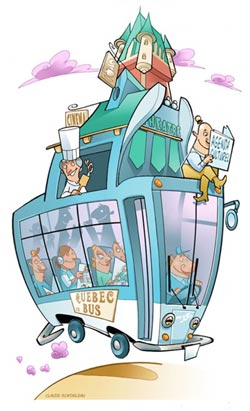 Claude Bordeleau is a Canadian illustrator, designer and cartoonist who has done work for Warner Brothers and Cartoon Networks as well as a number of other editorial and advertising clients.
Bordeleau has a springy, lively cartoon illustration style with lots of energy and color that is nicely restrained with precision linework. He uses a rich color palette and often accents his color work with touches of texture.
His site includes examples of his illustration, character design, caricature and comics work.
Note: the site contains some NSFW material.
Categories:




Charley’s Picks
Bookshop.org
(Bookshop.org affilliate links; sales benefit independent bookshop owners; I get a small percentage to help support my work on Lines and Colors)

John Singer Sargent: Watercolors


Urban Sketching: Understanding Perspective


Charley’s Picks
Amazon
(Amazon.com affiliate links; sales go to a larger yacht for Jeff Bezos; but I get a small percentage to help support my work on Lines and Colors)
John Singer Sargent: Watercolors
Urban Sketching: Understanding Perspective