


Categories
- 3d CGI
- Amusements
- Animation
- Anime & Manga
- Art Materials
- Art Videos
- Blogroll
- Cartoons
- Color
- Comics
- Concept & Visual Dev.
- Creativity
- Digital Art
- Digital Painting
- Displaying Art on the Web
- Drawing
- Eye Candy for Today
- Gallery and Museum Art
- High-res Art Images
- Illustration
- Motion Graphics & Flash
- Museums
- Online Museums
- Outsider Art
- Painting
- Painting a Day
- Paleo Art
- Pastel, Conté & Chalk
- Pen & Ink
- Prints and Printmaking
- Reviews
- Sc-fi and Fantasy
- Sculpture & Dimensional
- Site Comments
- Sketching
- Storyboards
- Tools and Techniques
- Uncategorized
- Vector Art
- Videos & Podcasts
- Vision and Optics
- Watercolor and Gouache
- Webcomics
Archives
- April 2026
- March 2026
- February 2026
- January 2026
- December 2025
- November 2025
- October 2025
- September 2025
- August 2025
- July 2025
- June 2025
- May 2025
- January 2025
- December 2024
- November 2024
- October 2024
- September 2024
- August 2024
- June 2024
- April 2024
- March 2024
- February 2024
- January 2024
- December 2023
- November 2023
- October 2023
- September 2023
- August 2023
- July 2023
- May 2023
- April 2023
- March 2023
- February 2023
- January 2023
- December 2022
- November 2022
- September 2022
- August 2022
- July 2022
- June 2022
- May 2022
- April 2022
- March 2022
- February 2022
- January 2022
- December 2021
- November 2021
- October 2021
- September 2021
- August 2021
- July 2021
- June 2021
- May 2021
- April 2021
- March 2021
- February 2021
- January 2021
- December 2020
- November 2020
- October 2020
- September 2020
- August 2020
- July 2020
- June 2020
- May 2020
- April 2020
- March 2020
- February 2020
- January 2020
- December 2019
- November 2019
- October 2019
- September 2019
- August 2019
- July 2019
- June 2019
- May 2019
- April 2019
- March 2019
- February 2019
- January 2019
- December 2018
- November 2018
- October 2018
- September 2018
- August 2018
- July 2018
- June 2018
- May 2018
- April 2018
- March 2018
- February 2018
- January 2018
- December 2017
- November 2017
- October 2017
- September 2017
- August 2017
- July 2017
- June 2017
- May 2017
- April 2017
- March 2017
- February 2017
- January 2017
- December 2016
- November 2016
- October 2016
- September 2016
- August 2016
- July 2016
- June 2016
- May 2016
- April 2016
- March 2016
- February 2016
- January 2016
- December 2015
- November 2015
- October 2015
- September 2015
- August 2015
- July 2015
- June 2015
- May 2015
- April 2015
- March 2015
- February 2015
- January 2015
- December 2014
- November 2014
- October 2014
- September 2014
- August 2014
- July 2014
- June 2014
- May 2014
- April 2014
- March 2014
- February 2014
- January 2014
- December 2013
- November 2013
- October 2013
- September 2013
- August 2013
- July 2013
- June 2013
- May 2013
- April 2013
- March 2013
- February 2013
- January 2013
- December 2012
- November 2012
- October 2012
- September 2012
- August 2012
- July 2012
- June 2012
- May 2012
- April 2012
- March 2012
- February 2012
- January 2012
- December 2011
- November 2011
- October 2011
- September 2011
- August 2011
- July 2011
- June 2011
- May 2011
- April 2011
- March 2011
- February 2011
- January 2011
- December 2010
- November 2010
- October 2010
- September 2010
- August 2010
- July 2010
- June 2010
- May 2010
- April 2010
- March 2010
- February 2010
- January 2010
- December 2009
- November 2009
- October 2009
- September 2009
- August 2009
- July 2009
- June 2009
- May 2009
- April 2009
- March 2009
- February 2009
- January 2009
- December 2008
- November 2008
- October 2008
- September 2008
- August 2008
- July 2008
- June 2008
- May 2008
- April 2008
- March 2008
- February 2008
- January 2008
- December 2007
- November 2007
- October 2007
- September 2007
- August 2007
- July 2007
- June 2007
- May 2007
- April 2007
- March 2007
- February 2007
- January 2007
- December 2006
- November 2006
- October 2006
- September 2006
- August 2006
- July 2006
- June 2006
- May 2006
- April 2006
- March 2006
- February 2006
- January 2006
- December 2005
- November 2005
- October 2005
- September 2005
- August 2005
Relevant Blogs
Art, Painting & Sketch
- Gurney Journey
- Underpaintings
- Art and Influence
- Painting Perceptions
- Oil Painters of America
- Vasari Paint POV
- Flying Fox
- Urban Sketchers
- Bento (Smithsonian)
- Art Inconnu
- The Hidden Place
- Still Life
- Making a Mark
- The Art of the Landscape
- Exploring Color & Creativity
- Art Contrarian
- Artist A Day
- beinArt Surreal Art Collective
- Eye Level
- David Dunlop
- p.i.g.m.e.n.t.i.u.m
- CultureGrrl
- Joaquín Sorolla blog
- Artists in Pastel
“Painting a Day”
- A Painting a Day (Keiser)
- On Painting (Keiser)
- Julian Merrow-Smith
- Karen Jurick
- Jeffrey Hayes
- Carol Marine
- Abbey Ryan
- Daily Paintworks
Other Painting Blogs
- Virtual Gouache Land
- Neil Hollingsworth
- Marc Hanson
- Kevin Menck
- Marc Dalessio
- Larry Seiler
- Stapleton Kearns
- Colin Page
- Roos Schuring
- Hans Versfelt
- Titus Meeuws
- Régis Pettinari
- René Plein Air
- Belinda Del Pesco
- Robin Weiss
- Nathan Fowkes (Land Sketch)
- William Wray
- Frank Serrano
- Stephen Magsig
- Michael Chesley Johnson
- Twice a Week
- Sarah Wimperis
- Rob Adams
- Michael Cole Manley
- The Dirty Palette Club
- Mike Manley’s Draw!
Gallery Art & Illustration mix
Illustration
- Howard Pyle
- 100 Years of Illustration
- BibliOdyssey
- Illustration Art
- Today’s Inspiration
- Illustration Mundo
- Little Chimp Society
- Danny Gregory
- R D (John Martz
- Illustration Friday blog
- Monster Brains
- Illustrators & Illustrations (RU)
- Elwood H. Smith
- DaniDraws.com
- Designers Who Blog
- iSpot Blog
Sci-Fi & Fantasy
Illustration & Comics
Comics & Cartoons
- Comics Beat
- Robot 6
- Newsarama Blog
- Comic Vine
- Comics Alliance
- Forbidden Planet Int.
- Paolo Rivera
- Bolt City
- Flight
- Scott McCloud
- The Comics Journal
- Comixpedia
- Funnybook Babylon
- James Baker
- Middleton’s Sketchbook
- Boneville
- The Hotel Fred
- Paul Rivoche
- Daily Cartoonist
- Mad About Cartoons (William Wray)
- Digital Strips
Illustration & Concept
Animation & Concept
- Cartoon Brew
- Animation Blog
- Cold Hard Flash
- Concept Art World
- The CAB
- FY Concept Art
- Concept Ships
- Concept Robots
- John Nevarez
- Armand Serrano
- Marcos Mateu-Mestre
- all kinds of stuff (Kricfalusi)
- Yacin the faun (Man Arenas)
- Kelsey Mann
- Cre8tivemarks Blog
- Ice-Cream Monster Toon Cafe
- AAU Character & Creature Design
- AAU Animation Notes
- Articles and Texticles
Paleo & Scientific
Tools & Techniques
Other
Lists of Art Blogs
Art Image Resource Links
Historic Art Images
- Wikimedia Commons: Paintings
- Wikimedia Commons: Drawings
- The Athenaeum
- WikiArt (WikiPaintings)
- Google Art Project: Artists
- Google Art Project: Collections (Museums)
- ArtCyclopedia
- Web Gallery of Art
- Art Renewal Center
- Web Gallery of Impressionism
Auction Consolidation sites
Auction sites
- Sotheby’s
- Bonham’s
- Christies
- Heritage Auctions: Fine Art
- Heritage Auctions: Illustration
- Freeman’s Auctions
- Bukowskis
- Shannon’s
Image Search
Reverse Image Search (search by image)
- Tin Eye
- RevImg
- Google Image Search (camera icon)
- Bing Image Search (camera icon)
Promoting some friends and some clients of my website design business
- Twin Willows T’ai Chi studio in Wilmington DE. Taiji classes with Bryan Davis.
- Ray Hayward, Inspired Teacher of T’ai Chi ( Taiji ) in Minneapolis, Founder of Mindful Motion Tai Chi Academy
- OldHead Tattoo studio and Art Gallery in Wilmington DE. Tattoos and paintings by Bruce Gulick
- Sharon Domenico Art, pet portrait oil paintings
- Platinum Paperhanging, wallpaper hanging, Main Line and Philadelphia, PA
- Lisa Stone Design, interior designer, Main Line and Philadelphia, PA
- Studio12KPT, original art, prints, calendars and other custom printed items by Van Sickle & Rolleri
-
Eye Candy for Today: DeCamp’s Blue Mandarin Coat
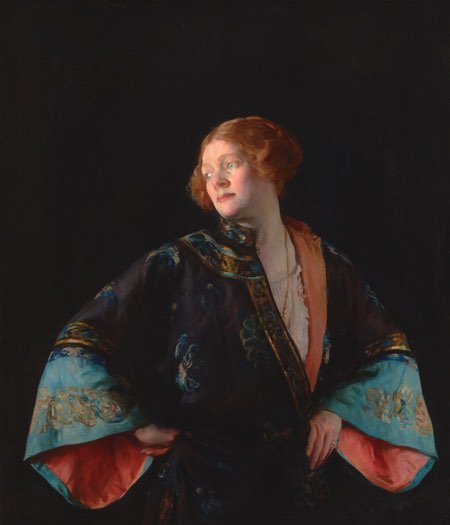

The Blue Mandarin Coat (The Blue Kimono), Joseph Rodefer DeCamp, oil on canvas, roughly 43 x37 in (109 x 94 cm); link is to zoomable version on Google Art Project, original is in the High Museum, which also has a zoomable version. There is a somewhat smaller downloadable image on Wikimedia Commons.
Categories:
-
Adoration of the Shepherds, Gerrit van Honthorst


Adoration of the Shepherds, Gerrit (AKA Gerard) van Honthorst; link is to zoomable version on Google Art Project, downloadable file on Wikimedia Commons.
I love this kind of nativity scene, in which the painter has represented the infant as the source of light. Special effects!
Van Honthorst was noted for his paintings featuring lighting effects (some similar to those of Georges de la Tour). He also painted another version of Adoration of the Shepherds with a similar light effect.
Categories:
-
A Cavalcade of Santas
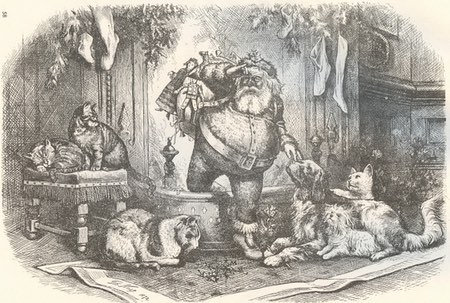

Our image of Santa Claus comes primarily from the interpretations of illustrators over time. Here are a few examples.
Despite the fact hat Nast had given Santa his physical form and Reginald Marsh dressed him in the red suit with white cuffs, I think it’s J.C. Leyendecker to whom we owe our most complete contemporary image of His Jollyness.
(Images above, in chronological order: Thomas Nast [with detail], Reginald Marsh, Arthur Rackham, J.C. Leyendecker, N.C. Wyeth, Norman Rockwell and Haddon “Sunny” Sundblom)
Categories:
-
A few thoughts on “AI Art”

I will begin as a curmudgeon and state that I think the term “artificial intelligence” is overly generous when applied to the current level of this technology, and would be better reserved for future systems that are more likely to fulfill the expectations created by the term “intelligence”.
In an effort to neatly sidestep the semantic/philosophical black hole that is the definition of “intelligence”, I will say that here I’m referring to the common perception most people have of the term — essentially, generalized human intelligence — the ability to think and reason as well as learn. In most cases, this carries an implied sense of self awareness, even when we assign the characteristic to other animals.
These “AI” systems — which I prefer to refer to simply as “machine learning systems” or “neural networks” — are indeed impressive in certain ways, but if they are intelligent, they are savants — extremely capable a few highly specialized areas.
However, I do wonder if they are adept in ways we haven’t likely considered, and I will pose the question: are neural networks capable of being creative?
How do machine learning text to image generators work?
There are three major text to image generators: Stable Diffusion, DALL-E, and Midjourney, as well a a number of less well known systems.
These systems are trained by being fed images — lots of images — from various sources. At present there is little restraint on sources. The images are tagged, or associated with text in some way, and accumulated into enormous datasets. The system can quickly access its dataset and identify various kinds of images by their associated words.
A user will log into a site from which one or more of the systems can be accessed, and give the system a text “prompt” from which to generate images. Typically, this is a set of words suggesting a kind of image, a subject and a style of rendering. The system will fly through its database of text-tagged images, compare them, and try to produce new images with a similar appearance based on the text cues.
There is a common misconception
that these systems cobble together bits of “stolen” images into new configurations, like a kind of blended collage. This is not how they work, and the way they do work is the crux of the copyright problem. The best descriptor I can think of for their actual training a output process is pattern recognition. They learn to associate certain kinds of visual patterns with text words or strings of words, and they then create brand new, unique images based on those patterns. The patterns they recognize and can replicate can be highly sophisticated, such as the style of a given artist, but the results do not directly contain copyrighted existing artwork. (There is an exception if you feed an existing copyrighted image into the system directly —as a basis from which to work — and then only modify it slightly, but that’s a different use than what I’m talking about here.)
Perhaps not as easy at it looks
In my attempt to learn more about text to image generators, and to understand how they work, I have been experimenting with the machine learning model known as Stable Diffusion 1.5.
I’m a reasonably accomplished artist, and in my role as a website designer and developer, quite comfortable with computers, to the point of writing certain kinds of code. However, my efforts in creating prompts for the system have produced rather mediocre results compared to some of the machine generated image examples I’ve seen. To me this indicates there is a significant level of effort and skill in crafting prompts that produce the best results from these systems.
The text prompt I used for the image above, left was: “beautiful young woman with straight red hair and bangs in front of elaborate art nouveau style decoration rendered in the style of alphonse mucha“.
For the image on the right it was: “beautiful young woman with straight, collar length bright red hair, bangs, green eyes, in the style of alphonse mucha“.
Though both images have a vague look of Art Nouveau, neither looks to me like the style of Mucha, nor do they quite fulfill the design feel of his posters that I was trying to achieve.
I’m hampered by the fact that I’m only writing prompts at the most basic level, and I have not learned the processes of iteration and other techniques more skilled users employ.
Eventually, I found that clicking on the original prompt text in the detail page for the image in my PlaygroundAI account profile would access a large number existing images posted by other users, presumably with prompts the system deemed related to mine.
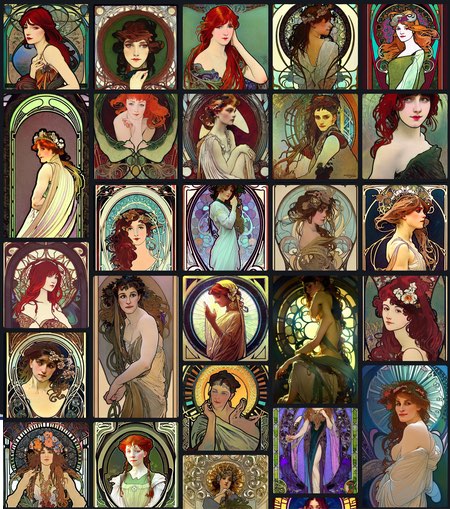
Some of these were visually appealing, and obviously created by users with a greater degree of experience; others were aberrations that looked like an illustration for a science fiction story about a horrible teleportation accident. In each case, in these images the users had tagged as publicly viewable, the text prompt is there to read and learn from.

Are machine generated images that imitate the recognizable style of a contemporary artist theft? — or not?
When machine generated images seem to carry the style of a living artist, the “new images” part of that process is the at heart of a conundrum: if the generated images are not copies of existing copyrighted images, but are rendered in the recognizable style of an living artist (or a deceased artist whose works are still protected under copyright law), does this constitute theft?
Many of us will be quick to sail off to the conclusion that copying an artist’s style is theft, but on further reflection, will quickly run aground on the shoal of existing U.S. and international copyright law, which states that only existing works can be protected by copyright.
You cannot copyright a style.
However unethical it may seem, it is not against current law to copy a style, as long as the copyist is not misrepresenting the works as authentic works by the original artist.
What is more likely in question is the legality of the training methods of the machine learning models in “scraping” images from the web and other sources. So far they seem to be operating within generally accepted practices, as the “fair use” part of copyright law is, of necessity, vague.
Change the law?
The cry to “Change copyright law!” quickly runs into its own barriers. When given thought, (not a popular practice, I know), it becomes obvious this is not only a bog-like whirlpool of conflicting and amorphous concepts, it may well be an impossible task.
How would you go about defining copyright infringement of an artist’s style? In some of the most blatant cases, it seems obvious, but it’s in the dark, shifting fringes of this concept that the details, and the difficulties, lie.
As an artist, my own style is an accumulation of the influences I’ve encountered through my life — other artists whose work I have admired and, in many cases, studied.
If I admire the style of an artist whose work is under copyright — let’s say Alphonse Mucha — and I study his style and attempt to bring elements of it into my own work, at what point could I be accused of copyright infringement?
Can you see what a muddy slope this is already? How is this different from the history of art, in which artists have always learned from those who came before them?
Was Rembrandt guilty of theft in adopting the pose of a painting he admired by Titian?

(Image above, left: Man with a quilted sleeve, Titian 1510, right: Self portrait at the age of 34, Rembrandt 1640; note: these are images of the real paintings, not machine learning imitations)Learning from those who came before us is how human endeavor, whether artistic, scientific, literary or otherwise, has always progressed. As has often been said: “We stand on the shoulders of giants.”
So in what fundamental and legally definable way is a machine learning system creating new images based on the accumulated observation of existing images different from humans observing, and learning from art they have been inspired by?
In what way is this aspect of machine learning different from what we identify in humans as creativity, which has always consisted of combining existing material in new ways?
These seemingly simple, but challenging, questions are worthy of consideration.
Capitalism rears its greedy, leering grin
I have not yet mentioned the inexorable forces of commerce and the fact that a number of powerful and influential companies have a stake in making the commercial versions of these systems as powerful as possible.

(Image above: Stable Diffusion 1.5, text prompt: “fierce, threatening monster robot”)Even more to the point is the “cost cutting” pressure on companies to use these systems in lieu of hiring artists and graphic designers who must be paid for their work.
On the hopeful side, I’m reminded of the “desktop publishing revolution” of the 1980s and 1990s, during which companies decided that a computer with lots of fonts and Microsoft Word meant that Kevin in Accounting could take over the design and publishing chores for the company, and that hiring a graphic designer was no longer necessary.
Endless centered-text multi-font Word documents later, the companies realized this was indeed an error of judgement.
How different the current situation may be is as yet unclear, but at this time, companies would have to pay someone who is skilled at manipulating one of these systems to produce acceptable results; so as yet, this doesn’t seem to be a Kevin in Accounting push-button threat to graphic designers.
However, machine learning systems are disrupting more areas of human endeavor than the arts; word-based systems like ChatGPT and Open AI Playground (not to be confused with Playground AI.com) are being used to write advertising copy, blog posts, term papers and computer code, and will be sought after to take over a variety of other jobs.
You may have noticed the prevalence of fake humans keeping you from talking to a real person when you try to get “customer service” on the phone, the “convenient self service checkouts” that encourage you to do a checkout clerk’s job for free, as well as taking orders from a machine, and robot voices in other aspects of modern life. All of these will become more sophisticated — and harder to discern as non-human — as machine learning makes its presence felt.
Companies love the fantasy of having to pay no employee salaries or benefits, instead having machines fulfill their roles in selling goods and services to consumers (who, one assumes, will be paid salaries by other firms that are less savvy).
What’s an artist to do?
For those artists concerned with protecting their own style of art from being adopted by these systems, what options are available?
If we focus on the imitations of existing copyright law, we find that in the U.S. copyright generally covers works for 95 years after the publication date.
If you tried to define an artist’s style for the purpose of copyright law, not only would defining a style be a daunting challenge, but how would you enforce such a regulation?
Many artists are urging that you contact your legislative representatives and demand that they do “something”.
The idea of involving legislators in this process just makes my blood run cold. Never have I seen a group more monumentally and almost universally ignorant and misguided in issues of technology than legislators — not that this has ever stopped them from sticking their dirty fingers in the pie.
Could legal restrictions be placed on the types of content allowable for use by these systems in the training stage? Perhaps, but this is in itself a muddy issue, which may contain unintended consequences in the form of limitations on what we can access as humans. Can we really regulate machine access to images differently than what is available to humans?
The Concept Art Association it trying to rally the troops with a crowdfunding campaign and a list of suggested actions.
However, I think those suggesting that image collection for text to image generation be limited to opt-in, and otherwise restricted to public domain content, may find this is a more complex legal issue than it may seem at first, and are again casting wide nets that may well catch humans in unpredicted ways.

(Image above: Stable diffusion 1.5, text prompt: “fierce, threatening monster robot holding an artist’s palette and paintbrush”; image-to-image prompt: Self portrait by Élisabeth Louise Vigée Le Brun)Leaving something like this in the hands of politicians would be at best ineffectual, and at worst disastrous. If there are solutions to be found, they must come from individuals who are intimately familiar with the complexities of the issues, the structure and use of these systems and the likely trajectory of their technological progression as well as the legal framework of copyright law.
At present there is some evidence that public opinion can have an effect on the creators of these systems. Already, Stability AI, the company behind the Stable Diffusion text to image generator, is offering an opt out to have your artwork excluded from the flood of images being fed into their training system for the next version of the software. This does, however, require that artists be proactive in opting out and requires an awareness of this option in the first place. Also, Stable Diffusion is only one of several systems in operation.
It’s worth noting that the creators of some of these systems are attempting to restrict the use of specific artists’ names in prompting the style of rendering.
There are also efforts being made to allow for digitally tagging images in a way that can be used to identify and exclude images from assimilation by the Borg, er,… I mean neural network training routines.
Meanwhile, putting the “NO AI” symbol up on social media accounts seems pretty weak sauce, though it may help raise a bit of awareness of the issue. (I can certainly understand the attempt to bring it to the attention of the owners of ArtStation.)
I will suggest, however, that artists would do well to raise their own level of awareness and become more informed abut the underlying technology and related copyright issues.
Being informed
I think that artists to whom this issue is important will benefit from taking a little time to log into one of these systems and spend a few minutes learning to write prompts, in order to understand what they do and how they are being used. It’s also worth noting how they can be individually further “trained” by uploading images from which the system can be prompted to create new variations.
If you can avoid a knee-jerk “I’m not having anything to do with this!” reaction, you can easily investigate image to text generation for yourself by going to Dream Studio, and creating an account, which requires only an email address. There, you will be able to use Stable Diffusion for free.
There is a 15 minute YouTube video here that will walk you through the process of creating prompts for these systems, as well as giving you a quick overview of their capabilities.
I’m not suggesting that you start using text to image generators going forward — or that a few minutes spent using one of these systems is likely to change your opinion — but I believe the experience will give you a better informed opinion.
It may also prompt you (if you’ll excuse the expression) to think about how you tag and classify your images when making them publicly available.
I will also suggest that artists will do well to become more informed about copyright, how it works, what its limitations are and what is meant by the public domain and fair use.
Can these systems be used ethically?

In my attempt to understand how these systems are trained to adopt a contemporary artist’s style, I tried to teach Stable Diffusion to imitate my own comics style by feeding it an image from my webcomic, Argon Zark! (image above, left) and playing with various text prompts. The results, though occasionally amusing, were far from successful.
That and my weak attempts to prompt the system to imitate the look of Alphonse Mucha convinced me that the image generator users who are successfully imitating a contemporary artist’s style are doing so not only deliberately, but with considerable effort and practice. If they are doing so to make money, this seems to me the focal point of unethical practice in this arena.
The loud voices in opposition to text to image generation in any form appear to assume that the only use of these systems is to appropriate without credit the hard work of living artists, ignoring the fact that there is a great deal of art, other images and writing that belongs in the public domain and is therefore fair game any way you look at it. If I ask a neural network to create an image in the style of Rembrandt, no one has reason to complain.

(Image above: Stable Diffusion 1.5, text prompt: “landscape etching in the style of Rembrandt”)
Where am I coming from, and where do we go from here?
For those of you who might assume from my reluctance to jump on the “text to image generation is the spawn of hell” bandwagon that I am a disinterested observer, I’ll point out that I’m a painter, illustrator, comics artist, and part-time art teacher, and the creator of intellectual property that I consider valuable.
Also, in my role as a graphic designer, I stand to lose business if these systems make website creation a job for neural networks rather than human designers.
I’m not without a stake in this discussion.
That being said, we have to acknowledge that this technology is here. It’s not going away, and it’s likely to rapidly become more sophisticated and effective in the near future.
We can rage against the machine, shake our fists at the sky and cry foul — and hide in our bunkers as Skynet becomes active — or we can turn around, examine the technology and its uses, and attempt to understand and adapt — and perhaps influence the outcome of some of these conflicts, or even find uses for some aspects of this technology in our own creative endeavors.
There may be no easy answers, but we can at least try to understand the questions.
Categories:
-
Eye Candy for the Winter Solstice: Winter Landscape, Stepan Kolesnikoff
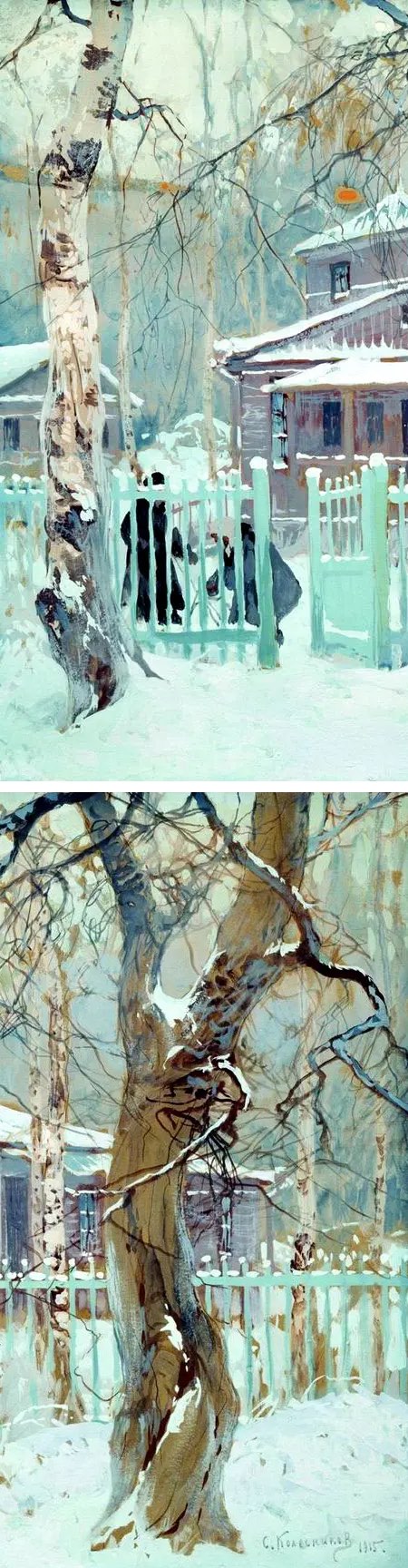
Winter Landscape>, Stepan Kolesnikoff, gouache
Another wonderful winter gouache painting by Stepan Kolesnikoff. As far as I have been able to tell, Kolesnikoff was born in Ukraine when it was considered part of the Russian Federation, and after studying and working in Russia for a time, settled in what is now Serbia.
Happy Winter Solstice!
Categories:
-
Eye Candy for Today: La Tour’s Joseph

Joseph the Carpenter, Georges de La Tour; oil on canvas; roughly 54 x 40 in (137 x 101 cm) Link is to image page on Wikimedia Commons. Original is listed as being in the Louvre (though I can’t find it in a search of the Louvre’s online database).
17th century French painter Georges de La Tour was known for his scenes lit by candlelight, the source for which was sometimes open, and sometimes obscured by a hand or other object, as in this painting.
Given his overall tendency for naturalistic rendering and lighting, and the way he has presented candle flames in other paintings, I find his representation of the candle flame in this painting particularly odd. Perhaps, given that the candle is held by a young Jesus, it as some religious significance. I don’t know.
Categories:




Charley’s Picks
Bookshop.org
(Bookshop.org affilliate links; sales benefit independent bookshop owners; I get a small percentage to help support my work on Lines and Colors)

John Singer Sargent: Watercolors


Urban Sketching: Understanding Perspective


.jpg)

Charley’s Picks
Amazon
(Amazon.com affiliate links; sales go to a larger yacht for Jeff Bezos; but I get a small percentage to help support my work on Lines and Colors)
John Singer Sargent: Watercolors
Urban Sketching: Understanding Perspective