


Categories
- 3d CGI
- Amusements
- Animation
- Anime & Manga
- Art Materials
- Art Videos
- Blogroll
- Cartoons
- Color
- Comics
- Concept & Visual Dev.
- Creativity
- Digital Art
- Digital Painting
- Displaying Art on the Web
- Drawing
- Eye Candy for Today
- Gallery and Museum Art
- High-res Art Images
- Illustration
- Motion Graphics & Flash
- Museums
- Online Museums
- Outsider Art
- Painting
- Painting a Day
- Paleo Art
- Pastel, Conté & Chalk
- Pen & Ink
- Prints and Printmaking
- Reviews
- Sc-fi and Fantasy
- Sculpture & Dimensional
- Site Comments
- Sketching
- Storyboards
- Tools and Techniques
- Uncategorized
- Vector Art
- Videos & Podcasts
- Vision and Optics
- Watercolor and Gouache
- Webcomics
Archives
- June 2026
- May 2026
- April 2026
- March 2026
- February 2026
- January 2026
- December 2025
- November 2025
- October 2025
- September 2025
- August 2025
- July 2025
- June 2025
- May 2025
- January 2025
- December 2024
- November 2024
- October 2024
- September 2024
- August 2024
- June 2024
- April 2024
- March 2024
- February 2024
- January 2024
- December 2023
- November 2023
- October 2023
- September 2023
- August 2023
- July 2023
- May 2023
- April 2023
- March 2023
- February 2023
- January 2023
- December 2022
- November 2022
- September 2022
- August 2022
- July 2022
- June 2022
- May 2022
- April 2022
- March 2022
- February 2022
- January 2022
- December 2021
- November 2021
- October 2021
- September 2021
- August 2021
- July 2021
- June 2021
- May 2021
- April 2021
- March 2021
- February 2021
- January 2021
- December 2020
- November 2020
- October 2020
- September 2020
- August 2020
- July 2020
- June 2020
- May 2020
- April 2020
- March 2020
- February 2020
- January 2020
- December 2019
- November 2019
- October 2019
- September 2019
- August 2019
- July 2019
- June 2019
- May 2019
- April 2019
- March 2019
- February 2019
- January 2019
- December 2018
- November 2018
- October 2018
- September 2018
- August 2018
- July 2018
- June 2018
- May 2018
- April 2018
- March 2018
- February 2018
- January 2018
- December 2017
- November 2017
- October 2017
- September 2017
- August 2017
- July 2017
- June 2017
- May 2017
- April 2017
- March 2017
- February 2017
- January 2017
- December 2016
- November 2016
- October 2016
- September 2016
- August 2016
- July 2016
- June 2016
- May 2016
- April 2016
- March 2016
- February 2016
- January 2016
- December 2015
- November 2015
- October 2015
- September 2015
- August 2015
- July 2015
- June 2015
- May 2015
- April 2015
- March 2015
- February 2015
- January 2015
- December 2014
- November 2014
- October 2014
- September 2014
- August 2014
- July 2014
- June 2014
- May 2014
- April 2014
- March 2014
- February 2014
- January 2014
- December 2013
- November 2013
- October 2013
- September 2013
- August 2013
- July 2013
- June 2013
- May 2013
- April 2013
- March 2013
- February 2013
- January 2013
- December 2012
- November 2012
- October 2012
- September 2012
- August 2012
- July 2012
- June 2012
- May 2012
- April 2012
- March 2012
- February 2012
- January 2012
- December 2011
- November 2011
- October 2011
- September 2011
- August 2011
- July 2011
- June 2011
- May 2011
- April 2011
- March 2011
- February 2011
- January 2011
- December 2010
- November 2010
- October 2010
- September 2010
- August 2010
- July 2010
- June 2010
- May 2010
- April 2010
- March 2010
- February 2010
- January 2010
- December 2009
- November 2009
- October 2009
- September 2009
- August 2009
- July 2009
- June 2009
- May 2009
- April 2009
- March 2009
- February 2009
- January 2009
- December 2008
- November 2008
- October 2008
- September 2008
- August 2008
- July 2008
- June 2008
- May 2008
- April 2008
- March 2008
- February 2008
- January 2008
- December 2007
- November 2007
- October 2007
- September 2007
- August 2007
- July 2007
- June 2007
- May 2007
- April 2007
- March 2007
- February 2007
- January 2007
- December 2006
- November 2006
- October 2006
- September 2006
- August 2006
- July 2006
- June 2006
- May 2006
- April 2006
- March 2006
- February 2006
- January 2006
- December 2005
- November 2005
- October 2005
- September 2005
- August 2005
Relevant Blogs
Art, Painting & Sketch
- Gurney Journey
- Underpaintings
- Art and Influence
- Painting Perceptions
- Oil Painters of America
- Vasari Paint POV
- Flying Fox
- Urban Sketchers
- Bento (Smithsonian)
- Art Inconnu
- The Hidden Place
- Still Life
- Making a Mark
- The Art of the Landscape
- Exploring Color & Creativity
- Art Contrarian
- Artist A Day
- beinArt Surreal Art Collective
- Eye Level
- David Dunlop
- p.i.g.m.e.n.t.i.u.m
- CultureGrrl
- Joaquín Sorolla blog
- Artists in Pastel
“Painting a Day”
- A Painting a Day (Keiser)
- On Painting (Keiser)
- Julian Merrow-Smith
- Karen Jurick
- Jeffrey Hayes
- Carol Marine
- Abbey Ryan
- Daily Paintworks
Other Painting Blogs
- Virtual Gouache Land
- Neil Hollingsworth
- Marc Hanson
- Kevin Menck
- Marc Dalessio
- Larry Seiler
- Stapleton Kearns
- Colin Page
- Roos Schuring
- Hans Versfelt
- Titus Meeuws
- Régis Pettinari
- René Plein Air
- Belinda Del Pesco
- Robin Weiss
- Nathan Fowkes (Land Sketch)
- William Wray
- Frank Serrano
- Stephen Magsig
- Michael Chesley Johnson
- Twice a Week
- Sarah Wimperis
- Rob Adams
- Michael Cole Manley
- The Dirty Palette Club
- Mike Manley’s Draw!
Gallery Art & Illustration mix
Illustration
- Howard Pyle
- 100 Years of Illustration
- BibliOdyssey
- Illustration Art
- Today’s Inspiration
- Illustration Mundo
- Little Chimp Society
- Danny Gregory
- R D (John Martz
- Illustration Friday blog
- Monster Brains
- Illustrators & Illustrations (RU)
- Elwood H. Smith
- DaniDraws.com
- Designers Who Blog
- iSpot Blog
Sci-Fi & Fantasy
Illustration & Comics
Comics & Cartoons
- Comics Beat
- Robot 6
- Newsarama Blog
- Comic Vine
- Comics Alliance
- Forbidden Planet Int.
- Paolo Rivera
- Bolt City
- Flight
- Scott McCloud
- The Comics Journal
- Comixpedia
- Funnybook Babylon
- James Baker
- Middleton’s Sketchbook
- Boneville
- The Hotel Fred
- Paul Rivoche
- Daily Cartoonist
- Mad About Cartoons (William Wray)
- Digital Strips
Illustration & Concept
Animation & Concept
- Cartoon Brew
- Animation Blog
- Cold Hard Flash
- Concept Art World
- The CAB
- FY Concept Art
- Concept Ships
- Concept Robots
- John Nevarez
- Armand Serrano
- Marcos Mateu-Mestre
- all kinds of stuff (Kricfalusi)
- Yacin the faun (Man Arenas)
- Kelsey Mann
- Cre8tivemarks Blog
- Ice-Cream Monster Toon Cafe
- AAU Character & Creature Design
- AAU Animation Notes
- Articles and Texticles
Paleo & Scientific
Tools & Techniques
Other
Lists of Art Blogs
Art Image Resource Links
Historic Art Images
- Wikimedia Commons: Paintings
- Wikimedia Commons: Drawings
- The Athenaeum
- WikiArt (WikiPaintings)
- Google Art Project: Artists
- Google Art Project: Collections (Museums)
- ArtCyclopedia
- Web Gallery of Art
- Art Renewal Center
- Web Gallery of Impressionism
Auction Consolidation sites
Auction sites
- Sotheby’s
- Bonham’s
- Christies
- Heritage Auctions: Fine Art
- Heritage Auctions: Illustration
- Freeman’s Auctions
- Bukowskis
- Shannon’s
Image Search
Reverse Image Search (search by image)
- Tin Eye
- RevImg
- Google Image Search (camera icon)
- Bing Image Search (camera icon)
Promoting some friends and some clients of my website design business
- Twin Willows T’ai Chi studio in Wilmington DE. Taiji classes with Bryan Davis.
- Ray Hayward, Inspired Teacher of T’ai Chi ( Taiji ) in Minneapolis, Founder of Mindful Motion Tai Chi Academy
- OldHead Tattoo studio and Art Gallery in Wilmington DE. Tattoos and paintings by Bruce Gulick
- Sharon Domenico Art, pet portrait oil paintings
- Platinum Paperhanging, wallpaper hanging, Main Line and Philadelphia, PA
- Lisa Stone Design, interior designer, Main Line and Philadelphia, PA
- Studio12KPT, original art, prints, calendars and other custom printed items by Van Sickle & Rolleri
-
Elizabeth Traynor (update)

I first wrote about Elizabeth Traynor in a post in 2006, in which I expressed my admiration in particular for her scratchboard illustrations (and gave a brief description of the scratchboard process).In addition to her scratchboard work (images above, 1 & 4), her online portfolio also showcases her work in pen and ink, often used with watercolor (images above, 2 & 5), as well as her straightforward watercolor pieces (3 & 6, with detail, 7).
Traynor says that her clients appreciate her ability to work in all three mediums and that much of her work recently is in the latter two.
She was kind enough to pass on to me three recent illustrations, that are not yet on her site, to share in this post (4, 5 & 6, above, plus detail at bottom).
I initially encountered Traynor from her previous association with the Delaware College of Art and Design, where she was at one time the head of the Illustration Department, and where I taught (and continue to teach) a class in Adobe Flash.
Since then Traynor has been based in Massachusetts, but she was born in Alabama, and still has family and friends there who live in an area that was in the path of the extremely destructive storms that recently ripped through the U.S. south.
In a letter which I have quoted below with her permission, she offers a way for those who would like to help to contribute to a local, all volunteer, non-profit group; assuring that your help will go directly to communities in need and not be compromised by the overhead and administrative costs inherent in established relief agencies.
Dear Friends and Family,
I don’t have to tell any of you about the devastation from the tornados last week in Alabama. If you want to help, though, I can tell you a direct way to do so — without red tape.
You may not know that I am a native of Alabama (even though I grew up in Delaware too). My mother, son, five brothers, and ten nieces and nephews live there. Thankfully, no one in my family was injured, although they all have suffered damage in varying degrees. It has been a terrible week for all of us, even those of us far away trying to get word about our loved ones.
My mother is the President of the St. Vincent de Paul Society (St. William’s Conference) in Guntersville, Alabama (in the northeast section of the state).
The Society is providing aid for all residents of Marshall County who are in need, especially in the towns of Guntersville, Arab, Albertville, and Boaz. Each of these towns, as well as other areas of this rural county, suffered direct hits by multiple tornados.
(One tornado ripped up 1,000 trees from a long scenic stretch on the shore of Lake Guntersville, less than 1/2 mile from my mother’s house.)
The St. Vincent de Paul Society is running out of money. If you would like to make a donation to help, the Society would be extremely thankful. 100% of donations are used directly for feeding, sheltering, and repairs. There are no administrative costs, since this is an all-volunteer group with headquarters in St. William’s Catholic Church.
Donations can be made to St. Vincent de Paul Society (St. William’s Conference) and are fully tax deductible. The address is:
St. Vincent de Paul Society
c/o St. Williams Church
929 Gunter Avenue
Guntersville, AL 35976You are under no obligation to make a donation. If you do so, any amount is welcome, and I thank you from the bottom of my heart.
Sincerely,
Elizabeth
Categories:
-
Simon Schubert

German artist Simon Schubert works in the novel medium of creased paper, using the sharp creases as lines, and apparently letting the differences in surface provide tones under the controlled lighting in which the piece is photographed.His subjects for this sequence of works are largely architectural interiors of a particular villa. They often include patterned floors and recursive repetition of spaces in facing mirrors.
His online gallery also includes installations and sculpture.
[Via BoingBoing]
Categories:
-
Hobo Lobo of Hamlin

Hobo Lobo of Hamlin is a side-scrolling webcomic by Stevan Zivadinovic that uses multiple planes scrolling at different rates to give a nice dimensional effect, augmented with other touches of animation.My screen captures above attempt to give some idea of the changing relationship of the planes, but they’re inadequate to the task; you need to see the actual effect.
You can use the controls at top to move through the panoramic images one “scene” at a time, or just grab the horizontal scrollbar at the bottom of the window and have at it.
The animation and multi-plane scrolling are apparently created in HTML and JavaScript rather than Flash, which means you should be able to view the effects on the iPad, but outdated desktop browsers may have issues.
On his “What is this thing?” page, Zivadinovic implores users of Internet Explorer to get a real browser, as well as explaining a few other technical considerations and indicating his intended update schedule; according to which an update should be coming 1:25am (CDT) on this Friday, April 29th, 2011.
The strip, which appears to be loosely based on The Pied Piper of Hamlin, is only two sections long at the moment, but looks promising to be watched for coming updates.
Zivadinovic also has a primary website called The Nihilist Canary, where you can see more of his work.
[Via Scott McCloud]
Categories:
-
Rachel Constantine
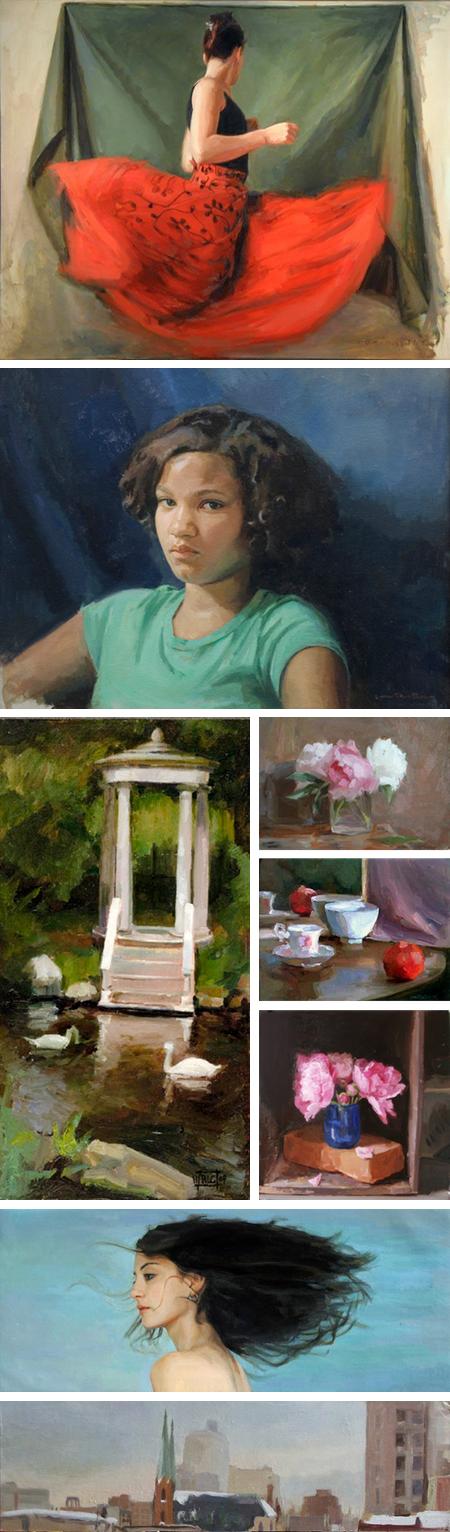
Contemporary realist Rachel Constantine is based here in Philadelphia, where she studied at the University of the Arts, The Fleisher Art Memorial and the Pennsylvania Academy of the Fine Arts.Her work is featured in Alla Prima: A Contemporary Guide to Traditional Direct Painting by Al Gury, current chairman of the Painting department at PAFA; as well as in a number of other features and mentions in various periodicals.
Constantine has a nicely painterly approach, with rough edged areas of color contrasting with smoother passages in her definition of form.
She focuses primarily on figurative and portrait subjects, but you will also find lively still life subjects and muted, quiet landscapes, as well as a selection of drawings, on her website.
[Via Mike Manley]
Categories:
-
Ray Morimura

Tokyo born artist Ray Morimura creates woodblock and linocut prints that manage to feel at once traditional and modern.His crisp, sharp edges of color delineate forms that often repeat or combine to form patterns, at times varying in size to suggest perspective and distance.
Morimura studied painting at Tokyo Gakugel University. He originally worked in abstraction but, inspired by the prints of Shigeru Hatsuyama and Sumio Kawakami, he took up the study of woodplock prints.
[Via BibliOdyssey, on Twitter @BibliOdyssey]
Categories:
-
Jonathan Jones’ top five rabbits in art

I don’t know how small long-eared mammals (not to mention the shelled embryos of certain avian species and similarly shaped confections) came to be associated with the Christian holiday observance of Easter, but there they are, popping up in popular culture all over the place.Jonathan Jones, writing in his OnArt blog on Guardian.co.uk, uses that association with the upcoming holiday to suggest his top five rabbits in art.
It’s a fun idea, but for one reason or another, his article is only accompanied (at least online) by a single image. I won’t second guess his choices (as I’m all onboard with four out of five), but I’ve take the liberty of supplementing his article with images and, where possible, links to better examples of the works he mentions.
Images above: The Virgin and Child with Saint Catherine and a Shepherd, known as The Madonna of the Rabbit by Titian (Tiziano Vecellio), Young Hare by Albrecht Dürer, the March Hare from Alice’s Adventures in Wonderland by Sir John Tenniel, Rabbit by Jeff Koons, early Bugs Bunny model sheet by Robert Givens.
Categories:




Charley’s Picks
Bookshop.org
(Bookshop.org affilliate links; sales benefit independent bookshop owners; I get a small percentage to help support my work on Lines and Colors)

John Singer Sargent: Watercolors


Urban Sketching: Understanding Perspective


Charley’s Picks
Amazon
(Amazon.com affiliate links; sales go to a larger yacht for Jeff Bezos; but I get a small percentage to help support my work on Lines and Colors)
John Singer Sargent: Watercolors
Urban Sketching: Understanding Perspective