


Categories
- 3d CGI
- Amusements
- Animation
- Anime & Manga
- Art Materials
- Art Videos
- Blogroll
- Cartoons
- Color
- Comics
- Concept & Visual Dev.
- Creativity
- Digital Art
- Digital Painting
- Displaying Art on the Web
- Drawing
- Eye Candy for Today
- Gallery and Museum Art
- High-res Art Images
- Illustration
- Motion Graphics & Flash
- Museums
- Online Museums
- Outsider Art
- Painting
- Painting a Day
- Paleo Art
- Pastel, Conté & Chalk
- Pen & Ink
- Prints and Printmaking
- Reviews
- Sc-fi and Fantasy
- Sculpture & Dimensional
- Site Comments
- Sketching
- Storyboards
- Tools and Techniques
- Uncategorized
- Vector Art
- Videos & Podcasts
- Vision and Optics
- Watercolor and Gouache
- Webcomics
Archives
- June 2026
- May 2026
- April 2026
- March 2026
- February 2026
- January 2026
- December 2025
- November 2025
- October 2025
- September 2025
- August 2025
- July 2025
- June 2025
- May 2025
- January 2025
- December 2024
- November 2024
- October 2024
- September 2024
- August 2024
- June 2024
- April 2024
- March 2024
- February 2024
- January 2024
- December 2023
- November 2023
- October 2023
- September 2023
- August 2023
- July 2023
- May 2023
- April 2023
- March 2023
- February 2023
- January 2023
- December 2022
- November 2022
- September 2022
- August 2022
- July 2022
- June 2022
- May 2022
- April 2022
- March 2022
- February 2022
- January 2022
- December 2021
- November 2021
- October 2021
- September 2021
- August 2021
- July 2021
- June 2021
- May 2021
- April 2021
- March 2021
- February 2021
- January 2021
- December 2020
- November 2020
- October 2020
- September 2020
- August 2020
- July 2020
- June 2020
- May 2020
- April 2020
- March 2020
- February 2020
- January 2020
- December 2019
- November 2019
- October 2019
- September 2019
- August 2019
- July 2019
- June 2019
- May 2019
- April 2019
- March 2019
- February 2019
- January 2019
- December 2018
- November 2018
- October 2018
- September 2018
- August 2018
- July 2018
- June 2018
- May 2018
- April 2018
- March 2018
- February 2018
- January 2018
- December 2017
- November 2017
- October 2017
- September 2017
- August 2017
- July 2017
- June 2017
- May 2017
- April 2017
- March 2017
- February 2017
- January 2017
- December 2016
- November 2016
- October 2016
- September 2016
- August 2016
- July 2016
- June 2016
- May 2016
- April 2016
- March 2016
- February 2016
- January 2016
- December 2015
- November 2015
- October 2015
- September 2015
- August 2015
- July 2015
- June 2015
- May 2015
- April 2015
- March 2015
- February 2015
- January 2015
- December 2014
- November 2014
- October 2014
- September 2014
- August 2014
- July 2014
- June 2014
- May 2014
- April 2014
- March 2014
- February 2014
- January 2014
- December 2013
- November 2013
- October 2013
- September 2013
- August 2013
- July 2013
- June 2013
- May 2013
- April 2013
- March 2013
- February 2013
- January 2013
- December 2012
- November 2012
- October 2012
- September 2012
- August 2012
- July 2012
- June 2012
- May 2012
- April 2012
- March 2012
- February 2012
- January 2012
- December 2011
- November 2011
- October 2011
- September 2011
- August 2011
- July 2011
- June 2011
- May 2011
- April 2011
- March 2011
- February 2011
- January 2011
- December 2010
- November 2010
- October 2010
- September 2010
- August 2010
- July 2010
- June 2010
- May 2010
- April 2010
- March 2010
- February 2010
- January 2010
- December 2009
- November 2009
- October 2009
- September 2009
- August 2009
- July 2009
- June 2009
- May 2009
- April 2009
- March 2009
- February 2009
- January 2009
- December 2008
- November 2008
- October 2008
- September 2008
- August 2008
- July 2008
- June 2008
- May 2008
- April 2008
- March 2008
- February 2008
- January 2008
- December 2007
- November 2007
- October 2007
- September 2007
- August 2007
- July 2007
- June 2007
- May 2007
- April 2007
- March 2007
- February 2007
- January 2007
- December 2006
- November 2006
- October 2006
- September 2006
- August 2006
- July 2006
- June 2006
- May 2006
- April 2006
- March 2006
- February 2006
- January 2006
- December 2005
- November 2005
- October 2005
- September 2005
- August 2005
Relevant Blogs
Art, Painting & Sketch
- Gurney Journey
- Underpaintings
- Art and Influence
- Painting Perceptions
- Oil Painters of America
- Vasari Paint POV
- Flying Fox
- Urban Sketchers
- Bento (Smithsonian)
- Art Inconnu
- The Hidden Place
- Still Life
- Making a Mark
- The Art of the Landscape
- Exploring Color & Creativity
- Art Contrarian
- Artist A Day
- beinArt Surreal Art Collective
- Eye Level
- David Dunlop
- p.i.g.m.e.n.t.i.u.m
- CultureGrrl
- Joaquín Sorolla blog
- Artists in Pastel
“Painting a Day”
- A Painting a Day (Keiser)
- On Painting (Keiser)
- Julian Merrow-Smith
- Karen Jurick
- Jeffrey Hayes
- Carol Marine
- Abbey Ryan
- Daily Paintworks
Other Painting Blogs
- Virtual Gouache Land
- Neil Hollingsworth
- Marc Hanson
- Kevin Menck
- Marc Dalessio
- Larry Seiler
- Stapleton Kearns
- Colin Page
- Roos Schuring
- Hans Versfelt
- Titus Meeuws
- Régis Pettinari
- René Plein Air
- Belinda Del Pesco
- Robin Weiss
- Nathan Fowkes (Land Sketch)
- William Wray
- Frank Serrano
- Stephen Magsig
- Michael Chesley Johnson
- Twice a Week
- Sarah Wimperis
- Rob Adams
- Michael Cole Manley
- The Dirty Palette Club
- Mike Manley’s Draw!
Gallery Art & Illustration mix
Illustration
- Howard Pyle
- 100 Years of Illustration
- BibliOdyssey
- Illustration Art
- Today’s Inspiration
- Illustration Mundo
- Little Chimp Society
- Danny Gregory
- R D (John Martz
- Illustration Friday blog
- Monster Brains
- Illustrators & Illustrations (RU)
- Elwood H. Smith
- DaniDraws.com
- Designers Who Blog
- iSpot Blog
Sci-Fi & Fantasy
Illustration & Comics
Comics & Cartoons
- Comics Beat
- Robot 6
- Newsarama Blog
- Comic Vine
- Comics Alliance
- Forbidden Planet Int.
- Paolo Rivera
- Bolt City
- Flight
- Scott McCloud
- The Comics Journal
- Comixpedia
- Funnybook Babylon
- James Baker
- Middleton’s Sketchbook
- Boneville
- The Hotel Fred
- Paul Rivoche
- Daily Cartoonist
- Mad About Cartoons (William Wray)
- Digital Strips
Illustration & Concept
Animation & Concept
- Cartoon Brew
- Animation Blog
- Cold Hard Flash
- Concept Art World
- The CAB
- FY Concept Art
- Concept Ships
- Concept Robots
- John Nevarez
- Armand Serrano
- Marcos Mateu-Mestre
- all kinds of stuff (Kricfalusi)
- Yacin the faun (Man Arenas)
- Kelsey Mann
- Cre8tivemarks Blog
- Ice-Cream Monster Toon Cafe
- AAU Character & Creature Design
- AAU Animation Notes
- Articles and Texticles
Paleo & Scientific
Tools & Techniques
Other
Lists of Art Blogs
Art Image Resource Links
Historic Art Images
- Wikimedia Commons: Paintings
- Wikimedia Commons: Drawings
- The Athenaeum
- WikiArt (WikiPaintings)
- Google Art Project: Artists
- Google Art Project: Collections (Museums)
- ArtCyclopedia
- Web Gallery of Art
- Art Renewal Center
- Web Gallery of Impressionism
Auction Consolidation sites
Auction sites
- Sotheby’s
- Bonham’s
- Christies
- Heritage Auctions: Fine Art
- Heritage Auctions: Illustration
- Freeman’s Auctions
- Bukowskis
- Shannon’s
Image Search
Reverse Image Search (search by image)
- Tin Eye
- RevImg
- Google Image Search (camera icon)
- Bing Image Search (camera icon)
Promoting some friends and some clients of my website design business
- Twin Willows T’ai Chi studio in Wilmington DE. Taiji classes with Bryan Davis.
- Ray Hayward, Inspired Teacher of T’ai Chi ( Taiji ) in Minneapolis, Founder of Mindful Motion Tai Chi Academy
- OldHead Tattoo studio and Art Gallery in Wilmington DE. Tattoos and paintings by Bruce Gulick
- Sharon Domenico Art, pet portrait oil paintings
- Platinum Paperhanging, wallpaper hanging, Main Line and Philadelphia, PA
- Lisa Stone Design, interior designer, Main Line and Philadelphia, PA
- Studio12KPT, original art, prints, calendars and other custom printed items by Van Sickle & Rolleri
-
Free Comic Book Day 2012
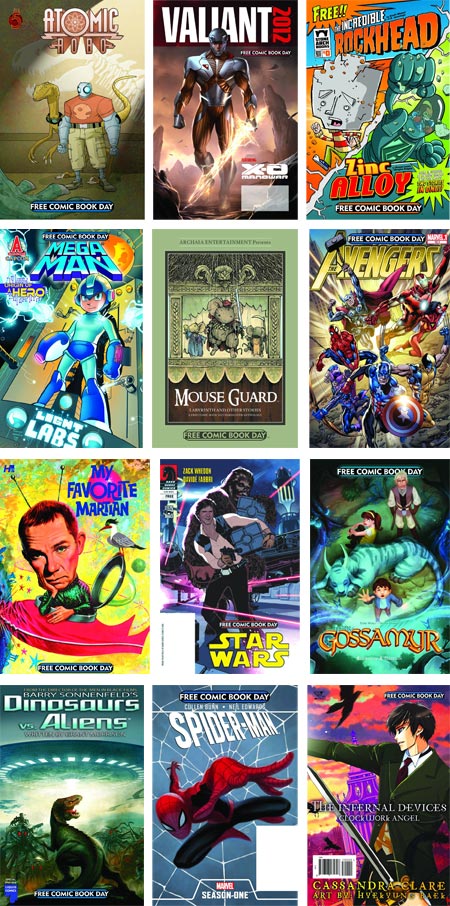 Here in the U.S., tomorrow, Saturday, May 5, is Free Comic Book Day, a yearly opportunity for those who love comics to pick up some free promotional titles prepared by publishers large and small to promote their lines.
More importantly, it’s an opportunity for those who aren’t familiar with the current state of comic books (which may be quite different than you think), to visit a comic book specialty store in an atmosphere of open house, with proprietors ready to introduce new readers to titles that they might find of interest and answer any questions they may have.
Many stores also use the occasion to hold sales, have signing events and otherwise use the day as “Comic Book Day” as much as “Free Comic Book Day.
There is an official Free Comic Book Day website, that includes a Store Locator to find a participating comics store in your area, and page describing the comics that will be given away, including PDF previews of some titles. Not all are available at all stores; check your store to see if they are featuring Gold (more common) or Gold and Silver (more extensive) titles.
For more, see some of my previous posts, below, particularly the one from 2005, in which I talk more about why you might want to check out comic books, especially if you think they are only about superheroes.
Categories:
-
Derek Penix

Artist Derek Penix came from a family in which his mother and grandfather both painted, and took it up himself after high school.He says his admiration for painters like Nicolai Fechin, John Singer Sargent and the French Impressionists has been superseded as his primary influence by his studies with contemporary painter Quang Ho.
Penix has a crisp, painterly approach with a deft play of light and shadow. I particularly enjoy his paintings of outdoor market stalls and the play of sunlight on brightly colored wooden boats.
Categories:
-
The Boundaries of Life and Death

The Boundaries of Life and Death is a very short (one minute), beautifully realized black and white animation by Saskia Kretzschmann.It is based on a quote by Edgar Allen Poe:
“The Boundaries which divide life from death are at best shadowy and vague. Who shall say where the one ends, and where the other begins?”
On Vimeo.
Categories:
-
Brad Kunkle

Gold is an extraordinarily malleable material. When hammered into very thin sheets, a kind of foil called “gold leaf”, a very small amount can cover a relatively large area, and it can be applied to surfaces for decorative effect.Gold leaf has been applied to art objects and decorative surfaces through much of recorded history. The most common application familiar to contemporary artists is in the gilding of picture frames.
New York based artist Brad Kunkle, who has a background applying metal leaf as a decorative artist when he was younger, incorporates gold and silver leaf directly into his oil paintings, utilizing the material both for its symbolic and physical and visual properties.
Kunkle uses a very controlled, almost monochromatic palette in his paintings, the subjects of which are women, either in landscapes or amid elements of nature that are often in flux or in motion and in defiance of gravity or other natural laws.
Kunkle uses his metallic elements, pushed forward by the grisaille-like palette, to emphasize these magical or metaphysical suggestions, giving his images a kind of implied magic, perhaps coming full circle to one of the characteristics that has been ascribed to precious metals, and gold in particular, throughout their historic use in art related to religion and ritual.
Kunkle’s work in currently on display in a solo show, The Women in the Fields of Gold, at the Arcadia Fine Arts gallery (Soho) in New York that runs until May 5. 2012.
Unfortunately, the Arcadia gallery’s website (though much improved over its previous versions) has navigation within a Flash file, and I can’t give you direct links. From the home page, choose: Exhibitions: Soho for a view of works in the show (while it’s current), and select the artist’s name from the main list on the home page to view his work as represented by the gallery at other times.
There is a Step by Step process series on Underpaintings.
Categories:
-
Van Gogh: Up Close

As I’ve suggested before, Vincent van Gogh’s work was much more varied and diverse than most books on the artist, which tend to take the safe path of presenting his “greatest hits” over and over, would lead you to believe.Van Gogh: Up Close, an exhibition that is toward the end of its run at the Philadelphia Museum of Art and then moves to the National Gallery of Canada in Ottawa, focuses attention on a range of his lesser known works, primarily from the later part of his career and with a theme of intimate subjects, both landscape and still life.
There are still examples of his sweeping views of fields and farms, but also the less frequently seen subjects of “sous bois” (undergrowth) paintings, which immediately became favorites of mine, and his remarkable paintings of simple grasses, in which he sees subjects where other artists might see nothing of interest. And though the famous sunflowers are represented by the Philadelphia Museum’s iconic piece of the golden topped vase, and the Metropolitan Museum of Art’s sunflower blossoms as still life, there are also still life paintings different from those we are used to seeing.
Van Gogh’s strikingly textural use of paint is evident in several pieces, brush strokes that are so three dimensional they look as though they were just laid down, a characteristic often evident in his more famous works. One of the things that struck me, however, in comparing these paintings to many of his more well known works, was his use of directional strokes.
Van Gogh, whether intentionally or as a byproduct of his efforts to express what he saw, was a master of the application of brushstrokes that move across and around forms, through skies and backgrounds and lead your eye through his paintings in a way quite unlike any other artist. These effects are frequently combined with his remarkable tendency to mix outlines and other elements of drawing into his paintings.
Even in a simple still life subject of apples, grapes and pears, in which any other artist would have painted the highlights on grapes with a simple horizontal stroke of lighter color, Van Gogh has used a vertical hatching of strokes to define them, imparting a fascinating textural quality — but not for a moment reducing their presence as grapes.
In other images his strokes point toward the focal point of the painting, leading you in like a Photoshop Zoom filter. Somehow these elements captured my attention more in these works in which he also played with focus and depth of field and frequently portrayed distant and close objects in the same scene.
The Philadelphia Museum of Art does not have much of a selection of images from the show on their website, but the National Gallery of Canada does. On this page, the National Gallery has been posting a new image from the show every week, to continue up to the opening on May 25. As of this writing they are up to 21 images. (Click on images to view larger versions.) I’ve also linked below to a few images not yet posted that I made note of and looked up elsewhere.
There is also a book from the exhibition, available from the Philadelphia Museum and the National gallery, as well as Amazon and other booksellers.
Van Gogh: Up Close is on display at the Philadelphia Museum of Art until May 6 (timed paid or member tickets required, but some are still available according to the website). It moves to the National Gallery of Canada where it will be on display from 25 May to 3 September, 2012.
Van Gogh is an artist for whom many misconceptions and popular assumptions, and the very brilliance of his fame, often obscure the actual artist. Van Gogh: Up Close, by focusing on less familiar works and more intimate ones as well, gets us a bit closer to Vincent van Gogh, the painter.
Categories:
-
Tom Bagshaw

Tom Bagshaw is an illustrator and gallery artist based in Bath, England.He works digitally in a style that often combines refined rendering with background patterns or textural elements. His compositions often feature women who are looking out of the canvas, engaging the viewer directly, often with what seems to be a challenging stare.
His work is sometimes macabre, and laced with dark humor.
The galleries on his website are divided into a showcase, two portfolios and an archive. You can find additional images, including sequences of work in progress, on his blog.
In addition, he has a presence on the Behance Network that features larger versions of his images, often supplemented with detail crops.
Bagshaw, who has also been known by the handle “Mostlywanted”, offers limited edition prints of his most popular images on his Mostlywanted Shop.
Categories:




Charley’s Picks
Bookshop.org
(Bookshop.org affilliate links; sales benefit independent bookshop owners; I get a small percentage to help support my work on Lines and Colors)

John Singer Sargent: Watercolors


Urban Sketching: Understanding Perspective


Charley’s Picks
Amazon
(Amazon.com affiliate links; sales go to a larger yacht for Jeff Bezos; but I get a small percentage to help support my work on Lines and Colors)
John Singer Sargent: Watercolors
Urban Sketching: Understanding Perspective