


Categories
- 3d CGI
- Amusements
- Animation
- Anime & Manga
- Art Materials
- Art Videos
- Blogroll
- Cartoons
- Color
- Comics
- Concept & Visual Dev.
- Creativity
- Digital Art
- Digital Painting
- Displaying Art on the Web
- Drawing
- Eye Candy for Today
- Gallery and Museum Art
- High-res Art Images
- Illustration
- Motion Graphics & Flash
- Museums
- Online Museums
- Outsider Art
- Painting
- Painting a Day
- Paleo Art
- Pastel, Conté & Chalk
- Pen & Ink
- Prints and Printmaking
- Reviews
- Sc-fi and Fantasy
- Sculpture & Dimensional
- Site Comments
- Sketching
- Storyboards
- Tools and Techniques
- Uncategorized
- Vector Art
- Videos & Podcasts
- Vision and Optics
- Watercolor and Gouache
- Webcomics
Archives
- October 2026
- September 2026
- August 2026
- July 2026
- June 2026
- May 2026
- April 2026
- March 2026
- February 2026
- January 2026
- December 2025
- November 2025
- October 2025
- September 2025
- August 2025
- July 2025
- June 2025
- May 2025
- January 2025
- December 2024
- November 2024
- October 2024
- September 2024
- August 2024
- June 2024
- April 2024
- March 2024
- February 2024
- January 2024
- December 2023
- November 2023
- October 2023
- September 2023
- August 2023
- July 2023
- May 2023
- April 2023
- March 2023
- February 2023
- January 2023
- December 2022
- November 2022
- September 2022
- August 2022
- July 2022
- June 2022
- May 2022
- April 2022
- March 2022
- February 2022
- January 2022
- December 2021
- November 2021
- October 2021
- September 2021
- August 2021
- July 2021
- June 2021
- May 2021
- April 2021
- March 2021
- February 2021
- January 2021
- December 2020
- November 2020
- October 2020
- September 2020
- August 2020
- July 2020
- June 2020
- May 2020
- April 2020
- March 2020
- February 2020
- January 2020
- December 2019
- November 2019
- October 2019
- September 2019
- August 2019
- July 2019
- June 2019
- May 2019
- April 2019
- March 2019
- February 2019
- January 2019
- December 2018
- November 2018
- October 2018
- September 2018
- August 2018
- July 2018
- June 2018
- May 2018
- April 2018
- March 2018
- February 2018
- January 2018
- December 2017
- November 2017
- October 2017
- September 2017
- August 2017
- July 2017
- June 2017
- May 2017
- April 2017
- March 2017
- February 2017
- January 2017
- December 2016
- November 2016
- October 2016
- September 2016
- August 2016
- July 2016
- June 2016
- May 2016
- April 2016
- March 2016
- February 2016
- January 2016
- December 2015
- November 2015
- October 2015
- September 2015
- August 2015
- July 2015
- June 2015
- May 2015
- April 2015
- March 2015
- February 2015
- January 2015
- December 2014
- November 2014
- October 2014
- September 2014
- August 2014
- July 2014
- June 2014
- May 2014
- April 2014
- March 2014
- February 2014
- January 2014
- December 2013
- November 2013
- October 2013
- September 2013
- August 2013
- July 2013
- June 2013
- May 2013
- April 2013
- March 2013
- February 2013
- January 2013
- December 2012
- November 2012
- October 2012
- September 2012
- August 2012
- July 2012
- June 2012
- May 2012
- April 2012
- March 2012
- February 2012
- January 2012
- December 2011
- November 2011
- October 2011
- September 2011
- August 2011
- July 2011
- June 2011
- May 2011
- April 2011
- March 2011
- February 2011
- January 2011
- December 2010
- November 2010
- October 2010
- September 2010
- August 2010
- July 2010
- June 2010
- May 2010
- April 2010
- March 2010
- February 2010
- January 2010
- December 2009
- November 2009
- October 2009
- September 2009
- August 2009
- July 2009
- June 2009
- May 2009
- April 2009
- March 2009
- February 2009
- January 2009
- December 2008
- November 2008
- October 2008
- September 2008
- August 2008
- July 2008
- June 2008
- May 2008
- April 2008
- March 2008
- February 2008
- January 2008
- December 2007
- November 2007
- October 2007
- September 2007
- August 2007
- July 2007
- June 2007
- May 2007
- April 2007
- March 2007
- February 2007
- January 2007
- December 2006
- November 2006
- October 2006
- September 2006
- August 2006
- July 2006
- June 2006
- May 2006
- April 2006
- March 2006
- February 2006
- January 2006
- December 2005
- November 2005
- October 2005
- September 2005
- August 2005
Relevant Blogs
Art, Painting & Sketch
- Gurney Journey
- Underpaintings
- Art and Influence
- Painting Perceptions
- Oil Painters of America
- Vasari Paint POV
- Flying Fox
- Urban Sketchers
- Bento (Smithsonian)
- Art Inconnu
- The Hidden Place
- Still Life
- Making a Mark
- The Art of the Landscape
- Exploring Color & Creativity
- Art Contrarian
- Artist A Day
- beinArt Surreal Art Collective
- Eye Level
- David Dunlop
- p.i.g.m.e.n.t.i.u.m
- CultureGrrl
- Joaquín Sorolla blog
- Artists in Pastel
“Painting a Day”
- A Painting a Day (Keiser)
- On Painting (Keiser)
- Julian Merrow-Smith
- Karen Jurick
- Jeffrey Hayes
- Carol Marine
- Abbey Ryan
- Daily Paintworks
Other Painting Blogs
- Virtual Gouache Land
- Neil Hollingsworth
- Marc Hanson
- Kevin Menck
- Marc Dalessio
- Larry Seiler
- Stapleton Kearns
- Colin Page
- Roos Schuring
- Hans Versfelt
- Titus Meeuws
- Régis Pettinari
- René Plein Air
- Belinda Del Pesco
- Robin Weiss
- Nathan Fowkes (Land Sketch)
- William Wray
- Frank Serrano
- Stephen Magsig
- Michael Chesley Johnson
- Twice a Week
- Sarah Wimperis
- Rob Adams
- Michael Cole Manley
- The Dirty Palette Club
- Mike Manley’s Draw!
Gallery Art & Illustration mix
Illustration
- Howard Pyle
- 100 Years of Illustration
- BibliOdyssey
- Illustration Art
- Today’s Inspiration
- Illustration Mundo
- Little Chimp Society
- Danny Gregory
- R D (John Martz
- Illustration Friday blog
- Monster Brains
- Illustrators & Illustrations (RU)
- Elwood H. Smith
- DaniDraws.com
- Designers Who Blog
- iSpot Blog
Sci-Fi & Fantasy
Illustration & Comics
Comics & Cartoons
- Comics Beat
- Robot 6
- Newsarama Blog
- Comic Vine
- Comics Alliance
- Forbidden Planet Int.
- Paolo Rivera
- Bolt City
- Flight
- Scott McCloud
- The Comics Journal
- Comixpedia
- Funnybook Babylon
- James Baker
- Middleton’s Sketchbook
- Boneville
- The Hotel Fred
- Paul Rivoche
- Daily Cartoonist
- Mad About Cartoons (William Wray)
- Digital Strips
Illustration & Concept
Animation & Concept
- Cartoon Brew
- Animation Blog
- Cold Hard Flash
- Concept Art World
- The CAB
- FY Concept Art
- Concept Ships
- Concept Robots
- John Nevarez
- Armand Serrano
- Marcos Mateu-Mestre
- all kinds of stuff (Kricfalusi)
- Yacin the faun (Man Arenas)
- Kelsey Mann
- Cre8tivemarks Blog
- Ice-Cream Monster Toon Cafe
- AAU Character & Creature Design
- AAU Animation Notes
- Articles and Texticles
Paleo & Scientific
Tools & Techniques
Other
Lists of Art Blogs
Art Image Resource Links
Historic Art Images
- Wikimedia Commons: Paintings
- Wikimedia Commons: Drawings
- The Athenaeum
- WikiArt (WikiPaintings)
- Google Art Project: Artists
- Google Art Project: Collections (Museums)
- ArtCyclopedia
- Web Gallery of Art
- Art Renewal Center
- Web Gallery of Impressionism
Auction Consolidation sites
Auction sites
- Sotheby’s
- Bonham’s
- Christies
- Heritage Auctions: Fine Art
- Heritage Auctions: Illustration
- Freeman’s Auctions
- Bukowskis
- Shannon’s
Image Search
Reverse Image Search (search by image)
- Tin Eye
- RevImg
- Google Image Search (camera icon)
- Bing Image Search (camera icon)
Promoting some friends and some clients of my website design business
- Twin Willows T’ai Chi studio in Wilmington DE. Taiji classes with Bryan Davis.
- Ray Hayward, Inspired Teacher of T’ai Chi ( Taiji ) in Minneapolis, Founder of Mindful Motion Tai Chi Academy
- OldHead Tattoo studio and Art Gallery in Wilmington DE. Tattoos and paintings by Bruce Gulick
- Sharon Domenico Art, pet portrait oil paintings
- Platinum Paperhanging, wallpaper hanging, Main Line and Philadelphia, PA
- Lisa Stone Design, interior designer, Main Line and Philadelphia, PA
- Studio12KPT, original art, prints, calendars and other custom printed items by Van Sickle & Rolleri
-
Art Inconnu
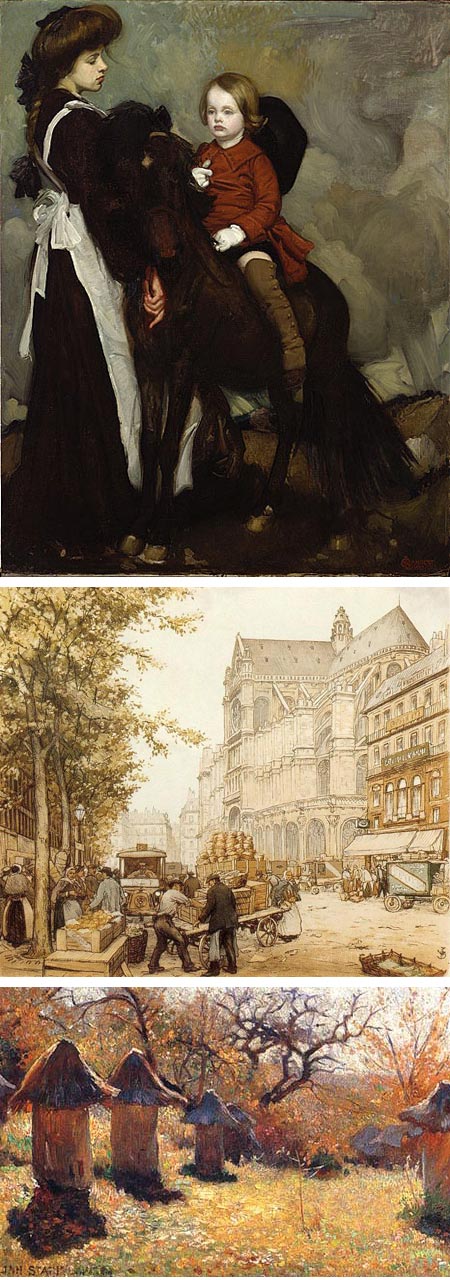
Art Inconnu is a terrific blog that has been going since January of 2008, but one that I have been unaware of until recently.“Inconnu” is a word meaning a stranger or unknown person. Maintained by an anonymous “Curator”, Art Inconnu is devoted to “little-known and under-appreciated art”, sometimes obscure, sometimes just artists who seldom receive the spotlight.
The blog focuses primarily on 19th and 20th Century European paintings, but occasionally ventures further back. There is a nice mix of styles. Though the Curator’s tastes lean further into 20th Century modernism than mine, there were many artists of interest as I thumbed through a few pages.
There are occasionally articles accompanying the posts, though many are simply a collection of images by the artist, but most include titles of the individual works and dates of the artist’s life.
There are also collections available from the right sidebar, in which the Curator has assembled works by several lesser-known artists on a particular theme.
(Images above, with links to the Art Inconnu posts: George Lambert, Tavik Frantisek Simon and Stanislaw Kamocki)
Categories:
-
Tyler Jacobson

California illustrator Tyler Jacobson recently graduated from Academy of Art University in San Francisco, and has embarked on a career as an illustrator, with an eye to working as a concept artist for the film and gaming industries.His clients include Wizards of the Coast, Dungeons and Dragons, NBC, Texas Monthly and Simon and Schuster.
Jacobson works in both traditional and digital media, sometimes mixing the two where appropriate for the desired result. There is a brief description of his process, featuring a step-through of the image above, top, on the Richard Solomon site.
He recently was awarded the Jack Gaughan Award for Best Emerging Artist, and some of his work has been selected for the upcoming Spectrum 17.
His website portfolio is divided into three sections for illustration, sketches and fine art. Both illustration and sketches feature work from a Moby Dick project, though I don’t know if it’s commissioned or personal, and the fine art section includes both portraits (above, lower right) and figurative work.
Both his illustrations and gallery paintings show his attention to value and chiaroscuro in creating drama, along with the use of carefully controlled color ranges punctuated with more intense areas of high chroma color.
On Jacobson’s blog you will often find many of the images in his portfolios, but often reproduced a bit larger and with commentary about their creation.
Categories:
-
Ted Polomis

Massachusetts still life painter Ted Polomis appears to craft the arrangements of objects for his compositions with as much care and skill as he paints them.His subjects include vintage metal and wooden toys, the time-worn surfaces of which he renders with intimate fidelity, and “classic objects”, vases, glassware, fruit and vegetables, painted with exacting finesse.
One is tempted to label Polomis as a “realist”, but such labels tend to shut our eyes rather than open them. In his apparently faithful rendering there is an affection, an emotional dimension to his appreciation of the objects he paints.
To me there is an emphasis on the “still” in “still life” in Polomis’ work, with a sense of stopped time. He extends an invitation to engage the objects in a contemplative way, lingering on the simultaneously soft and sharply defined edge of a fruit, looking more deeply into the reflections on a glassy vase, or seeking out the negative shapes carved out of the background by the objects in his arrangements.
The color harmonies of his compositions are also notable, and obviously the result of careful thought. Serene blues are set off with bright oranges; golds, greens and grays are laid gently against one another; and white objects, notoriously difficult to handle, are given a muted sheen of color, a range of subtitles within the surface tones.
Categories:
-
Dominick Domingo
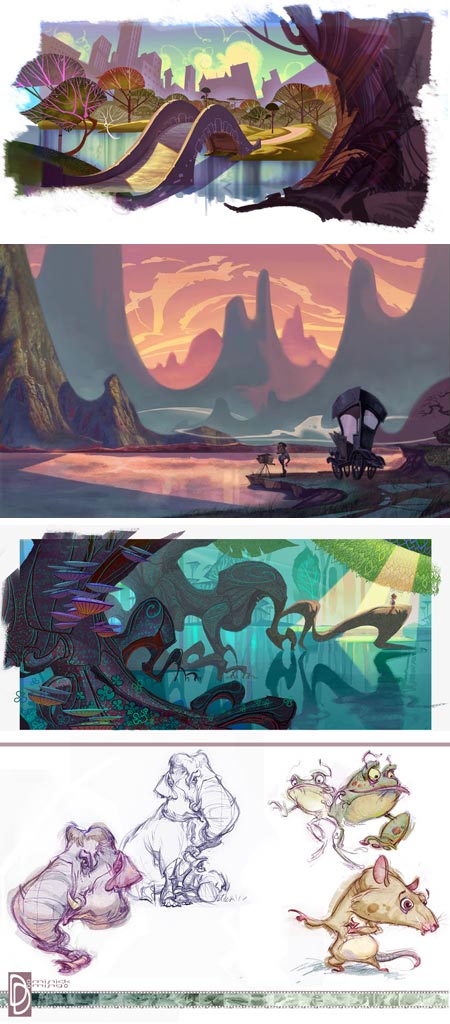
Before graduating from the Art Center College of Design, Dominick Domingo interned at Disney Feature Animation, training in numerous roles in the animation process. After graduating, he worked with them as a concept artist and background artist, in both Los Angeles and Paris.His credits with Disney include Lion King, Pocahontas, The Hunchback Of Notre Dame, Tarzan, and Fantasia 2000. He also maintained a roster of independent clients, including ORION Pictures, Parker Brothers, Milton Bradley, the Pacific Design Center, Comedy Central, Wizards of the Coast and several book publishers.
Domingo helped to found the animation program at Laguna Art Institute, was an instructor at L.A. Academy of Figurative Art and is currently an instructor at Art Center.
In 2001 he attended the New York Film Academy and shifted his attention to directing live action film, and has directed several independent short films. He currently divides his time between illustration, concept art and directing.
Domingo’s lively, wonderfully stylized concept art has a feeling of enthusiasm and energy. The energetic nature of the drawing is sometimes restrained with carefully controlled color palettes, or enlivened by the dramatically theatrical use of light and shadow and judicious application of texture.
He uses a blog page as a portfolio, and you can view a variety of images from his professional projects including character design, as well as personal work, figure drawing, portraits and landscape paintings.
[VIa John Nevarez]
Categories:
-
Alchemeyez: Visionary Art Conference
 Visionary art might be loosely described as an attempt to express the inexpressible, to make manifest a visual statement of an inner mystical or visionary experience that is almost universally categorized as one that cannot be directly described in conventional terms.
Still the desire of artists to create some form of expression in response to such experiences is a strong one, and has produced some fascinating visual art, often astonishingly intricate, intensely colorful and suggestive of transcendent states of consciousness.
Whether that appeals to you or not is a matter of personal preference, of course, but the art itself is notable as a specific and unique genre; with many visual and compositional characteristics descended from tantric art, mandalas, thangkas and other sources of imagery from India, China, Japan and Indonesia.
Alchemeyez is a 3-day conference on the Big Island of Hawaii on June 10-13, 2010. Attendees include an extensive list of widely recognized names in visionary art circles, including several I’ve profiled previously on Lines and Colors: Robert Venosa, Martina Hoffmann, Alex Grey and Android Jones.
Though there isn’t a great deal of art featured directly on the conference web site, the page that lists the participating artists features a representative piece by each artist, a short bio and, when available, a link to the artist’s web site, where you can find additional examples of their work.
(Images at left: Robert Venosa, Martina Hoffmann, Alex Grey, Luke Brown)
Categories:
-
Calvin Liang

California based plein air painter Calvin Liang was born in Canton, China, studied at the Shcnghai Academy of Fine Arts and went to work designing and creating sets for the Canton Opera Institute.Liang moved to the U.S. and shifted his attention to animation, working for Walt Disney Studio and Nickelodeon. He became interested in painting the California countryside and gradually transitioned into landscape painting.
I haven’t found a dedicated site for Liang, but he is represented with a bio and online gallery of both sold and available works on the Greenhouse Gallery of Fine Art.
Whether painting the California hills and missions, traveling in the American West or in Europe in Florence and Venice, Liang brings his scenes to life with a crisp, economical notation, defining structures with geometric shapes, lost and found edges and muted earth tone palettes.
Many of his brush strokes can bee seen as discreet chunks of color with a physical presence, laid down with apparent abandon, but blending into a unified composition.
Categories:



Charley’s Picks
Bookshop.org
(Bookshop.org affilliate links; sales benefit independent bookshop owners; I get a small percentage to help support my work on Lines and Colors)
Carlson’s Guide to Landscape Painting
Drawing and Sketching in Pencil

Bridgman’s Complete Guide to Drawing from Life
Charley’s Picks
Amazon
(Amazon.com affiliate links; sales go to a larger yacht for Jeff Bezos; but I get a small percentage to help support my work on Lines and Colors)
Carlson’s Guide to Landscape Painting
Drawing and Sketching in Pencil
Bridgman’s Complete Guide to Drawing from Life