


Categories
- 3d CGI
- Amusements
- Animation
- Anime & Manga
- Art Materials
- Art Videos
- Blogroll
- Cartoons
- Color
- Comics
- Concept & Visual Dev.
- Creativity
- Digital Art
- Digital Painting
- Displaying Art on the Web
- Drawing
- Eye Candy for Today
- Gallery and Museum Art
- High-res Art Images
- Illustration
- Motion Graphics & Flash
- Museums
- Online Museums
- Outsider Art
- Painting
- Painting a Day
- Paleo Art
- Pastel, Conté & Chalk
- Pen & Ink
- Prints and Printmaking
- Reviews
- Sc-fi and Fantasy
- Sculpture & Dimensional
- Site Comments
- Sketching
- Storyboards
- Tools and Techniques
- Uncategorized
- Vector Art
- Videos & Podcasts
- Vision and Optics
- Watercolor and Gouache
- Webcomics
Archives
- October 2026
- September 2026
- August 2026
- July 2026
- June 2026
- May 2026
- April 2026
- March 2026
- February 2026
- January 2026
- December 2025
- November 2025
- October 2025
- September 2025
- August 2025
- July 2025
- June 2025
- May 2025
- January 2025
- December 2024
- November 2024
- October 2024
- September 2024
- August 2024
- June 2024
- April 2024
- March 2024
- February 2024
- January 2024
- December 2023
- November 2023
- October 2023
- September 2023
- August 2023
- July 2023
- May 2023
- April 2023
- March 2023
- February 2023
- January 2023
- December 2022
- November 2022
- September 2022
- August 2022
- July 2022
- June 2022
- May 2022
- April 2022
- March 2022
- February 2022
- January 2022
- December 2021
- November 2021
- October 2021
- September 2021
- August 2021
- July 2021
- June 2021
- May 2021
- April 2021
- March 2021
- February 2021
- January 2021
- December 2020
- November 2020
- October 2020
- September 2020
- August 2020
- July 2020
- June 2020
- May 2020
- April 2020
- March 2020
- February 2020
- January 2020
- December 2019
- November 2019
- October 2019
- September 2019
- August 2019
- July 2019
- June 2019
- May 2019
- April 2019
- March 2019
- February 2019
- January 2019
- December 2018
- November 2018
- October 2018
- September 2018
- August 2018
- July 2018
- June 2018
- May 2018
- April 2018
- March 2018
- February 2018
- January 2018
- December 2017
- November 2017
- October 2017
- September 2017
- August 2017
- July 2017
- June 2017
- May 2017
- April 2017
- March 2017
- February 2017
- January 2017
- December 2016
- November 2016
- October 2016
- September 2016
- August 2016
- July 2016
- June 2016
- May 2016
- April 2016
- March 2016
- February 2016
- January 2016
- December 2015
- November 2015
- October 2015
- September 2015
- August 2015
- July 2015
- June 2015
- May 2015
- April 2015
- March 2015
- February 2015
- January 2015
- December 2014
- November 2014
- October 2014
- September 2014
- August 2014
- July 2014
- June 2014
- May 2014
- April 2014
- March 2014
- February 2014
- January 2014
- December 2013
- November 2013
- October 2013
- September 2013
- August 2013
- July 2013
- June 2013
- May 2013
- April 2013
- March 2013
- February 2013
- January 2013
- December 2012
- November 2012
- October 2012
- September 2012
- August 2012
- July 2012
- June 2012
- May 2012
- April 2012
- March 2012
- February 2012
- January 2012
- December 2011
- November 2011
- October 2011
- September 2011
- August 2011
- July 2011
- June 2011
- May 2011
- April 2011
- March 2011
- February 2011
- January 2011
- December 2010
- November 2010
- October 2010
- September 2010
- August 2010
- July 2010
- June 2010
- May 2010
- April 2010
- March 2010
- February 2010
- January 2010
- December 2009
- November 2009
- October 2009
- September 2009
- August 2009
- July 2009
- June 2009
- May 2009
- April 2009
- March 2009
- February 2009
- January 2009
- December 2008
- November 2008
- October 2008
- September 2008
- August 2008
- July 2008
- June 2008
- May 2008
- April 2008
- March 2008
- February 2008
- January 2008
- December 2007
- November 2007
- October 2007
- September 2007
- August 2007
- July 2007
- June 2007
- May 2007
- April 2007
- March 2007
- February 2007
- January 2007
- December 2006
- November 2006
- October 2006
- September 2006
- August 2006
- July 2006
- June 2006
- May 2006
- April 2006
- March 2006
- February 2006
- January 2006
- December 2005
- November 2005
- October 2005
- September 2005
- August 2005
Relevant Blogs
Art, Painting & Sketch
- Gurney Journey
- Underpaintings
- Art and Influence
- Painting Perceptions
- Oil Painters of America
- Vasari Paint POV
- Flying Fox
- Urban Sketchers
- Bento (Smithsonian)
- Art Inconnu
- The Hidden Place
- Still Life
- Making a Mark
- The Art of the Landscape
- Exploring Color & Creativity
- Art Contrarian
- Artist A Day
- beinArt Surreal Art Collective
- Eye Level
- David Dunlop
- p.i.g.m.e.n.t.i.u.m
- CultureGrrl
- Joaquín Sorolla blog
- Artists in Pastel
“Painting a Day”
- A Painting a Day (Keiser)
- On Painting (Keiser)
- Julian Merrow-Smith
- Karen Jurick
- Jeffrey Hayes
- Carol Marine
- Abbey Ryan
- Daily Paintworks
Other Painting Blogs
- Virtual Gouache Land
- Neil Hollingsworth
- Marc Hanson
- Kevin Menck
- Marc Dalessio
- Larry Seiler
- Stapleton Kearns
- Colin Page
- Roos Schuring
- Hans Versfelt
- Titus Meeuws
- Régis Pettinari
- René Plein Air
- Belinda Del Pesco
- Robin Weiss
- Nathan Fowkes (Land Sketch)
- William Wray
- Frank Serrano
- Stephen Magsig
- Michael Chesley Johnson
- Twice a Week
- Sarah Wimperis
- Rob Adams
- Michael Cole Manley
- The Dirty Palette Club
- Mike Manley’s Draw!
Gallery Art & Illustration mix
Illustration
- Howard Pyle
- 100 Years of Illustration
- BibliOdyssey
- Illustration Art
- Today’s Inspiration
- Illustration Mundo
- Little Chimp Society
- Danny Gregory
- R D (John Martz
- Illustration Friday blog
- Monster Brains
- Illustrators & Illustrations (RU)
- Elwood H. Smith
- DaniDraws.com
- Designers Who Blog
- iSpot Blog
Sci-Fi & Fantasy
Illustration & Comics
Comics & Cartoons
- Comics Beat
- Robot 6
- Newsarama Blog
- Comic Vine
- Comics Alliance
- Forbidden Planet Int.
- Paolo Rivera
- Bolt City
- Flight
- Scott McCloud
- The Comics Journal
- Comixpedia
- Funnybook Babylon
- James Baker
- Middleton’s Sketchbook
- Boneville
- The Hotel Fred
- Paul Rivoche
- Daily Cartoonist
- Mad About Cartoons (William Wray)
- Digital Strips
Illustration & Concept
Animation & Concept
- Cartoon Brew
- Animation Blog
- Cold Hard Flash
- Concept Art World
- The CAB
- FY Concept Art
- Concept Ships
- Concept Robots
- John Nevarez
- Armand Serrano
- Marcos Mateu-Mestre
- all kinds of stuff (Kricfalusi)
- Yacin the faun (Man Arenas)
- Kelsey Mann
- Cre8tivemarks Blog
- Ice-Cream Monster Toon Cafe
- AAU Character & Creature Design
- AAU Animation Notes
- Articles and Texticles
Paleo & Scientific
Tools & Techniques
Other
Lists of Art Blogs
Art Image Resource Links
Historic Art Images
- Wikimedia Commons: Paintings
- Wikimedia Commons: Drawings
- The Athenaeum
- WikiArt (WikiPaintings)
- Google Art Project: Artists
- Google Art Project: Collections (Museums)
- ArtCyclopedia
- Web Gallery of Art
- Art Renewal Center
- Web Gallery of Impressionism
Auction Consolidation sites
Auction sites
- Sotheby’s
- Bonham’s
- Christies
- Heritage Auctions: Fine Art
- Heritage Auctions: Illustration
- Freeman’s Auctions
- Bukowskis
- Shannon’s
Image Search
Reverse Image Search (search by image)
- Tin Eye
- RevImg
- Google Image Search (camera icon)
- Bing Image Search (camera icon)
Promoting some friends and some clients of my website design business
- Twin Willows T’ai Chi studio in Wilmington DE. Taiji classes with Bryan Davis.
- Ray Hayward, Inspired Teacher of T’ai Chi ( Taiji ) in Minneapolis, Founder of Mindful Motion Tai Chi Academy
- OldHead Tattoo studio and Art Gallery in Wilmington DE. Tattoos and paintings by Bruce Gulick
- Sharon Domenico Art, pet portrait oil paintings
- Platinum Paperhanging, wallpaper hanging, Main Line and Philadelphia, PA
- Lisa Stone Design, interior designer, Main Line and Philadelphia, PA
- Studio12KPT, original art, prints, calendars and other custom printed items by Van Sickle & Rolleri
-
Sundays with Walt and Skeezix (Gasoline Alley by Frank King)

In 2005 Sunday Press Books published a remarkable collection of Little Nemo in Slumberland, Winsor McCay’s astonishing early 20th Century comic strip, printed at the size of the original full page newspaper comics. (See my post on both McCay and the book.)Thanks to the risky but brilliant choice of format, So Many Splendid Sundays is a revelation. It is the comics equivalent of the cleaning of the Sistine Chapel, a great masterwork revealed in the way it was meant to be seen.
How do you follow up an act like that?
Well, you could start with another masterful comics creation, particularly one that has been under-appreciated, even by those of us who treasure the great classic newspaper comics, and give it the same eye-opening full-size newspaper page treatment.
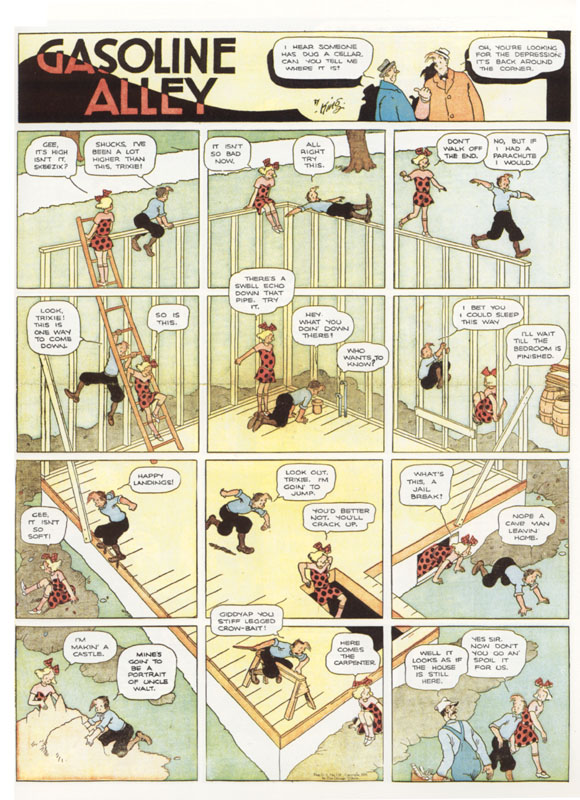
Sunday Press Books editor/publisher Peter Maresca has done just that with the release of Sundays with Walt and Skeezix, featuring the innovative and beautiful work of Frank King on his landmark strip Gasoline Alley.
Gasoline Alley was a deceptively quiet slice of life comic started by King in 1918. Like George Herriman’s Krazy Kat, Gasoline Alley was a secondary feature that rose to be the artist’s main opus. Originally a single black and white panel in the Chicago Tribune’s catch-all Sunday page called “The Rectangle”, the original premise was simply characters talking about automobiles, which were something of a newfangled contraption at the time and the object of much tinkering and discussion. The panel and its characters gained popularity and the title went to a full strip with a full Sunday Page.
Over time, instead of featuring the normal comic strip conventions of gags or adventures, Gasoline Alley developed into a series of gentle, subtle slices of american life. Several years into the successful run of the strip, the Tribune asked King to broaden the appeal to women, so King brought a family to his main character Walt Wallet, a confirmed bachelor at the time, by having a baby left on his doorstep. Little Skeezix (according to Wikipedia, slang for motherless calf), called his adopted father “Uncle Walt” and became the second star character.
Skeezix also started one of the more remarkable attributes of Gasoline Alley. Most authors of continuing stories, in comics or other mediums, are reluctant to let their characters change and age, not wanting to lose a good thing, so they suspend them in a kind of no-time, in which events happen, but the characters remain roughly the same age. In Gasoline Alley, Skeezix and the other characters began to age, in more or less real time, growing older, going through the phases of their lives like real people and passing the torch new young members of the family. Remarkable.
Don Markstein in his Toonpedia article on Gasoline Alley, contends that the strip was not only the first soap opera style comic, but the first soap opera style continuing story of any kind, predating the actual “soap operas” by many years.
The strip is still going today, carried on by “descendents” in a way. When he retired, King handed the Sunday strip to Bill Perry, who he had found in the Tribune’s mail room and made his assistant, and the daily to Dick Moores, who had been Chester Gould’s assistant on Dick Tracy and put his own unique stamp on the strip, in some ways reinventing it and making it his own. Moores took over the Sunday too when Perry retired and he, in turn, passed the strip on to his assistant Jim Scancarelli, who writes and draws it today.
Though each has their own approach, they, and many other cartoonists and comics artists, were influenced by King’s clear, spare but richly imaginative drawing style.
King’s drawings, in fact, were influential on the European comics artists like Hergé who would refine the ligne claire style, the influence of which would come full circle to contemporary American comics artists like Chris Ware, who contributed to the Drawn & Quarterly collections of Gasoline Alley a few years ago and has done the book design on the new Sundays with Walt and Skeezix volume.
King was obviously influenced and impressed by McCay’s sublime fantasy in Little Nemo (and who wouldn’t be), and his stories of family life were peppered with dream sequences and flights of fancy in which he let his pen and imagination roam freely.
The Sunday Press book, though I haven’t yet had the pleasure of seeing it in person, focuses in particular on some of King’s more imaginative and innovative strips and promises to be an absolute treat.
At $95 it may seem pricey for a comics collection, even a great one, but keep in mind that this is the wide screen, high definition, Imax version of comic strips. Until you see one of these volumes, you don’t realize what a difference size makes.
The book can be pre-ordered now and ships in August. I don’t know if the publisher is better prepared to meet demand this time, but the first printing of the Little Nemo book sold out quickly and the second printing wasn’t available for months.
Ironically, the sample strips displayed on the Sunday Press Books site are too small to read and get a real feeling for the beauty of the art. Here’s an (unfortunately watermarked) image of an original Sunday from Library of Congress exhibit of comic strips, another image of a printed Sunday page from the FamilyLosAngeles blog, one from MarkStaffBrandl.com; and you may find more through an image search.
Here’s the page shown above posted larger, and another, on the site of the Tate Museum from their online magazine’s excellent essay on The Real Comic Book Heroes.
Categories:
-
DC Comics Announces Zudacomics.com

In the 12 years or so that I’ve been drawing webcomics, I’ve continued to be stupefied by the monumental cluelessness of the major comics companies (with the possible exception of Dark Horse) in regard to online comics.It took Marvel and DC four or five years to even acknowledge their existence, they never seemed to get that this was a whole new branch of the comics medium, if not a new medium in itself; and, since they couldn’t figure out how to make money off of web comics directly, merely used their half-hearted and unimaginative forays into the field as shills for their regular print stuff.
When I heard that DC Comics was starting a new “web comics imprint” called Zudacomics.com, I assumed that this was more of the same. It turns out though, that it’s a bit different and, thankfully, at last, a bit less clueless.
Modeled on the notion of a webcomics portal, an idea that numerous independent sites have been exploring for eight or nine years, Zudacomics.com is touted as a home to multiple online comics that will be culled from work submitted, and voted on, by the site’s visitors.
The key and clueful difference here is that the chosen creators will then actually be paid, receiving commissions for a year’s worth of work (though what that actually means isn’t stated), and have their creations published in print as well.
Another hopeful sign of cluefulness is the format. DC is asking that the submissions be in 4:3 aspect ratio, not quite modern computer screen dimensions, but close enough, and something that the “big two”, and even a large number of current webcomics artists, haven’t quite gotten, instead forcing readers to scroll through vertical print-comics format on the horizontal screen.
The real sign of cluefulness, however, is their statement that the content will remain creator-owned; but before we get too warm and fuzzy, read Todd Allen’s thoughtful analysis on Comic Book Resources. You can also read the New York Times’ more rosy announcement.
DC is evidently throwing some money at the project, hiring IBM to build a dynamic, back-end driven site, though how they intend to make money on the venture is still unclear.
The Zudacomics.com “teaser site” doesn’t include much detail yet, just the press release, a brief overview of “the deal“, some logos and a “stay notified” sign-up. They will be rolling out information over time, with the scheduled launch for the content site slated for October.
[Link courtesy of Bob Hires]
Categories:
-
Etch-A-Sketch at 47

Short of crayons, maybe the Etch-A-Sketch, which turns 47 this week, has earned it’s tagline of “World’s favorite drawing toy”.We’ve all done it, right? Artists and non-artists alike, twirling the little plastic knobs, trying to make diagonals and curves, which was a little like patting your head, rubbing your stomach and chewing gum at the same time, trying not to backtrack, striving to make something cool out of that single continuous line, and, finally, resolving ourselves to drawing things like buildings and robots that looked good in straight lines.
Of course, you could always turn it upside-down, shake the mysterious gray stuff (which turns out to be powdered aluminum), to “reboot” your Etch-A-Sketch, erasing all signs of failure, and have at it again.
Well, some of us persevered, learned the curves, and mastered the thing. A striking case in point is George Vlosich, etch-A-Sketch artist extraordinaire, who demonstrates on his site that he can do a lot more than draw diagonals and curves, creating detailed portrait drawings with complex compositions and rendered tones.
Lest we doubt that these drawings were, in fact, created with the aforementioned knob-twirling device, Vlosich has a demo video on YouTube in which you can see a time-lapse movie of him in action.
Ohio Art, the company to whom inventor Arthur Granjean sold the idea for the Etch-A-Sketch after being turned down by several of the major toy companies, doesn’t seem to be making much of the anniversary, but there is an article on Wired with a gallery of Etch-A sketches by Vlosich and others (including a computer adapter – “machine draws with machine, film at 11”).
You can also look at the World’s Largest at SIGGRAPH 2006 or try your hand a a virtual Etch-A-Sketch,like this one from BabyGrand.com or Etchy.org (note that these allow you to use the keyboard). Of course the Etch-A-Sketch has a presence in the Blog-O-Sphere, at blogs like The Etch-A-Sketchist, which has a list of other links.
[Link via Wired]
Categories:
-
The Venice Chronicles (Enrico Casarosa)
 I’ve mentioned Enrico Casarosa before. A multi-facetied artist who does storyboards for Pixar, but is also a character designer, comics artist, designer, illustrator, blogger and dedicated sketcher. Casarosa is the instigator of the Sketchcrawl drawing events.
Last summer Casarosa took a trip to Veince, that most magical of Italian cities, and instead of just making travel sketches as most artists might, decided to chronicle his trip in the form of a comics journal.
As always, available time became a factor and, while he couldn’t document his entire trip during his stay, he decided to continue telling the story after the fact, extending his narrative into the next winter and beyond. The result is a wonderful stream-of-consciousness style story, not only of his stay in Venice and his visit to his childhood home in Genova, but of his attempt to chronicle the story in comics form, artistic blocks and all.
His story wanders from cut-away views of a Venitian apartment to similar views of his parent’s home, to the streets of both cities and the canals of one, to his ruminations on Hugo Pratt’s famous comics series, Corto Maltese, which takes place in Venice.
The artwork varies from quickly suggested cartoon-like characters to nicely drawn images of scenes he encountered in Venice and Genova, to renditions of the masterworks he saw in the Gallery Academia.
From the introductory page, click to launch the story in a pop-up, which you can then click through in sequence until you get to the limit of that section’s thumbnails, at which point you will no longer have a forward arrow available. You must then close the pop-up and click to the next page of thumbnails to continue.
[Link via Bolt City]
Categories:
-
Tristan Schane

Tristan Schane began his art career doing comic book illustration for companies like Marvel, DC, First Comics and Continuity Comics. He began to do more painted covers and moved into more general illustration, producing work in watercolor, gouache, acrylic and oil for covers, posters, promotional art and merchandise.He eventually moved into doing paintings specifically for gallery display and now concentrates on his gallery paintings and has also been working in life-size sculpture, working in oil clay and casting from rubber molds in materials like gypsum cement and plastic resins.
Schane has a penchant for portraying the grotesque and bizarre in his sculpture, and in his painting works with subjects that have a connection to his work as an illustrator and concept artist, but carry them forward with an eye to classical painting tradition.
You can see influences of Dali, as well as science fiction and fantasy illustration and movie concept art stirred together into a rich stew of phantasmagoric imagery, painted in oil in compositions that are often, interestingly, in a square format. Square compositions are difficult to handle and are often the result of the demands of particular illustration tasks, but Schane takes them on in his gallery art and seems to revel in the challenge.
His online galleries include painting, drawings, sculpture, concept art and illustrations.
Categories:
-
Basil Wolverton
 What has skin like the cratered and mountainous surface of an alien planet, teeth that look like diseased barnacles, popping bloodshot eyeballs that would have made Big Daddy Roth grimace in envy and, of course, carefully combed hair and a pearl necklace?
Why, it’s one of Basil Wolverton’s charming beauties, of course!
Wolverton was a cartoonist active in the middle part of the 20th Century. He started doing work for newspaper comics and then in comic books. In the mid-40’s, Wolverton created Powerhouse Pepper, a little guy who could out-muscle bullies and strongmen twice his size. The strip ran in comics for 10 years.
In 1946 he won a contest for the best image of “Lena the Hyena”, a character spoken of, but never seen, in Al Capp’s Lil Abner newspaper comic. Lil Abner was so popular at the time that the contest was judged by a celebrity panel composed of Boris Karloff, Frank Sinatra and Salvador Dali, and Wolverton’s winning entry was featured on the cover of Life Magazine.
He eventually developed a specialty for the portrayal of perfect ugliness, a celebration of the grotesque and counter-pretty that has never been matched. He found a likely outlet for these talents in the E.C. horror comics of the 1950’s and on the covers of Mad comics. In the early 50’s, Mad was a comic book rather than a magazine, and was a bastion of outrageous, against-the-grain humor (and had not yet devolved into the faded remnant of its former glory that you see on the shelves today). In the 1970’s he continued the tradition for Plop!, a short lived, anemic version of Mad comics from DC.
Wolverton retired from comics and devoted most of his remaining years to illustrating The Bible Story, for which he provided hundreds of illustrations, some of which are just bizarre, particularly in his interpretation of The End. There is a selection of those drawings here, originally in black and white, but colored by his son Monte Wolverton.
There are a few books available with Wolverton’s work. Some are out of print but should be available with a little digging.
Wolverton’s exaggerated weirdness was an inspiration for the original 1950’s Mad comics artists (See my posts on Wally Wood, Will Elder and Jack Davis), the early 60’s Kustom Kar Kulture artists like Ed Roth, the mid 60’s Undergound cartoonists like Robert Crumb, S. Clay Wilson and Robert Williams, the lowbrow/”Pop Surrealism” artists of today and numerous cartoonists in between.
Categories:



Charley’s Picks
Bookshop.org
(Bookshop.org affilliate links; sales benefit independent bookshop owners; I get a small percentage to help support my work on Lines and Colors)
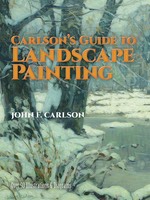
Carlson’s Guide to Landscape Painting

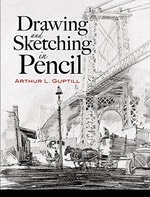
Drawing and Sketching in Pencil

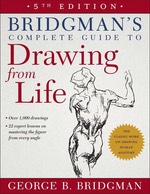
Bridgman’s Complete Guide to Drawing from Life


Charley’s Picks
Amazon
(Amazon.com affiliate links; sales go to a larger yacht for Jeff Bezos; but I get a small percentage to help support my work on Lines and Colors)
Carlson’s Guide to Landscape Painting
Drawing and Sketching in Pencil
Bridgman’s Complete Guide to Drawing from Life