


Categories
- 3d CGI
- Amusements
- Animation
- Anime & Manga
- Art Materials
- Art Videos
- Blogroll
- Cartoons
- Color
- Comics
- Concept & Visual Dev.
- Creativity
- Digital Art
- Digital Painting
- Displaying Art on the Web
- Drawing
- Eye Candy for Today
- Gallery and Museum Art
- High-res Art Images
- Illustration
- Motion Graphics & Flash
- Museums
- Online Museums
- Outsider Art
- Painting
- Painting a Day
- Paleo Art
- Pastel, Conté & Chalk
- Pen & Ink
- Prints and Printmaking
- Reviews
- Sc-fi and Fantasy
- Sculpture & Dimensional
- Site Comments
- Sketching
- Storyboards
- Tools and Techniques
- Uncategorized
- Vector Art
- Videos & Podcasts
- Vision and Optics
- Watercolor and Gouache
- Webcomics
Archives
- June 2026
- May 2026
- April 2026
- March 2026
- February 2026
- January 2026
- December 2025
- November 2025
- October 2025
- September 2025
- August 2025
- July 2025
- June 2025
- May 2025
- January 2025
- December 2024
- November 2024
- October 2024
- September 2024
- August 2024
- June 2024
- April 2024
- March 2024
- February 2024
- January 2024
- December 2023
- November 2023
- October 2023
- September 2023
- August 2023
- July 2023
- May 2023
- April 2023
- March 2023
- February 2023
- January 2023
- December 2022
- November 2022
- September 2022
- August 2022
- July 2022
- June 2022
- May 2022
- April 2022
- March 2022
- February 2022
- January 2022
- December 2021
- November 2021
- October 2021
- September 2021
- August 2021
- July 2021
- June 2021
- May 2021
- April 2021
- March 2021
- February 2021
- January 2021
- December 2020
- November 2020
- October 2020
- September 2020
- August 2020
- July 2020
- June 2020
- May 2020
- April 2020
- March 2020
- February 2020
- January 2020
- December 2019
- November 2019
- October 2019
- September 2019
- August 2019
- July 2019
- June 2019
- May 2019
- April 2019
- March 2019
- February 2019
- January 2019
- December 2018
- November 2018
- October 2018
- September 2018
- August 2018
- July 2018
- June 2018
- May 2018
- April 2018
- March 2018
- February 2018
- January 2018
- December 2017
- November 2017
- October 2017
- September 2017
- August 2017
- July 2017
- June 2017
- May 2017
- April 2017
- March 2017
- February 2017
- January 2017
- December 2016
- November 2016
- October 2016
- September 2016
- August 2016
- July 2016
- June 2016
- May 2016
- April 2016
- March 2016
- February 2016
- January 2016
- December 2015
- November 2015
- October 2015
- September 2015
- August 2015
- July 2015
- June 2015
- May 2015
- April 2015
- March 2015
- February 2015
- January 2015
- December 2014
- November 2014
- October 2014
- September 2014
- August 2014
- July 2014
- June 2014
- May 2014
- April 2014
- March 2014
- February 2014
- January 2014
- December 2013
- November 2013
- October 2013
- September 2013
- August 2013
- July 2013
- June 2013
- May 2013
- April 2013
- March 2013
- February 2013
- January 2013
- December 2012
- November 2012
- October 2012
- September 2012
- August 2012
- July 2012
- June 2012
- May 2012
- April 2012
- March 2012
- February 2012
- January 2012
- December 2011
- November 2011
- October 2011
- September 2011
- August 2011
- July 2011
- June 2011
- May 2011
- April 2011
- March 2011
- February 2011
- January 2011
- December 2010
- November 2010
- October 2010
- September 2010
- August 2010
- July 2010
- June 2010
- May 2010
- April 2010
- March 2010
- February 2010
- January 2010
- December 2009
- November 2009
- October 2009
- September 2009
- August 2009
- July 2009
- June 2009
- May 2009
- April 2009
- March 2009
- February 2009
- January 2009
- December 2008
- November 2008
- October 2008
- September 2008
- August 2008
- July 2008
- June 2008
- May 2008
- April 2008
- March 2008
- February 2008
- January 2008
- December 2007
- November 2007
- October 2007
- September 2007
- August 2007
- July 2007
- June 2007
- May 2007
- April 2007
- March 2007
- February 2007
- January 2007
- December 2006
- November 2006
- October 2006
- September 2006
- August 2006
- July 2006
- June 2006
- May 2006
- April 2006
- March 2006
- February 2006
- January 2006
- December 2005
- November 2005
- October 2005
- September 2005
- August 2005
Relevant Blogs
Art, Painting & Sketch
- Gurney Journey
- Underpaintings
- Art and Influence
- Painting Perceptions
- Oil Painters of America
- Vasari Paint POV
- Flying Fox
- Urban Sketchers
- Bento (Smithsonian)
- Art Inconnu
- The Hidden Place
- Still Life
- Making a Mark
- The Art of the Landscape
- Exploring Color & Creativity
- Art Contrarian
- Artist A Day
- beinArt Surreal Art Collective
- Eye Level
- David Dunlop
- p.i.g.m.e.n.t.i.u.m
- CultureGrrl
- Joaquín Sorolla blog
- Artists in Pastel
“Painting a Day”
- A Painting a Day (Keiser)
- On Painting (Keiser)
- Julian Merrow-Smith
- Karen Jurick
- Jeffrey Hayes
- Carol Marine
- Abbey Ryan
- Daily Paintworks
Other Painting Blogs
- Virtual Gouache Land
- Neil Hollingsworth
- Marc Hanson
- Kevin Menck
- Marc Dalessio
- Larry Seiler
- Stapleton Kearns
- Colin Page
- Roos Schuring
- Hans Versfelt
- Titus Meeuws
- Régis Pettinari
- René Plein Air
- Belinda Del Pesco
- Robin Weiss
- Nathan Fowkes (Land Sketch)
- William Wray
- Frank Serrano
- Stephen Magsig
- Michael Chesley Johnson
- Twice a Week
- Sarah Wimperis
- Rob Adams
- Michael Cole Manley
- The Dirty Palette Club
- Mike Manley’s Draw!
Gallery Art & Illustration mix
Illustration
- Howard Pyle
- 100 Years of Illustration
- BibliOdyssey
- Illustration Art
- Today’s Inspiration
- Illustration Mundo
- Little Chimp Society
- Danny Gregory
- R D (John Martz
- Illustration Friday blog
- Monster Brains
- Illustrators & Illustrations (RU)
- Elwood H. Smith
- DaniDraws.com
- Designers Who Blog
- iSpot Blog
Sci-Fi & Fantasy
Illustration & Comics
Comics & Cartoons
- Comics Beat
- Robot 6
- Newsarama Blog
- Comic Vine
- Comics Alliance
- Forbidden Planet Int.
- Paolo Rivera
- Bolt City
- Flight
- Scott McCloud
- The Comics Journal
- Comixpedia
- Funnybook Babylon
- James Baker
- Middleton’s Sketchbook
- Boneville
- The Hotel Fred
- Paul Rivoche
- Daily Cartoonist
- Mad About Cartoons (William Wray)
- Digital Strips
Illustration & Concept
Animation & Concept
- Cartoon Brew
- Animation Blog
- Cold Hard Flash
- Concept Art World
- The CAB
- FY Concept Art
- Concept Ships
- Concept Robots
- John Nevarez
- Armand Serrano
- Marcos Mateu-Mestre
- all kinds of stuff (Kricfalusi)
- Yacin the faun (Man Arenas)
- Kelsey Mann
- Cre8tivemarks Blog
- Ice-Cream Monster Toon Cafe
- AAU Character & Creature Design
- AAU Animation Notes
- Articles and Texticles
Paleo & Scientific
Tools & Techniques
Other
Lists of Art Blogs
Art Image Resource Links
Historic Art Images
- Wikimedia Commons: Paintings
- Wikimedia Commons: Drawings
- The Athenaeum
- WikiArt (WikiPaintings)
- Google Art Project: Artists
- Google Art Project: Collections (Museums)
- ArtCyclopedia
- Web Gallery of Art
- Art Renewal Center
- Web Gallery of Impressionism
Auction Consolidation sites
Auction sites
- Sotheby’s
- Bonham’s
- Christies
- Heritage Auctions: Fine Art
- Heritage Auctions: Illustration
- Freeman’s Auctions
- Bukowskis
- Shannon’s
Image Search
Reverse Image Search (search by image)
- Tin Eye
- RevImg
- Google Image Search (camera icon)
- Bing Image Search (camera icon)
Promoting some friends and some clients of my website design business
- Twin Willows T’ai Chi studio in Wilmington DE. Taiji classes with Bryan Davis.
- Ray Hayward, Inspired Teacher of T’ai Chi ( Taiji ) in Minneapolis, Founder of Mindful Motion Tai Chi Academy
- OldHead Tattoo studio and Art Gallery in Wilmington DE. Tattoos and paintings by Bruce Gulick
- Sharon Domenico Art, pet portrait oil paintings
- Platinum Paperhanging, wallpaper hanging, Main Line and Philadelphia, PA
- Lisa Stone Design, interior designer, Main Line and Philadelphia, PA
- Studio12KPT, original art, prints, calendars and other custom printed items by Van Sickle & Rolleri
-
Kevin Frank

Encaustic painting is an early painting medium, used by the ancient Greeks and Egyptians. In the later case it was used for the well-known Fayum Mummy Portraits, the sometimes strikingly beautiful portraits done on wooden panels attached to mummies in Roman Egypt.Encaustic painting is a process in which pigment is added to heated beeswax, sometimes modified with damar resin or other hardening agents, and applied to the support while still hot. Though wax is thought of as a fragile substance, the addition of hardeners and the “Punic wax” process, lost and then rediscovered by painter Fritz Faiss in the early 20th Century, make it durable. The encaustic mummy portraits date from 100-300 AD.
Modern artists in the 20th Century, notably Jasper Johns, incorporated encaustic into their work; and the process, demanding as it can be, is experiencing something of a revival.
Kevin Frank is a Brooklyn based contemporary artist who does still life, landscape and portraits in the encaustic medium. His paintings have a beautiful character of texture and surface color, due in part to the way in which the artist must apply the paint, quickly and with finesse, before the wax cools. (Inexperienced painters will sometimes find themselves with a brush stuck to the surface.)
I find the way that Frank uses the character of the paint particularly appealing in his still life subjects, which have a visceral, tactile quality reminiscent of Chardin. His landscapes appear to lean to photorealism when viewed small; viewing the details, however (look for a link to the left in the pages on his web site) reveals a painterly, textural surface.
Frank’s site includes an essay on his work, and the nature of encaustic painting, by Joanne Mattera, painter and author of The Art of Encaustic Painting: Contemporary Expression in the Ancient Medium of Pigmented Wax.
In two of his still life paintings Frank pays tribute to his chosen medium, Still Life with Flag makes reference to objects associated with the work of Jasper Johns; and The Lyre (image above, third down and detail, bottom) refers to the mummy portraits, one of which Frank had a life size reproduction of mounted on a board and keeps in his studio for study.
Categories:
-
Lawson Wood
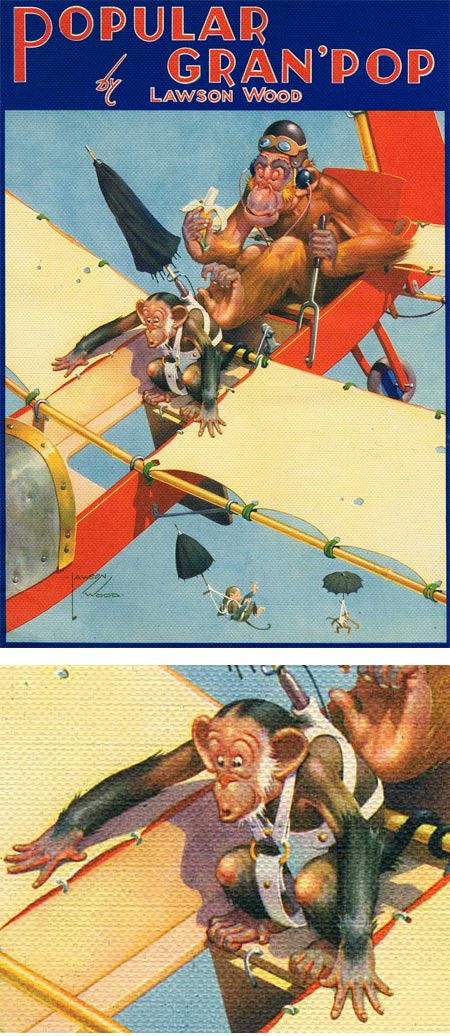
UK painter, illustrator and designer Lawson Wood found a rather unique niche for himself amid the great turn of the 20th Century illustrators by going ape.Though he portrayed many other subjects, and even had other comic illustration series with particular themes, notably police officers and prehistoric scenes, it was his comic illustrations of apes and monkeys, rendered as if they were Leyendecker models in all their finery, that made his reputation.
he used his apes in a variety of situations, even painting ape caricatures of Hitler, Stalin and the Japanese Emperor during World War II.
His own character, the aged Gran’pop, appeared several times on the cover of Collier’s and was under consideration for an animated cartoon before war broke out.
ASIFA-Hollywood Animation Archive has a great selection of Wood covers, click on the in-page images for larger versions.
Categories:
-
Errol Le Cain
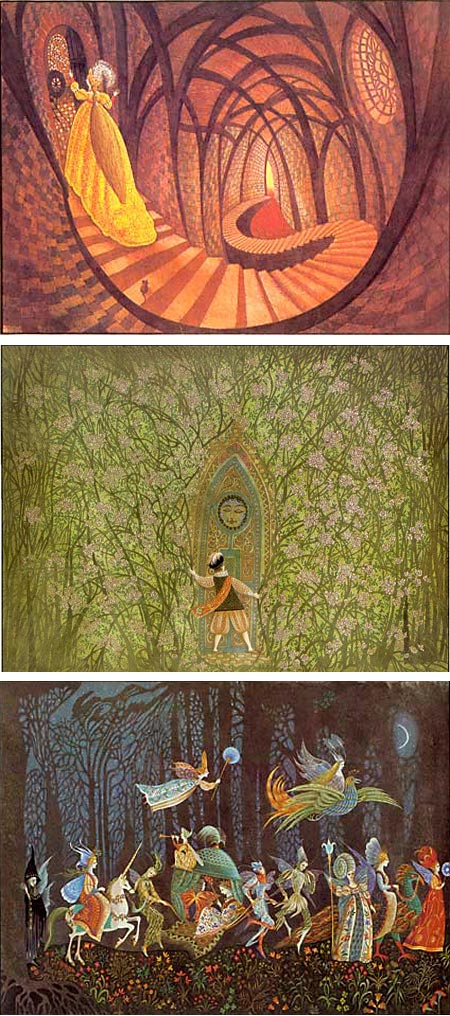
British animator and illustrator Errol Le Cain was a member of Richard William’s animation studio in the 1960’s when they were producing the terrific and influential animated opening credits for films like A Funny Thing Happened on the Way to the Forum and Casino Royale (the original, weird one). He also worked on William’s The Thief and the Cobbler.While he was working with William’s studio, Le Cain began to illustrate children’s books, developing a colorful style lush with patterns, textural design elements and Art Nouveau touches. In many ways his style seems like a continuation of the traditions of the European Golden Age illustrators (see the links in my recent post on Ivan Bilibin) without feeling like an emulation of any of them.
Le Cain went on to do extensive animation work for the BBC, continuing to create illustrations for children’s books into the years before his death in 1989.
Most of his books are out of print, but if you look around you can find them used.
There is a site devoted to his illustration work, The Illustrated Work of Errol Le Cain maintained by Tania Covo. Though it doesn’t have a gallery, per se, it has a list of his published work and the page for each title features two of his illustrations from that book.
Categories:
-
Paul Delaroche

Hippolyte (Paul) Delaroche was a French academic painter who helped set the standards for late 19th Century history painting.Though denigrated in subsequent times (and at the time by upstarts like the Impressionists), history painting was the core of mainstream academic painting, then the artistic establishment; and Delaroche, along with Eugéne Delacroix and Théodore Géricault, was among its chief proponents.
Delaroche was a student of Antoine-Jean Gros, and a teacher of many notable artists, including Charles-François Daubigny and Jean-Léon Gérôme.
His highly refined and smoothly rendered history paintings, often large scale tableaux with life-size figures, were dramatic portrayals of scenes from both distant times and recent events.
Very popular in his day, his paintings represented what many find appealing, and others find objectionable, about academic art — superb draftsmanship and flawless technique, but, despite their drama, little investment of emotion or passion on the part of the artist.
Delaroche is known for his monumental work, 88 feet (27 metres) long, around the inside curve of a wall of the hemicycle (circular chamber) of the award theatre of the École des Beaux-Arts in Paris (image above, top and middle). The painting was a commission from the architect of the school and portrays 75 great artists from various points in time, focused on three thrones on which the creators of the Parthenon sit, flanked by muses, representing their chosen arts of architecture, sculpture and painting.
The Execution of Lady Jane Grey (images above, third down and detail, bottom), was unusual and caused great interest when it debuted. It was essentially the start of a new genre of painting, combining the refined painting technique exemplified by Ingres with the drama of history painters like Delacroix. It was an event from English history portrayed, in striking scale and realism, by a French painter. It shows the moments just before the beheading of Lady Jane Grey, who, at the age of 16, was Queen of England for only 9 days before being deposed and later executed by her half-sister Mary.
Other paintings of similar subjects, by Delaroche and other French history painters, would follow. These history paintings, particularly involving subjects like the wresting of crowns from one hand to another, along with such juicy subjects as beheadings (you know — entertainment), would prove very popular with the French audience, who saw many parallels to their own history of clashing monarchs.
This painting, perhaps Delaroche’s most famous, and several notable works on loan, are part of an exhibition at the National Gallery in London, Painting History: Delaroche and Lady Jane Grey, that is on display until 23 May, 2010.
There is a nice big zoomable version of the painting here as part of the online material for the exhibition (detail above, bottom); be sure to use the “expand” button (rectangle with 4 arrows) to make the zoomable image full screen.
Categories:
-
10 Surreal Animated Short Films on Listicles

Listicles, part of The L Magazine from New York, is a blog for which every post is a list of some kind, has posted an interesting list of 10 Surreal Animated Short Films.These are culled from various sources (including the Goeblins Annecy animations) and are a mix of hand drawn and CGI animation.
All of them are interesting, and collectively make for a good bit of amusement and fascination.
(Images above: “Galileo” by Avrillon Ghislain, “The Lady and the Reaper” by Javier Recio Garcia, Music Video for “Where Dream & Day Collide” by Madder Mortem, directed by Christian Ruud and Kim Holm, “Garuda” by Nicolas Athane, Meryl Frack, Alexis Liddell, Andres Salaff and Maïlys Vallade)
Categories:
-
Glenn Dean
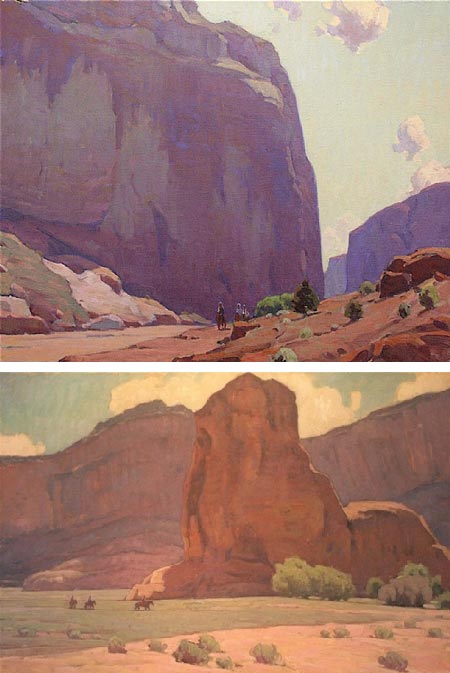
California born, new Mexico based artist Glenn Dean finds endless variety in the rocks, hills, canyons, bluffs and mountains of the American West.Sometimes his work can be more intimate, with scenes of small arroyos, canyons and adobe structures, and he occasionally paints views of the California coast, but most often portrays the monumental geologic structures of the western part of the continent.
His site is, in fact, themed Landscapes of The West. Unfortunately, it’s one of those stock FineArtStudioOnline stock sites, in which you must view the larger images in a little pop-up window, the largest of which is still somewhat small. You can see some larger images, in which Dean’s brushwork and color variations are more apparent, on the Brandon Michael Fine Art gallery (though some items are not linked to larger versions).
Dean cites as inspiration noted painters of the America West like Edgar Payne and Maynard Dixon. You can also see the influence of California Impressionists like Hanson Puthuff and Granville Redmond in his bright but atmospherically softened palette.
Dean also carries forward the spiritual/philosophical component of some of the early California painters, in which the landscape is seen as an expression of the spiritual within the material.
He is essentially a self-taught artist. His work has been featured in a number of magazines like Southwest Art, Art of the West and American Artist.
Dean paints en plein air when possible, finishing larger works in the studio.
Categories:




Charley’s Picks
Bookshop.org
(Bookshop.org affilliate links; sales benefit independent bookshop owners; I get a small percentage to help support my work on Lines and Colors)

John Singer Sargent: Watercolors


Urban Sketching: Understanding Perspective


Charley’s Picks
Amazon
(Amazon.com affiliate links; sales go to a larger yacht for Jeff Bezos; but I get a small percentage to help support my work on Lines and Colors)
John Singer Sargent: Watercolors
Urban Sketching: Understanding Perspective