


Categories
- 3d CGI
- Amusements
- Animation
- Anime & Manga
- Art Materials
- Art Videos
- Blogroll
- Cartoons
- Color
- Comics
- Concept & Visual Dev.
- Creativity
- Digital Art
- Digital Painting
- Displaying Art on the Web
- Drawing
- Eye Candy for Today
- Gallery and Museum Art
- High-res Art Images
- Illustration
- Motion Graphics & Flash
- Museums
- Online Museums
- Outsider Art
- Painting
- Painting a Day
- Paleo Art
- Pastel, Conté & Chalk
- Pen & Ink
- Prints and Printmaking
- Reviews
- Sc-fi and Fantasy
- Sculpture & Dimensional
- Site Comments
- Sketching
- Storyboards
- Tools and Techniques
- Uncategorized
- Vector Art
- Videos & Podcasts
- Vision and Optics
- Watercolor and Gouache
- Webcomics
Archives
- May 2026
- April 2026
- March 2026
- February 2026
- January 2026
- December 2025
- November 2025
- October 2025
- September 2025
- August 2025
- July 2025
- June 2025
- May 2025
- January 2025
- December 2024
- November 2024
- October 2024
- September 2024
- August 2024
- June 2024
- April 2024
- March 2024
- February 2024
- January 2024
- December 2023
- November 2023
- October 2023
- September 2023
- August 2023
- July 2023
- May 2023
- April 2023
- March 2023
- February 2023
- January 2023
- December 2022
- November 2022
- September 2022
- August 2022
- July 2022
- June 2022
- May 2022
- April 2022
- March 2022
- February 2022
- January 2022
- December 2021
- November 2021
- October 2021
- September 2021
- August 2021
- July 2021
- June 2021
- May 2021
- April 2021
- March 2021
- February 2021
- January 2021
- December 2020
- November 2020
- October 2020
- September 2020
- August 2020
- July 2020
- June 2020
- May 2020
- April 2020
- March 2020
- February 2020
- January 2020
- December 2019
- November 2019
- October 2019
- September 2019
- August 2019
- July 2019
- June 2019
- May 2019
- April 2019
- March 2019
- February 2019
- January 2019
- December 2018
- November 2018
- October 2018
- September 2018
- August 2018
- July 2018
- June 2018
- May 2018
- April 2018
- March 2018
- February 2018
- January 2018
- December 2017
- November 2017
- October 2017
- September 2017
- August 2017
- July 2017
- June 2017
- May 2017
- April 2017
- March 2017
- February 2017
- January 2017
- December 2016
- November 2016
- October 2016
- September 2016
- August 2016
- July 2016
- June 2016
- May 2016
- April 2016
- March 2016
- February 2016
- January 2016
- December 2015
- November 2015
- October 2015
- September 2015
- August 2015
- July 2015
- June 2015
- May 2015
- April 2015
- March 2015
- February 2015
- January 2015
- December 2014
- November 2014
- October 2014
- September 2014
- August 2014
- July 2014
- June 2014
- May 2014
- April 2014
- March 2014
- February 2014
- January 2014
- December 2013
- November 2013
- October 2013
- September 2013
- August 2013
- July 2013
- June 2013
- May 2013
- April 2013
- March 2013
- February 2013
- January 2013
- December 2012
- November 2012
- October 2012
- September 2012
- August 2012
- July 2012
- June 2012
- May 2012
- April 2012
- March 2012
- February 2012
- January 2012
- December 2011
- November 2011
- October 2011
- September 2011
- August 2011
- July 2011
- June 2011
- May 2011
- April 2011
- March 2011
- February 2011
- January 2011
- December 2010
- November 2010
- October 2010
- September 2010
- August 2010
- July 2010
- June 2010
- May 2010
- April 2010
- March 2010
- February 2010
- January 2010
- December 2009
- November 2009
- October 2009
- September 2009
- August 2009
- July 2009
- June 2009
- May 2009
- April 2009
- March 2009
- February 2009
- January 2009
- December 2008
- November 2008
- October 2008
- September 2008
- August 2008
- July 2008
- June 2008
- May 2008
- April 2008
- March 2008
- February 2008
- January 2008
- December 2007
- November 2007
- October 2007
- September 2007
- August 2007
- July 2007
- June 2007
- May 2007
- April 2007
- March 2007
- February 2007
- January 2007
- December 2006
- November 2006
- October 2006
- September 2006
- August 2006
- July 2006
- June 2006
- May 2006
- April 2006
- March 2006
- February 2006
- January 2006
- December 2005
- November 2005
- October 2005
- September 2005
- August 2005
Relevant Blogs
Art, Painting & Sketch
- Gurney Journey
- Underpaintings
- Art and Influence
- Painting Perceptions
- Oil Painters of America
- Vasari Paint POV
- Flying Fox
- Urban Sketchers
- Bento (Smithsonian)
- Art Inconnu
- The Hidden Place
- Still Life
- Making a Mark
- The Art of the Landscape
- Exploring Color & Creativity
- Art Contrarian
- Artist A Day
- beinArt Surreal Art Collective
- Eye Level
- David Dunlop
- p.i.g.m.e.n.t.i.u.m
- CultureGrrl
- Joaquín Sorolla blog
- Artists in Pastel
“Painting a Day”
- A Painting a Day (Keiser)
- On Painting (Keiser)
- Julian Merrow-Smith
- Karen Jurick
- Jeffrey Hayes
- Carol Marine
- Abbey Ryan
- Daily Paintworks
Other Painting Blogs
- Virtual Gouache Land
- Neil Hollingsworth
- Marc Hanson
- Kevin Menck
- Marc Dalessio
- Larry Seiler
- Stapleton Kearns
- Colin Page
- Roos Schuring
- Hans Versfelt
- Titus Meeuws
- Régis Pettinari
- René Plein Air
- Belinda Del Pesco
- Robin Weiss
- Nathan Fowkes (Land Sketch)
- William Wray
- Frank Serrano
- Stephen Magsig
- Michael Chesley Johnson
- Twice a Week
- Sarah Wimperis
- Rob Adams
- Michael Cole Manley
- The Dirty Palette Club
- Mike Manley’s Draw!
Gallery Art & Illustration mix
Illustration
- Howard Pyle
- 100 Years of Illustration
- BibliOdyssey
- Illustration Art
- Today’s Inspiration
- Illustration Mundo
- Little Chimp Society
- Danny Gregory
- R D (John Martz
- Illustration Friday blog
- Monster Brains
- Illustrators & Illustrations (RU)
- Elwood H. Smith
- DaniDraws.com
- Designers Who Blog
- iSpot Blog
Sci-Fi & Fantasy
Illustration & Comics
Comics & Cartoons
- Comics Beat
- Robot 6
- Newsarama Blog
- Comic Vine
- Comics Alliance
- Forbidden Planet Int.
- Paolo Rivera
- Bolt City
- Flight
- Scott McCloud
- The Comics Journal
- Comixpedia
- Funnybook Babylon
- James Baker
- Middleton’s Sketchbook
- Boneville
- The Hotel Fred
- Paul Rivoche
- Daily Cartoonist
- Mad About Cartoons (William Wray)
- Digital Strips
Illustration & Concept
Animation & Concept
- Cartoon Brew
- Animation Blog
- Cold Hard Flash
- Concept Art World
- The CAB
- FY Concept Art
- Concept Ships
- Concept Robots
- John Nevarez
- Armand Serrano
- Marcos Mateu-Mestre
- all kinds of stuff (Kricfalusi)
- Yacin the faun (Man Arenas)
- Kelsey Mann
- Cre8tivemarks Blog
- Ice-Cream Monster Toon Cafe
- AAU Character & Creature Design
- AAU Animation Notes
- Articles and Texticles
Paleo & Scientific
Tools & Techniques
Other
Lists of Art Blogs
Art Image Resource Links
Historic Art Images
- Wikimedia Commons: Paintings
- Wikimedia Commons: Drawings
- The Athenaeum
- WikiArt (WikiPaintings)
- Google Art Project: Artists
- Google Art Project: Collections (Museums)
- ArtCyclopedia
- Web Gallery of Art
- Art Renewal Center
- Web Gallery of Impressionism
Auction Consolidation sites
Auction sites
- Sotheby’s
- Bonham’s
- Christies
- Heritage Auctions: Fine Art
- Heritage Auctions: Illustration
- Freeman’s Auctions
- Bukowskis
- Shannon’s
Image Search
Reverse Image Search (search by image)
- Tin Eye
- RevImg
- Google Image Search (camera icon)
- Bing Image Search (camera icon)
Promoting some friends and some clients of my website design business
- Twin Willows T’ai Chi studio in Wilmington DE. Taiji classes with Bryan Davis.
- Ray Hayward, Inspired Teacher of T’ai Chi ( Taiji ) in Minneapolis, Founder of Mindful Motion Tai Chi Academy
- OldHead Tattoo studio and Art Gallery in Wilmington DE. Tattoos and paintings by Bruce Gulick
- Sharon Domenico Art, pet portrait oil paintings
- Platinum Paperhanging, wallpaper hanging, Main Line and Philadelphia, PA
- Lisa Stone Design, interior designer, Main Line and Philadelphia, PA
- Studio12KPT, original art, prints, calendars and other custom printed items by Van Sickle & Rolleri
-
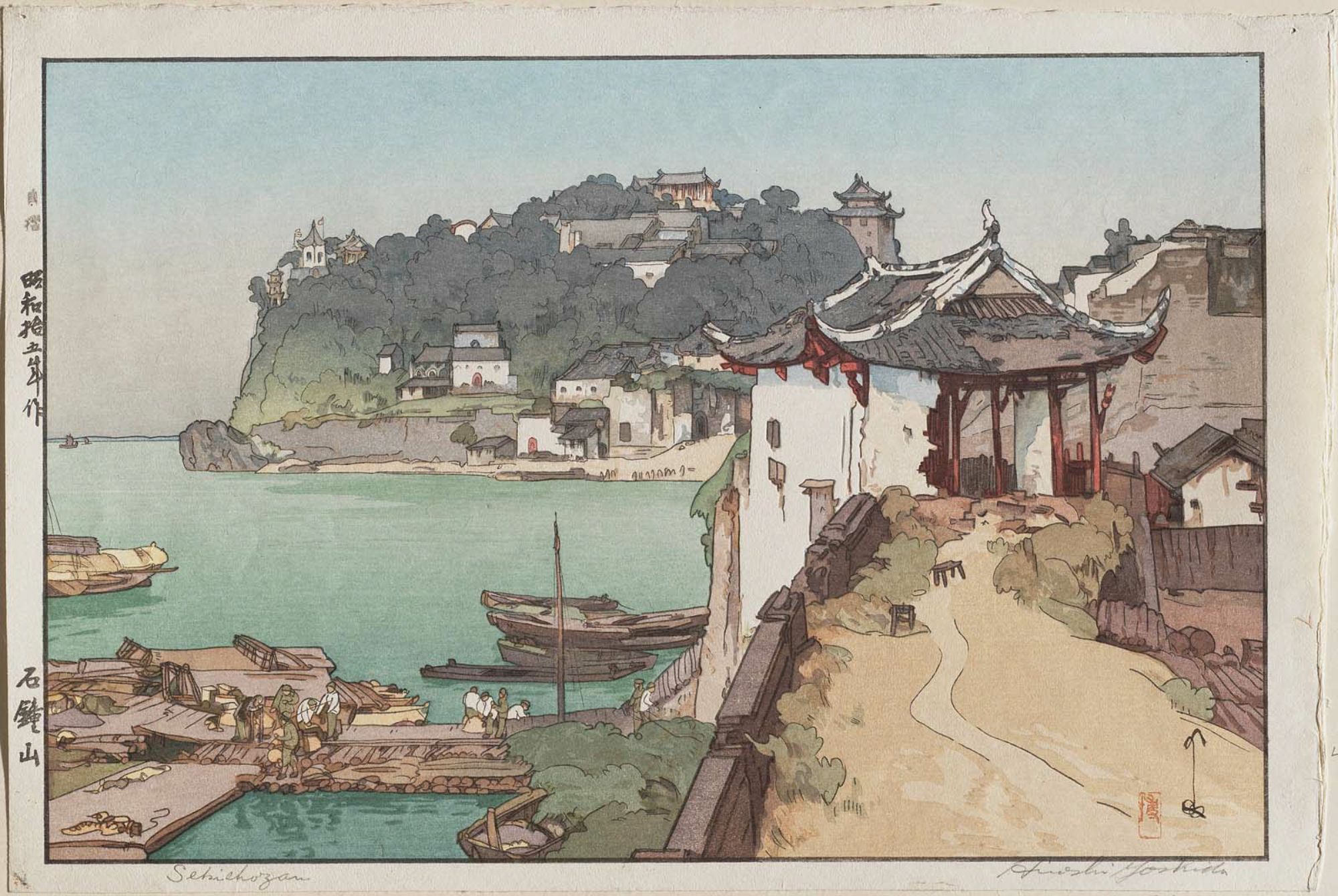
Eye Candy for Today: Hiroshi Yoshida woodblock print

Sekishozan (Shi-shung-shan, South China), Hiroshi YoshidaLarge version here.
As much as I recognize and admire the influence Japanese printmakers had on European artists, notably the French Impressionists, my favorite synthesis of Japanese and European artistic conventions is found in the woodblock prints of Japanese painter and printmaker Hiroshi Yoshida.
There is something about his blend of lines and colors (if you’ll excuse the expression), his suggestions of texture, atmospheric perspective, evocative composition and choice of subject matter that just connects directly to the pleasure center of my visual cortex.
This version of the print is from Ukiyo-e Search (my post here), on which you can find more images by Hiroshi Yoshida and many other superb printmakers (Timesink warning!).
Categories:
-
Xiaodi Jin

Xiaodi Jin is a freelance concept artist based in Bejing, China. Beyond, that, I can find little information, and only a few images.The images that are available, however, are tantalizing — wonderfully atmospheric and textural — and leave me waiting for more.
[Via Spectrum Fantastic on Twitter @SFantasticAL]
Categories:
-
Eye Candy for Today: Weissenbruch landscape

The Trekvliet Shipping Canal near Rijswijk, Johan Hendrik WeissenbruchAlso known as the “View near the Geest Bridge”, original is in the Rijksmuseum, link above is to a zoomable image. Downloadable high-resolution file on Wikimedia Commons.
Wonderful light, air and painterly rendering by a 19th century Dutch painter who was influenced by the French Barbizon painters, the predecessors of Impressionism.
Categories:
-
Isaac Orloff

Isaac Orloff is a visual development artist and illustrator based in the San Francisco area, and currently working with Storm 8.Orloff has range of stye that nicely mixes painterly effects with more graphic rendering, color with monochrome and cartoony with more fully realized.
His website galleries (accessed from a pop-out under “Work”) include Color Script, Illustration, Sketch and Paint, the latter being watercolors from life.
Orloff also has a blog and a Tumblog, on which you can find additional images and background information.
Categories:
-
Eye Candy for Today: Waterhouse’s Lady of Shalott

The Lady of Shalott, John William WaterhouseOriginal is in the Tate, Britain. There is a high-resolution zoomable image on the Google Art Project, and a downloadable version of that file on Wikimedia Commons.
I almost hesitated to feature this image; Waterhouse’s interpretation of the scene from Tennyson’s poem is so commonly reproduced, it’s almost a cliché — but the fact that there is a high-resolution version available online now is too good to pass up.
Unfortunately, though the reproductions on the Google Art Project are usually pretty good in terms of color balance — better in many cases than the images posted on the websites of the museums themselves — I don’t think that’s the case here.
I haven’t had the chance to see this painting in person (yet), but my instinct is that the version on the Tate website is more accurate in this case. The Google Art Project version seems dark and over-saturated in the reds.
I’ve used the Tate image as the full image (above, top), and then taken the liberty to adjust the color on the Google version to try to bring it a bit closer to that before using it for my detail crops.
Even if inaccurate, it’s a delight to see Waterhouse paintings reproduced in detail. You can find more high-res Google Art Project images of Waterhouse paintings here and here.
There is an article devoted to this painting on Wikipedia.
In that article and elsewhere, you will often see Waterhouse mentioned as a “Pre-Raphaelite” painter, but that’s not really accurate. Though he was certainly much influenced by them and shared many of their subjects, he was actually a generation younger, and adopted a much looser and more painterly approach.
For more, see some of my previous posts on John William Waterhouse.
Categories:
-
Benjamin West’s Ben Franklin Drawing Electricity from the Sky

Ben Franklin Drawing Electricity from the Sky, Benjamin WestHere in the U.S., we celebrate July 4 as “Independence Day”, marking the time in the late 18th century when our land transitioned from being a wholly owned subsidiary of the British East India Company to a more fairly divided property co-owned by a number of multi-national firms.
This was accomplished with the help of a number of figures we like to honor as our “Founding Fathers” (and apparently, if you read the traditional history and textbooks, without need of assistance from any “Founding Mothers”, except in sewing a flag). It was also accomplished with some help (well, lots of help, actually) from France, but we don’t talk about that much because it seems to upset some people.
The Founding Fathers did cool stuff like writing the Declaration of Independence and the U.S. Constitution, raising the Continental Army and convincing the British to take their trading monopoly elsewhere (with lots of help from France).
Among the individuals considered U.S. Founding Fathers, my favorite figure was always Benjamin Franklin.
Franklin was a politician, writer, printer, publisher, postmaster, inventor and scientist (as well as inveterate ladies man). Though he didn’t hold elected office or a military post, it was in his role a diplomat, and the first U.S. Ambassador to France, that he was largely responsible for securing their their financial and military assistance — and in many ways, providing the ability for the woefully underfunded, underarmed and understaffed Continental Army to resist the much larger and better armed British Forces.
Franklin’s influence and renown was worldwide, Though he was born in Boston, his cultural, scientific and political heritage looms large here in Philadelphia, which was the center of political and cultural activity in the fledgling nation at the time of the Revolution.
In his role as a scientist and inventor, Franklin was responsible for numerous innovations, including bifocals, the Franklin stove and the lightning rod. The latter came from his design for an experiment (that he never conducted) in which a kite flown in an electrical storm might prove his theory that lightning was, in fact, a form of electricity.
In this allegorical painting, which hangs appropriately enough in the Philadelphia Museum of Art, Franklin’s friend, British-American painter Benjamin West, has portrayed Franklin as a figure of mythological stature, surrounded by helpful angelic cherubim (one of which wears the headdress of a Native American Tribe) as he summons one of the great forces of nature from the heavens. In the background the cherubim mind an electrical apparatus and what is presumably a spare kite. (Kids, don’t try this at home!)
The painting is small (13×10 inches, 24x26cm) and loosely rendered, and was likely intended as a study for a larger painting (perhaps life-size) that was never realized.
There is a zoomable version on the Google Art Project, and a downloadable high-res version on Wikimedia Commons.
I have a small, pseudo-3D, lenticular animation version of this painting as a refrigerator magnet — because I can.
Categories:




Charley’s Picks
Bookshop.org
(Bookshop.org affilliate links; sales benefit independent bookshop owners; I get a small percentage to help support my work on Lines and Colors)

John Singer Sargent: Watercolors


Urban Sketching: Understanding Perspective




_-_Benjamin_Franklin_Drawing_Electricity_from_the_Sky_-_Google_Art_Project.jpg)
Charley’s Picks
Amazon
(Amazon.com affiliate links; sales go to a larger yacht for Jeff Bezos; but I get a small percentage to help support my work on Lines and Colors)
John Singer Sargent: Watercolors
Urban Sketching: Understanding Perspective