


Categories
- 3d CGI
- Amusements
- Animation
- Anime & Manga
- Art Materials
- Art Videos
- Blogroll
- Cartoons
- Color
- Comics
- Concept & Visual Dev.
- Creativity
- Digital Art
- Digital Painting
- Displaying Art on the Web
- Drawing
- Eye Candy for Today
- Gallery and Museum Art
- High-res Art Images
- Illustration
- Motion Graphics & Flash
- Museums
- Online Museums
- Outsider Art
- Painting
- Painting a Day
- Paleo Art
- Pastel, Conté & Chalk
- Pen & Ink
- Prints and Printmaking
- Reviews
- Sc-fi and Fantasy
- Sculpture & Dimensional
- Site Comments
- Sketching
- Storyboards
- Tools and Techniques
- Uncategorized
- Vector Art
- Videos & Podcasts
- Vision and Optics
- Watercolor and Gouache
- Webcomics
Archives
- May 2026
- April 2026
- March 2026
- February 2026
- January 2026
- December 2025
- November 2025
- October 2025
- September 2025
- August 2025
- July 2025
- June 2025
- May 2025
- January 2025
- December 2024
- November 2024
- October 2024
- September 2024
- August 2024
- June 2024
- April 2024
- March 2024
- February 2024
- January 2024
- December 2023
- November 2023
- October 2023
- September 2023
- August 2023
- July 2023
- May 2023
- April 2023
- March 2023
- February 2023
- January 2023
- December 2022
- November 2022
- September 2022
- August 2022
- July 2022
- June 2022
- May 2022
- April 2022
- March 2022
- February 2022
- January 2022
- December 2021
- November 2021
- October 2021
- September 2021
- August 2021
- July 2021
- June 2021
- May 2021
- April 2021
- March 2021
- February 2021
- January 2021
- December 2020
- November 2020
- October 2020
- September 2020
- August 2020
- July 2020
- June 2020
- May 2020
- April 2020
- March 2020
- February 2020
- January 2020
- December 2019
- November 2019
- October 2019
- September 2019
- August 2019
- July 2019
- June 2019
- May 2019
- April 2019
- March 2019
- February 2019
- January 2019
- December 2018
- November 2018
- October 2018
- September 2018
- August 2018
- July 2018
- June 2018
- May 2018
- April 2018
- March 2018
- February 2018
- January 2018
- December 2017
- November 2017
- October 2017
- September 2017
- August 2017
- July 2017
- June 2017
- May 2017
- April 2017
- March 2017
- February 2017
- January 2017
- December 2016
- November 2016
- October 2016
- September 2016
- August 2016
- July 2016
- June 2016
- May 2016
- April 2016
- March 2016
- February 2016
- January 2016
- December 2015
- November 2015
- October 2015
- September 2015
- August 2015
- July 2015
- June 2015
- May 2015
- April 2015
- March 2015
- February 2015
- January 2015
- December 2014
- November 2014
- October 2014
- September 2014
- August 2014
- July 2014
- June 2014
- May 2014
- April 2014
- March 2014
- February 2014
- January 2014
- December 2013
- November 2013
- October 2013
- September 2013
- August 2013
- July 2013
- June 2013
- May 2013
- April 2013
- March 2013
- February 2013
- January 2013
- December 2012
- November 2012
- October 2012
- September 2012
- August 2012
- July 2012
- June 2012
- May 2012
- April 2012
- March 2012
- February 2012
- January 2012
- December 2011
- November 2011
- October 2011
- September 2011
- August 2011
- July 2011
- June 2011
- May 2011
- April 2011
- March 2011
- February 2011
- January 2011
- December 2010
- November 2010
- October 2010
- September 2010
- August 2010
- July 2010
- June 2010
- May 2010
- April 2010
- March 2010
- February 2010
- January 2010
- December 2009
- November 2009
- October 2009
- September 2009
- August 2009
- July 2009
- June 2009
- May 2009
- April 2009
- March 2009
- February 2009
- January 2009
- December 2008
- November 2008
- October 2008
- September 2008
- August 2008
- July 2008
- June 2008
- May 2008
- April 2008
- March 2008
- February 2008
- January 2008
- December 2007
- November 2007
- October 2007
- September 2007
- August 2007
- July 2007
- June 2007
- May 2007
- April 2007
- March 2007
- February 2007
- January 2007
- December 2006
- November 2006
- October 2006
- September 2006
- August 2006
- July 2006
- June 2006
- May 2006
- April 2006
- March 2006
- February 2006
- January 2006
- December 2005
- November 2005
- October 2005
- September 2005
- August 2005
Relevant Blogs
Art, Painting & Sketch
- Gurney Journey
- Underpaintings
- Art and Influence
- Painting Perceptions
- Oil Painters of America
- Vasari Paint POV
- Flying Fox
- Urban Sketchers
- Bento (Smithsonian)
- Art Inconnu
- The Hidden Place
- Still Life
- Making a Mark
- The Art of the Landscape
- Exploring Color & Creativity
- Art Contrarian
- Artist A Day
- beinArt Surreal Art Collective
- Eye Level
- David Dunlop
- p.i.g.m.e.n.t.i.u.m
- CultureGrrl
- Joaquín Sorolla blog
- Artists in Pastel
“Painting a Day”
- A Painting a Day (Keiser)
- On Painting (Keiser)
- Julian Merrow-Smith
- Karen Jurick
- Jeffrey Hayes
- Carol Marine
- Abbey Ryan
- Daily Paintworks
Other Painting Blogs
- Virtual Gouache Land
- Neil Hollingsworth
- Marc Hanson
- Kevin Menck
- Marc Dalessio
- Larry Seiler
- Stapleton Kearns
- Colin Page
- Roos Schuring
- Hans Versfelt
- Titus Meeuws
- Régis Pettinari
- René Plein Air
- Belinda Del Pesco
- Robin Weiss
- Nathan Fowkes (Land Sketch)
- William Wray
- Frank Serrano
- Stephen Magsig
- Michael Chesley Johnson
- Twice a Week
- Sarah Wimperis
- Rob Adams
- Michael Cole Manley
- The Dirty Palette Club
- Mike Manley’s Draw!
Gallery Art & Illustration mix
Illustration
- Howard Pyle
- 100 Years of Illustration
- BibliOdyssey
- Illustration Art
- Today’s Inspiration
- Illustration Mundo
- Little Chimp Society
- Danny Gregory
- R D (John Martz
- Illustration Friday blog
- Monster Brains
- Illustrators & Illustrations (RU)
- Elwood H. Smith
- DaniDraws.com
- Designers Who Blog
- iSpot Blog
Sci-Fi & Fantasy
Illustration & Comics
Comics & Cartoons
- Comics Beat
- Robot 6
- Newsarama Blog
- Comic Vine
- Comics Alliance
- Forbidden Planet Int.
- Paolo Rivera
- Bolt City
- Flight
- Scott McCloud
- The Comics Journal
- Comixpedia
- Funnybook Babylon
- James Baker
- Middleton’s Sketchbook
- Boneville
- The Hotel Fred
- Paul Rivoche
- Daily Cartoonist
- Mad About Cartoons (William Wray)
- Digital Strips
Illustration & Concept
Animation & Concept
- Cartoon Brew
- Animation Blog
- Cold Hard Flash
- Concept Art World
- The CAB
- FY Concept Art
- Concept Ships
- Concept Robots
- John Nevarez
- Armand Serrano
- Marcos Mateu-Mestre
- all kinds of stuff (Kricfalusi)
- Yacin the faun (Man Arenas)
- Kelsey Mann
- Cre8tivemarks Blog
- Ice-Cream Monster Toon Cafe
- AAU Character & Creature Design
- AAU Animation Notes
- Articles and Texticles
Paleo & Scientific
Tools & Techniques
Other
Lists of Art Blogs
Art Image Resource Links
Historic Art Images
- Wikimedia Commons: Paintings
- Wikimedia Commons: Drawings
- The Athenaeum
- WikiArt (WikiPaintings)
- Google Art Project: Artists
- Google Art Project: Collections (Museums)
- ArtCyclopedia
- Web Gallery of Art
- Art Renewal Center
- Web Gallery of Impressionism
Auction Consolidation sites
Auction sites
- Sotheby’s
- Bonham’s
- Christies
- Heritage Auctions: Fine Art
- Heritage Auctions: Illustration
- Freeman’s Auctions
- Bukowskis
- Shannon’s
Image Search
Reverse Image Search (search by image)
- Tin Eye
- RevImg
- Google Image Search (camera icon)
- Bing Image Search (camera icon)
Promoting some friends and some clients of my website design business
- Twin Willows T’ai Chi studio in Wilmington DE. Taiji classes with Bryan Davis.
- Ray Hayward, Inspired Teacher of T’ai Chi ( Taiji ) in Minneapolis, Founder of Mindful Motion Tai Chi Academy
- OldHead Tattoo studio and Art Gallery in Wilmington DE. Tattoos and paintings by Bruce Gulick
- Sharon Domenico Art, pet portrait oil paintings
- Platinum Paperhanging, wallpaper hanging, Main Line and Philadelphia, PA
- Lisa Stone Design, interior designer, Main Line and Philadelphia, PA
- Studio12KPT, original art, prints, calendars and other custom printed items by Van Sickle & Rolleri
-
Francisco Pons Arnau

Francisco Pons Arnau was a Spanish Academic painter active in the mid 19th Century [Correction: late 19th, early 20th Centuries]. He became a follower of Joaquín Sorolla (see my recent post on Sorolla), and was influenced by Art Nouveau.He painted portraits, figures, landscapes and what might be called intimate landscapes — garden scenes with detailed depictions of shrubs or trellised vines.
Beyond that, I’ve been able to find little information. Fortunately, there are several examples of his richly colored, light-filled paintings on the web.
The best selection I’ve come across is on The Athenaeum, and there is a nice, easy to access selection on Art Inconnu. There is a video slideshow overview of his work posted to YouTube by mariayutub.
[Initial idea via Francis Vallejo on Twitpic]
Categories:
-
Ben Mauro

Benjamin Mauro is a concept artist and designer for the gaming and feature film industries, whose credits include work for WETA Workshop, Design Studio Press, LucasFilm, Sony Pictures Animation and others.His work has been featured in books like Expose 5, Expose 7 and D’Artiste Concept Art from Ballistic Publishing, and Alien Race and Cosmic Motors from Design Studio Press.
Mauro studied at the DigiPen Institute of Technology, the Los Angeles Academy of Figurative Arts and the Art Center College of Design.
His brightly imaginative take on monsters, mecha, alien worlds and other fantastic environments is marked by an affinity for texture, solidity of form and a nicely offbeat feeling for the concept of “alien” lifeforms.
His environments can be moody and atmospheric as well as future tech, and are often punctuated with glowing lights and highlights that give them an added dimension of visual interest.
There is a gallery of work on his website, with additional work and alternate or preliminary versions on his blog. There is also an archive of older work here, and a gallery on CGHub.
Categories:
-
Shakespeare portrait in New York
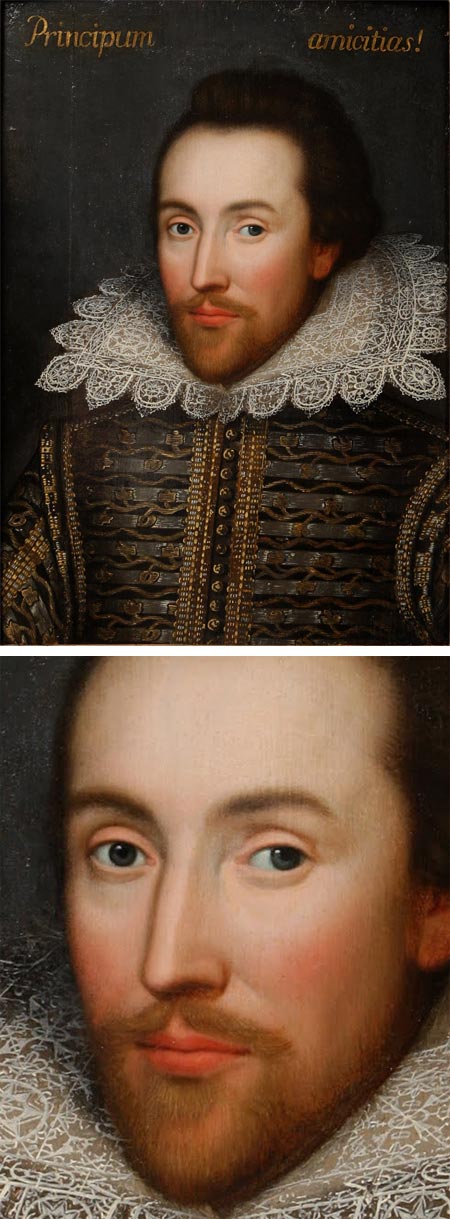
The “Cobbe” portrait of Shakespeare, named for the family estate where the painting was found, not for the artist (who remains unknown), stands on good evidence to be the only portrait of the Bard actually painted from life.The painting has crossed the Atlantic and is currently on display in New Amsterdam, er… I mean New York, at the Morgan Library and Museum.
Accompanied by a few other Shakespeare portraits (like all other known portraits, created posthumously), the Morgan’s first folio 1623 edition of Shakespeare’s plays and other related artifacts, the painting will be on display through May 1, 2011.
Unfortunately, the Morgan hasn’t seen fit to put more than a small image on their site.
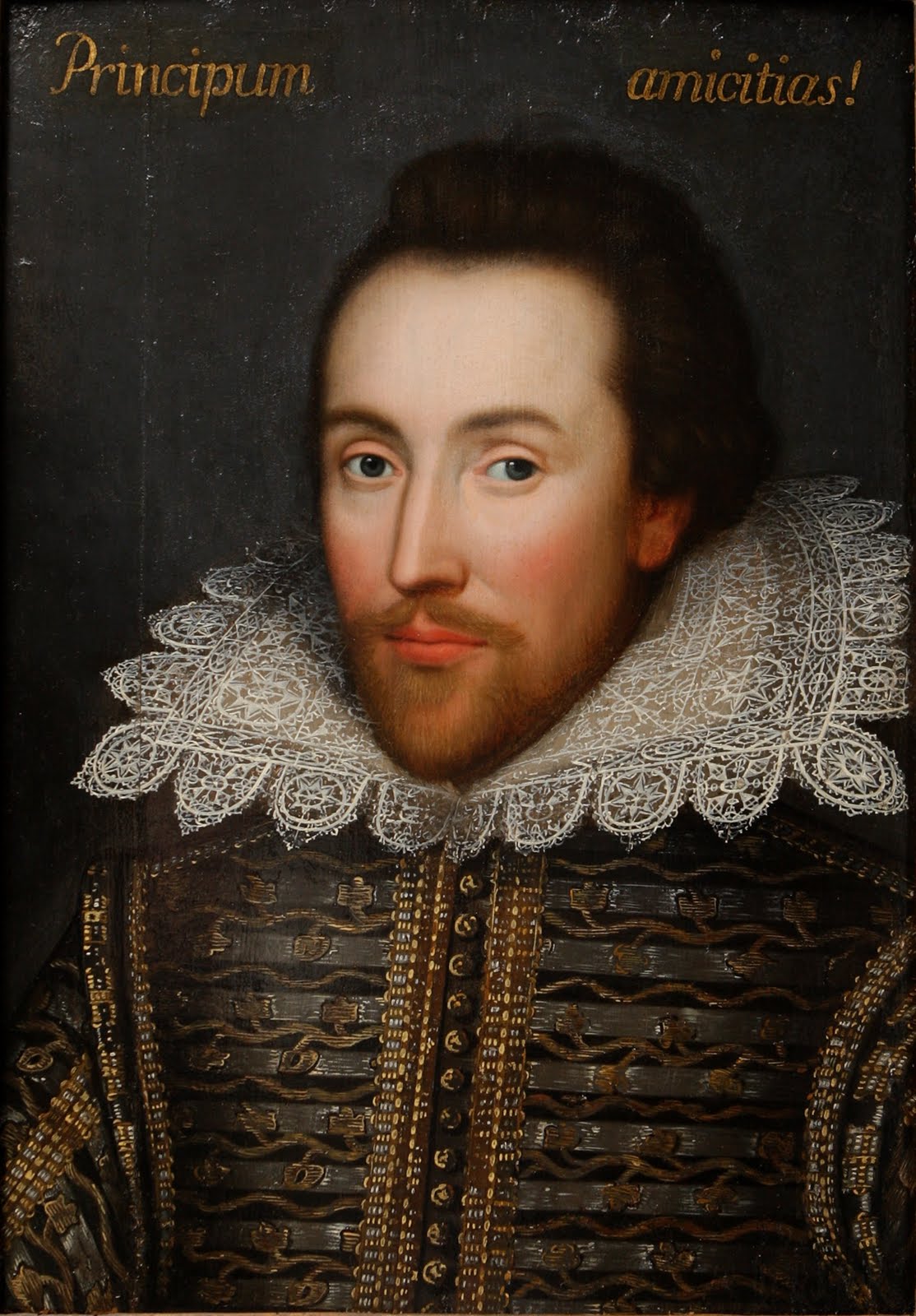
I found large images of the painting here, accompanying a post on Doobybrain, and here accompanying a post on Fragments. The latter image, though smaller, looks to have truer color.
For more on this portrait and a comparison to other key portraits of Shakespeare, see my post: Shakespeare’s Portrait? from March, 2009.
Categories:
-
Trove of Sorolla images

Similar to my opinion of John Singer Sargent, I think that the place of Joaquín Sorolla y Bastida in the canon of great painters in art history is vastly understated.Sorolla has enjoyed something of a renaissance in the last 20 years or so. His popularity is continuing to rise, and resources for his images on the net are growing.
Iain Vellacott, who maintains a nice resource site on Sorolla called Sorolla Paintings pointed out this morning on his Twitter feed a surprisingly extensive selection of Sorolla paintings posted to a site called Art might.
On the downside, many are in desperate need, if not beyond the help of color correction; some are repeats (occasionally with better color), and a number of them are obviously scanned from books or magazines without benefit of de-screening.
On the upside, most of them have pretty good color, and it’s a cache of perhaps 200 images of Sorolla paintings, many of which I haven’t seen reproduced on the web before. Some are familiar, but quite a few are of the kind of work that doesn’t often get reproduced in books, quick studies and sketches, often with a wonderfully gestural quality.
There are older, more academic set pieces and portraits, as well as quick landscape studies and rare still life subjects.
There are as of this writing 11 pages of thumbnails, each with 20 images. Clicking on the thumbnail leads to an intermediate sized image; clicking on that leads to the largest version of the image.
(Interestingly, each intermediate image is accompanied by a palette of colors extracted from the image. Clicking on the color circle at the bottom of that leads to other paintings by various artists with a similar color scheme. Clicking on an individual color in the palette leads to other paintings by other artists in which that color is predominant.)
The images, though not as large as I might like (they rarely are) at least are of a size to get a good feeling for the work. The variety alone, and the impression it gives of the scope of Sorolla’s work, is worth the visit.
Vellacott’s own Sorolla Paintings site also has a small gallery of Sorolla’s paintings; the color reproduction in these is much more reliable.
You can find some additional resources on my previous posts about Sorolla, listed below.
Categories:
-
The Practice & Science of Drawing by Harold Speed

In my post on resources for Learning to Draw back in October, one of the books I mentioned for those on a dedicated path was Harold Speed’s The Practice and Science of Drawing.Though illustrated, this book, like Speed’s well regarded book Oil Painting Techniques and Materials, is less “look and follow” instruction, and more “read and understand and then go practice”.
Speed, whose career spanned the late 19th and early 20th centuries, carried forward the traditions of academic teaching, tempered with an understanding of the new paths then being blazed by the Impressionists and others.
The knowledge Speed offers is supplemented by the illustrations, some by artists like Da Vinci, Rubens, Holbein, Degas and others, and many by Speed himself, a skilled academic draftsman with a loose rendering style that foreshadows the work of noted 20th Century teacher/draftsmen like Andrew Loomis, Walt Reed and Willy Pogany.
Unlike Oil Painting Techniques and Materials, which is available largely as a single edition, The Practice and Science of Drawing, which is also in the public domain, is available in a confusing array of editions, some good, some not so good, some minus the illustrations altogether.
The Dover edition is reliably inexpensive, and contains the illustrations, even if reproduction isn’t superb.
I have not personally seen this edition from General Books, released in January of 2010, or this one from Nabu Press that came out in July of 2010 and is described as a “facsimile edition”, so I can’t recommend either, but I would be interested in hearing from any readers who have seen them. (If I were to take a guess, I might try the General Books edition, but that’s just a guess.)
In the meanwhile, there is a complete online facsimile edition available on the Internet Archive.
Despite being hampered by one of these unendurably stupid “page-flipping” navigation widgets (Do we really need to pretend that our digital books have pages that flip? Really?), the book is presented in a format that allows for relatively large, well presented reproductions of the original illustrations by Speed and others.
There is also a PDF downloadable from the “i” for Information button in the upper right, which may be easier for offline reading, but the illustrations in that one, despite the 20mb download, are so small and over-compressed as to be almost useless.
The digital version is worth looking through and, with a bit of fuss, you can use the enlarge and scroll buttons to view the illustrations without the page-flippy widget driving you crazy.
Perhaps it’s just as well that the interface is a bit demanding of patience, since Speed’s method of study requires dedication and persistence to be of real value.
I’ll leave you with Speed’s own opening sentence from the preface of the book:
“Permit me in the first place to anticipate the disappointment of any student who opens this book with the idea of finding “wrinkles” on how to draw faces, trees, clouds, or what not, short cuts to excellence in drawing, or any of the tricks so popular with the drawing masters of our grandmothers and still dearly loved by a large number of people. No good can come of such methods, for there are no shortcuts to excellence.”
[Link via Robh Ruppel]
Categories:
-
Wikipedia Color Resources
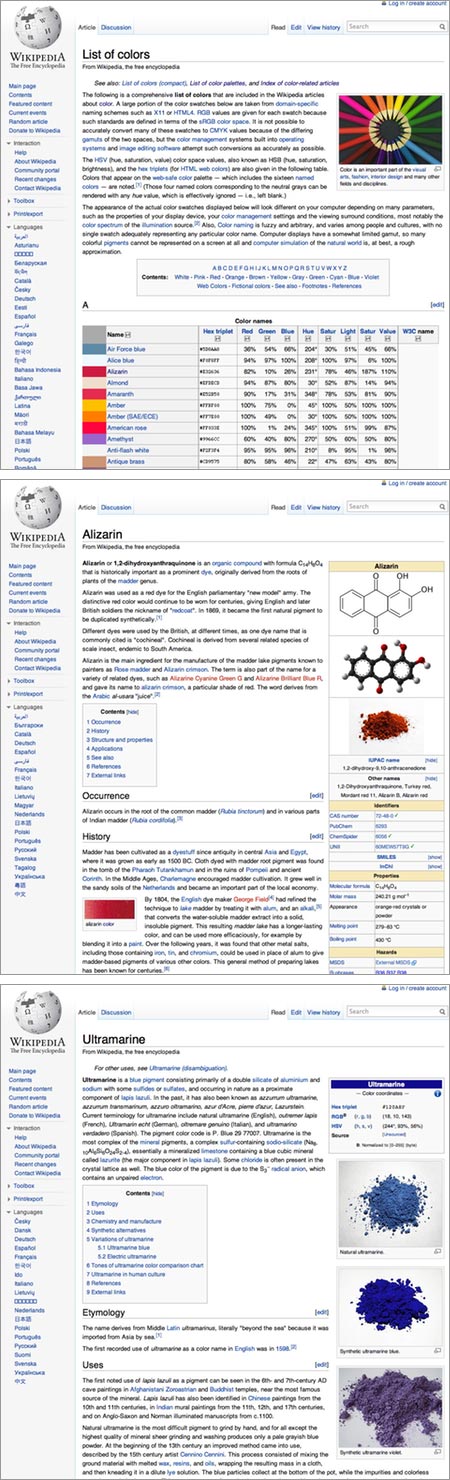
There are lots of color resources on the web, for artists, designers and others, but an often overlooked one is Wikipedia, the venerable user-edited online encyclopedia.Whatever you may say about the reliability of the information on Wikipedia (or from Britannica, or any other single resource, for that matter), I rarely consider a source like Wikipedia a place to end a search, but, like Google, a place to begin one.
Though not specifically an artist’s resource, Wikipedia’s color related articles are numerous and varied.
You might find it interesting to start with their “List of Colors“. The list includes a lot of non-artist colors, like “British Racing Green” and “Psychedelic Purple”, but the familiar artist pigments are there too. Links for those lead to articles with information about the pigment, including source materials, history, chemical composition, lightfastness, typical use, hazardous qualities, color system numbers and sometimes more.
Some are grouped; Cadmium Yellow, Cadmium Orange and Cadmium Red all lead to a single entry for “Cadmium pigments“, but some have more extensive and interesting listings, like the history behind Ultramarine.
There are articles about Color Theory, Color Vision, the Color Wheel, Complimentary Color, Primary Color, Hue, Saturation and many other related topics.
Though hardly an exhaustive resource on color for artists, it does seem a valuable resource to add to your virtual palette.
Categories:




Charley’s Picks
Bookshop.org
(Bookshop.org affilliate links; sales benefit independent bookshop owners; I get a small percentage to help support my work on Lines and Colors)

John Singer Sargent: Watercolors


Urban Sketching: Understanding Perspective


Charley’s Picks
Amazon
(Amazon.com affiliate links; sales go to a larger yacht for Jeff Bezos; but I get a small percentage to help support my work on Lines and Colors)
John Singer Sargent: Watercolors
Urban Sketching: Understanding Perspective