


Categories
- 3d CGI
- Amusements
- Animation
- Anime & Manga
- Art Materials
- Art Videos
- Blogroll
- Cartoons
- Color
- Comics
- Concept & Visual Dev.
- Creativity
- Digital Art
- Digital Painting
- Displaying Art on the Web
- Drawing
- Eye Candy for Today
- Gallery and Museum Art
- High-res Art Images
- Illustration
- Motion Graphics & Flash
- Museums
- Online Museums
- Outsider Art
- Painting
- Painting a Day
- Paleo Art
- Pastel, Conté & Chalk
- Pen & Ink
- Prints and Printmaking
- Reviews
- Sc-fi and Fantasy
- Sculpture & Dimensional
- Site Comments
- Sketching
- Storyboards
- Tools and Techniques
- Uncategorized
- Vector Art
- Videos & Podcasts
- Vision and Optics
- Watercolor and Gouache
- Webcomics
Archives
- April 2026
- March 2026
- February 2026
- January 2026
- December 2025
- November 2025
- October 2025
- September 2025
- August 2025
- July 2025
- June 2025
- May 2025
- January 2025
- December 2024
- November 2024
- October 2024
- September 2024
- August 2024
- June 2024
- April 2024
- March 2024
- February 2024
- January 2024
- December 2023
- November 2023
- October 2023
- September 2023
- August 2023
- July 2023
- May 2023
- April 2023
- March 2023
- February 2023
- January 2023
- December 2022
- November 2022
- September 2022
- August 2022
- July 2022
- June 2022
- May 2022
- April 2022
- March 2022
- February 2022
- January 2022
- December 2021
- November 2021
- October 2021
- September 2021
- August 2021
- July 2021
- June 2021
- May 2021
- April 2021
- March 2021
- February 2021
- January 2021
- December 2020
- November 2020
- October 2020
- September 2020
- August 2020
- July 2020
- June 2020
- May 2020
- April 2020
- March 2020
- February 2020
- January 2020
- December 2019
- November 2019
- October 2019
- September 2019
- August 2019
- July 2019
- June 2019
- May 2019
- April 2019
- March 2019
- February 2019
- January 2019
- December 2018
- November 2018
- October 2018
- September 2018
- August 2018
- July 2018
- June 2018
- May 2018
- April 2018
- March 2018
- February 2018
- January 2018
- December 2017
- November 2017
- October 2017
- September 2017
- August 2017
- July 2017
- June 2017
- May 2017
- April 2017
- March 2017
- February 2017
- January 2017
- December 2016
- November 2016
- October 2016
- September 2016
- August 2016
- July 2016
- June 2016
- May 2016
- April 2016
- March 2016
- February 2016
- January 2016
- December 2015
- November 2015
- October 2015
- September 2015
- August 2015
- July 2015
- June 2015
- May 2015
- April 2015
- March 2015
- February 2015
- January 2015
- December 2014
- November 2014
- October 2014
- September 2014
- August 2014
- July 2014
- June 2014
- May 2014
- April 2014
- March 2014
- February 2014
- January 2014
- December 2013
- November 2013
- October 2013
- September 2013
- August 2013
- July 2013
- June 2013
- May 2013
- April 2013
- March 2013
- February 2013
- January 2013
- December 2012
- November 2012
- October 2012
- September 2012
- August 2012
- July 2012
- June 2012
- May 2012
- April 2012
- March 2012
- February 2012
- January 2012
- December 2011
- November 2011
- October 2011
- September 2011
- August 2011
- July 2011
- June 2011
- May 2011
- April 2011
- March 2011
- February 2011
- January 2011
- December 2010
- November 2010
- October 2010
- September 2010
- August 2010
- July 2010
- June 2010
- May 2010
- April 2010
- March 2010
- February 2010
- January 2010
- December 2009
- November 2009
- October 2009
- September 2009
- August 2009
- July 2009
- June 2009
- May 2009
- April 2009
- March 2009
- February 2009
- January 2009
- December 2008
- November 2008
- October 2008
- September 2008
- August 2008
- July 2008
- June 2008
- May 2008
- April 2008
- March 2008
- February 2008
- January 2008
- December 2007
- November 2007
- October 2007
- September 2007
- August 2007
- July 2007
- June 2007
- May 2007
- April 2007
- March 2007
- February 2007
- January 2007
- December 2006
- November 2006
- October 2006
- September 2006
- August 2006
- July 2006
- June 2006
- May 2006
- April 2006
- March 2006
- February 2006
- January 2006
- December 2005
- November 2005
- October 2005
- September 2005
- August 2005
Relevant Blogs
Art, Painting & Sketch
- Gurney Journey
- Underpaintings
- Art and Influence
- Painting Perceptions
- Oil Painters of America
- Vasari Paint POV
- Flying Fox
- Urban Sketchers
- Bento (Smithsonian)
- Art Inconnu
- The Hidden Place
- Still Life
- Making a Mark
- The Art of the Landscape
- Exploring Color & Creativity
- Art Contrarian
- Artist A Day
- beinArt Surreal Art Collective
- Eye Level
- David Dunlop
- p.i.g.m.e.n.t.i.u.m
- CultureGrrl
- Joaquín Sorolla blog
- Artists in Pastel
“Painting a Day”
- A Painting a Day (Keiser)
- On Painting (Keiser)
- Julian Merrow-Smith
- Karen Jurick
- Jeffrey Hayes
- Carol Marine
- Abbey Ryan
- Daily Paintworks
Other Painting Blogs
- Virtual Gouache Land
- Neil Hollingsworth
- Marc Hanson
- Kevin Menck
- Marc Dalessio
- Larry Seiler
- Stapleton Kearns
- Colin Page
- Roos Schuring
- Hans Versfelt
- Titus Meeuws
- Régis Pettinari
- René Plein Air
- Belinda Del Pesco
- Robin Weiss
- Nathan Fowkes (Land Sketch)
- William Wray
- Frank Serrano
- Stephen Magsig
- Michael Chesley Johnson
- Twice a Week
- Sarah Wimperis
- Rob Adams
- Michael Cole Manley
- The Dirty Palette Club
- Mike Manley’s Draw!
Gallery Art & Illustration mix
Illustration
- Howard Pyle
- 100 Years of Illustration
- BibliOdyssey
- Illustration Art
- Today’s Inspiration
- Illustration Mundo
- Little Chimp Society
- Danny Gregory
- R D (John Martz
- Illustration Friday blog
- Monster Brains
- Illustrators & Illustrations (RU)
- Elwood H. Smith
- DaniDraws.com
- Designers Who Blog
- iSpot Blog
Sci-Fi & Fantasy
Illustration & Comics
Comics & Cartoons
- Comics Beat
- Robot 6
- Newsarama Blog
- Comic Vine
- Comics Alliance
- Forbidden Planet Int.
- Paolo Rivera
- Bolt City
- Flight
- Scott McCloud
- The Comics Journal
- Comixpedia
- Funnybook Babylon
- James Baker
- Middleton’s Sketchbook
- Boneville
- The Hotel Fred
- Paul Rivoche
- Daily Cartoonist
- Mad About Cartoons (William Wray)
- Digital Strips
Illustration & Concept
Animation & Concept
- Cartoon Brew
- Animation Blog
- Cold Hard Flash
- Concept Art World
- The CAB
- FY Concept Art
- Concept Ships
- Concept Robots
- John Nevarez
- Armand Serrano
- Marcos Mateu-Mestre
- all kinds of stuff (Kricfalusi)
- Yacin the faun (Man Arenas)
- Kelsey Mann
- Cre8tivemarks Blog
- Ice-Cream Monster Toon Cafe
- AAU Character & Creature Design
- AAU Animation Notes
- Articles and Texticles
Paleo & Scientific
Tools & Techniques
Other
Lists of Art Blogs
Art Image Resource Links
Historic Art Images
- Wikimedia Commons: Paintings
- Wikimedia Commons: Drawings
- The Athenaeum
- WikiArt (WikiPaintings)
- Google Art Project: Artists
- Google Art Project: Collections (Museums)
- ArtCyclopedia
- Web Gallery of Art
- Art Renewal Center
- Web Gallery of Impressionism
Auction Consolidation sites
Auction sites
- Sotheby’s
- Bonham’s
- Christies
- Heritage Auctions: Fine Art
- Heritage Auctions: Illustration
- Freeman’s Auctions
- Bukowskis
- Shannon’s
Image Search
Reverse Image Search (search by image)
- Tin Eye
- RevImg
- Google Image Search (camera icon)
- Bing Image Search (camera icon)
Promoting some friends and some clients of my website design business
- Twin Willows T’ai Chi studio in Wilmington DE. Taiji classes with Bryan Davis.
- Ray Hayward, Inspired Teacher of T’ai Chi ( Taiji ) in Minneapolis, Founder of Mindful Motion Tai Chi Academy
- OldHead Tattoo studio and Art Gallery in Wilmington DE. Tattoos and paintings by Bruce Gulick
- Sharon Domenico Art, pet portrait oil paintings
- Platinum Paperhanging, wallpaper hanging, Main Line and Philadelphia, PA
- Lisa Stone Design, interior designer, Main Line and Philadelphia, PA
- Studio12KPT, original art, prints, calendars and other custom printed items by Van Sickle & Rolleri
-
W. W. Denslow
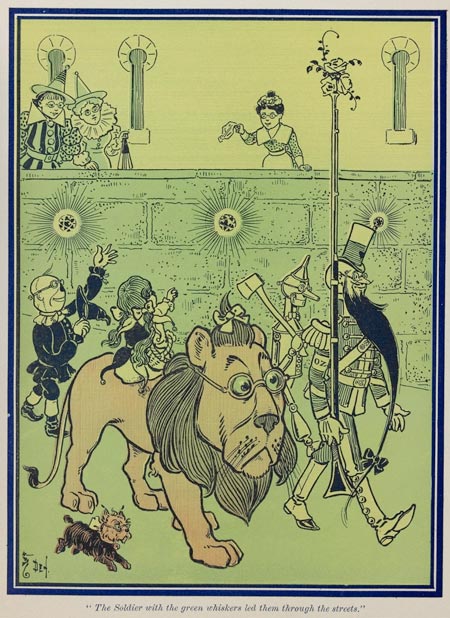
Many more people are familiar with the 1939 MGM movie The Wizard of Oz than are familiar with the source book, The Wonderful Wizard of Oz, written by Frank L. Baum and illustrated by W. W. Denslow.Though not as iconically linked with the title as, say John Tenniel was with Alice’s Adventures in Wonderland, William Wallace Denslow was the definitive illustrator for the first Oz book, and was co-owner of the copyright.
The latter fact, and Denslow’s claim on profits from a very successful stage production of the story in 1902, for which he designed sets and costumes, caused a rift between Denslow and Baum; and Baum refused to work with him thereafter.
Denslow had previously collaborated with Baum on three other children’s books.
The following series of Oz books were illustrated by John R. Neil, an excellent illustrator with a very different style. Subsequent interpretations of the books were more in keeping with Neil than Denslow.
Denslow was an editorial cartoonist, with strong political views, leading many to look for political meanings in The Wonderful Wizard of Oz (see this Wikipedia article). He was born here in Philadelphia and studied at the National Academy of Design and Cooper Institute in New York.
After his split with Baum, Denslow went on to illustrate other books with his now famous name, such as Denslow’s Mother Goose and Denslow’s Night Before Christmas, but it was royalties from the original OZ book and play that enabled him to buy an island off the coast of Bermuda and proclaim himself as its ruler, King Denslow I.
The best online source for Denslow’s Oz illustrations is the always enchanting BibliOdyssey (see my previous post on BibliOdyssey, and here), which has an article on Baum with nice large reproductions of many of the multi-color plates and monochromatic illustrations from the book (click on the illustrations in the article).
The original edition was very elaborate and stretched the book printing paradigms of the time, but the expensive printing costs apparently contributed to the book’s great success.
You can see a reproduction of the entire original edition of the book on The Library of Congress.
Categories:
-
Judith Leyster
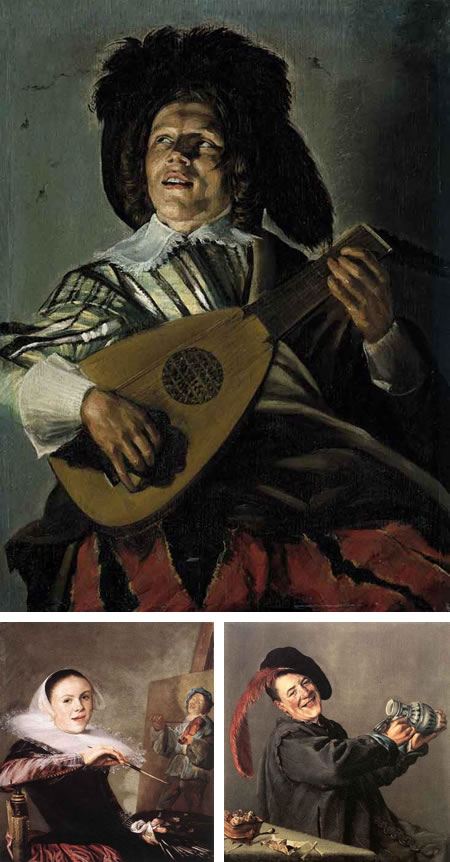
Through some remarkable combination of circumstance and personal strength, the work of Judith Leyster was not lost to us; as must have been the case with countless potential women artists who were denied the opportunity to even pick up a brush by centuries of restrictive social convention.Leyster was active in Harrlem and Amsterdam in the first half of the 17th Century. She painted still life, portraits and genre scenes; particularly domestic scenes of women, a subject which she effectively pioneered. Many of her works feature dramatic lighting, and have a visible light source in the painting, an unusual practice at the time.
It’s presumed because of stylistic similarities that she was a student of Frans Hals, to whom much of her work was attributed for many years, including the image above, top, Serenade. To have had her work mistaken for that of Hals is a testament to her skill.
She also showed the influence of the Utrecht painters who took their inspiration from Caravaggio . She married painter Jan Miense Molenaer, whose work she easily outshone, and shared a studio with him, along with models and props found in both of their paintings.
The image above, bottom left, is a self portrait. Like most artists’ self portraits at the time, it was essentially a demonstration of her skill and an advertisement for her abilities as a portraitist.
This work is in the collection of the National Gallery in Washington, D.C., where it is currently the centerpiece of a show celebrating Leyster’s 400th birthday, Judith Leyster 1609-1660. The exhibition runs until November 29, 2009.
There is a click-thgough slideshow (accompanied by period music) on the national Gallery site.
Leyster’s active career was short, truncated by her duties as a mother, but at least we have her oeuvre as it stands.
[Suggestion and link courtesy of Larry Roibal (see my post on Larry Roibal)]
Categories:
-
Maxfield Parrish (update)
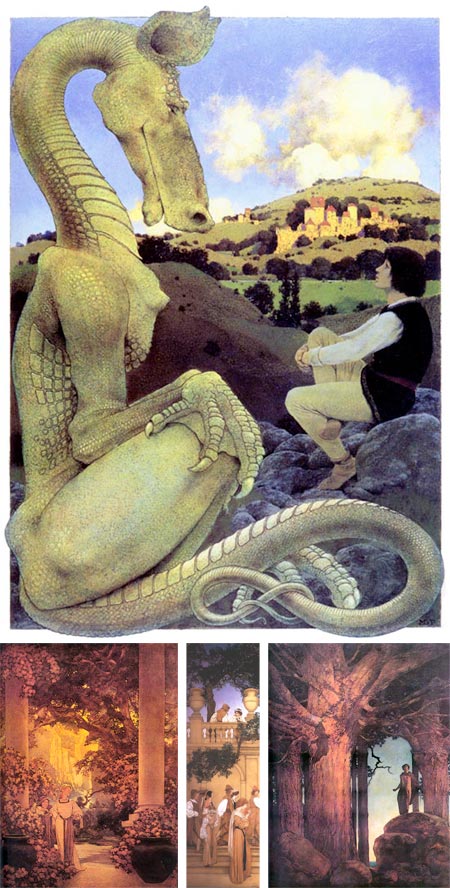
Today is the birthday of Maxfield Parrish, one of the great illustrators form the “Golden Age” of American illustratraton.For more, see my previous post on Maxfield Parrish, which includes a list of links to galleries of his work and other resources.
I’ve included a few additional resources below that I’ve come across since then, in particular the large reproductions from The Arabian Nights on ASIFA-Hollywood Animation Archive.
The list on my previous post is the primary one, however, with the most resources and images.
Categories:
-
Basil Wolverton at Gladstone Gallery

The wonderfully demented art of Basil Wolverton, a cartoonist who helped put the “Ugh” in ugly and the “Gross” in gross-out with his work for Mad Comics (later Mad Magazine) in the 1950’s and 60’s, will be on display at the Gladstone Gallery in New York From June 20 to August 14, 2009.The gallery has a selection of his work online that inclides pieces from many stages of his career, from early, more innocent cartoons, to the gross-out “Beautiful Girl of the Month” that made his reputation, to the apocalyptic Bible illustrations to which he devoted his later career.
There is a review of the show in the New York Times.
For more, including links to more of his art on the web, see my previous post about Basil Wolverton.
Categories:
-
Cowboy Artists of America

Cowboy Artists of America is an organization devoted, in the words of the founders:To perpetuate the memory and culture of the Old West as typified by the late Frederic Remington, Charles Russell and others;
To insure authentic representations of the life os the West, as it was and is;
To maintain standards of quality in contemporary Western art;
To help guide collectors of Western art;
To give mutual assistance in protection of artists’ rights;
To conduct a trail ride and campout in some locality of special interest once a year;
To hold an annual joint exhibition of the works of active members.
It is in the section of the organization’s web site devoted to the latter that you will find images of their work, in oil, water media and drawings, as well as dimensional works. Here is a link to the 2008 Awards, others are listed in the sidebar.
There are also selected works, usually one or two, shown with the members’ bios.
In my quick tour of the site, I found a number of artists that bear further investigation individually, but here is a nice opportunity to see them as a group.
This year’s 44th Annual Show will be at the Phoenix Art Museum in October.
(Images above: John Moyers, Fred Fellows, Bill Owen, R.S. Riddick, Martin Grelle)
[Via Don Coker]
Categories:
-
Don Coker

Georgia artist Don Coker found himself at a crossroads this year when the round of cutbacks and layoffs sweeping the newspaper industry (which is being hit by both the economic downturn and the changing paradigm of how news is delivered) caused him to be laid off from his long time position as a newspaper illustrator, cartoonist, caricaturist, art director and designer.Coker had for a couple of years been following the “painting a day” phenomenon, and was particularly inspired by its originator, Duane Keiser, and an early practitioner, Julian Merrow-Smith (see my posts on “painting a day“, Duane Keiser, and Julian Merrow-Smith).
Coker decided this was an opportune time to explore that avenue, and started a painting blog called “A Daily Curmudgeon“. The intention is to do small oil paintings in the format common to painting a day blogs, 5×5 or 5×7”, but to indulge in his fondness for whimsical character studies rather than the usual small still life or landscape subjects that are the staple of the genre.
Coker says his painting process is to start with a blank canvas or gessoed illustration board and to take a small brush loaded with burnt umber and just start pushing and pulling until an image begins to suggest itself. This has led so far to an array of odd characters as well as a portrait of Shakespeare and a homage to Van-Gogh self portraits.
Be sure to click on the images in the blog to see the large version, and Coker’s technique, which can be painterly or smoothly refined as subject dictates.
Something tells me that Coker’s interests and multi-faceted talents will lead to a wider range of subject matter and approach in the future, but in the meanwhile, his small painted characters are a delight (and a steal at the auction prices he’s asking, I don’t think anyone knows about his blog yet, he just started a few days ago).
Categories:




Charley’s Picks
Bookshop.org
(Bookshop.org affilliate links; sales benefit independent bookshop owners; I get a small percentage to help support my work on Lines and Colors)

John Singer Sargent: Watercolors


Urban Sketching: Understanding Perspective


Charley’s Picks
Amazon
(Amazon.com affiliate links; sales go to a larger yacht for Jeff Bezos; but I get a small percentage to help support my work on Lines and Colors)
John Singer Sargent: Watercolors
Urban Sketching: Understanding Perspective