


Categories
- 3d CGI
- Amusements
- Animation
- Anime & Manga
- Art Materials
- Art Videos
- Blogroll
- Cartoons
- Color
- Comics
- Concept & Visual Dev.
- Creativity
- Digital Art
- Digital Painting
- Displaying Art on the Web
- Drawing
- Eye Candy for Today
- Gallery and Museum Art
- High-res Art Images
- Illustration
- Motion Graphics & Flash
- Museums
- Online Museums
- Outsider Art
- Painting
- Painting a Day
- Paleo Art
- Pastel, Conté & Chalk
- Pen & Ink
- Prints and Printmaking
- Reviews
- Sc-fi and Fantasy
- Sculpture & Dimensional
- Site Comments
- Sketching
- Storyboards
- Tools and Techniques
- Uncategorized
- Vector Art
- Videos & Podcasts
- Vision and Optics
- Watercolor and Gouache
- Webcomics
Archives
- April 2026
- March 2026
- February 2026
- January 2026
- December 2025
- November 2025
- October 2025
- September 2025
- August 2025
- July 2025
- June 2025
- May 2025
- January 2025
- December 2024
- November 2024
- October 2024
- September 2024
- August 2024
- June 2024
- April 2024
- March 2024
- February 2024
- January 2024
- December 2023
- November 2023
- October 2023
- September 2023
- August 2023
- July 2023
- May 2023
- April 2023
- March 2023
- February 2023
- January 2023
- December 2022
- November 2022
- September 2022
- August 2022
- July 2022
- June 2022
- May 2022
- April 2022
- March 2022
- February 2022
- January 2022
- December 2021
- November 2021
- October 2021
- September 2021
- August 2021
- July 2021
- June 2021
- May 2021
- April 2021
- March 2021
- February 2021
- January 2021
- December 2020
- November 2020
- October 2020
- September 2020
- August 2020
- July 2020
- June 2020
- May 2020
- April 2020
- March 2020
- February 2020
- January 2020
- December 2019
- November 2019
- October 2019
- September 2019
- August 2019
- July 2019
- June 2019
- May 2019
- April 2019
- March 2019
- February 2019
- January 2019
- December 2018
- November 2018
- October 2018
- September 2018
- August 2018
- July 2018
- June 2018
- May 2018
- April 2018
- March 2018
- February 2018
- January 2018
- December 2017
- November 2017
- October 2017
- September 2017
- August 2017
- July 2017
- June 2017
- May 2017
- April 2017
- March 2017
- February 2017
- January 2017
- December 2016
- November 2016
- October 2016
- September 2016
- August 2016
- July 2016
- June 2016
- May 2016
- April 2016
- March 2016
- February 2016
- January 2016
- December 2015
- November 2015
- October 2015
- September 2015
- August 2015
- July 2015
- June 2015
- May 2015
- April 2015
- March 2015
- February 2015
- January 2015
- December 2014
- November 2014
- October 2014
- September 2014
- August 2014
- July 2014
- June 2014
- May 2014
- April 2014
- March 2014
- February 2014
- January 2014
- December 2013
- November 2013
- October 2013
- September 2013
- August 2013
- July 2013
- June 2013
- May 2013
- April 2013
- March 2013
- February 2013
- January 2013
- December 2012
- November 2012
- October 2012
- September 2012
- August 2012
- July 2012
- June 2012
- May 2012
- April 2012
- March 2012
- February 2012
- January 2012
- December 2011
- November 2011
- October 2011
- September 2011
- August 2011
- July 2011
- June 2011
- May 2011
- April 2011
- March 2011
- February 2011
- January 2011
- December 2010
- November 2010
- October 2010
- September 2010
- August 2010
- July 2010
- June 2010
- May 2010
- April 2010
- March 2010
- February 2010
- January 2010
- December 2009
- November 2009
- October 2009
- September 2009
- August 2009
- July 2009
- June 2009
- May 2009
- April 2009
- March 2009
- February 2009
- January 2009
- December 2008
- November 2008
- October 2008
- September 2008
- August 2008
- July 2008
- June 2008
- May 2008
- April 2008
- March 2008
- February 2008
- January 2008
- December 2007
- November 2007
- October 2007
- September 2007
- August 2007
- July 2007
- June 2007
- May 2007
- April 2007
- March 2007
- February 2007
- January 2007
- December 2006
- November 2006
- October 2006
- September 2006
- August 2006
- July 2006
- June 2006
- May 2006
- April 2006
- March 2006
- February 2006
- January 2006
- December 2005
- November 2005
- October 2005
- September 2005
- August 2005
Relevant Blogs
Art, Painting & Sketch
- Gurney Journey
- Underpaintings
- Art and Influence
- Painting Perceptions
- Oil Painters of America
- Vasari Paint POV
- Flying Fox
- Urban Sketchers
- Bento (Smithsonian)
- Art Inconnu
- The Hidden Place
- Still Life
- Making a Mark
- The Art of the Landscape
- Exploring Color & Creativity
- Art Contrarian
- Artist A Day
- beinArt Surreal Art Collective
- Eye Level
- David Dunlop
- p.i.g.m.e.n.t.i.u.m
- CultureGrrl
- Joaquín Sorolla blog
- Artists in Pastel
“Painting a Day”
- A Painting a Day (Keiser)
- On Painting (Keiser)
- Julian Merrow-Smith
- Karen Jurick
- Jeffrey Hayes
- Carol Marine
- Abbey Ryan
- Daily Paintworks
Other Painting Blogs
- Virtual Gouache Land
- Neil Hollingsworth
- Marc Hanson
- Kevin Menck
- Marc Dalessio
- Larry Seiler
- Stapleton Kearns
- Colin Page
- Roos Schuring
- Hans Versfelt
- Titus Meeuws
- Régis Pettinari
- René Plein Air
- Belinda Del Pesco
- Robin Weiss
- Nathan Fowkes (Land Sketch)
- William Wray
- Frank Serrano
- Stephen Magsig
- Michael Chesley Johnson
- Twice a Week
- Sarah Wimperis
- Rob Adams
- Michael Cole Manley
- The Dirty Palette Club
- Mike Manley’s Draw!
Gallery Art & Illustration mix
Illustration
- Howard Pyle
- 100 Years of Illustration
- BibliOdyssey
- Illustration Art
- Today’s Inspiration
- Illustration Mundo
- Little Chimp Society
- Danny Gregory
- R D (John Martz
- Illustration Friday blog
- Monster Brains
- Illustrators & Illustrations (RU)
- Elwood H. Smith
- DaniDraws.com
- Designers Who Blog
- iSpot Blog
Sci-Fi & Fantasy
Illustration & Comics
Comics & Cartoons
- Comics Beat
- Robot 6
- Newsarama Blog
- Comic Vine
- Comics Alliance
- Forbidden Planet Int.
- Paolo Rivera
- Bolt City
- Flight
- Scott McCloud
- The Comics Journal
- Comixpedia
- Funnybook Babylon
- James Baker
- Middleton’s Sketchbook
- Boneville
- The Hotel Fred
- Paul Rivoche
- Daily Cartoonist
- Mad About Cartoons (William Wray)
- Digital Strips
Illustration & Concept
Animation & Concept
- Cartoon Brew
- Animation Blog
- Cold Hard Flash
- Concept Art World
- The CAB
- FY Concept Art
- Concept Ships
- Concept Robots
- John Nevarez
- Armand Serrano
- Marcos Mateu-Mestre
- all kinds of stuff (Kricfalusi)
- Yacin the faun (Man Arenas)
- Kelsey Mann
- Cre8tivemarks Blog
- Ice-Cream Monster Toon Cafe
- AAU Character & Creature Design
- AAU Animation Notes
- Articles and Texticles
Paleo & Scientific
Tools & Techniques
Other
Lists of Art Blogs
Art Image Resource Links
Historic Art Images
- Wikimedia Commons: Paintings
- Wikimedia Commons: Drawings
- The Athenaeum
- WikiArt (WikiPaintings)
- Google Art Project: Artists
- Google Art Project: Collections (Museums)
- ArtCyclopedia
- Web Gallery of Art
- Art Renewal Center
- Web Gallery of Impressionism
Auction Consolidation sites
Auction sites
- Sotheby’s
- Bonham’s
- Christies
- Heritage Auctions: Fine Art
- Heritage Auctions: Illustration
- Freeman’s Auctions
- Bukowskis
- Shannon’s
Image Search
Reverse Image Search (search by image)
- Tin Eye
- RevImg
- Google Image Search (camera icon)
- Bing Image Search (camera icon)
Promoting some friends and some clients of my website design business
- Twin Willows T’ai Chi studio in Wilmington DE. Taiji classes with Bryan Davis.
- Ray Hayward, Inspired Teacher of T’ai Chi ( Taiji ) in Minneapolis, Founder of Mindful Motion Tai Chi Academy
- OldHead Tattoo studio and Art Gallery in Wilmington DE. Tattoos and paintings by Bruce Gulick
- Sharon Domenico Art, pet portrait oil paintings
- Platinum Paperhanging, wallpaper hanging, Main Line and Philadelphia, PA
- Lisa Stone Design, interior designer, Main Line and Philadelphia, PA
- Studio12KPT, original art, prints, calendars and other custom printed items by Van Sickle & Rolleri
-
Robert McCall

In some ways Robert McCall is an inheritor of the mantle of pioneering space artist Chesley Bonestell, continuing to document the space program and visually forecast its future, as well as the future of mankind as we step off our little blue island into the vast sea of space.McCall first gained notice for his illustrations for a series on the future of space travel in Life magazine in the early 1960’s. McCall began documenting the US space program for NASA, chronicling many of its major achievements in dramatic paintings. His visions of spacecraft, both existing and projected, and scenes of space and the surfaces of other worlds are on display at a large scale in murals for the National Air and Space Museum in Wasington, D.C. the Pentagon, EPCOT Center and the Johnson Space Center.
His work is also in the collection of the National Gallery of Art and was on a series of stamps for the US Postal Service commemorating the space program, as well as gracing emblems worn by astronauts.
His conceptual and poster art for films includes titles like 2001: A Space Odyssey, The Black Hole and Star Trek: The Motion Picture.
You’ve probably seen McCall’s work many times without realizing it, both in famous posters and accompanying articles in popular magazines. His poster for 2001: A Space Odyssey has become something of a cultural icon.
Even if you’re passingly familiar with McCall’s work, you’re likely to be unaware of the range and variety of his paintings, from accurate representations of existing technology and real events to imaginative projections of visionary futures.
McCall’s site has nicely extensive galleries of his work in several categories. When viewing the thumbnails, rollover the “i” symbol for information about the dimensions, medium and publication of the image, and click on the text link for a larger version (thumbnails are not linked).
The site also has biographic and background information on the artist, as well as information on sales of original art and limited edition prints. There is a collection of his work, The Art of Robert McCall: A Celebration of Our Future in Space, with an introduction by Ray Bradbury, that is out of print, but may be available used. McCall’s site has a limited number of signed copies for sale.
[Link via Randall Ensley]
Categories:
-
Joe Duncan Gleason

I only became aware of Duncan Gleason when my wife let me know there was an interesting painting being shown on one of those PBS programs about antiques. It was a painting of two kids sitting somewhat precariously on a rock in front of surf on the rocky California coast. It was painterly and colorful in a way that seemed related to the California Impressionist tradition.I did a little digging and, while I couldn’t find much on his illustration work, I came up with some background and a number of images of his gallery paintings.
Edenhurst Gallery owns the domain name and keeps a small site for DuncanGleason.com (as they do for the names of many historic California painters), but their own gallery has little in the way of images (at least from what I could bring up through their search feature, they seem mostly interested in buying his work and don’t keep an online archive of previously sold works).
The best results I got were from Vallejo Gallery, which has four pages of images (roughly 20 – links at top right of page), as well as a couple more here, along with a short bio. Click through to the page for the individual image and then click again for the large image (or sneak in the back door and look through the image directory for direct links but no thumbnails).
Duncan Gleason was a talented illustrator who started working for an engraving company when he was only 14. He trained in art at the University of Souther California and the Mark Hopkins Institute of Art in California and the Art Institute of Chicago and later at the Art Students League in New York.
He eventually returned to California and pursued his desire to transition into gallery art, and developed a specialty as a marine painter, with an emphasis on historic sailing ships. He was also an accomplished sailor himself, and a consultant on ship construction, and performed volunteer duty for the Coast Guard during WWII in his own yawl. He the author of two books about the California coast.
Later in his career, he worked as a background and production artist for MGM and Warner Brothers Studios. In addition, he was a championship gymnast and his relationship with the movie studios included work as a stuntman.
This colorful individual painted equally colorful paintings, with a broad, painterly approach rich in tactile brushstrokes and impressionistic hues.
There is a monograph on Gleason, Joe Duncan Gleason: Artist, Athlete, Author by Jane Apostol that at is available through John Moran, who also has a nice selection of books on California art, American Art and monographs, with an emphasis on American Impressionism, that are not always easy to find elsewhere.
Categories:
-
Sergy Skachkov

Sergy Skachkov is a Russian concept artist, who is currently doing freelance work for films and games.Except for a brief bio on CapucinesBoulevard, I can find very little in the way of information about him or his professional work. He doesn’t have his own web site (at least that I can find), but instead seems content to represent himself in galleries on community sites devoted to digital graphics and concept art, like gfxartist and the CGSociety, where he goes by the handle “Atris”.
You can also find some informal tutorials and articles about work in progress on the CGSociety, as well as more formal articles like this feature article about Dangerous Entertainments, the image shown above (larger version here). There is also a milestone post, in which he posted about the image’s progress as he created it as part of a CGSociety “challenge”, in this case with a theme of “Spectacular”.
Skachov works in both 3-D modeling and rendering applications like 3-D Max, as well as doing direct digital painting in Photoshop. When viewing his portfolio on CGSociety, you’ll find an indication of the software used below the image.
I prefer his digital paintings in Photoshop, in which he often takes on complex compositions and loads of detail, as in the image shown above. I was particularly struck by this image, but didn’t use it here because I didn’t think it was representative of his other work.
Categories:
-
Pen Drawing by Charles Maginnis on Project Gutenberg
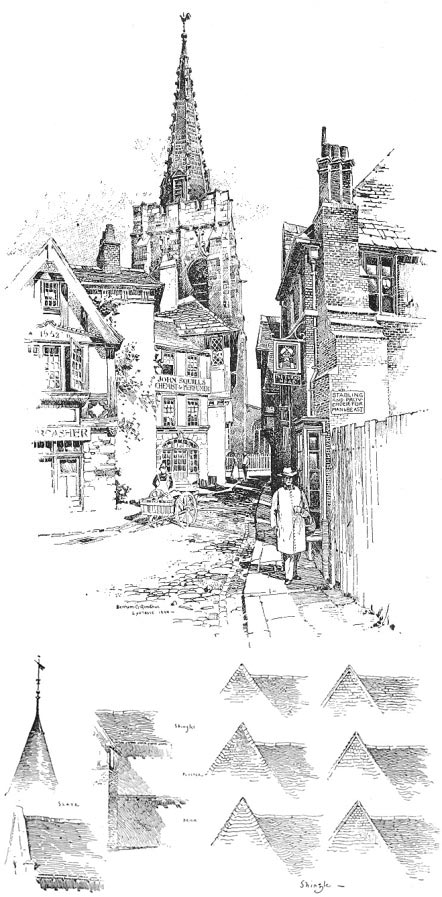
I love pen and ink drawing. It has a visual charm and character unlike any other medium.I assume that I came by my affection for it from realizing as a teenager that pen and ink drawing was the basis for comic books and cartoons, but I was also exposed at a pretty early age to the amazing pen and ink illustrations of Howard Pyle and other illustrators of the Brandywine School in my visits to the Delaware Art Museum, where I also encountered beautiful pen drawings by some of the Pre-Raphaelite artists.
It’s medium that doesn’t get as much attention as more colorful forms of expression, but it’s still there as the basis for much illustration, comics, cartoons and concept art, as well as standing on it’s own as a method of sketching or creating finished drawings.
There are some good resources out there on pen drawing if you dig for them, and you’ll occasionally find some for free.
A case is point is the Project Gutenberg eBook version of Pen Drawing by Charles Maginnis. (Amazon listing here)
This is a relatively short treatise published in 1903, at a time when pen drawing was in its heyday as a ubiquitous method of drawing that could be easily and inexpensively be mass reproduced as illustrations in books and periodicals.
The tone and attitude of the text are a bit dated, but is fascinating as a bit of history for that, and the instruction is basically sound.
The illustrations are not reproduced well, one of the frustrating things about Project Gutenberg that I’ve railed about before, but some of them fare better than others and can give you a taste for some of the excellent pen and ink artists featured from that era, including Joseph Pennell, Daniel Vierge, Herbert Railton, B. G. Goodhue (image above, top), Martin Rico and Maxime LaLanne.
Author Charles Maginnis was a noted architect and the book is slanted a bit toward architectural rendering and supplemented with the author’s own drawings (image above, bottom), but he also includes examples from more figurative artists like Howard Pyle, Will Bradley and Alfonse Mucha.
If this whets your appetite and you want physical pen and ink instruction books with high resolution images of great pen and ink drawing, look for copies of Joseph Pennel’s Pen Drawing, Pen Draughtsmen and Arthur Guptill’s Rendering in Pen and Ink.
[Link via ArtDemonstrations.com]
Categories:
-
Creativity Enhancing Disease? (Anne Adams)

No, you don’t want to get it.The New York Times has published an article, A Disease That Allowed Torrents of Creativity, on the case of Dr. Anne Adams, a Canadian scientist who suffered from a form of dementia called frontotemporal dementia, or FTD, in which certain parts of the brain are adversely affected and diminish in function, while others are apparently enhanced by some compensating action within the brain itself.
FTD is often misdiagnosed as Alzheimer’s disease, but it’s actions are different and more specific to certain parts of the brain. Adams’ particular affliction was a variant of FTD called primary progressive aphasia, PPA, in which patients lose the ability to speak. The action of the disease apparently releases inhibitions on other areas of the brain, enabling them to increase their function, in this case, the right posterior brain, which brain researchers have been coming to associate with artistic endeavor and creativity. Artists who suffer damage to that part of the brain often lose their creative abilities.
Adams, a scientist and gifted mathematician, lost her ability to work with numbers along with her speaking abilities, and began to exhibit a desire to create visually. She had a passing interest in drawing when she was younger, but never pursued it. To the surprise of her family, she abandoned her scientific work and took up art with an uncanny intensity.
At first she was painting architectural house portraits of houses in her neighborhood. As things progressed, she became fascinated with the music of composer Maurice Ravel, who, unknown to her, had suffered from the same disease.
Ravel composed Bolero, his most famous composition, while he was suffering from the disease. Adams became fascinated with this work in particular and created a visual interpretation of the musical piece. An expert in this kind of brain disorder has described Ravel’s piece as “an exercise in compulsivity, structure and preservation”.
You can see Adam’s interpretation, called Unraveling Bolero (image above, bottom) on a page devoted to Adam’s work on the Patient Art Gallery web site of the Memory and Aging Center of the University of California at San Francisco. Unfortunately, the page is in frames, so I can link directly to it for you. It’s the 5th thumbnail down, with the magenta border. There you will also find other examples of her work, like her paintings of houses and buildings, and other pattern based work, like her interpretation of Pi.
You can also find examples of Adam’s work here, along with a complete series of wonderful, almost Escher-like illustrations from An ABC Book of Invertebrates, by Adams and her husband, Robert Adams.
So here we have a disease that apparently rearranges the brain’s functions, and in these rare cases, unleashes a flood of creativity.
Like I said, you don’t want to get it, but it may help us understand the creative processes of the human brain a little better; just as the cases of artistic savants like Stephen Wiltshire and Gilles Tréhin can tell us some thing about the function of memory and mental visualization in relation to drawing.
Categories:
-
Martin Wittfooth

Martin Wittfooth’s paintings draw on both industrial and natural elements, often displaying an intersection and clash of those worlds.Rusting hulks of buses (school, public and VW) sink into the ground in barren landscapes, and occasionally sprout new growth; disarmingly fish-eyed cats swim in drainage channels with bobbing warheads while silver zeppelins glide over concrete aqueducts; wild dogs prowl at the perimeters of fire-belching furnaces; and a gas pump sits amid tree stumps while WPA mural style trains ride high trestles through the smoke and haze of indistinct industrial forms.
Wittfooth uses almost iconic bits of industrial effluvia, and combines them with sometimes malformed or even composite animals, including odd combinations of birds and squirrels, dogs and frogs, and monkeys and butterflies.
Instead of the more common photo-realist approach many artists might take when exploring this territory, Wittfooth approaches his subjects with an eye to texture, almost impressionistic brushwork and a muscular definition of forms; sort of Magritte meets Pissarro meets Thomas Hart Benton.
He paints both gallery works and illustration, and the pieces displayed in his online gallery are often shown in their elaborate frames.
Wittfooth’s commercial clients include Playboy, Victory Records/Silverstein, O’Brien Wakeboards, Sims Snowboards Ltd & Lamar Snowboards.
The “Shop” and “News” sections of his site (I can’t give you direct links because the site is hampered by frames) mention a new limited edition book of his work, Melting Season, Paintings by Martin Wittfooth. There are also limited edition prints available.
The Canadian born artist studied at Sheridan College in Canada and the School of Visual Arts in New York. He has exhibited at the La Luz Jueus gallery in Los Angeles, The Conference Room gallery in Beverly Hills and Galerie d’art Yves Laroche in Montreal.
Categories:




Charley’s Picks
Bookshop.org
(Bookshop.org affilliate links; sales benefit independent bookshop owners; I get a small percentage to help support my work on Lines and Colors)

John Singer Sargent: Watercolors


Urban Sketching: Understanding Perspective


Charley’s Picks
Amazon
(Amazon.com affiliate links; sales go to a larger yacht for Jeff Bezos; but I get a small percentage to help support my work on Lines and Colors)
John Singer Sargent: Watercolors
Urban Sketching: Understanding Perspective