


Categories
- 3d CGI
- Amusements
- Animation
- Anime & Manga
- Art Materials
- Art Videos
- Blogroll
- Cartoons
- Color
- Comics
- Concept & Visual Dev.
- Creativity
- Digital Art
- Digital Painting
- Displaying Art on the Web
- Drawing
- Eye Candy for Today
- Gallery and Museum Art
- High-res Art Images
- Illustration
- Motion Graphics & Flash
- Museums
- Online Museums
- Outsider Art
- Painting
- Painting a Day
- Paleo Art
- Pastel, Conté & Chalk
- Pen & Ink
- Prints and Printmaking
- Reviews
- Sc-fi and Fantasy
- Sculpture & Dimensional
- Site Comments
- Sketching
- Storyboards
- Tools and Techniques
- Uncategorized
- Vector Art
- Videos & Podcasts
- Vision and Optics
- Watercolor and Gouache
- Webcomics
Archives
- April 2026
- March 2026
- February 2026
- January 2026
- December 2025
- November 2025
- October 2025
- September 2025
- August 2025
- July 2025
- June 2025
- May 2025
- January 2025
- December 2024
- November 2024
- October 2024
- September 2024
- August 2024
- June 2024
- April 2024
- March 2024
- February 2024
- January 2024
- December 2023
- November 2023
- October 2023
- September 2023
- August 2023
- July 2023
- May 2023
- April 2023
- March 2023
- February 2023
- January 2023
- December 2022
- November 2022
- September 2022
- August 2022
- July 2022
- June 2022
- May 2022
- April 2022
- March 2022
- February 2022
- January 2022
- December 2021
- November 2021
- October 2021
- September 2021
- August 2021
- July 2021
- June 2021
- May 2021
- April 2021
- March 2021
- February 2021
- January 2021
- December 2020
- November 2020
- October 2020
- September 2020
- August 2020
- July 2020
- June 2020
- May 2020
- April 2020
- March 2020
- February 2020
- January 2020
- December 2019
- November 2019
- October 2019
- September 2019
- August 2019
- July 2019
- June 2019
- May 2019
- April 2019
- March 2019
- February 2019
- January 2019
- December 2018
- November 2018
- October 2018
- September 2018
- August 2018
- July 2018
- June 2018
- May 2018
- April 2018
- March 2018
- February 2018
- January 2018
- December 2017
- November 2017
- October 2017
- September 2017
- August 2017
- July 2017
- June 2017
- May 2017
- April 2017
- March 2017
- February 2017
- January 2017
- December 2016
- November 2016
- October 2016
- September 2016
- August 2016
- July 2016
- June 2016
- May 2016
- April 2016
- March 2016
- February 2016
- January 2016
- December 2015
- November 2015
- October 2015
- September 2015
- August 2015
- July 2015
- June 2015
- May 2015
- April 2015
- March 2015
- February 2015
- January 2015
- December 2014
- November 2014
- October 2014
- September 2014
- August 2014
- July 2014
- June 2014
- May 2014
- April 2014
- March 2014
- February 2014
- January 2014
- December 2013
- November 2013
- October 2013
- September 2013
- August 2013
- July 2013
- June 2013
- May 2013
- April 2013
- March 2013
- February 2013
- January 2013
- December 2012
- November 2012
- October 2012
- September 2012
- August 2012
- July 2012
- June 2012
- May 2012
- April 2012
- March 2012
- February 2012
- January 2012
- December 2011
- November 2011
- October 2011
- September 2011
- August 2011
- July 2011
- June 2011
- May 2011
- April 2011
- March 2011
- February 2011
- January 2011
- December 2010
- November 2010
- October 2010
- September 2010
- August 2010
- July 2010
- June 2010
- May 2010
- April 2010
- March 2010
- February 2010
- January 2010
- December 2009
- November 2009
- October 2009
- September 2009
- August 2009
- July 2009
- June 2009
- May 2009
- April 2009
- March 2009
- February 2009
- January 2009
- December 2008
- November 2008
- October 2008
- September 2008
- August 2008
- July 2008
- June 2008
- May 2008
- April 2008
- March 2008
- February 2008
- January 2008
- December 2007
- November 2007
- October 2007
- September 2007
- August 2007
- July 2007
- June 2007
- May 2007
- April 2007
- March 2007
- February 2007
- January 2007
- December 2006
- November 2006
- October 2006
- September 2006
- August 2006
- July 2006
- June 2006
- May 2006
- April 2006
- March 2006
- February 2006
- January 2006
- December 2005
- November 2005
- October 2005
- September 2005
- August 2005
Relevant Blogs
Art, Painting & Sketch
- Gurney Journey
- Underpaintings
- Art and Influence
- Painting Perceptions
- Oil Painters of America
- Vasari Paint POV
- Flying Fox
- Urban Sketchers
- Bento (Smithsonian)
- Art Inconnu
- The Hidden Place
- Still Life
- Making a Mark
- The Art of the Landscape
- Exploring Color & Creativity
- Art Contrarian
- Artist A Day
- beinArt Surreal Art Collective
- Eye Level
- David Dunlop
- p.i.g.m.e.n.t.i.u.m
- CultureGrrl
- Joaquín Sorolla blog
- Artists in Pastel
“Painting a Day”
- A Painting a Day (Keiser)
- On Painting (Keiser)
- Julian Merrow-Smith
- Karen Jurick
- Jeffrey Hayes
- Carol Marine
- Abbey Ryan
- Daily Paintworks
Other Painting Blogs
- Virtual Gouache Land
- Neil Hollingsworth
- Marc Hanson
- Kevin Menck
- Marc Dalessio
- Larry Seiler
- Stapleton Kearns
- Colin Page
- Roos Schuring
- Hans Versfelt
- Titus Meeuws
- Régis Pettinari
- René Plein Air
- Belinda Del Pesco
- Robin Weiss
- Nathan Fowkes (Land Sketch)
- William Wray
- Frank Serrano
- Stephen Magsig
- Michael Chesley Johnson
- Twice a Week
- Sarah Wimperis
- Rob Adams
- Michael Cole Manley
- The Dirty Palette Club
- Mike Manley’s Draw!
Gallery Art & Illustration mix
Illustration
- Howard Pyle
- 100 Years of Illustration
- BibliOdyssey
- Illustration Art
- Today’s Inspiration
- Illustration Mundo
- Little Chimp Society
- Danny Gregory
- R D (John Martz
- Illustration Friday blog
- Monster Brains
- Illustrators & Illustrations (RU)
- Elwood H. Smith
- DaniDraws.com
- Designers Who Blog
- iSpot Blog
Sci-Fi & Fantasy
Illustration & Comics
Comics & Cartoons
- Comics Beat
- Robot 6
- Newsarama Blog
- Comic Vine
- Comics Alliance
- Forbidden Planet Int.
- Paolo Rivera
- Bolt City
- Flight
- Scott McCloud
- The Comics Journal
- Comixpedia
- Funnybook Babylon
- James Baker
- Middleton’s Sketchbook
- Boneville
- The Hotel Fred
- Paul Rivoche
- Daily Cartoonist
- Mad About Cartoons (William Wray)
- Digital Strips
Illustration & Concept
Animation & Concept
- Cartoon Brew
- Animation Blog
- Cold Hard Flash
- Concept Art World
- The CAB
- FY Concept Art
- Concept Ships
- Concept Robots
- John Nevarez
- Armand Serrano
- Marcos Mateu-Mestre
- all kinds of stuff (Kricfalusi)
- Yacin the faun (Man Arenas)
- Kelsey Mann
- Cre8tivemarks Blog
- Ice-Cream Monster Toon Cafe
- AAU Character & Creature Design
- AAU Animation Notes
- Articles and Texticles
Paleo & Scientific
Tools & Techniques
Other
Lists of Art Blogs
Art Image Resource Links
Historic Art Images
- Wikimedia Commons: Paintings
- Wikimedia Commons: Drawings
- The Athenaeum
- WikiArt (WikiPaintings)
- Google Art Project: Artists
- Google Art Project: Collections (Museums)
- ArtCyclopedia
- Web Gallery of Art
- Art Renewal Center
- Web Gallery of Impressionism
Auction Consolidation sites
Auction sites
- Sotheby’s
- Bonham’s
- Christies
- Heritage Auctions: Fine Art
- Heritage Auctions: Illustration
- Freeman’s Auctions
- Bukowskis
- Shannon’s
Image Search
Reverse Image Search (search by image)
- Tin Eye
- RevImg
- Google Image Search (camera icon)
- Bing Image Search (camera icon)
Promoting some friends and some clients of my website design business
- Twin Willows T’ai Chi studio in Wilmington DE. Taiji classes with Bryan Davis.
- Ray Hayward, Inspired Teacher of T’ai Chi ( Taiji ) in Minneapolis, Founder of Mindful Motion Tai Chi Academy
- OldHead Tattoo studio and Art Gallery in Wilmington DE. Tattoos and paintings by Bruce Gulick
- Sharon Domenico Art, pet portrait oil paintings
- Platinum Paperhanging, wallpaper hanging, Main Line and Philadelphia, PA
- Lisa Stone Design, interior designer, Main Line and Philadelphia, PA
- Studio12KPT, original art, prints, calendars and other custom printed items by Van Sickle & Rolleri
-
Barefoot Gen (Keiji Nakazawa)
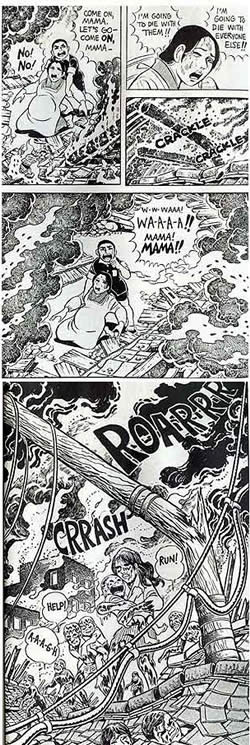 Contrary to popular belief, the horror of nuclear war is not the stuff of science fiction; humanity has already experienced a nuclear war, albeit a limited one; it was called World War II; a war in which nuclear weapons were dropped on cities full of people.
Those whose impression of the medium we call “comics” is based on American super-hero comics and the current milquetoast crop of newspaper comics may be amazed to learn of some of the topics that comics stories have dealt with. In a future post, I’ll cover Maus, Art Spiegelman’s graphic novel (fancy name for comics story) of his father’s account of imprisonment in a German concentration camp in WWII.
Spiegelman also contributed an introduction to the U.S. release of another chilling and powerful story presented in the medium of comics: the Japanese graphic novel Hadashi no Gen (Barefoot Gen, pronounced with a hard “G”), an account of the bombing of Hiroshima and its aftermath told from the point of view of a six year old boy. Though the story is fiction, it is also true to life; author/artist Keiji Nakazawa was six years old and living in Hiroshima when the bomb fell.
Tonight (Monday, August 6) at 7:30pm (ET/PT), HBO will air White Light, Black Rain: The Destruction of Hiroshima and Nagasaki, a documentary on this often ignored and swept-under-the-rug chapter from World War II. It features profiles of several survivors of the event, along with profiles of the Americans that flew the mission. One of the survivors who will be profiled is Keiji Nakazawa.
You can read an interview with the documentary’s director, Steven Okazaki, on the HBO site; and an interview with Keiji Nakazawa in The Comics Journal.
Nakazawa’s initial manga story about Hiroshima, Ore wa Mita (I Saw It) was more directly autobiographical; Gen, however, is more ambitious and more compelling as a story. At first there was resistance to the publication of these stories among the major manga publishers in Japan, who considered them too political, but a smaller publisher of “adult” (erotic) comics supported the publication of Nakazawa’s I Saw It and encouraged him to expand on the idea, which resulted in the story of Barefoot Gen.
Serialized in the manga anthology Weekly Shonen Jump in the early 1970’s, Barefoot Gen was translated into other languages in the 1980’s, and a new translation has been published in the U.S. as a four volume “graphic novel” series (with an introduction by Speigelman): Barefoot Gen Volume One: A Cartoon Story of Hiroshima, Barefoot Gen Volume Two: The Day After, Barefoot Gen Volume Three: Life After the Bomb and Barefoot Gen Volume Four: Out of the Ashes.
The Barefoot Gen manga story was made into an anime in 1983, directed by Mori Masaki, followed by Barefoot Gen 2 in 1986. (They are available on DVD as a set.)
The art for the original manga version of Barefoot Gen could be described as “cartoony” compared to what you might expect for such a theme; but the simple, spare drawings, almost iconic in their basic representation of people and environments, convey the story in a way that would actually be difficult with a more “realistic” drawing approach.
There is nothing simplistic about the story. It might have been easy to blame the “enemy”, the U.S., for the suffering imposed on their family by the war, but Gen’s father blames the greed of the ruling class and begins to resist the government’s propaganda. His pacifist beliefs brand the family as traitors. Gen is caught between the indoctrination he receives at school and his Father’s adamant anti-war stance. The already hard scrabble for food, made more imperative by his mother’s current pregnancy, becomes multiplied in the aftermath of the bomb, which leaves only Gen and his mother alive from his family. (Nakazawa himself lost his father, brother and two sisters.)
The story pulls no punches in it’s portrayal of the effect and immediate aftermath of the bomb that was dropped on Hiroshima, and the harsh realities of life for the survivors; but it is a story of personal struggle and survival in the face of the madness of war, and a story with humanity, nobility, sacrifice and compassion.
Nakazawa does not have a simplistic attitude toward the event either. Barefoot Gen is not an expression of bitterness toward the U.S. for dropping the bomb, which might be forgivable given his experience and circumstances; it rises above the kind of nationalism that permitted the events of WWII to happen in the first place; and, in its direct and honest description of the event, condems all war, and our insanity as a species in threatening ouselves with nuclear weapons, and in particular for actually using them on ourselves.
Reading Barefoot Gen should be mandatory for the presidents of the U.S. and Russia, the leaders of China, and every politician and minister in every nuclear power; as should a viewing of tonight’s HBO presentation of White Light, Black Rain.
The Web site for the documentary also includes a sldeshow of artwork created by survivors. While most of it was created by individuals without formal artistic training, the power of the images is undeniable. There are additional drawings by atomic bomb survivors on the site of the Hiroshima Peace Memorial Museum.
Categories:
-
Registering a domain name
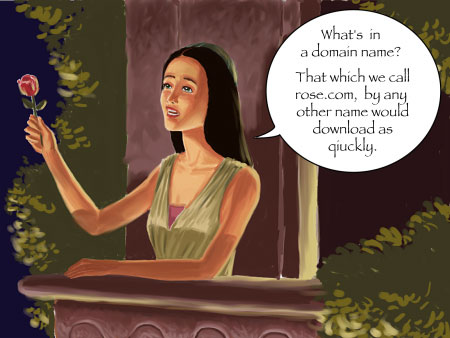
How to Display Your Art on the Web: Part 2
[This is part of a series of articles for which the introduction and list of articles is here. If you haven’t read the introduction yet, it would be helpful to read it first.]
If you want a professional web presence, suitable for putting on a business card or giving out to art directors or gallery owners, you need something better than a MySpace page, a Flickr account or a page with an address like tripod.com/~joeartist/web/portfolio.html; you need a domain name.
In theory registering a domain name is simple; look up the name on a domain name lookup page; if it’s available, pay a fee, and then point the domain name at the web server where your site’s HTML pages reside. In practice, however, it can be a little more complicated than that.
When to register a domain name
Now. Yesterday. Three years ago. Get the picture? Even if you’re not ready to put your web site together yet, if you can find a domain name you like, get it now. It doesn’t cost that much to keep them registered ($5-$15 a year in most cases) and they disappear quickly. If you are looking around to “see what’s available”, and you find one that you really like, be prepared to buy in now. If you come back tomorrow, it may be gone. There is also the questionable practice of “domain tasting”, or “domain kiting” in which domains can be used by spammers for free for five days at a time (details here and here). If the domain you want isn’t available, it may be worth checking back in five days (but not before).
What’s in a name?
When you type in a URL like www.linesandcolors.com into a browser, or click on a link in a web page, your browser sends out a request for an HTML document (a web page) that is supposed to exist at that address. The web server at that address is supposed to receive your request and send back the web page, along with any embedded content, like images or Flash files, that are included in the code of the page.
A web server is a computer somewhere; it could be in a temperature controlled room in a vast hosting facility with backup power generators and 24 hour security; it could be in some geek’s closet. More specifically, a web server is a piece of software running on such a computer that handles requests for web pages. When you sign up for a hosting account, you’re paying to have your site hosted on a web server.
An address like www.linesandcolors.com or the first part of a longer address like www.linesandcolors.com/how-to-display-your-artwork-on-the-web/, is the domain name, the key part of the location of the requested web page. The domain name is like the address of a building, the other page locations are like offices or apartments in that building.
The domain name isn’t really the location of the web page (or web site), though. The actual location is a number, like 208.112.74.241. The domain name is just a short cut, a way to make it easier for humans to remember and use internet addresses. The domain name points to a web server at the address number. Your request for the page at www.linesandcolors.com actually goes first to a special computer called a domain name server, that translates the domain name into the number, and sends the request to the web server at that numbered address.
When you register a domain name, you point it to the number for a particular set of domain name servers (“DNS”) associated with your hosting company. If you change hosting companies, you can take your domain name with you and use the control panel, or domain name admin login that comes with your domain name registration account, to point the domain name at a new set of domain name servers associated with your new hosting account.
Registering a domain name
Registering a domain name and hosting a web site are two different and separate things, though they are often handled through the same company.
Domain name registrars are companies approved by ICANN, the officiating agency, to register and maintain records of domain names. Some are better than others and, as with my post on web hosting providers, I’m not going to stick my neck out and recommend which ones to use, so you don’t come back and complain to me if you don’t like them.
Unless you’re registering a domain name well in advance of creating a site, I’ll recommend that you take the easy path of registering your domain through your chosen hosting provider. Most domain name registrars, in fact, also offer hosting, and many web hosting companies offer a “free” domain name registration as one of the features in their web hosting accounts.
If you register your domain name through the same company you open your web hosting account with, they will automatically point the domain to their DNS servers for you. You can always take the domain name with you if you decide to change hosts. It belongs to you as long as you keep it registered.
If you can’t decide yet, you can simply choose a known domain name registar. Registering a domain name can cost anywhere from $5 to $15 a year. You can easily pay more, but I don’t think you have to. Cheapest is not necessarily best. You want one that is reliable an doesn’t make it difficult to administer the domain or move it to another registrar if you want to.
Domain name parking You can “park” a domain name, meaning to have it registered without pointing it to a web site, inexpensively. Some registrars offer a minimal home page with your name on it as part of the parking, others will just point it to their own site until you’re ready to use it.
Domain name look-ups All hosting providers and domain name registrars have a lookup field where you can type in a potential domain name and see if it’s taken. If it’s available, they will allow you to start the process of registering it. If it’s not available, they’ll try to sell you six dozen variations and twenty different suffixes (.net, .biz, .tv, .whatever…). You want a .com if at all possible.
Dot what?
There are a lot of other “top level domains” now, but “.com” is still preferable; “.net” or “.org” are a long second (in theory, “.org” is supposed to be for non-profits). This may change, but right now you can ignore the registrar’s attempts to sell you domains ending in .tv, .biz .name, etc.
The reason I say this is the same principle that applies to corporate domain names, people expect a domain to be companyname.com. The closer you can get to that as an individual or studio, the better. You will hear that shorter domain names are always better; this is not true. You want a domain name that people will remember and associate with you and what you do.
Types of contacts
Part of the registration process is listing four types of contacts, these may be different within a company, for example, or all the same for an individual. “Registrant” is the owner of the domain name and is the most important. “Administrative” is the one responsible for maintaining the information in the listing and is usually the same as Registrant. “Billing” is the one responsible for payment to renew the registration. “Technical” might be the IT department at a company, or a trusted web site developer for an individual, responsible for pointing the domain to the correct domain name servers, etc. You can assign all of these to youself.
More on registering a domain name here.
Choosing a domain name
The bad news: all of the really good ones are taken. You can tell I’ve been on the web for a long time because my web comic (which was the first of its kind) has a four-letter domain name (zark.com). Not only have people been snatching up domain names for the last 14 years, there are companies and individuals who make money off of domain name “squatting”, i.e. the bulk registration of hundreds, thousands or tens of thousands of domain names, on the basis of being able to hold them for ransom from those who actually want to use them.
The good news: If you’re lucky, clever, or work at it hard enough, you can come up with a perfectly acceptable one.
The best domain name is yourname.com. If you you have a name with an unusual spelling, you may actually be able to do this. It was only a few years ago that I registered charleyparker.com.
The next best is something that has to do with your name and what you do, the name of your studio, your name and your specialty, etc. For example yournameillustration.com.
I’ll say it again: shorter is not necessarily better. The important thing about your domain name is that people can remember it and associate it with you! janedoeillustration.com is better than jdcoolpen.com.
Adopting a professional studio name, for which you can find a good domain name and under which you intend to do business, is another solution, just like having a company name. Not easy, but certainly possible. Be prepared for that studio name to become your professional identity.
If your domain name is easily misspelled, consider buying the common misspelling (if it’s available) and “pointing” it to your domain. (Try typing misspellings for Britannica.com into your browser.)
Other considerations
Automatic renewal. The default registration is for one year, though most registrars will try to get you to register for two or more. This is actually a good idea if you are certain you want the name for that long. Most registrars also offer “automatic renewal”. This is also a good idea, in that once a domain name is registered, don’t let it lapse, unless you are intentionally dropping it. There are thousands of hungry web bottom feeders out there waiting for dropped domain names to appear so they can grab them up and fill them with spam links. If you don’t want this to happen, keep your registration current. If you choose the automatic renewal option, registrars and hosting companies that offer it will send you an email in advance of your renewal date, and then automatically charge your credit card (keep that current, too) to renew your domain name unless you tell them not to.
Domain name locking (transfer protection). ICANN recently changed the rules so that one registrar can initiate the transfer of a domain from another registrar without the current registrar’s approval. This may seem odd, but it was initiated so that unscrupulous registrars couldn’t hold a domain against the wishes of the actual registrant. Of course, this solves one problem and causes another, because it allows those same unscrupulous registrars, or hackers working through them, to force a domain over to a shady registrar without the registrant’s knowledge or permission and actually steal it from them through additional machinations. This is why registrars now offer “domain locking” which means that you voluntarily “lock” your domain from being moved to another registrar until you unlock it. If you trust your registrar (and you’d better), this is a good idea, and it is not the default. You have to choose it somewhere in the registration process or later in the page where you administer your domain. (More details here.)
Master of your domain
When you register a domain name, you should be provided with some way to administer it, i.e. to re-register it, change where your DNS servers point, lock it or unlock it, and so on. This is usually a web address accessed by a log-in and password that the registrar or hosting company will provide you in an email. (Print out that info and keep it on record!) If you purchase your domain through your web hosting provider, domain name administration may be through the same “control panel” that allows administration of your web site and email.
Multiple domains If you have multiple domains regsistered through the same company, you can usually administer them through the same admin panel. You can also “point” one domain to another. If you have a domain name for you and one for your studio, for example, you can have one point to the other instead of maintaining two sites.
Dealing with the bottom feeders
Other people have multiple domain names for a different reason. They’ve registered zillions of them in the hope that they now have the one you want and can force you to cough up many times the cost of registration to ransom it from them. If you look up your absolutely perfect, no-substitutes, must-have domain name and find that it is being squatted, usually indicated by the fact the the domain points to a page full of links, or a page that tries to look like a search engine, you may decide you want to ransom it from the squatters.
While I don’t necessarily condone this, the one thing I will suggest is that you enter the transaction warily and use a service like escrow.com to cover yourself. (It adds expense, but getting a domain from squatters can be expensive to begin with.) The squatters who want to sell the names usually have a notice on the page saying that the domain is for sale and offering contact info. Some squatters don’t want to sell the domain name because it is successful in bringing in “pay-per-click” revenue on the page full of ads that the domain links to. It may be hard to wrestle these away, even with a gerneous offer.
WhoIs You can also look up the owner of a domain name and their contact information by using a WhoIs lookup, like the one on arin.net or Network Solutions. There are also a number of other WhoIs outfits out there. Be aware that its been suggested that some of the less reputable WhoIs search services engage in domain name tasting (see “When to register”, above).
Putting your name out there
When you register a domain name your contact information, including your email address, becomes public record through the same WhoIs process described above. This is unavoidable unless you want to use “anonymous registration” offered by some registrars, but I’m wary of that because legally it means the registrar (or web hosting provider) becomes the actual owner of the domain name. You must use a real email address when registering a domain as it is one of the primary ways the domain is administered, and the only way you will usually be notified if there are any important changes (or if your domain is up for renewal).
Promoting your domain name and making your site known will be the topic of a future post, but it’s worth noting that keywords in domain names can sometimes help with search engine rankings (there are other factors that are much more important, however).
Next: Building your web site
Categories:
-
Ron Cobb
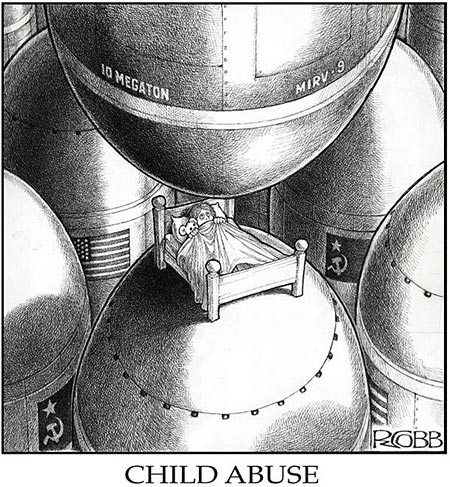
I’ve been wanting to write a post on Ron Cobb for some time now.
Cobb is a cartoonist, film production designer and concept artist from Los Angeles, currently living and working in Sydney, Australia.
When I went to write a post on Cobb last year, I was disappointed to find that there wasn’t much material available on the web. Cobb had an official site, but there was little to it but promises of “coming soon”. I was recently pleased to find that, despite continued protestations of the site being “under construction”, there is now sufficient material on his site for me to remind you of (or introduce you to) the work of this terrific and unjustly overlooked artist. In addition, new material has cropped up in a few other places.
Cobb began his career as an in-betweener and eventually breakdown artist for Disney, working on the ground-breaking feature Sleeping Beauty, but was laid off by Disney in 1957. (“In-betweeners” were junior artists who drew the frames in-between the “key” frames drawn by the senior artists; from which we get the term “tweening” as used in modern computer animation.) Cobb drifted between odd jobs for awhile before finding his new niche.
In the 1960’s and 1970’s there was a lively, energetic “alternative media”, consisting largely of small, independent “underground” newspapers, that opposed the deficiencies and corruption they saw the established order and viewed the mainstream media as tool of the corporate and political elite. (These days, of course, that function is largely served by the web.)
Cobb became the premiere editorial cartoonist for that generation’s countercultural voices. From 1965 to 1970 he drew editorial cartoons for the L.A. Free Press and in the early 70’s for The Digger in Melbourne, Australia; and his cartoons were distributed to other alternative papers through the Underground Press Syndicate.
I don’t use the term “political cartoons” when referring to Cobb because his work often transcended poiltics and dealt with larger issues. His caustic cartoons from the 60’s and 70’s exposed our follies, not just as a group or a party or a nation, but often as a species, in a biting, no-holds-barred commentary that few mainstream cartoonists could approach.
And what cartoons they were! His images were drawn with a raw, in-your-face energy and given a visual wallop by his use of intensely detailed crosshatching, contrasted with large open areas of negative space, and often dealt with subject matter that was disturbing and horrific. He pulled no punches when trying to point out to us how blind and short sighted we were; often portraying a stunned looking everyman who finds himself in some dystopian near-future, shocked with the outcome of our foolish species’ predilection for pollution, racism, violence, war and other monumental stupidity.
There were some collections of his cartoons printed, but they are unfortunately out of print. You may be able to find some used, if you can find someone willing to part with their copies. Personally, I treasure my battered copy of Raw Sewage.
Cobb also was in evidence as an illustrator, particularly within that same counter-cultural milieu; for example, did the terrific wrap-around cover for the Jefferson Airplane’s After Bathing at Baxters album (back when 12″x12″ record albums covers were the “big canvas” for illustrators).
Eventually, he moved back into the film industry, which answers the question for all of his cartoon fans of “Where has he been all these years?”
As a production designer and concept artist, Cobb has worked on films like Leviathan, The Last Starfighter, Conan the Barbarian, Dark Star, Back to the Future, Aliens, The Abyss, Total Recall and Firefly.
There is a somewhat scattered selection of work in various categories on his site, arranged by year. The best of the posted material is the selection of cartoons in the 1955-1987 section. Some of them are frighteningly prescient.
Cobb is currently continuing his work in the film industry, but I was surprised and delighted to see that he may return to editorial cartooning by way of his web site in the near future, something I would very much look forward to. I think this insane world could use a good dose of Ron Cobb cartoons about now.
Categories:
-
A Little Bit of Leyendecker Greatness
Wow.Every once in a while, I get something in my electronic mail box that’s like Christmas in July (well, August, anyway), and what a treat this is! (If you’re short on time, skip the rest of my palaver, go to this page right now and click on the images to see the large versions!)
Andrew Bosley wrote to say that after reading my previous posts about J.C. Leyendecker (also here and here) he had gotten to thinking about the relative lack of Leyendecker material online and realized that he could actually do something about it. Bosley happened to have a collection of 31 Saturday Evening Post covers with Leyendecker illustrations, which he has generously scanned (apparently expertly) and placed online in a blog called A Little Bit of Leyendecker Greatness as beautiful, high-resolution images.
For the benefit of the uninitiated, Joseph Christian Leyendecker was one of the all time greatest illustrators. He is also one of my personal favorites. In my original post about him I tried to convey how flabbergasted I was, and continued to be, at how relatively unknown he remains; particularly when compared to Norman Rockwell, who followed Leyendecker into the role of main cover illustrator for the Post, considered Leyendecker a major influence and a friend, and receives credit that I think belongs to Leyendecker for setting the high-bar on American magazine illustration.
J.C. Leyendecker, along with his even less well recognized brother Frank X. Leyendecker, who was also an excellent illustrator with a similar style, helped revolutionize illustration in a way akin to Howard Pyle’s revolution half a century earlier. Pyle brought illustration out of the polite stage-like settings and into the drama of realistic action; Leyendecker brought illustration out of the window of the picture frame and into the modern idea of illustration as a mixture of painting and design. Not only did his composition’s incorporate the design of the page (in a manner somewhat akin to Mucha and later carried into modernism by Al Parker), Leyendecker designed his images right down to his brush strokes.
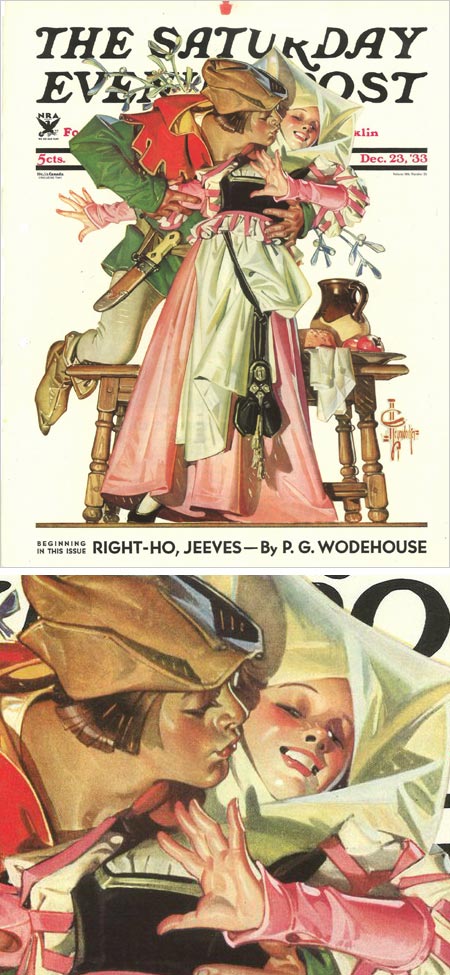
I know I used the illustration above in one of my previous posts about Leyendecker, but I just love it. It’s Leyendecker doing his take on Howard Pyle and N.C. Wyeth’s territory (large version here) . Just look at the modeling on the faces and hands, the rounded apple skin blush on the woman’s cheeks, the textures of the different types of material, the astonishing handling of the cloth folds and the geometric solidity of the underlying forms, the snap and liveliness of his drawing and the designerly confidence of the way his color is applied. I’ll say it again. Wow.
It simply boggles my mind that there are not dozens of books on Leyendecker and museums dedicated to his work. Yes, there are some resources out there and I’ve listed some of them on my previous posts., but in one fell swoop, Bosley has created a Leyendecker archive that ranks as one of the best available on the net. (Bosley is a recent graduate of the Illustration program at San Jose State University and currently works as a concept artist for Red Storm Entertainment. From the look of the intriguing work on his own blog Sketch Hunter, we’ll be seeing more of him in the future.)
Meanwhile, my thanks to Andrew and the other generous souls out there who have endeavored to make some of Leyendecker’s legacy of beautiful illustration available to us.
Hey, all you art book publishers, given the great revival of interest in Golden Age American illustration (and the astronomical prices the originals are commanding) why is there no big new compendium of J.C. Leyendecker’s work? C’mon!
Addendum: A new book has finally been released: J.C. Leyendecker by Laurence S. Cutler, Judy Goffman Cutler. (See this post’s comments.)
Categories:
-
James Gurney (update)

I received a note through James Gurney’s mailing list that his Dinotopia site has been completely redone and expanded with new content, largely in support of the newest book in his Dinotopia series, Dinotopia: Journey to Chandara.In addition, Gurney has a new blog, Gurney Journey, in which he intends to chronicle the people and places he and his wife (who is also an artist) encounter as they travel on the book release tour.
As I mentioned in my previous post about Gurney, Dinotopia (images above, top and middle) is a series of illustrated fantasy stories, in which the illustration/text ratio is nicely weighted toward illustration. The stories are about a land where intelligent dinosaurs co-exist with people in a vaguely late 19th Century level culture; and in them Gurney mixes a fascination with dinosaurs with a passion for Victorian painting and 19th Century academic art (particularly Sir Lawrence Alma-Tadema).
You can tell that Gurney keeps abreast of the latest paleontological discoveries, as his portrayal of various dinosaurs has changed to reflect scientific revisions over time, in spite of the overtly fantastic setting.
If your only exposure to the Dinotopia stories is by way of the cable TV mini-series, the books are much more engaging, largely because of Gurney’s wonderful illustrations; and the new book promises to be one of the most visually striking of the series. You can see some sample pages on the Dinotopia site and the publisher, Andrews and McMeel, also has a web space devoted to Journey to Chandra.
What isn’t made obvious on the Dinotopia site or the blog is that Gurney is also a landscape painter (image above, bottom), working in the area, and somewhat in the tradition, of the Hudson River School.
In looking at the rich, high-chroma palette in his landscape paintings, it’s easy to think that he has carried some of his illustration style into the landscape work, but I think the style flows more dramatically in the other direction, in that his landscape painting from life informs and enlivens the invented landscapes in his illustrations.
Addendum: Those in Los Angeles, CA and Oshkosh, WI will have the opportunity this fall to see Gurney’s work in person in the form of two exhibits: Dinotopia: The Fantastical Art of James Gurney is at the Los Angeles Public Library from Aug 4, 2007 – Jan 6, 2008, and Return to Dinotopia will be at the Oshkosh Public Museum, November 3, 2007 through January 27, 2008. For more details see the Dinotopia Exhibitions page on the Dinotopia site.
Categories:
-
Virtual Gouache Land (Erik Tiemens)

Erik Tiemens is a concept artist and designer working for LucasFilm who also does gallery paintings in oil and gouache, as well as digital sketching.I first reported on Tiemens in September of 2006. Since then his web site doesn’t look like it has gotten a great deal of attention (there is still a promise of Star Wars Episode III concept art to be added in April 2005 in the Concept Art gallery), but he has been maintaining a more frequently updated blog entitled Virtual Gouache Land.
In the blog Tiemens posts landscape sketches, sometimes digital, but often in gouache. The images are usually linked to larger versions, big enough to get a real feeling for the works, which are generally small-scale to begin with, and to see his wonderfully succinct notation of complex forms (image above, top, with detail, bottom).
He usually annotates the images with a brief description of the time and place, and sometimes the process, indicating when he is trying out new paints or other materials.
In contrast to small watercolor paintings or gouache sketches by many contemporary artists, Tiemens’ work has a flavor of the early watercolor artists of the Barbizon school, and English landscape artists like Turner and Constable. His small images, and digital paintings, are often dark overall, punctuated with brilliant patches of light poking through roiling clouds or the dark canopies of trees.
Categories:




Charley’s Picks
Bookshop.org
(Bookshop.org affilliate links; sales benefit independent bookshop owners; I get a small percentage to help support my work on Lines and Colors)

John Singer Sargent: Watercolors


Urban Sketching: Understanding Perspective


Charley’s Picks
Amazon
(Amazon.com affiliate links; sales go to a larger yacht for Jeff Bezos; but I get a small percentage to help support my work on Lines and Colors)
John Singer Sargent: Watercolors
Urban Sketching: Understanding Perspective