


Categories
- 3d CGI
- Amusements
- Animation
- Anime & Manga
- Art Materials
- Art Videos
- Blogroll
- Cartoons
- Color
- Comics
- Concept & Visual Dev.
- Creativity
- Digital Art
- Digital Painting
- Displaying Art on the Web
- Drawing
- Eye Candy for Today
- Gallery and Museum Art
- High-res Art Images
- Illustration
- Motion Graphics & Flash
- Museums
- Online Museums
- Outsider Art
- Painting
- Painting a Day
- Paleo Art
- Pastel, Conté & Chalk
- Pen & Ink
- Prints and Printmaking
- Reviews
- Sc-fi and Fantasy
- Sculpture & Dimensional
- Site Comments
- Sketching
- Storyboards
- Tools and Techniques
- Uncategorized
- Vector Art
- Videos & Podcasts
- Vision and Optics
- Watercolor and Gouache
- Webcomics
Archives
- April 2026
- March 2026
- February 2026
- January 2026
- December 2025
- November 2025
- October 2025
- September 2025
- August 2025
- July 2025
- June 2025
- May 2025
- January 2025
- December 2024
- November 2024
- October 2024
- September 2024
- August 2024
- June 2024
- April 2024
- March 2024
- February 2024
- January 2024
- December 2023
- November 2023
- October 2023
- September 2023
- August 2023
- July 2023
- May 2023
- April 2023
- March 2023
- February 2023
- January 2023
- December 2022
- November 2022
- September 2022
- August 2022
- July 2022
- June 2022
- May 2022
- April 2022
- March 2022
- February 2022
- January 2022
- December 2021
- November 2021
- October 2021
- September 2021
- August 2021
- July 2021
- June 2021
- May 2021
- April 2021
- March 2021
- February 2021
- January 2021
- December 2020
- November 2020
- October 2020
- September 2020
- August 2020
- July 2020
- June 2020
- May 2020
- April 2020
- March 2020
- February 2020
- January 2020
- December 2019
- November 2019
- October 2019
- September 2019
- August 2019
- July 2019
- June 2019
- May 2019
- April 2019
- March 2019
- February 2019
- January 2019
- December 2018
- November 2018
- October 2018
- September 2018
- August 2018
- July 2018
- June 2018
- May 2018
- April 2018
- March 2018
- February 2018
- January 2018
- December 2017
- November 2017
- October 2017
- September 2017
- August 2017
- July 2017
- June 2017
- May 2017
- April 2017
- March 2017
- February 2017
- January 2017
- December 2016
- November 2016
- October 2016
- September 2016
- August 2016
- July 2016
- June 2016
- May 2016
- April 2016
- March 2016
- February 2016
- January 2016
- December 2015
- November 2015
- October 2015
- September 2015
- August 2015
- July 2015
- June 2015
- May 2015
- April 2015
- March 2015
- February 2015
- January 2015
- December 2014
- November 2014
- October 2014
- September 2014
- August 2014
- July 2014
- June 2014
- May 2014
- April 2014
- March 2014
- February 2014
- January 2014
- December 2013
- November 2013
- October 2013
- September 2013
- August 2013
- July 2013
- June 2013
- May 2013
- April 2013
- March 2013
- February 2013
- January 2013
- December 2012
- November 2012
- October 2012
- September 2012
- August 2012
- July 2012
- June 2012
- May 2012
- April 2012
- March 2012
- February 2012
- January 2012
- December 2011
- November 2011
- October 2011
- September 2011
- August 2011
- July 2011
- June 2011
- May 2011
- April 2011
- March 2011
- February 2011
- January 2011
- December 2010
- November 2010
- October 2010
- September 2010
- August 2010
- July 2010
- June 2010
- May 2010
- April 2010
- March 2010
- February 2010
- January 2010
- December 2009
- November 2009
- October 2009
- September 2009
- August 2009
- July 2009
- June 2009
- May 2009
- April 2009
- March 2009
- February 2009
- January 2009
- December 2008
- November 2008
- October 2008
- September 2008
- August 2008
- July 2008
- June 2008
- May 2008
- April 2008
- March 2008
- February 2008
- January 2008
- December 2007
- November 2007
- October 2007
- September 2007
- August 2007
- July 2007
- June 2007
- May 2007
- April 2007
- March 2007
- February 2007
- January 2007
- December 2006
- November 2006
- October 2006
- September 2006
- August 2006
- July 2006
- June 2006
- May 2006
- April 2006
- March 2006
- February 2006
- January 2006
- December 2005
- November 2005
- October 2005
- September 2005
- August 2005
Relevant Blogs
Art, Painting & Sketch
- Gurney Journey
- Underpaintings
- Art and Influence
- Painting Perceptions
- Oil Painters of America
- Vasari Paint POV
- Flying Fox
- Urban Sketchers
- Bento (Smithsonian)
- Art Inconnu
- The Hidden Place
- Still Life
- Making a Mark
- The Art of the Landscape
- Exploring Color & Creativity
- Art Contrarian
- Artist A Day
- beinArt Surreal Art Collective
- Eye Level
- David Dunlop
- p.i.g.m.e.n.t.i.u.m
- CultureGrrl
- Joaquín Sorolla blog
- Artists in Pastel
“Painting a Day”
- A Painting a Day (Keiser)
- On Painting (Keiser)
- Julian Merrow-Smith
- Karen Jurick
- Jeffrey Hayes
- Carol Marine
- Abbey Ryan
- Daily Paintworks
Other Painting Blogs
- Virtual Gouache Land
- Neil Hollingsworth
- Marc Hanson
- Kevin Menck
- Marc Dalessio
- Larry Seiler
- Stapleton Kearns
- Colin Page
- Roos Schuring
- Hans Versfelt
- Titus Meeuws
- Régis Pettinari
- René Plein Air
- Belinda Del Pesco
- Robin Weiss
- Nathan Fowkes (Land Sketch)
- William Wray
- Frank Serrano
- Stephen Magsig
- Michael Chesley Johnson
- Twice a Week
- Sarah Wimperis
- Rob Adams
- Michael Cole Manley
- The Dirty Palette Club
- Mike Manley’s Draw!
Gallery Art & Illustration mix
Illustration
- Howard Pyle
- 100 Years of Illustration
- BibliOdyssey
- Illustration Art
- Today’s Inspiration
- Illustration Mundo
- Little Chimp Society
- Danny Gregory
- R D (John Martz
- Illustration Friday blog
- Monster Brains
- Illustrators & Illustrations (RU)
- Elwood H. Smith
- DaniDraws.com
- Designers Who Blog
- iSpot Blog
Sci-Fi & Fantasy
Illustration & Comics
Comics & Cartoons
- Comics Beat
- Robot 6
- Newsarama Blog
- Comic Vine
- Comics Alliance
- Forbidden Planet Int.
- Paolo Rivera
- Bolt City
- Flight
- Scott McCloud
- The Comics Journal
- Comixpedia
- Funnybook Babylon
- James Baker
- Middleton’s Sketchbook
- Boneville
- The Hotel Fred
- Paul Rivoche
- Daily Cartoonist
- Mad About Cartoons (William Wray)
- Digital Strips
Illustration & Concept
Animation & Concept
- Cartoon Brew
- Animation Blog
- Cold Hard Flash
- Concept Art World
- The CAB
- FY Concept Art
- Concept Ships
- Concept Robots
- John Nevarez
- Armand Serrano
- Marcos Mateu-Mestre
- all kinds of stuff (Kricfalusi)
- Yacin the faun (Man Arenas)
- Kelsey Mann
- Cre8tivemarks Blog
- Ice-Cream Monster Toon Cafe
- AAU Character & Creature Design
- AAU Animation Notes
- Articles and Texticles
Paleo & Scientific
Tools & Techniques
Other
Lists of Art Blogs
Art Image Resource Links
Historic Art Images
- Wikimedia Commons: Paintings
- Wikimedia Commons: Drawings
- The Athenaeum
- WikiArt (WikiPaintings)
- Google Art Project: Artists
- Google Art Project: Collections (Museums)
- ArtCyclopedia
- Web Gallery of Art
- Art Renewal Center
- Web Gallery of Impressionism
Auction Consolidation sites
Auction sites
- Sotheby’s
- Bonham’s
- Christies
- Heritage Auctions: Fine Art
- Heritage Auctions: Illustration
- Freeman’s Auctions
- Bukowskis
- Shannon’s
Image Search
Reverse Image Search (search by image)
- Tin Eye
- RevImg
- Google Image Search (camera icon)
- Bing Image Search (camera icon)
Promoting some friends and some clients of my website design business
- Twin Willows T’ai Chi studio in Wilmington DE. Taiji classes with Bryan Davis.
- Ray Hayward, Inspired Teacher of T’ai Chi ( Taiji ) in Minneapolis, Founder of Mindful Motion Tai Chi Academy
- OldHead Tattoo studio and Art Gallery in Wilmington DE. Tattoos and paintings by Bruce Gulick
- Sharon Domenico Art, pet portrait oil paintings
- Platinum Paperhanging, wallpaper hanging, Main Line and Philadelphia, PA
- Lisa Stone Design, interior designer, Main Line and Philadelphia, PA
- Studio12KPT, original art, prints, calendars and other custom printed items by Van Sickle & Rolleri
-
TRIADS: Painting with Three Colors, James Gurney


In his latest instructional video, TRIADS: Painting with Three Colors, painter James Gurney explores three-color palettes and gives a good introduction to the basic concepts of painting with limited palettes.
Though not specifically about triadic color schemes in the classic sense (in which the colors are evenly spaced around the color wheel), his exploration of palettes with three colors points out one of the strengths of this approach: a palette of three colors can mix a broad range of additional colors, and yet remain manageable when you’re trying to wrap your head around how to mix them. (Like many painters, Gurney chooses to regard white as not a color, and I think wisely so.)
TRIADS is a follow up to Gurney’s previous video, Color in Practice, Part 1, Black, White, and Complements (link is to my review), and serves as second in a planned series. Here, he is painting with gouache, transparent watercolor and casein, but the principles are applicable to other mediums.
Initially painting with a palette of three colors similar to the cyan, magenta and yellow colors used in printing inks to produce a wide range of colors, he starts with a demo painting of brightly colored still life subjects in sunlight. The initially chosen palette creates a broad gamut (range of colors), but like any limited palette, has areas of weakness.
Gurney supplements the demo painting with the creation of a “triad test”, a simple diamond shaped set of test patches of the colors in the palette, and mixtures of the colors as well as tints (the color plus white) and mixtures of the tints.
He then moves on to a different set of “primaries”, richer in the colors that are weak in the previous palette, creates another “triad test” and goes back into the same demo painting, pointing out how the two palettes differ in areas of strength.
He goes on with other demos and studio exercises to explore various three color combinations — some unusual, using secondaries in place of primaries — as well as the creation of grays and low chroma colors from high chroma palettes, making swatches of test colors as he goes. He goes through about ten demo paintings in the course of the video, some quite briefly, others in more depth.
As is often the case with Gurney’s videos, I find myself learning from aspects of the visuals that aren’t specifically part of the video’s primary subject. At one point in the creation of grays from triads of colors, he makes a couple of grays in transparent watercolor by layering three transparent layers of pure color, one over another, letting them mix optically rather than mixing on the palette. I found the resulting grayed tones particularly rich with subtle variations of color, and came away eager to experiment with that aspect of applying paint.
You’ll find other off-topic but valuable painting techniques in the creation of the demos, such as the way he uses large brushes in areas where a less experienced painter might be reaching for smaller ones, the creation of texture with split hair dry brush, using a mahl stick to steady the brush for drawing the lines like those of siding on a house, and his process of using interesting color variations as colored grounds before blocking in.
TRIADS: Painting with Three Colors takes the seemingly simple concept of painting with three color palettes and through it opens a window into a range of concepts of value to students of painting.
The 90 minute video is available as a digital download through Gumroad or Sellfy for $17.98 and comes with a PDF study guide.
You can find previews of the video, along with supplementary information, on Gurney’s blog, Gurney Journey.
In addition, Gurney is promoting a just-for-fun Sunny Still Life “challenge” for those interested to paint a sunny still life with a triad palette and post their paintings online. The challenge deadline is October 20, 2020.
Categories:
-
Eye Candy for Today: Sunny Autumn Day by George Inness
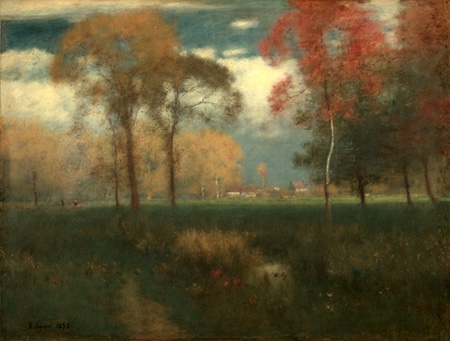

Sunny Autumn Day by George Inness
Oil on canvas, approximately 32 x 42 in. (81 x 106 cm). Link is to the Cleveland Museum of Art, which has the original in its collection and offers both a zoomable and downloadable version of the image.
It’s easy to see the visual drama of the light and dark areas of the composition, but like may of Inness’ paintings from this period of his career, an important part of the magic is in the relationship of the soft and hard edges. At times, the edges of his trees are so soft as to seem like visual whispers.
Happy Autumnal Equinox!
Categories:
-
Jakob Matthias Schmutzer

Jakob Schmutzer Was an Austrian artist active in the late 18th and early 19th centuries. He was primarily an engraver, and also a painter, but what I find most appealing, and what you will find most often if you research his work on the internet, are his chalk drawings.
His drawings sometimes of figures, but often of portraits; in them, Schmutzer’s hatching follows the form and crosses lines in the manner of the hatching in engravings, but his secondary line work is often loose and gestural, giving the drawings a particular visual charm.
Categories:
-
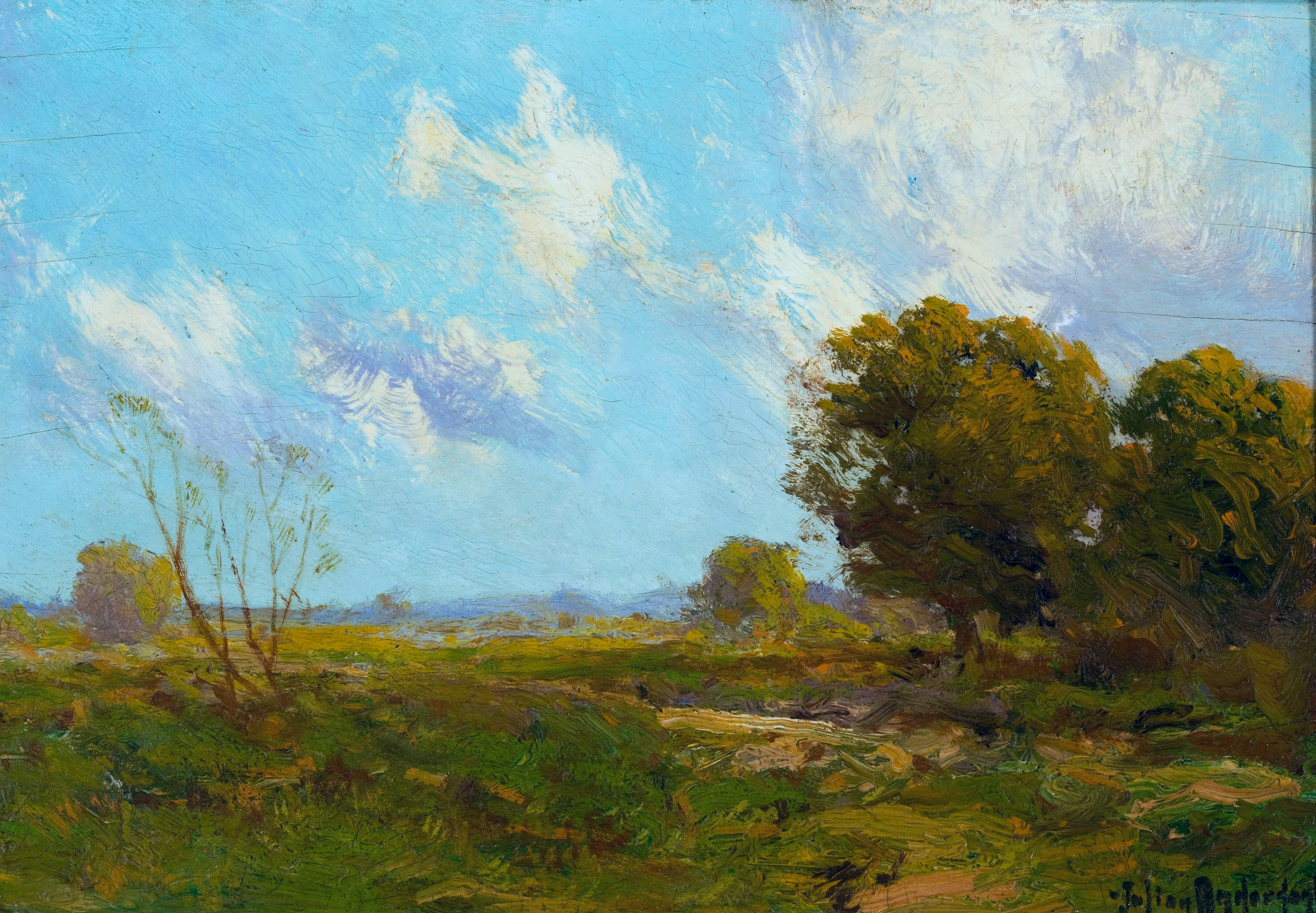
Eye Candy for Today: Julian Onderdonk landscape


Late Afternoon, Julian Onderdonk
The link is to the image page on WikiArt, which unfortunately doesn’t have much information about the size or location of the original. If you click on “View all sizes” under the image on their page, you can access a reasonably high res version of the image. Presumably, this is oil on canvas.
Texas painter Robert Julian Onderdonk, who was active in the late 19th and early 20th centuries, is considered an “American Impressionist”, and in known in particular for his landscapes featuring fields of Texas Bluebonnet flowers.
Here, his subject is less colorful and more prosaic, but, even though I’ve only see it in reproduction, I just love this painting. Onderdonk’s seemingly casual brush work is so delightfully brushy and textural, the usual adjective of “painterly” seems insufficient.
Categories:
-
Tyl Destoop
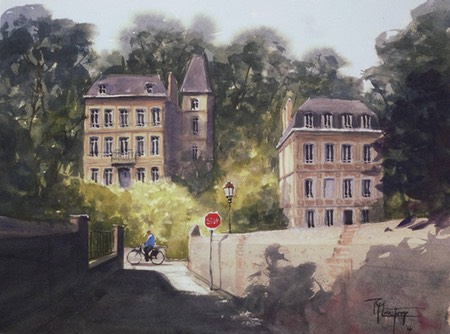

Originally from Belgium, Tyl Destoop is a watercolor painter living in the Normandy region of France.
Destoop has a pleasantly free rendering style, matched with solid draftsmanship and compositional skills. I particularly enjoy his urban scenes.
His website offers a selection of his paintings, most of which are available for purchase. You can find more on his pages on SaatchiArt and FineArtAmerica.
Destoop’s YouTube channel offers a number of demonstration and process videos.
Categories:
-
Eye Candy for Today: George Elgar Hicks genre painting


The Dead Goldfinch (“All that was left to love”), George Elgar Hicks; oil on canvas; roughly 24 x 30 inches (62 x 75 cm). Link is to zoomable image on Google Art Project; downloadable file on Wikimedia Commons, original is in the Art Gallery of South Australia.
Genre painting, which became popular in the 18th and 19th centuries, focused on scenes of everyday life and of people who were not particular known individuals, as opposed to portrait or history painting.
It was not uncommon for genre paintings to feature scenes meant to elicit emotions that might appeal to potential patrons, sadness or grief among them.
This scene by 19th century English painter George Elgar Hicks portrays a despondent young peasant girl, her hands gently cradling her dead pet (it’s an ex-goldfinch, to paraphrase Monty Python).
What strikes me about the painting — as in much of Hicks’ work — is his painterly, textural brush work and his use of soft edges. Look in particular at the edges that define the girl’s arms, and how they turn softly into the dark areas of the cloth and wall behind them.
I like the textural application of paint throughout — even in the softest areas of the girl’s face — and the chunky splashes of paint in the highlights of the hair.
Categories:





Charley’s Picks
Bookshop.org
(Bookshop.org affilliate links; sales benefit independent bookshop owners; I get a small percentage to help support my work on Lines and Colors)

John Singer Sargent: Watercolors


Urban Sketching: Understanding Perspective


_-_Google_Art_Project.jpg)
Charley’s Picks
Amazon
(Amazon.com affiliate links; sales go to a larger yacht for Jeff Bezos; but I get a small percentage to help support my work on Lines and Colors)
John Singer Sargent: Watercolors
Urban Sketching: Understanding Perspective