


Categories
- 3d CGI
- Amusements
- Animation
- Anime & Manga
- Art Materials
- Art Videos
- Blogroll
- Cartoons
- Color
- Comics
- Concept & Visual Dev.
- Creativity
- Digital Art
- Digital Painting
- Displaying Art on the Web
- Drawing
- Eye Candy for Today
- Gallery and Museum Art
- High-res Art Images
- Illustration
- Motion Graphics & Flash
- Museums
- Online Museums
- Outsider Art
- Painting
- Painting a Day
- Paleo Art
- Pastel, Conté & Chalk
- Pen & Ink
- Prints and Printmaking
- Reviews
- Sc-fi and Fantasy
- Sculpture & Dimensional
- Site Comments
- Sketching
- Storyboards
- Tools and Techniques
- Uncategorized
- Vector Art
- Videos & Podcasts
- Vision and Optics
- Watercolor and Gouache
- Webcomics
Archives
- April 2026
- March 2026
- February 2026
- January 2026
- December 2025
- November 2025
- October 2025
- September 2025
- August 2025
- July 2025
- June 2025
- May 2025
- January 2025
- December 2024
- November 2024
- October 2024
- September 2024
- August 2024
- June 2024
- April 2024
- March 2024
- February 2024
- January 2024
- December 2023
- November 2023
- October 2023
- September 2023
- August 2023
- July 2023
- May 2023
- April 2023
- March 2023
- February 2023
- January 2023
- December 2022
- November 2022
- September 2022
- August 2022
- July 2022
- June 2022
- May 2022
- April 2022
- March 2022
- February 2022
- January 2022
- December 2021
- November 2021
- October 2021
- September 2021
- August 2021
- July 2021
- June 2021
- May 2021
- April 2021
- March 2021
- February 2021
- January 2021
- December 2020
- November 2020
- October 2020
- September 2020
- August 2020
- July 2020
- June 2020
- May 2020
- April 2020
- March 2020
- February 2020
- January 2020
- December 2019
- November 2019
- October 2019
- September 2019
- August 2019
- July 2019
- June 2019
- May 2019
- April 2019
- March 2019
- February 2019
- January 2019
- December 2018
- November 2018
- October 2018
- September 2018
- August 2018
- July 2018
- June 2018
- May 2018
- April 2018
- March 2018
- February 2018
- January 2018
- December 2017
- November 2017
- October 2017
- September 2017
- August 2017
- July 2017
- June 2017
- May 2017
- April 2017
- March 2017
- February 2017
- January 2017
- December 2016
- November 2016
- October 2016
- September 2016
- August 2016
- July 2016
- June 2016
- May 2016
- April 2016
- March 2016
- February 2016
- January 2016
- December 2015
- November 2015
- October 2015
- September 2015
- August 2015
- July 2015
- June 2015
- May 2015
- April 2015
- March 2015
- February 2015
- January 2015
- December 2014
- November 2014
- October 2014
- September 2014
- August 2014
- July 2014
- June 2014
- May 2014
- April 2014
- March 2014
- February 2014
- January 2014
- December 2013
- November 2013
- October 2013
- September 2013
- August 2013
- July 2013
- June 2013
- May 2013
- April 2013
- March 2013
- February 2013
- January 2013
- December 2012
- November 2012
- October 2012
- September 2012
- August 2012
- July 2012
- June 2012
- May 2012
- April 2012
- March 2012
- February 2012
- January 2012
- December 2011
- November 2011
- October 2011
- September 2011
- August 2011
- July 2011
- June 2011
- May 2011
- April 2011
- March 2011
- February 2011
- January 2011
- December 2010
- November 2010
- October 2010
- September 2010
- August 2010
- July 2010
- June 2010
- May 2010
- April 2010
- March 2010
- February 2010
- January 2010
- December 2009
- November 2009
- October 2009
- September 2009
- August 2009
- July 2009
- June 2009
- May 2009
- April 2009
- March 2009
- February 2009
- January 2009
- December 2008
- November 2008
- October 2008
- September 2008
- August 2008
- July 2008
- June 2008
- May 2008
- April 2008
- March 2008
- February 2008
- January 2008
- December 2007
- November 2007
- October 2007
- September 2007
- August 2007
- July 2007
- June 2007
- May 2007
- April 2007
- March 2007
- February 2007
- January 2007
- December 2006
- November 2006
- October 2006
- September 2006
- August 2006
- July 2006
- June 2006
- May 2006
- April 2006
- March 2006
- February 2006
- January 2006
- December 2005
- November 2005
- October 2005
- September 2005
- August 2005
Relevant Blogs
Art, Painting & Sketch
- Gurney Journey
- Underpaintings
- Art and Influence
- Painting Perceptions
- Oil Painters of America
- Vasari Paint POV
- Flying Fox
- Urban Sketchers
- Bento (Smithsonian)
- Art Inconnu
- The Hidden Place
- Still Life
- Making a Mark
- The Art of the Landscape
- Exploring Color & Creativity
- Art Contrarian
- Artist A Day
- beinArt Surreal Art Collective
- Eye Level
- David Dunlop
- p.i.g.m.e.n.t.i.u.m
- CultureGrrl
- Joaquín Sorolla blog
- Artists in Pastel
“Painting a Day”
- A Painting a Day (Keiser)
- On Painting (Keiser)
- Julian Merrow-Smith
- Karen Jurick
- Jeffrey Hayes
- Carol Marine
- Abbey Ryan
- Daily Paintworks
Other Painting Blogs
- Virtual Gouache Land
- Neil Hollingsworth
- Marc Hanson
- Kevin Menck
- Marc Dalessio
- Larry Seiler
- Stapleton Kearns
- Colin Page
- Roos Schuring
- Hans Versfelt
- Titus Meeuws
- Régis Pettinari
- René Plein Air
- Belinda Del Pesco
- Robin Weiss
- Nathan Fowkes (Land Sketch)
- William Wray
- Frank Serrano
- Stephen Magsig
- Michael Chesley Johnson
- Twice a Week
- Sarah Wimperis
- Rob Adams
- Michael Cole Manley
- The Dirty Palette Club
- Mike Manley’s Draw!
Gallery Art & Illustration mix
Illustration
- Howard Pyle
- 100 Years of Illustration
- BibliOdyssey
- Illustration Art
- Today’s Inspiration
- Illustration Mundo
- Little Chimp Society
- Danny Gregory
- R D (John Martz
- Illustration Friday blog
- Monster Brains
- Illustrators & Illustrations (RU)
- Elwood H. Smith
- DaniDraws.com
- Designers Who Blog
- iSpot Blog
Sci-Fi & Fantasy
Illustration & Comics
Comics & Cartoons
- Comics Beat
- Robot 6
- Newsarama Blog
- Comic Vine
- Comics Alliance
- Forbidden Planet Int.
- Paolo Rivera
- Bolt City
- Flight
- Scott McCloud
- The Comics Journal
- Comixpedia
- Funnybook Babylon
- James Baker
- Middleton’s Sketchbook
- Boneville
- The Hotel Fred
- Paul Rivoche
- Daily Cartoonist
- Mad About Cartoons (William Wray)
- Digital Strips
Illustration & Concept
Animation & Concept
- Cartoon Brew
- Animation Blog
- Cold Hard Flash
- Concept Art World
- The CAB
- FY Concept Art
- Concept Ships
- Concept Robots
- John Nevarez
- Armand Serrano
- Marcos Mateu-Mestre
- all kinds of stuff (Kricfalusi)
- Yacin the faun (Man Arenas)
- Kelsey Mann
- Cre8tivemarks Blog
- Ice-Cream Monster Toon Cafe
- AAU Character & Creature Design
- AAU Animation Notes
- Articles and Texticles
Paleo & Scientific
Tools & Techniques
Other
Lists of Art Blogs
Art Image Resource Links
Historic Art Images
- Wikimedia Commons: Paintings
- Wikimedia Commons: Drawings
- The Athenaeum
- WikiArt (WikiPaintings)
- Google Art Project: Artists
- Google Art Project: Collections (Museums)
- ArtCyclopedia
- Web Gallery of Art
- Art Renewal Center
- Web Gallery of Impressionism
Auction Consolidation sites
Auction sites
- Sotheby’s
- Bonham’s
- Christies
- Heritage Auctions: Fine Art
- Heritage Auctions: Illustration
- Freeman’s Auctions
- Bukowskis
- Shannon’s
Image Search
Reverse Image Search (search by image)
- Tin Eye
- RevImg
- Google Image Search (camera icon)
- Bing Image Search (camera icon)
Promoting some friends and some clients of my website design business
- Twin Willows T’ai Chi studio in Wilmington DE. Taiji classes with Bryan Davis.
- Ray Hayward, Inspired Teacher of T’ai Chi ( Taiji ) in Minneapolis, Founder of Mindful Motion Tai Chi Academy
- OldHead Tattoo studio and Art Gallery in Wilmington DE. Tattoos and paintings by Bruce Gulick
- Sharon Domenico Art, pet portrait oil paintings
- Platinum Paperhanging, wallpaper hanging, Main Line and Philadelphia, PA
- Lisa Stone Design, interior designer, Main Line and Philadelphia, PA
- Studio12KPT, original art, prints, calendars and other custom printed items by Van Sickle & Rolleri
-
Russell Chatham


Russell Chatham was an American landscape artist based for most of his career in Montana. Though he also produced oil paintings, he is known in particular for his beautifully subtle color lithographs, some of which use 30 or more layers of color to attain the final image.
His work shares some characteristics with tonalist painting, but I think of it as something aside and quite unique. I love the soft, poetic nuances of his color and value relationships, the meditative stillness of his scenes and the often bold geometry of his compositions.
Russell Chatham died this past November, 2019, at the age of 80. I don’t know of a dedicated website for his work; I’ve linked to a few other sources that I could find.
Categories:
-
Eye Candy for Today: Paxton’s The Yellow Jacket


The Yellow Jacket, William McGregor Paxton, oil on canvas, roughly 27 x 22 inches (56 x 69 cm).
Link is to Bonham’s, which auctioned the painting in 2016 and has a zoomable version on the auction detail page. I don’t know the current location; I would assume it’s in a private collection. There is a smaller but reasonably large image online as part of an article about the sale on Antiques and the Arts (click on small image for larger version).
William McGregor Paxton was noted for his serene, contemplative paintings of elegantly dressed women in room interiors. In this beautifully realized example, you can see his fascination with the compositions of Vermeer, an interest he shared with fellow member of the Guild of Boston Painters, Edmund Charles Tarbell.
The rendering of the woman’s face and hair is a wonderful example of Paxton’s command of soft edges, the robe a study in subtle values, and the open book a tribute to the power of suggested detail.
Categories:
-
Will Terry
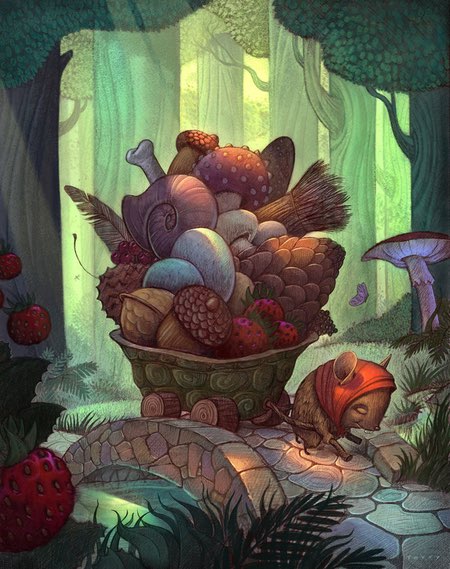

Will Terry is freelance illustrator with a history of both editorial and children’s book illustration. His emphasis currently is on the latter, and he has worked with publishers like Random House, Simon Schuster, Scholastic, Penguin, Klutz, and Albert Whitman.
He has also created widely circulated indie ebooks and is the co-founder of the online children’s book illustration instruction program Society of Visual Storytelling.
Terry’s style has a lively cartoon-like energy combined with sophisticated rendering. I particularly enjoy his textures and theatrical lighting effects. On his website you will also find examples of sketches and drawings.
Will Terry has a YouTube channel on which he offers advice to aspiring illustrators.
Categories:
-
Kazuo Torigoe
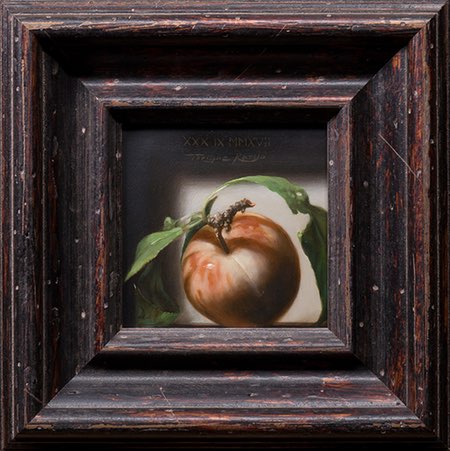

Trompe l’oeil (French for “deceive the eye”) — a style of painting in which the goal is to create an illusion of the presence of three dimensional objects — has a long history in European painting. While it’s tempting to dismiss it as mere amusement, I think it goes to the nature of illusion inherent in representational painting — something the masters explored long before the 20th century modernists made it central to their questioning of the nature of visual art.
Kazuo Torigoe is a contemporary Japanese painter who focuses on trompe l’oeil still life. He works in oil on copper, primarily at a small scale (roughly 4×4″ to 10×10″, or 10×10 cm 25×25 cm).
Most of the pieces currently in his online portfolio give the appearance of a shadowbox behind the frame, in which fruits, flowers or small objects are arranged.
Fascinatingly, he often incorporates trompe l’oeil “inserts” of painted frame, leaving the viewer in question as to the boundary between the physical frame and the painting of a frame. Torigoe will at times play with that uncertainty by extending objects over the edge of the trompe l’oeil frame.
Within this delightful context are his beautifully realized still life objects.
Categories:
-
Eye Candy for Today: Near Sydenham Hill, Camille Pissarro


Near Sydenham Hill, Camille Pissarro; oil on canvas, roughy 17 x 21 inches (43 x 53 cm). Link is to zoomable version on Google Art Project; downloadable version on Wikimedia Commons; original is in the Kimbell Art Museum.
Camille Pissarro is one of my favorites among the original French Impressionist painters.
I love the sense of atmospheric distance in this painting of the countryside near London, where — following Monet’s lead — the artist moved his family to escape the violence of the Prussian siege of Paris in 1870.
The foreground trees are so roughly indicated they appear to act primarily as a framing device. My eye is immediately drawn to the row of houses in the middleground, and then to the church beyond, all of them seemingly rough smudges of color on close inspection, but resolving to a naturalistic scene from sufficient distance.
A closer look also reveals a lone figure in the left middleground. I didn’t realize until reading the museum’s description of the painting that the white plume in the right middleground is the smoke of a passing train.
Categories:
-
Austin Briggs, The Consumate Illustrator


I initially encountered the work of Austin Briggs (see my previous post) in his role as a comics artist — working as an assistant to the great Alex Raymond, and eventually ghosting Raymond’s Flash Gordon newspaper strip, and taking over in a credited role on Secret Agent X-9.
Briggs’ work in comics was a sideline, however; he was primarily known as one of the great American illustrators of the 20th century. He started in advertising illustration, but moved into editorial illustration, which is where he made his mark, providing illustrations to prestigious magazines like Redbook, Cosmopolitan, and The Saturday Evening Post.
Briggs was a relentless experimenter; he was always pushing the boundaries of his approach to illustration, and expanding the language and range of that art form in the process.
I was delighted to receive a review copy of a new book from Auad Publishing that showcases the work of Austin Briggs from all phases of his career.
Austin Briggs: The Consumate Illustrator is an absolutely beautiful volume; nicely sized at 9×12″ it features 160 pages crammed with Briggs’ illustrations in both color and black and white. Briggs exceled in both areas, his black and white and tone drawings are remarkably economical given their power and expressive nature. His color work is simultaneously bold and subtle.
The range of his work, its dynamism and nuance is captured beautifully in this volume from Auad. They already have a reputation for presenting the work of great illustrators with high production values and great attention to detail and selection, and this book continues in that fine tradition.
The book includes a knowledgable and fascinating text by David Apatoff, that drew on an interview Apatoff was able to conduct with Briggs’ son, Austin Briggs Jr., who also contributed the forward.
Apatoff has two posts about the book on his own, always excellent blog, Illustration Art: here and here.
I had seen some of Briggs’ work in pieces here and there, but to see a collection like this upped my impression of his accomplishments even further. I recommend the book highly and suggest that if you’re interested, you should order sooner rather than later. Auad Publishing limits their print runs and does not do reprints.
Austin Briggs: The Consumate Illustrator is available direct from Auad Publishing for $34.95 plus $5 domestic shipping.
There is a small set of preview images on the Auad site if you click on the book cover image. I’ve added general links to Austin Briggs material below. You can find more if you do an image search for Austin Briggs.
Categories:




Charley’s Picks
Bookshop.org
(Bookshop.org affilliate links; sales benefit independent bookshop owners; I get a small percentage to help support my work on Lines and Colors)

John Singer Sargent: Watercolors


Urban Sketching: Understanding Perspective


Charley’s Picks
Amazon
(Amazon.com affiliate links; sales go to a larger yacht for Jeff Bezos; but I get a small percentage to help support my work on Lines and Colors)
John Singer Sargent: Watercolors
Urban Sketching: Understanding Perspective