


Categories
- 3d CGI
- Amusements
- Animation
- Anime & Manga
- Art Materials
- Art Videos
- Blogroll
- Cartoons
- Color
- Comics
- Concept & Visual Dev.
- Creativity
- Digital Art
- Digital Painting
- Displaying Art on the Web
- Drawing
- Eye Candy for Today
- Gallery and Museum Art
- High-res Art Images
- Illustration
- Motion Graphics & Flash
- Museums
- Online Museums
- Outsider Art
- Painting
- Painting a Day
- Paleo Art
- Pastel, Conté & Chalk
- Pen & Ink
- Prints and Printmaking
- Reviews
- Sc-fi and Fantasy
- Sculpture & Dimensional
- Site Comments
- Sketching
- Storyboards
- Tools and Techniques
- Uncategorized
- Vector Art
- Videos & Podcasts
- Vision and Optics
- Watercolor and Gouache
- Webcomics
Archives
- June 2026
- May 2026
- April 2026
- March 2026
- February 2026
- January 2026
- December 2025
- November 2025
- October 2025
- September 2025
- August 2025
- July 2025
- June 2025
- May 2025
- January 2025
- December 2024
- November 2024
- October 2024
- September 2024
- August 2024
- June 2024
- April 2024
- March 2024
- February 2024
- January 2024
- December 2023
- November 2023
- October 2023
- September 2023
- August 2023
- July 2023
- May 2023
- April 2023
- March 2023
- February 2023
- January 2023
- December 2022
- November 2022
- September 2022
- August 2022
- July 2022
- June 2022
- May 2022
- April 2022
- March 2022
- February 2022
- January 2022
- December 2021
- November 2021
- October 2021
- September 2021
- August 2021
- July 2021
- June 2021
- May 2021
- April 2021
- March 2021
- February 2021
- January 2021
- December 2020
- November 2020
- October 2020
- September 2020
- August 2020
- July 2020
- June 2020
- May 2020
- April 2020
- March 2020
- February 2020
- January 2020
- December 2019
- November 2019
- October 2019
- September 2019
- August 2019
- July 2019
- June 2019
- May 2019
- April 2019
- March 2019
- February 2019
- January 2019
- December 2018
- November 2018
- October 2018
- September 2018
- August 2018
- July 2018
- June 2018
- May 2018
- April 2018
- March 2018
- February 2018
- January 2018
- December 2017
- November 2017
- October 2017
- September 2017
- August 2017
- July 2017
- June 2017
- May 2017
- April 2017
- March 2017
- February 2017
- January 2017
- December 2016
- November 2016
- October 2016
- September 2016
- August 2016
- July 2016
- June 2016
- May 2016
- April 2016
- March 2016
- February 2016
- January 2016
- December 2015
- November 2015
- October 2015
- September 2015
- August 2015
- July 2015
- June 2015
- May 2015
- April 2015
- March 2015
- February 2015
- January 2015
- December 2014
- November 2014
- October 2014
- September 2014
- August 2014
- July 2014
- June 2014
- May 2014
- April 2014
- March 2014
- February 2014
- January 2014
- December 2013
- November 2013
- October 2013
- September 2013
- August 2013
- July 2013
- June 2013
- May 2013
- April 2013
- March 2013
- February 2013
- January 2013
- December 2012
- November 2012
- October 2012
- September 2012
- August 2012
- July 2012
- June 2012
- May 2012
- April 2012
- March 2012
- February 2012
- January 2012
- December 2011
- November 2011
- October 2011
- September 2011
- August 2011
- July 2011
- June 2011
- May 2011
- April 2011
- March 2011
- February 2011
- January 2011
- December 2010
- November 2010
- October 2010
- September 2010
- August 2010
- July 2010
- June 2010
- May 2010
- April 2010
- March 2010
- February 2010
- January 2010
- December 2009
- November 2009
- October 2009
- September 2009
- August 2009
- July 2009
- June 2009
- May 2009
- April 2009
- March 2009
- February 2009
- January 2009
- December 2008
- November 2008
- October 2008
- September 2008
- August 2008
- July 2008
- June 2008
- May 2008
- April 2008
- March 2008
- February 2008
- January 2008
- December 2007
- November 2007
- October 2007
- September 2007
- August 2007
- July 2007
- June 2007
- May 2007
- April 2007
- March 2007
- February 2007
- January 2007
- December 2006
- November 2006
- October 2006
- September 2006
- August 2006
- July 2006
- June 2006
- May 2006
- April 2006
- March 2006
- February 2006
- January 2006
- December 2005
- November 2005
- October 2005
- September 2005
- August 2005
Relevant Blogs
Art, Painting & Sketch
- Gurney Journey
- Underpaintings
- Art and Influence
- Painting Perceptions
- Oil Painters of America
- Vasari Paint POV
- Flying Fox
- Urban Sketchers
- Bento (Smithsonian)
- Art Inconnu
- The Hidden Place
- Still Life
- Making a Mark
- The Art of the Landscape
- Exploring Color & Creativity
- Art Contrarian
- Artist A Day
- beinArt Surreal Art Collective
- Eye Level
- David Dunlop
- p.i.g.m.e.n.t.i.u.m
- CultureGrrl
- Joaquín Sorolla blog
- Artists in Pastel
“Painting a Day”
- A Painting a Day (Keiser)
- On Painting (Keiser)
- Julian Merrow-Smith
- Karen Jurick
- Jeffrey Hayes
- Carol Marine
- Abbey Ryan
- Daily Paintworks
Other Painting Blogs
- Virtual Gouache Land
- Neil Hollingsworth
- Marc Hanson
- Kevin Menck
- Marc Dalessio
- Larry Seiler
- Stapleton Kearns
- Colin Page
- Roos Schuring
- Hans Versfelt
- Titus Meeuws
- Régis Pettinari
- René Plein Air
- Belinda Del Pesco
- Robin Weiss
- Nathan Fowkes (Land Sketch)
- William Wray
- Frank Serrano
- Stephen Magsig
- Michael Chesley Johnson
- Twice a Week
- Sarah Wimperis
- Rob Adams
- Michael Cole Manley
- The Dirty Palette Club
- Mike Manley’s Draw!
Gallery Art & Illustration mix
Illustration
- Howard Pyle
- 100 Years of Illustration
- BibliOdyssey
- Illustration Art
- Today’s Inspiration
- Illustration Mundo
- Little Chimp Society
- Danny Gregory
- R D (John Martz
- Illustration Friday blog
- Monster Brains
- Illustrators & Illustrations (RU)
- Elwood H. Smith
- DaniDraws.com
- Designers Who Blog
- iSpot Blog
Sci-Fi & Fantasy
Illustration & Comics
Comics & Cartoons
- Comics Beat
- Robot 6
- Newsarama Blog
- Comic Vine
- Comics Alliance
- Forbidden Planet Int.
- Paolo Rivera
- Bolt City
- Flight
- Scott McCloud
- The Comics Journal
- Comixpedia
- Funnybook Babylon
- James Baker
- Middleton’s Sketchbook
- Boneville
- The Hotel Fred
- Paul Rivoche
- Daily Cartoonist
- Mad About Cartoons (William Wray)
- Digital Strips
Illustration & Concept
Animation & Concept
- Cartoon Brew
- Animation Blog
- Cold Hard Flash
- Concept Art World
- The CAB
- FY Concept Art
- Concept Ships
- Concept Robots
- John Nevarez
- Armand Serrano
- Marcos Mateu-Mestre
- all kinds of stuff (Kricfalusi)
- Yacin the faun (Man Arenas)
- Kelsey Mann
- Cre8tivemarks Blog
- Ice-Cream Monster Toon Cafe
- AAU Character & Creature Design
- AAU Animation Notes
- Articles and Texticles
Paleo & Scientific
Tools & Techniques
Other
Lists of Art Blogs
Art Image Resource Links
Historic Art Images
- Wikimedia Commons: Paintings
- Wikimedia Commons: Drawings
- The Athenaeum
- WikiArt (WikiPaintings)
- Google Art Project: Artists
- Google Art Project: Collections (Museums)
- ArtCyclopedia
- Web Gallery of Art
- Art Renewal Center
- Web Gallery of Impressionism
Auction Consolidation sites
Auction sites
- Sotheby’s
- Bonham’s
- Christies
- Heritage Auctions: Fine Art
- Heritage Auctions: Illustration
- Freeman’s Auctions
- Bukowskis
- Shannon’s
Image Search
Reverse Image Search (search by image)
- Tin Eye
- RevImg
- Google Image Search (camera icon)
- Bing Image Search (camera icon)
Promoting some friends and some clients of my website design business
- Twin Willows T’ai Chi studio in Wilmington DE. Taiji classes with Bryan Davis.
- Ray Hayward, Inspired Teacher of T’ai Chi ( Taiji ) in Minneapolis, Founder of Mindful Motion Tai Chi Academy
- OldHead Tattoo studio and Art Gallery in Wilmington DE. Tattoos and paintings by Bruce Gulick
- Sharon Domenico Art, pet portrait oil paintings
- Platinum Paperhanging, wallpaper hanging, Main Line and Philadelphia, PA
- Lisa Stone Design, interior designer, Main Line and Philadelphia, PA
- Studio12KPT, original art, prints, calendars and other custom printed items by Van Sickle & Rolleri
-
Eye Candy for Today: Kano Sansetsu Plum

The Old Plum, attributed to Kano Sansetsu, ink, color and gold on gilded paper, 1645 (Edo period).This wonderfully gnarled old tree, portrayed across four sliding door panels, is almost a landscape — or a world — in itself.
In the Metropolitan Museum of Art. Click Fullscreen, then zoom or use download arrow.
Categories:
-
Gustave Caillebotte at Schirn Kunsthalle Frankfurt

The Schirn Kunsthalle Frankfurt is winding down an exhibition titled Gustave Caillebotte: An Inpressionist and Photography, in which they showcase the compositional and representational relationship between the avant guard painters and the newly popular medium of photography.Caillebotte is, to my mind, much underappreciated as an Impressionist painter — his more academic approach forming something of a bridge between the broken color of Monet, Pissarro and Sisley and the representationally direct paintings of Degas.
The exhibit closes this Sunday, 20 January 2013. Those of us not in the region can still enjoy some of Caillebotte’s work online.
Categories:
-
Eye Candy for Today: column drawing by Piranesi

Trajan column with two Dacian wars (approximate title), Giovanni Battista Piranesi.Comics expert Scott McCloud has suggested that this kind of display (the physical carved versions that continue around the column) qualify as “comics”, i.e. pictures in sequence that tell a story.
[Via Bibliodyssey]
Categories:
-
Ocean Quigley

Ocean Quigley is a painter, sculptor and art director living in Oakland, CA.Quigly has been art director on a number of well known games, including the new SimCity, for which you can see some rather striking CGI renders on his blog.
These, in addition to looking at times more like tilt-shift photography than CGI, are nicely art directed, with a balance between naturalism and eye candy, and warm and cool colors, that likely comes from Quigley approaching the layouts as landscapes, judged with a painter’s eye.
You will also find examples of Quigley’s paintings on his blog, which you can sort out by following his tags for painting and more specific categories like still life, figurative and, in particular landscape painting.
It’s in the latter category in which I find a series of paintings with a similar theme that I particularly enjoy, in which he portrays those characteristically Californian crenelated hills and the play of late evenking or early morning light sweeping horizontally through them.
The blog also features works in progress and step-through process of his paintings. You can also find a more condensed gallery of his paintings on Quigley’s website.
Categories:
-
Après la pluie (After the rain)
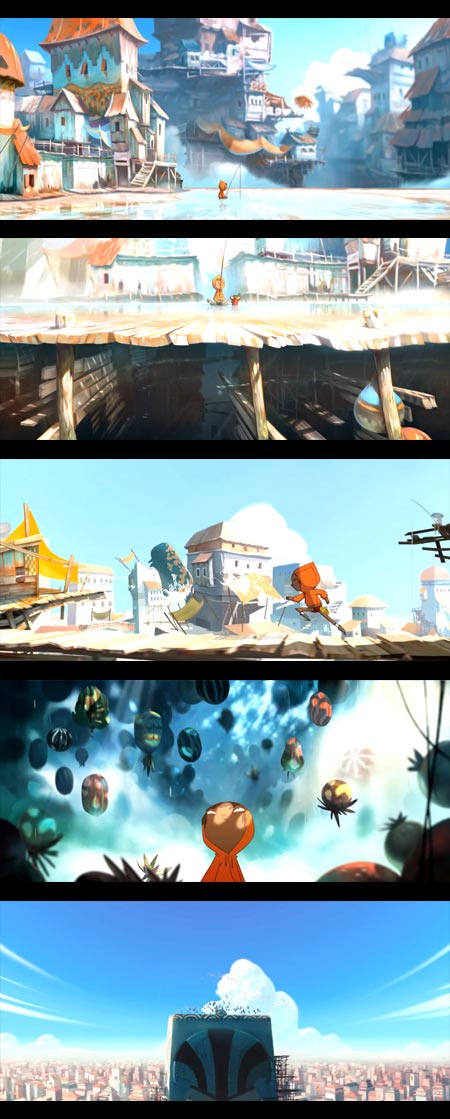
Après la pluie (After the rain) is a short (2 1/2 minute) whimsical animation created in 2008 by a group of then third year animation students at the always impressive Gobelins l’école de l’image in Paris.It uses what is apparently a blend of CGI and hand drawn animation and is beautifully realized. Watch full-screen.
Credits: De Charles-André Lefebvre, Manuel Tanon-Tchi, Louis Tardivier, Sébastien Vovau, Emmanuelle Walker.
Categories:
-
John Singer Sargent’s Madame X

Ever since portraiture become popular among the newly empowered merchant classes in Europe a few centuries ago, it has been common practice for portrait artists in the early stages of their career to paint non-commissioned portraits as examples of their ability.These are often intended to be striking and memorable, advertising the artist’s capabilities and hopefully achieving wide notice — putting their creator’s services in demand.
John Singer Sargent was no exception, though his attempt to paint a dramatic and attention getting portrait of a beautiful American socialite resulted in a simultaneous artistic triumph and societal disaster.
Virginie Amélie Avegno was an American who became Madame Pierre Gautreau, and was known for her beauty and charm. Like Sargent, she wanted greater acceptance in the circles of Parisian society in which she now moved, so she accepted his invitation to pose for a full-length portrait, having turned down similar offers from other painters.
Work on the portrait stretched out longer than either Mme Gatreau or the artist would have liked. There are numerous drawings and studies, and at least one unfinished full size study (now in the Tate, image above, second from bottom).
When the finished portrait was displayed at the Salon of 1884, Sargent had placed his model against a plain background in an unusual pose — her weight partially on a backward turned arm, her body toward the viewer, her head turned in dramatic profile and her skin strikingly pale against the dark background, with the exception of her ear, almost as red as her lips.
She was dressed in a daring black gown, one golden strap of which was off her shoulder.
The painting debuted at the Salon and did indeed garner attention, but the Parisians declared it a scandal rather than a triumph, shaming both artist and model (whose name had been unsuccessfully withheld by the title “Mme ***”).
Sargent, who did not relish this kind of negative attention, repainted the strap on the shoulder instead of off, and renamed the painting “Madame X”, but it did not improve subsequent reception of the work in France.
Sargent gave up on his hope of establishing himself in Paris and moved shortly thereafter to London, where he kept the painting in his studio (above, bottom), not allowing it to be exhibited again for 30 years. Mme Gatreau subsequently had her portrait painted by other artists, like Antonio de La Gandara.
Jonathan Jones, in his column for the Guardian, suggests it was not the painting style, the pale complexion of Mme Gatreau, the stark composition or the dangling strap, but the dress itself, and what it revealed about Parisian high society at the time, that prompted the reaction of scandal.
When he eventually sold the painting to the Metropolitan Museum of Art in New York, Sargent is said to have remarked “I suppose it is the best thing I have done.”
Categories:




Charley’s Picks
Bookshop.org
(Bookshop.org affilliate links; sales benefit independent bookshop owners; I get a small percentage to help support my work on Lines and Colors)

John Singer Sargent: Watercolors


Urban Sketching: Understanding Perspective


Charley’s Picks
Amazon
(Amazon.com affiliate links; sales go to a larger yacht for Jeff Bezos; but I get a small percentage to help support my work on Lines and Colors)
John Singer Sargent: Watercolors
Urban Sketching: Understanding Perspective