


Categories
- 3d CGI
- Amusements
- Animation
- Anime & Manga
- Art Materials
- Art Videos
- Blogroll
- Cartoons
- Color
- Comics
- Concept & Visual Dev.
- Creativity
- Digital Art
- Digital Painting
- Displaying Art on the Web
- Drawing
- Eye Candy for Today
- Gallery and Museum Art
- High-res Art Images
- Illustration
- Motion Graphics & Flash
- Museums
- Online Museums
- Outsider Art
- Painting
- Painting a Day
- Paleo Art
- Pastel, Conté & Chalk
- Pen & Ink
- Prints and Printmaking
- Reviews
- Sc-fi and Fantasy
- Sculpture & Dimensional
- Site Comments
- Sketching
- Storyboards
- Tools and Techniques
- Uncategorized
- Vector Art
- Videos & Podcasts
- Vision and Optics
- Watercolor and Gouache
- Webcomics
Archives
- July 2026
- June 2026
- May 2026
- April 2026
- March 2026
- February 2026
- January 2026
- December 2025
- November 2025
- October 2025
- September 2025
- August 2025
- July 2025
- June 2025
- May 2025
- January 2025
- December 2024
- November 2024
- October 2024
- September 2024
- August 2024
- June 2024
- April 2024
- March 2024
- February 2024
- January 2024
- December 2023
- November 2023
- October 2023
- September 2023
- August 2023
- July 2023
- May 2023
- April 2023
- March 2023
- February 2023
- January 2023
- December 2022
- November 2022
- September 2022
- August 2022
- July 2022
- June 2022
- May 2022
- April 2022
- March 2022
- February 2022
- January 2022
- December 2021
- November 2021
- October 2021
- September 2021
- August 2021
- July 2021
- June 2021
- May 2021
- April 2021
- March 2021
- February 2021
- January 2021
- December 2020
- November 2020
- October 2020
- September 2020
- August 2020
- July 2020
- June 2020
- May 2020
- April 2020
- March 2020
- February 2020
- January 2020
- December 2019
- November 2019
- October 2019
- September 2019
- August 2019
- July 2019
- June 2019
- May 2019
- April 2019
- March 2019
- February 2019
- January 2019
- December 2018
- November 2018
- October 2018
- September 2018
- August 2018
- July 2018
- June 2018
- May 2018
- April 2018
- March 2018
- February 2018
- January 2018
- December 2017
- November 2017
- October 2017
- September 2017
- August 2017
- July 2017
- June 2017
- May 2017
- April 2017
- March 2017
- February 2017
- January 2017
- December 2016
- November 2016
- October 2016
- September 2016
- August 2016
- July 2016
- June 2016
- May 2016
- April 2016
- March 2016
- February 2016
- January 2016
- December 2015
- November 2015
- October 2015
- September 2015
- August 2015
- July 2015
- June 2015
- May 2015
- April 2015
- March 2015
- February 2015
- January 2015
- December 2014
- November 2014
- October 2014
- September 2014
- August 2014
- July 2014
- June 2014
- May 2014
- April 2014
- March 2014
- February 2014
- January 2014
- December 2013
- November 2013
- October 2013
- September 2013
- August 2013
- July 2013
- June 2013
- May 2013
- April 2013
- March 2013
- February 2013
- January 2013
- December 2012
- November 2012
- October 2012
- September 2012
- August 2012
- July 2012
- June 2012
- May 2012
- April 2012
- March 2012
- February 2012
- January 2012
- December 2011
- November 2011
- October 2011
- September 2011
- August 2011
- July 2011
- June 2011
- May 2011
- April 2011
- March 2011
- February 2011
- January 2011
- December 2010
- November 2010
- October 2010
- September 2010
- August 2010
- July 2010
- June 2010
- May 2010
- April 2010
- March 2010
- February 2010
- January 2010
- December 2009
- November 2009
- October 2009
- September 2009
- August 2009
- July 2009
- June 2009
- May 2009
- April 2009
- March 2009
- February 2009
- January 2009
- December 2008
- November 2008
- October 2008
- September 2008
- August 2008
- July 2008
- June 2008
- May 2008
- April 2008
- March 2008
- February 2008
- January 2008
- December 2007
- November 2007
- October 2007
- September 2007
- August 2007
- July 2007
- June 2007
- May 2007
- April 2007
- March 2007
- February 2007
- January 2007
- December 2006
- November 2006
- October 2006
- September 2006
- August 2006
- July 2006
- June 2006
- May 2006
- April 2006
- March 2006
- February 2006
- January 2006
- December 2005
- November 2005
- October 2005
- September 2005
- August 2005
Relevant Blogs
Art, Painting & Sketch
- Gurney Journey
- Underpaintings
- Art and Influence
- Painting Perceptions
- Oil Painters of America
- Vasari Paint POV
- Flying Fox
- Urban Sketchers
- Bento (Smithsonian)
- Art Inconnu
- The Hidden Place
- Still Life
- Making a Mark
- The Art of the Landscape
- Exploring Color & Creativity
- Art Contrarian
- Artist A Day
- beinArt Surreal Art Collective
- Eye Level
- David Dunlop
- p.i.g.m.e.n.t.i.u.m
- CultureGrrl
- Joaquín Sorolla blog
- Artists in Pastel
“Painting a Day”
- A Painting a Day (Keiser)
- On Painting (Keiser)
- Julian Merrow-Smith
- Karen Jurick
- Jeffrey Hayes
- Carol Marine
- Abbey Ryan
- Daily Paintworks
Other Painting Blogs
- Virtual Gouache Land
- Neil Hollingsworth
- Marc Hanson
- Kevin Menck
- Marc Dalessio
- Larry Seiler
- Stapleton Kearns
- Colin Page
- Roos Schuring
- Hans Versfelt
- Titus Meeuws
- Régis Pettinari
- René Plein Air
- Belinda Del Pesco
- Robin Weiss
- Nathan Fowkes (Land Sketch)
- William Wray
- Frank Serrano
- Stephen Magsig
- Michael Chesley Johnson
- Twice a Week
- Sarah Wimperis
- Rob Adams
- Michael Cole Manley
- The Dirty Palette Club
- Mike Manley’s Draw!
Gallery Art & Illustration mix
Illustration
- Howard Pyle
- 100 Years of Illustration
- BibliOdyssey
- Illustration Art
- Today’s Inspiration
- Illustration Mundo
- Little Chimp Society
- Danny Gregory
- R D (John Martz
- Illustration Friday blog
- Monster Brains
- Illustrators & Illustrations (RU)
- Elwood H. Smith
- DaniDraws.com
- Designers Who Blog
- iSpot Blog
Sci-Fi & Fantasy
Illustration & Comics
Comics & Cartoons
- Comics Beat
- Robot 6
- Newsarama Blog
- Comic Vine
- Comics Alliance
- Forbidden Planet Int.
- Paolo Rivera
- Bolt City
- Flight
- Scott McCloud
- The Comics Journal
- Comixpedia
- Funnybook Babylon
- James Baker
- Middleton’s Sketchbook
- Boneville
- The Hotel Fred
- Paul Rivoche
- Daily Cartoonist
- Mad About Cartoons (William Wray)
- Digital Strips
Illustration & Concept
Animation & Concept
- Cartoon Brew
- Animation Blog
- Cold Hard Flash
- Concept Art World
- The CAB
- FY Concept Art
- Concept Ships
- Concept Robots
- John Nevarez
- Armand Serrano
- Marcos Mateu-Mestre
- all kinds of stuff (Kricfalusi)
- Yacin the faun (Man Arenas)
- Kelsey Mann
- Cre8tivemarks Blog
- Ice-Cream Monster Toon Cafe
- AAU Character & Creature Design
- AAU Animation Notes
- Articles and Texticles
Paleo & Scientific
Tools & Techniques
Other
Lists of Art Blogs
Art Image Resource Links
Historic Art Images
- Wikimedia Commons: Paintings
- Wikimedia Commons: Drawings
- The Athenaeum
- WikiArt (WikiPaintings)
- Google Art Project: Artists
- Google Art Project: Collections (Museums)
- ArtCyclopedia
- Web Gallery of Art
- Art Renewal Center
- Web Gallery of Impressionism
Auction Consolidation sites
Auction sites
- Sotheby’s
- Bonham’s
- Christies
- Heritage Auctions: Fine Art
- Heritage Auctions: Illustration
- Freeman’s Auctions
- Bukowskis
- Shannon’s
Image Search
Reverse Image Search (search by image)
- Tin Eye
- RevImg
- Google Image Search (camera icon)
- Bing Image Search (camera icon)
Promoting some friends and some clients of my website design business
- Twin Willows T’ai Chi studio in Wilmington DE. Taiji classes with Bryan Davis.
- Ray Hayward, Inspired Teacher of T’ai Chi ( Taiji ) in Minneapolis, Founder of Mindful Motion Tai Chi Academy
- OldHead Tattoo studio and Art Gallery in Wilmington DE. Tattoos and paintings by Bruce Gulick
- Sharon Domenico Art, pet portrait oil paintings
- Platinum Paperhanging, wallpaper hanging, Main Line and Philadelphia, PA
- Lisa Stone Design, interior designer, Main Line and Philadelphia, PA
- Studio12KPT, original art, prints, calendars and other custom printed items by Van Sickle & Rolleri
-
Uni-ball Kuru Toga Pencil

As much as I like wooden pencils, when drawing with graphite my favorite tool is a leadholder, sometimes called a drafting pencil or clutch pencil; basically a mechanical holder for a nice big shaft of 2mm graphite that can be sharpened or pointed in a variety of ways. Many comic book artists and illustrators swear by them, as I pointed out in my post about The Drafting Pencil Museum.Leadholders are usually used in conjunction with a separate leadpointer, though, which makes them less than ideal for carrying around when sketching. Likewise wooden pencils need to be frequently sharpened.
The solution for sketching, then, is a mechanical pencil, which holds a much thinner “lead”, usually .5 or .3mm, and keeps a reasonably consistent point without sharpening.
“Reasonably consistent point”, though, is a lukewarm assessment and hardly ideal. The problem with a mechanical pencil is that the lead wears down on one side, becoming a flattened chisel shape instead of a sharp point. While chisel points are often nice when intentionally used for special effects in pencil drawing, they’re not what you want most of the time.
Artists who use mechanical pencils frequently learn to turn them in their hand while drawing to keep the sharp side of the point down, but it’s distracting and basically a PITA, and I often just put up with the less desirable flattened point and the clunkier line it produces.
Not any more.
Enter the Uni-ball Kuru Toga Pencil, a cleverly different mechanical pencil from Mistubishi Pencil.
Kuru Toga means “auto-rotate pencil”, and the device actually contains a small geared mechanism that automatically rotates the lead each time it is pressed against the paper.
The result is s beautiful, consistently fine line that is a joy to sketch with. I picked up a .3mm model and it has immediately become my favorite sketching pencil.
The pencil does have some minuses, it’s not retractable, making it less convenient for sticking in a shirt pocket, the eraser is tiny and not very useable, and there is no under-the-eraser wire for pushing old lead bits out of the shaft. These are small quibbles, particularly in light of the Kuru Toga’s unexpectedly reasonable price of about $7 U.S.
Unfortunately, they seem to be in short supply at the moment, probably because there are several mentions of the Kuru Toga circulating on the web, like the mention on LifeHacker, and reviews on Pens and Pencils, Dave’s Mechanical Pencils and Trendhunter.
The latter has a short video (also on YouTube) that shows how the pencil’s transparent lower barrel allows you to actually see the clutch mechanism turning as you hit the point against the paper.
I found the Kuru Toga where I often find cool stuff, on Kevin Kelly’s Cool Tools, in a review by Jonathan Cope.
Most articles point to JetPens as the mail order source, though I found mine on J Stationery (.3mm and .5mm).
Sorry to tell you about it while it’s out of stock from both suppliers, but I figure better now than when it’s come back into stock and gone out again.
If you’re interested you’ll just have to watch for it and stay sharp.
Categories:
-
2008 Best Art Book Lists

To go along with my previous post about 2008 Best Graphic Novel Lists, here’s a list of lists from various corners for art, design and photography books for 2008:About.com: Best 10 Art Books of 2008
New York Times: 2008 Holiday Gift Guide, The Best Art Architecture and Design Books (if it asks for a login, try BugMeNot)
SFGate: Art and Photography Books
Times Online: The Times Christmas Books 2008: Art
Times Online: The Sunday TImes books of the year: Art
Chicago Tribune: Beautiful art books published in 2008
Time Out London: Best Christmas gift books 2008: Art
Booklist Online: Top 10: The Arts
[Image above: Classical Painting Atelier: A Contemporary Guide to Traditional Studio Practice, Painter in a Savage Land: The Strange Saga of the First European Artist in North America, Chagall: A Biography, Artists and Their Studios, Colour (Documents of Contemporary Art), Let’s See: Writings on Art from The New Yorker]
Categories:
-
2008 Best Graphic Novel Lists
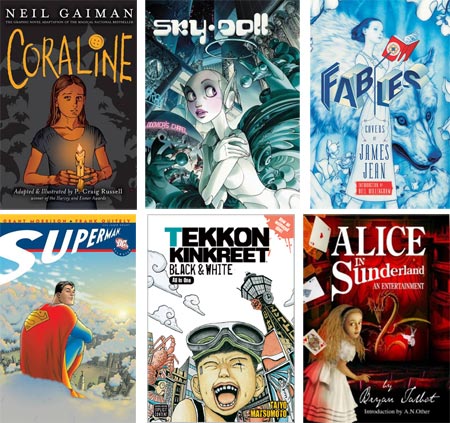
Ahhh…, it’s that time of year, the scramble through the barrage of “Buy this!” “Buy that!”, mall stuffing, parking lot screaming, credit card swinging, Scotch tape sticking, present buying madness; however tempered it may be this year by the ongoing Collapse of Western Civilization.So, just as sure as the days shorten, lists appear, guiding us through the maze of what to buy and what was good this year.
In lieu of attempting a list myself, given the sorry state of my “yet to be read” book and comics stack, I give you a short list of lists; in this case lists of the year’s best graphic novels and comics related books as suggested by various sources.
Drawn!: Favourite Comics and Art Books of 2008 Part 1: Matt’s picks
Drawn!: Favourite Comics and Art Books of 2008 Part 2: John’s picks
io9: 10 Graphic Novels That Make Thrilling Gifts
New York Magazine: Top Ten Graphic Novels – The 2008 Culture Awards
Vanguard: Top 10 graphic novels and comics of 2008
NPR: Best Graphic Novels of 2008
NPR: Best Superhero Graphic Novels
Times Online: Christmas Books 2008: Graphic Novels
Booklist Online: Top 10 Graphic Novels: 2008
Comic Book Galaxy: ADD Blog Best of 2008
ALA: 2008 Great Graphic Novels for Teens
Amazon.com: Best Books of 2008: Comics & Graphic Novels
Publisher’s Weekly: Best Books of the Year (scroll down for Comics)
ICv2 – Amazon & PW’s 10 Best Graphic Novels of 2008 (above two lists compared)
(Images above: Coraline Graphic Novel, Sky Doll, Fables Covers, All-Star Superman Vol. 1, Tekkon Kinkreet Black & White, Alice in Sunderland)
Categories:
-
American Impressionism from the Phillips Collection

Those who have been reading Lines and Colors for a while will know that I have a particular fondness for many of the late 19th, early 20th Century painters referred to as “American Impressionists”. (I put the phrase in quotes because I doubt the painters ever referred to themselves in those terms.)The Phillips Collection is a museum collection in Washington, D.C. that has strengths in that time period in both modern and Impressionist works from Europe and America.
A selection of American Impressionist paintings from the collection has been arranged into a traveling exhibit, and is currently on view as the Oklahoma City Museum of Art.
The Oklahoma City Museum has an online feature that displays some of the paintings in the exhibit, with a voice over narration about the works and the artists.
The Phillips Collection site has a Timeline of American Art, and a list of American Art in the collection that you can view alphabetically with an image of each work.
In many cases, like Childe Hassam’s beautiful painting of Washington Arch, Spring (image above), there is a more extensive feature and a Zoomable version of the image (also see my post on Childe Hassam).
In addition to Hassam, the exhibit includes works by Theodore Robinson, John Henry Twatchman, Julian Alden Weir, Ernest Lawson, William Glackens, Helen Turner and Gifford Beal. I was pleased to see that some of the “Pennsylvania Impressionists” were included, like William Lathrop, John Folinsbee and Robert Spencer. There is also at least one piece by George Inness, though he was not an Impressionist painter.
American Impressionism from the Phillips Collection is on view at the Oklahoma City Museum of Art until January 18, 2009.
The exhibit will then travel to the Society of the Four Arts in Palm Beach Florida from March 13 to April 15, 2009; and the New Mexico Museum of Art in Santa Fe from June 5 to September 13, 2009.
There is a 192 page book accompanying the exhibit, American Impressionists: Painters of Light and the Modern Landscape by Susan Behrends Frank, though it doesn’t seem to be in stock from Amazon; it should be available at the exhibit in all of the locations.
[Via Art Knowledge News]
Categories:
-
Anamorphic Art

An anamorphosis is an image that is distorted in such a way that it only assumes the proportions of recognizable forms when viewed from a certain angle, or by reflection in a curved surface.The term comes from the Greek anamorphoun, to transform. Anamorphic images have a long history in art. The earliest examples in Western art are found in Leonardo’s notebooks, though anamorphic images may have been developed in Chinese art around the same time.
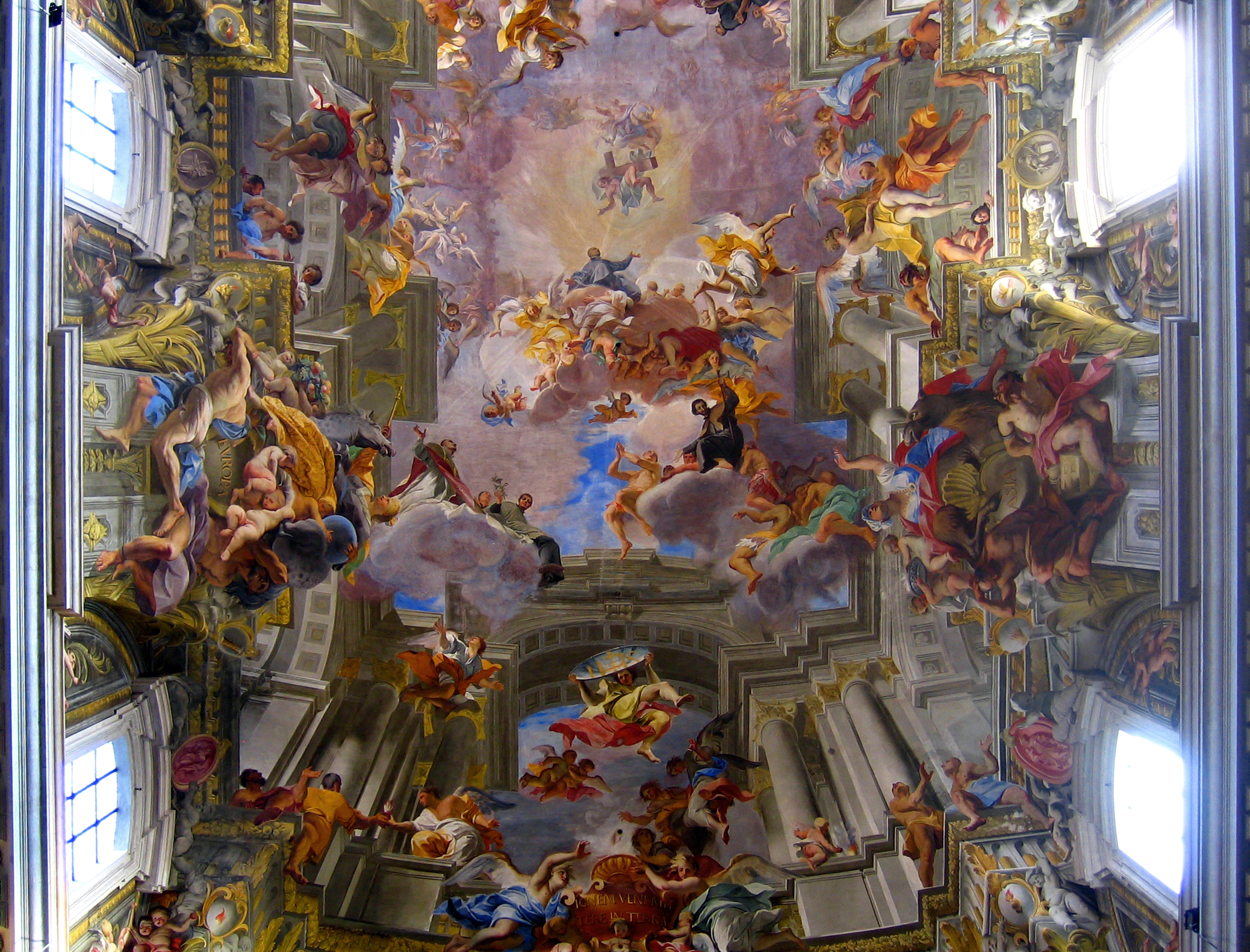
Anamorphic perspective was employed in the illusionistic painting of church vaults, like those of Andrea Pozzo (image above, top, large version here) and Andrea Mantegna, but it has most often appeared in art as a curiosity or entertainment; or been used for the creation of hidden or secret images, requiring a matching mirrored surface to reveal their true nature.
Anamorphic images can be of as much interest to scientists as they are to artists, as NewScientist reports in their mention of a recent seminar on technical aspects of anamorophic art at the London Knowledge Lab; and an event at the National Gallery in London called Curious Perspective: Anamophosis in Art.
The NewScientist article is accompanied by a slideshow of anamorphic images.
The event at the National Gallery in London centered on the wonderfully enigmatic painting The Ambassadors by Hans Holbein the Younger, which is in their permanent collection. I devoted a post to The Ambassadors in 2006.
One of the notable modern applications of artistic anamorphosis that is missing from the NewScientist article (and many other resources) is the use of anamorphic images in sidewalk art, as exemplified by the work of Julian Beever and Kurt Wenner.
You can also add to the list the illusionistic point-of-view dependent paintings of Felice Varini and the modern continuation of traditional anamorphic art by István Orosz (image above, bottom). I’ve gathered some other anamorphic art resources below.
[NewScientist article link via Digg]
Categories:
-
Dan Dos Santos’ “Top 10 SF/F Art Websites of 2008”

As part of the SF Signal year end round up of The Best Genre-Related Books/Films/Shows Consumed in 2008, illustrator Dan Dos Santos has posted his Top 10 SF/F Art Websites of 2008, in which he was kind enough to list Lines and Colors (thanks, Dan).The list includes some sites I’ve specifically written posts about, including Gorilla Artfare and the amazing Tor.com site (with its SF/F art gallery); as well as many that I’ve linked to in the course of posts about various artists.
It prominently mentions the always fascinating Gurney Journey, which is where I found out about the list. (Gurney’s blog had gone way beyond its original premise and has become a combination of art travelogue, insightful looks at art history and one of the best art instructional sites on the web.)
Of course, Dos Santos’ list also gives me a great excuse to post more of his own terrific artwork (above). When visiting his site, don’t miss the Wallpapers section of his gallery, where you can see a few detail crops from his images in high enough resolution to see his brushwork (image above, bottom).
Categories:




Charley’s Picks
Bookshop.org
(Bookshop.org affilliate links; sales benefit independent bookshop owners; I get a small percentage to help support my work on Lines and Colors)

John Singer Sargent: Watercolors


Urban Sketching: Understanding Perspective


Charley’s Picks
Amazon
(Amazon.com affiliate links; sales go to a larger yacht for Jeff Bezos; but I get a small percentage to help support my work on Lines and Colors)
John Singer Sargent: Watercolors
Urban Sketching: Understanding Perspective