


Categories
- 3d CGI
- Amusements
- Animation
- Anime & Manga
- Art Materials
- Art Videos
- Blogroll
- Cartoons
- Color
- Comics
- Concept & Visual Dev.
- Creativity
- Digital Art
- Digital Painting
- Displaying Art on the Web
- Drawing
- Eye Candy for Today
- Gallery and Museum Art
- High-res Art Images
- Illustration
- Motion Graphics & Flash
- Museums
- Online Museums
- Outsider Art
- Painting
- Painting a Day
- Paleo Art
- Pastel, Conté & Chalk
- Pen & Ink
- Prints and Printmaking
- Reviews
- Sc-fi and Fantasy
- Sculpture & Dimensional
- Site Comments
- Sketching
- Storyboards
- Tools and Techniques
- Uncategorized
- Vector Art
- Videos & Podcasts
- Vision and Optics
- Watercolor and Gouache
- Webcomics
Archives
- August 2026
- July 2026
- June 2026
- May 2026
- April 2026
- March 2026
- February 2026
- January 2026
- December 2025
- November 2025
- October 2025
- September 2025
- August 2025
- July 2025
- June 2025
- May 2025
- January 2025
- December 2024
- November 2024
- October 2024
- September 2024
- August 2024
- June 2024
- April 2024
- March 2024
- February 2024
- January 2024
- December 2023
- November 2023
- October 2023
- September 2023
- August 2023
- July 2023
- May 2023
- April 2023
- March 2023
- February 2023
- January 2023
- December 2022
- November 2022
- September 2022
- August 2022
- July 2022
- June 2022
- May 2022
- April 2022
- March 2022
- February 2022
- January 2022
- December 2021
- November 2021
- October 2021
- September 2021
- August 2021
- July 2021
- June 2021
- May 2021
- April 2021
- March 2021
- February 2021
- January 2021
- December 2020
- November 2020
- October 2020
- September 2020
- August 2020
- July 2020
- June 2020
- May 2020
- April 2020
- March 2020
- February 2020
- January 2020
- December 2019
- November 2019
- October 2019
- September 2019
- August 2019
- July 2019
- June 2019
- May 2019
- April 2019
- March 2019
- February 2019
- January 2019
- December 2018
- November 2018
- October 2018
- September 2018
- August 2018
- July 2018
- June 2018
- May 2018
- April 2018
- March 2018
- February 2018
- January 2018
- December 2017
- November 2017
- October 2017
- September 2017
- August 2017
- July 2017
- June 2017
- May 2017
- April 2017
- March 2017
- February 2017
- January 2017
- December 2016
- November 2016
- October 2016
- September 2016
- August 2016
- July 2016
- June 2016
- May 2016
- April 2016
- March 2016
- February 2016
- January 2016
- December 2015
- November 2015
- October 2015
- September 2015
- August 2015
- July 2015
- June 2015
- May 2015
- April 2015
- March 2015
- February 2015
- January 2015
- December 2014
- November 2014
- October 2014
- September 2014
- August 2014
- July 2014
- June 2014
- May 2014
- April 2014
- March 2014
- February 2014
- January 2014
- December 2013
- November 2013
- October 2013
- September 2013
- August 2013
- July 2013
- June 2013
- May 2013
- April 2013
- March 2013
- February 2013
- January 2013
- December 2012
- November 2012
- October 2012
- September 2012
- August 2012
- July 2012
- June 2012
- May 2012
- April 2012
- March 2012
- February 2012
- January 2012
- December 2011
- November 2011
- October 2011
- September 2011
- August 2011
- July 2011
- June 2011
- May 2011
- April 2011
- March 2011
- February 2011
- January 2011
- December 2010
- November 2010
- October 2010
- September 2010
- August 2010
- July 2010
- June 2010
- May 2010
- April 2010
- March 2010
- February 2010
- January 2010
- December 2009
- November 2009
- October 2009
- September 2009
- August 2009
- July 2009
- June 2009
- May 2009
- April 2009
- March 2009
- February 2009
- January 2009
- December 2008
- November 2008
- October 2008
- September 2008
- August 2008
- July 2008
- June 2008
- May 2008
- April 2008
- March 2008
- February 2008
- January 2008
- December 2007
- November 2007
- October 2007
- September 2007
- August 2007
- July 2007
- June 2007
- May 2007
- April 2007
- March 2007
- February 2007
- January 2007
- December 2006
- November 2006
- October 2006
- September 2006
- August 2006
- July 2006
- June 2006
- May 2006
- April 2006
- March 2006
- February 2006
- January 2006
- December 2005
- November 2005
- October 2005
- September 2005
- August 2005
Relevant Blogs
Art, Painting & Sketch
- Gurney Journey
- Underpaintings
- Art and Influence
- Painting Perceptions
- Oil Painters of America
- Vasari Paint POV
- Flying Fox
- Urban Sketchers
- Bento (Smithsonian)
- Art Inconnu
- The Hidden Place
- Still Life
- Making a Mark
- The Art of the Landscape
- Exploring Color & Creativity
- Art Contrarian
- Artist A Day
- beinArt Surreal Art Collective
- Eye Level
- David Dunlop
- p.i.g.m.e.n.t.i.u.m
- CultureGrrl
- Joaquín Sorolla blog
- Artists in Pastel
“Painting a Day”
- A Painting a Day (Keiser)
- On Painting (Keiser)
- Julian Merrow-Smith
- Karen Jurick
- Jeffrey Hayes
- Carol Marine
- Abbey Ryan
- Daily Paintworks
Other Painting Blogs
- Virtual Gouache Land
- Neil Hollingsworth
- Marc Hanson
- Kevin Menck
- Marc Dalessio
- Larry Seiler
- Stapleton Kearns
- Colin Page
- Roos Schuring
- Hans Versfelt
- Titus Meeuws
- Régis Pettinari
- René Plein Air
- Belinda Del Pesco
- Robin Weiss
- Nathan Fowkes (Land Sketch)
- William Wray
- Frank Serrano
- Stephen Magsig
- Michael Chesley Johnson
- Twice a Week
- Sarah Wimperis
- Rob Adams
- Michael Cole Manley
- The Dirty Palette Club
- Mike Manley’s Draw!
Gallery Art & Illustration mix
Illustration
- Howard Pyle
- 100 Years of Illustration
- BibliOdyssey
- Illustration Art
- Today’s Inspiration
- Illustration Mundo
- Little Chimp Society
- Danny Gregory
- R D (John Martz
- Illustration Friday blog
- Monster Brains
- Illustrators & Illustrations (RU)
- Elwood H. Smith
- DaniDraws.com
- Designers Who Blog
- iSpot Blog
Sci-Fi & Fantasy
Illustration & Comics
Comics & Cartoons
- Comics Beat
- Robot 6
- Newsarama Blog
- Comic Vine
- Comics Alliance
- Forbidden Planet Int.
- Paolo Rivera
- Bolt City
- Flight
- Scott McCloud
- The Comics Journal
- Comixpedia
- Funnybook Babylon
- James Baker
- Middleton’s Sketchbook
- Boneville
- The Hotel Fred
- Paul Rivoche
- Daily Cartoonist
- Mad About Cartoons (William Wray)
- Digital Strips
Illustration & Concept
Animation & Concept
- Cartoon Brew
- Animation Blog
- Cold Hard Flash
- Concept Art World
- The CAB
- FY Concept Art
- Concept Ships
- Concept Robots
- John Nevarez
- Armand Serrano
- Marcos Mateu-Mestre
- all kinds of stuff (Kricfalusi)
- Yacin the faun (Man Arenas)
- Kelsey Mann
- Cre8tivemarks Blog
- Ice-Cream Monster Toon Cafe
- AAU Character & Creature Design
- AAU Animation Notes
- Articles and Texticles
Paleo & Scientific
Tools & Techniques
Other
Lists of Art Blogs
Art Image Resource Links
Historic Art Images
- Wikimedia Commons: Paintings
- Wikimedia Commons: Drawings
- The Athenaeum
- WikiArt (WikiPaintings)
- Google Art Project: Artists
- Google Art Project: Collections (Museums)
- ArtCyclopedia
- Web Gallery of Art
- Art Renewal Center
- Web Gallery of Impressionism
Auction Consolidation sites
Auction sites
- Sotheby’s
- Bonham’s
- Christies
- Heritage Auctions: Fine Art
- Heritage Auctions: Illustration
- Freeman’s Auctions
- Bukowskis
- Shannon’s
Image Search
Reverse Image Search (search by image)
- Tin Eye
- RevImg
- Google Image Search (camera icon)
- Bing Image Search (camera icon)
Promoting some friends and some clients of my website design business
- Twin Willows T’ai Chi studio in Wilmington DE. Taiji classes with Bryan Davis.
- Ray Hayward, Inspired Teacher of T’ai Chi ( Taiji ) in Minneapolis, Founder of Mindful Motion Tai Chi Academy
- OldHead Tattoo studio and Art Gallery in Wilmington DE. Tattoos and paintings by Bruce Gulick
- Sharon Domenico Art, pet portrait oil paintings
- Platinum Paperhanging, wallpaper hanging, Main Line and Philadelphia, PA
- Lisa Stone Design, interior designer, Main Line and Philadelphia, PA
- Studio12KPT, original art, prints, calendars and other custom printed items by Van Sickle & Rolleri
-
Alessandro Barbucci
& Barbara Canepa A few years ago I was in Paris (sigh), gleefully digging through the bandes-dessinées shops in the area around the Sorbonne, when I chanced on a comic album called Sky-Doll. I knew nothing about it, I was just struck by the wonderful drawing and colors. I was unfamiliar with either the artist, Alessandro Barbucci, or the writer/colorist, Barbara Canepa, both from Genoa, Italy.
I managed to conjure up enough halting, clumsy French to convey to the proprietor that I was interested in any other comic albums he might have with art by Barbucci, but finally learned that this was the only volume so far and the artist was new.
The drawings were lively, fresh, slightly cartoony but highly rendered and with delightfully realized and very imaginative backgrounds and settings. I was immediately taken with the visual joie de vivre and went home happy with my discovery, but disappointed that I couldn’t carry home a stack of Barbucci albums with my Moebius, Beltran and Gillon.
I was able to pick the second volume of Sky-Doll a couple of years later (this time while rooting through fumetti shops in Rome), and learned that Barbucci had, in fact, been around for a while. He had previously worked on a comic series for Disney Italy, also written and colored by Canepa, called Witch, a charming and beautifully drawn childrens’ series (as opposed to the distinctly adult nature of Sky-Doll). The series is the basis for the current W.I.T.C.H. animated TV series, but I don’t think B&C have anything to do with it directly.
After the first two volumes of Sky-doll, Barbucci and Canepa returned to Disney to work on the first three (I think) stories for Monster Allergy, a delightful comic series about a kid whose allergies allow him to see invisible monsters in his house. The comic series continues to run under other artists and has been made into an animated TV show in Italy.
Sky-doll #3 is currently being serialized in Lanfeust (Google translation here), the French action-adventure comics anthology magazine, and should be released soon. Sky-doll 0: Doll’s Factory is a “making of” book on the series.
There is an official site for Sky-Doll, but it’s been unfinished and apparently abandoned for some time. It still has full pages that you can preview, though. In fact only the Book intro and Gallery page are active.
You can also find some art from B&C on Catsuka.com (Google translation here). The Catsuka.com page for Witch, has lots of small comics pages you can preview. There is also some Barbucci art here.
There is an unofficial site devoted to Barbucci and Canepa (annoying Lycos pop-up warning) with news and info as well as galleries of comics pages, covers and sketches. (Google translation here).
Americans can order some of the Sky-doll comic albums from Stuart NG Books or Mars Import. These are the French editions (there are no English translations that I’m aware of) and they come at a premium, but you can get them.
Note: Some of the sites linked here contain nudity and sexually suggestive images. Avoid them if you’re likely to be offended.
Categories:
-
Garren Gallery: Russian Art

It’s not that often that I get to be overwhelmed with dozens of terrific artists that are new to me all at once. That’s the happy result of my decision to look into Russian art for the post I did back in January.Responses to the post have left me with a wealth of links to great Russian art on the web. I’m still sifting through some of these great resources and wonderful Russian painters, but I’ll start with a response I just got from Robert Garren of the Garren Gallery.
The Garren Gallery is a remarkable commercial gallery in, of all places, Georgetown Tenessee, that has one of the largest collections of Russian art in the U.S and represents over 250 artists from Russia and the former Soviet Union.
The gallery’s site allows you to browse through online galleries of hundreds of works, sorted by artist, or by title of the works.
You can browse for hours and keep discovering wonderful paintings, drawings and graphic works. The site also includes bios of most of the artists, with important exhibitions, museum credits and lists of major publications.
There is also a selection of short articles, including one about the Russian Academy of Arts.
Shown in the images at top, clockwise from top left: Vasili Ivanovich Bratanuk, Boris Andreevich, Yuri Fedorovich Vnodchencko, Vladimir Ilich Scherdrin and Olga Nikitaevna Fomina.
Categories:
-
Sir John Tenniel

John Tenniel is best known (and rightly so) for his beautiful, imaginative, definitive and absolutely perfect pen and ink illustrations for Lewis Carroll’s Alice’s Adventures in Wonderland and Through the Looking Glass: And What Alice Found There.Though many illustrators have done their versions of Alice (see Lauren Harmon’s lists of Alice Illustrators, and the list of artist links on lewiscarroll.org), Tenniel remains the definitive interpretation. In my humble opinion, the only one who breaks out of Tenniel’s shadow when illustrating Alice is the great Arthur Rackham.
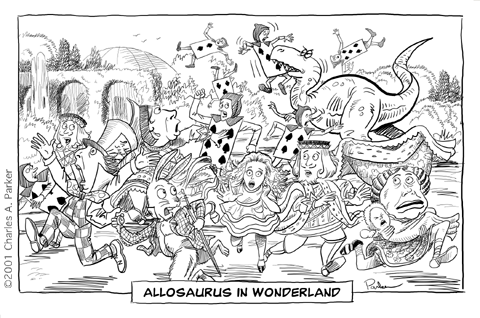
Tenniel has also influenced many artists and illustrators over the years, from his contemporary Victorian illustrators and cartoonists to modern “gothic” artists like Edward Gorey and Mark Ryden. (You can see my own nod to Tenniel in this cartoon from my book of Dinosaur Cartoons.)
The majority of Tenniel’s career was spent as a cartoonist and charicaturist for Punch, the British satire and humor magazine in the late 19th century. He also exhibited his work in galleries and painted a fresco in the Hall of Poets of the House of Lords.
As an illustrator, he created illustrations for a number of books including Aesop’s Fables, Undine, and Dickens’ The Haunted Man. It’s for his suberb drawings for the Alice stories, that we most treasure him though.
There are archived copies of Alice’s Adventures in Wonderland on Project Gutenbeg and Through the Looking Glass: And What Alice Found There on sabian.org, but the quality of the reproductions is inexplicably poor.
You can also find some of Tenniels’ Alice illustrations at the Webmuseum, and his political cartoons, illos for The Haunted Man as well as a full Alice set on The Victorian Web and some of the color versions of the Alice images on the British Library site.
For the best reproductions, and to truly appreciate Tenniels’ beautiful work, look for Alice books that include his illustrations. There are inexpensive editions in which the quality of the images is quite high: Alice’s Adventures in Wonderland and Through the Looking-Glass (Modern Library Classics) and Alice’s Adventures in Wonderland and Through the Looking Glass (Barnes & Noble Classics Trade Paper).
Categories:
-
Jamie Caliri
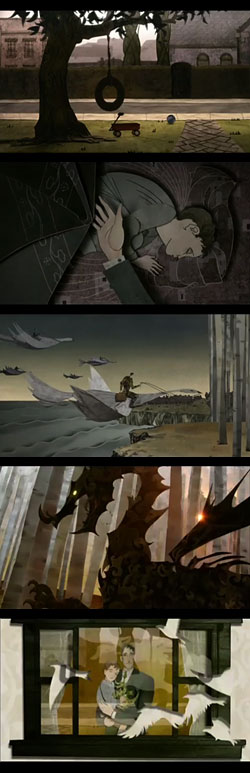 Jamie Caliri isn’t an illustrator, animator or graphic artist, he’s the director of two of my favorite recent short animations.
If you haven’t seen Dragon, the wonderful, essentially wordless, animated ad for United Airlines in which a father tucks his son in bed and flies off on the back of a bird to meet with knights at a round table, defeat a fire-breathing dragon and bring home the rewards, you’ve missed the most beautiful 64 seconds of animated television in recent memory.
You can see the ad here on the United Airlines site, along with a fascinating “making of” video that shows how Caliri and his talented crew of artists, animators and artisans created animated magic out of stage sets and puppets that were essentially paper cut-outs.
There is a larger format version of the ad (worth it) here on Caliri’s site, as well as a comprehensive list of the creative team and some large production stills.
Caliri is also responsible for the end titles for Lemony Snicket’s A Series of Unfortunate Events, which was certainly the best part of that movie and one of the best short pieces of animation in several years.
I didn’t care that much for the movie (although the production design is nice), but I’ll pick up that DVD just for Caliri & company’s beautiful end titles.
Link via Drawn!
Categories:
-
Henry Fuseli

A Swiss-born artist who lived and worked in Berlin, Rome and London, Fuseli is generally thought of as English. While in Rome he became fascinated with the work of Michelangelo and changed his name from Johann Heinrich Füssli to the Italian sounding “Fuseli”.Like the Pre-Raphaelites (see my post on William Holman-Hunt), who he pre-dated by some years, Fuseli often painted literary subjects; depicting scenes from Shakespeare and John Milton.
He also often painted mythological or fantastic subjects and the edges of his paintings are frequently populated with tiny details of elves and fairies. He created works infused with horror, wild imaginings and eroticism.
He seemed to want drama above all things in his canvases and often contorted and exaggerated his figures to achieve a dramatic effect. Men were overly muscled and women melodramatically sexual. You might think of him as a precursor to modern fantasy illustrators in that regard.
The picture shown here, The Nightmare, made his reputation and is by far his most famous and recognizable work.
Fuseli’s working methods were reputedly unorthodox and he was said to have often used his paints as a dry powder, spread and worked with a pencil dipped in oil or turpentine.
He was at one point romantically involved with Mary Wollstonecroft, whose daughter, Mary Shelly, wrote Frankenstein.
There is an exhibition at the Tate Gallery in London: Gothic Nightmares: Fuseli, Blake and the Romantic Imagination that runs until May 1, 2006.
Categories:
-
Ree (Cherie) Treweek
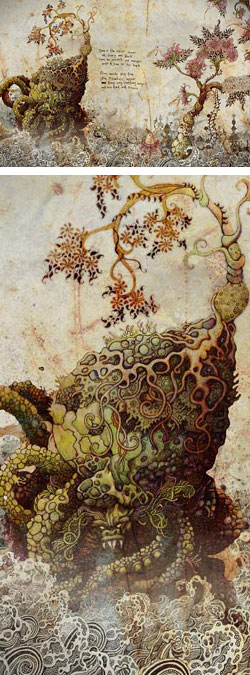 Ree (pen name for Cherie) Treweek is a South African artist and illustrator. Her fascinatingly detailed illustrations and drawings usually start as an ink drawing that she brings into Photoshop to be fully developed, occasionally in collaboration with Jannes Hendrikz.
The images look anything but digital and modern, however. They seem to be from another era; or even from another, perhaps mythical, culture.
Treweek’s images often use large areas of intricate patterns and decorative linework, to my eye showing influences of Indian and Chinese art as well as Art Nouveau and illustrators like Arthur Rackham, Kay Neilsen and perhaps Aubrey Beardsly.
Treweek and Hendrikz are part of “The Blackheart Gang”, who created an animated music video for Marcus Wormstorm. (I haven’t been able to find a post of the video.)
The image shown here is from a story called The Tale of How that is part of a larger work called The Household. The group is apparently working on an animation based on the thirteen prints in this series with animator Brian Goodwin. There is a tantalizing bit of teaser animation on Goodwin’s site.
I’ve found one book available illustrated under the name Cherie Treweek: Tales Of The Tokoloshe, a book of fantasy stories based on South African folktales, by Pieter Scholtz.
Treweek’s work is also included in the Expose 3 digital art collection, in which she is an award winner for the “Abstract & Design 2D” category.
The link below is to her section and gallery on the South African Cartoonists & Illustrators site. Here are a couple of additional links to posts on the CGSociety: Otto The Monster, Terrors and Typhoons
and Thief in the Night.
Categories:



Charley’s Picks
Bookshop.org
(Bookshop.org affilliate links; sales benefit independent bookshop owners; I get a small percentage to help support my work on Lines and Colors)
Carlson’s Guide to Landscape Painting
Drawing and Sketching in Pencil

Bridgman’s Complete Guide to Drawing from Life
Charley’s Picks
Amazon
(Amazon.com affiliate links; sales go to a larger yacht for Jeff Bezos; but I get a small percentage to help support my work on Lines and Colors)
Carlson’s Guide to Landscape Painting
Drawing and Sketching in Pencil
Bridgman’s Complete Guide to Drawing from Life