


Categories
- 3d CGI
- Amusements
- Animation
- Anime & Manga
- Art Materials
- Art Videos
- Blogroll
- Cartoons
- Color
- Comics
- Concept & Visual Dev.
- Creativity
- Digital Art
- Digital Painting
- Displaying Art on the Web
- Drawing
- Eye Candy for Today
- Gallery and Museum Art
- High-res Art Images
- Illustration
- Motion Graphics & Flash
- Museums
- Online Museums
- Outsider Art
- Painting
- Painting a Day
- Paleo Art
- Pastel, Conté & Chalk
- Pen & Ink
- Prints and Printmaking
- Reviews
- Sc-fi and Fantasy
- Sculpture & Dimensional
- Site Comments
- Sketching
- Storyboards
- Tools and Techniques
- Uncategorized
- Vector Art
- Videos & Podcasts
- Vision and Optics
- Watercolor and Gouache
- Webcomics
Archives
- May 2026
- April 2026
- March 2026
- February 2026
- January 2026
- December 2025
- November 2025
- October 2025
- September 2025
- August 2025
- July 2025
- June 2025
- May 2025
- January 2025
- December 2024
- November 2024
- October 2024
- September 2024
- August 2024
- June 2024
- April 2024
- March 2024
- February 2024
- January 2024
- December 2023
- November 2023
- October 2023
- September 2023
- August 2023
- July 2023
- May 2023
- April 2023
- March 2023
- February 2023
- January 2023
- December 2022
- November 2022
- September 2022
- August 2022
- July 2022
- June 2022
- May 2022
- April 2022
- March 2022
- February 2022
- January 2022
- December 2021
- November 2021
- October 2021
- September 2021
- August 2021
- July 2021
- June 2021
- May 2021
- April 2021
- March 2021
- February 2021
- January 2021
- December 2020
- November 2020
- October 2020
- September 2020
- August 2020
- July 2020
- June 2020
- May 2020
- April 2020
- March 2020
- February 2020
- January 2020
- December 2019
- November 2019
- October 2019
- September 2019
- August 2019
- July 2019
- June 2019
- May 2019
- April 2019
- March 2019
- February 2019
- January 2019
- December 2018
- November 2018
- October 2018
- September 2018
- August 2018
- July 2018
- June 2018
- May 2018
- April 2018
- March 2018
- February 2018
- January 2018
- December 2017
- November 2017
- October 2017
- September 2017
- August 2017
- July 2017
- June 2017
- May 2017
- April 2017
- March 2017
- February 2017
- January 2017
- December 2016
- November 2016
- October 2016
- September 2016
- August 2016
- July 2016
- June 2016
- May 2016
- April 2016
- March 2016
- February 2016
- January 2016
- December 2015
- November 2015
- October 2015
- September 2015
- August 2015
- July 2015
- June 2015
- May 2015
- April 2015
- March 2015
- February 2015
- January 2015
- December 2014
- November 2014
- October 2014
- September 2014
- August 2014
- July 2014
- June 2014
- May 2014
- April 2014
- March 2014
- February 2014
- January 2014
- December 2013
- November 2013
- October 2013
- September 2013
- August 2013
- July 2013
- June 2013
- May 2013
- April 2013
- March 2013
- February 2013
- January 2013
- December 2012
- November 2012
- October 2012
- September 2012
- August 2012
- July 2012
- June 2012
- May 2012
- April 2012
- March 2012
- February 2012
- January 2012
- December 2011
- November 2011
- October 2011
- September 2011
- August 2011
- July 2011
- June 2011
- May 2011
- April 2011
- March 2011
- February 2011
- January 2011
- December 2010
- November 2010
- October 2010
- September 2010
- August 2010
- July 2010
- June 2010
- May 2010
- April 2010
- March 2010
- February 2010
- January 2010
- December 2009
- November 2009
- October 2009
- September 2009
- August 2009
- July 2009
- June 2009
- May 2009
- April 2009
- March 2009
- February 2009
- January 2009
- December 2008
- November 2008
- October 2008
- September 2008
- August 2008
- July 2008
- June 2008
- May 2008
- April 2008
- March 2008
- February 2008
- January 2008
- December 2007
- November 2007
- October 2007
- September 2007
- August 2007
- July 2007
- June 2007
- May 2007
- April 2007
- March 2007
- February 2007
- January 2007
- December 2006
- November 2006
- October 2006
- September 2006
- August 2006
- July 2006
- June 2006
- May 2006
- April 2006
- March 2006
- February 2006
- January 2006
- December 2005
- November 2005
- October 2005
- September 2005
- August 2005
Relevant Blogs
Art, Painting & Sketch
- Gurney Journey
- Underpaintings
- Art and Influence
- Painting Perceptions
- Oil Painters of America
- Vasari Paint POV
- Flying Fox
- Urban Sketchers
- Bento (Smithsonian)
- Art Inconnu
- The Hidden Place
- Still Life
- Making a Mark
- The Art of the Landscape
- Exploring Color & Creativity
- Art Contrarian
- Artist A Day
- beinArt Surreal Art Collective
- Eye Level
- David Dunlop
- p.i.g.m.e.n.t.i.u.m
- CultureGrrl
- Joaquín Sorolla blog
- Artists in Pastel
“Painting a Day”
- A Painting a Day (Keiser)
- On Painting (Keiser)
- Julian Merrow-Smith
- Karen Jurick
- Jeffrey Hayes
- Carol Marine
- Abbey Ryan
- Daily Paintworks
Other Painting Blogs
- Virtual Gouache Land
- Neil Hollingsworth
- Marc Hanson
- Kevin Menck
- Marc Dalessio
- Larry Seiler
- Stapleton Kearns
- Colin Page
- Roos Schuring
- Hans Versfelt
- Titus Meeuws
- Régis Pettinari
- René Plein Air
- Belinda Del Pesco
- Robin Weiss
- Nathan Fowkes (Land Sketch)
- William Wray
- Frank Serrano
- Stephen Magsig
- Michael Chesley Johnson
- Twice a Week
- Sarah Wimperis
- Rob Adams
- Michael Cole Manley
- The Dirty Palette Club
- Mike Manley’s Draw!
Gallery Art & Illustration mix
Illustration
- Howard Pyle
- 100 Years of Illustration
- BibliOdyssey
- Illustration Art
- Today’s Inspiration
- Illustration Mundo
- Little Chimp Society
- Danny Gregory
- R D (John Martz
- Illustration Friday blog
- Monster Brains
- Illustrators & Illustrations (RU)
- Elwood H. Smith
- DaniDraws.com
- Designers Who Blog
- iSpot Blog
Sci-Fi & Fantasy
Illustration & Comics
Comics & Cartoons
- Comics Beat
- Robot 6
- Newsarama Blog
- Comic Vine
- Comics Alliance
- Forbidden Planet Int.
- Paolo Rivera
- Bolt City
- Flight
- Scott McCloud
- The Comics Journal
- Comixpedia
- Funnybook Babylon
- James Baker
- Middleton’s Sketchbook
- Boneville
- The Hotel Fred
- Paul Rivoche
- Daily Cartoonist
- Mad About Cartoons (William Wray)
- Digital Strips
Illustration & Concept
Animation & Concept
- Cartoon Brew
- Animation Blog
- Cold Hard Flash
- Concept Art World
- The CAB
- FY Concept Art
- Concept Ships
- Concept Robots
- John Nevarez
- Armand Serrano
- Marcos Mateu-Mestre
- all kinds of stuff (Kricfalusi)
- Yacin the faun (Man Arenas)
- Kelsey Mann
- Cre8tivemarks Blog
- Ice-Cream Monster Toon Cafe
- AAU Character & Creature Design
- AAU Animation Notes
- Articles and Texticles
Paleo & Scientific
Tools & Techniques
Other
Lists of Art Blogs
Art Image Resource Links
Historic Art Images
- Wikimedia Commons: Paintings
- Wikimedia Commons: Drawings
- The Athenaeum
- WikiArt (WikiPaintings)
- Google Art Project: Artists
- Google Art Project: Collections (Museums)
- ArtCyclopedia
- Web Gallery of Art
- Art Renewal Center
- Web Gallery of Impressionism
Auction Consolidation sites
Auction sites
- Sotheby’s
- Bonham’s
- Christies
- Heritage Auctions: Fine Art
- Heritage Auctions: Illustration
- Freeman’s Auctions
- Bukowskis
- Shannon’s
Image Search
Reverse Image Search (search by image)
- Tin Eye
- RevImg
- Google Image Search (camera icon)
- Bing Image Search (camera icon)
Promoting some friends and some clients of my website design business
- Twin Willows T’ai Chi studio in Wilmington DE. Taiji classes with Bryan Davis.
- Ray Hayward, Inspired Teacher of T’ai Chi ( Taiji ) in Minneapolis, Founder of Mindful Motion Tai Chi Academy
- OldHead Tattoo studio and Art Gallery in Wilmington DE. Tattoos and paintings by Bruce Gulick
- Sharon Domenico Art, pet portrait oil paintings
- Platinum Paperhanging, wallpaper hanging, Main Line and Philadelphia, PA
- Lisa Stone Design, interior designer, Main Line and Philadelphia, PA
- Studio12KPT, original art, prints, calendars and other custom printed items by Van Sickle & Rolleri
-
Carlo Russo
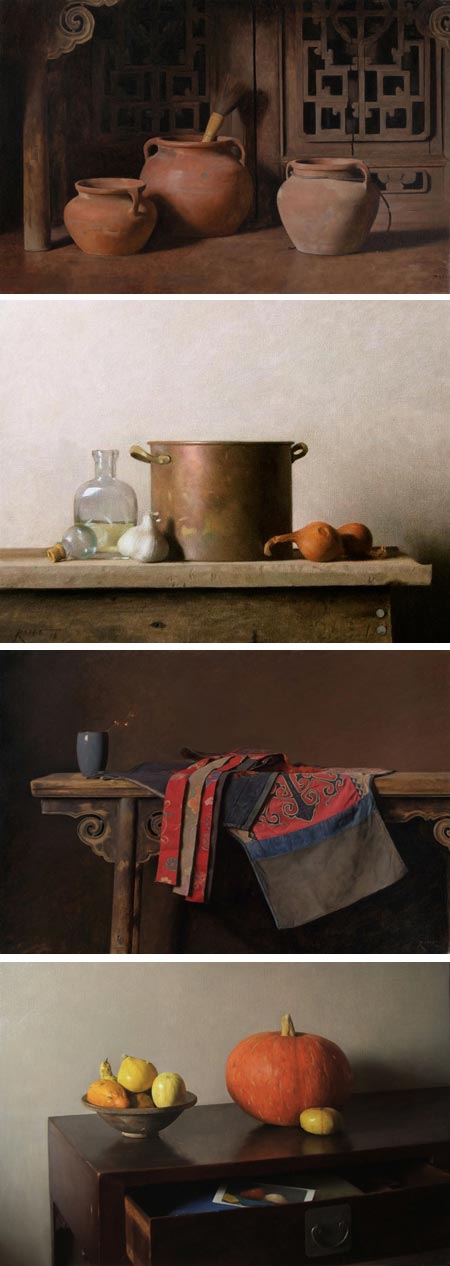
Philadelphia artist Carlo Russo paints landscapes and figurative work, but his emphasis is on still life.Russo is one of those still life painters who manages to convey a feeling of stopped time in his paintings, a sensation of quiet focus and contemplative stillness. His portrayals of rough textured crockery, weathered wood, and tarnished copper pots bring to mind the textural marvels of Jean-Baptiste-Siméon Chardin.
Though his still life subjects also include such staples as fruit and flowers, Russo is more likely to choose pumpkins or gourds, objects that are rich with texture. In his recent work, he is also experimenting with other textural challenges, painting difficult objects like feather dusters and sheepskin.
Russo studied at the Pennsylvania Academy of the Fine Arts. He teaches classes at the Woodmere Art Museum and occasionally takes on students in his studio. His South Philadelphia studio will be on the Philadelphia Open Studio Tours event on October 2-3 of this year.
Russo currently the subject of a one man show at the F.A.N. Gallery here in Philadelphia, that ends this Saturday on September 25th, 2010.
Categories:
-
Line by Line, James McMullan
 I have long been a proponent of the idea that drawing is as much of a natural potential ability for human beings as writing.
I’ve often wondered about that odd demarcation somewhere around puberty where an unspoken law seems to take effect and “all children draw” becomes “only some teenagers and adults draw because they’re artists”.
Somehow, drawing has acquired the cachet of a magical gift, “talent”, with which one is endowed or not. While this can be fun and advantageous for those of us who are on that side of the divide, it’s basically nonsensical.
Drawing is a skill, a skill that can be taught (or at least learned), like playing a musical instrument.
The most popular example of this is the tremendous success of the techniques championed by Betty Edwards in her book, Drawing on the Right Side of the Brain. See the examples on her site for the leap adults make from “childlike drawing” to “realistic drawing” with about 40 hours of training. See my post on Drawing on the Right Side of the Brain for more on the subject of drawing as a teachable skill.
I was delighted, then, to see illustrator and poster artist James McMullan begin a series last week in the New York Times called Line by Line, in which he encourages anyone interested to explore the fundamentals of drawing.
He starts out in the initial installment, Getting back to the Phantom Skill, pointing out that drawing is a pleasurable activity and open to any of us. He describes the structure of the 12 week series, in which he will teach fundamental drawing skills and use art, his own and examples from art history, to illustrate points and move the reader/student deeper into the process, understanding and appreciation of drawing.
During the 12 weeks in which he is working on the column, he will be working on professional assignments doing posters for Lincoln Center Theatre and illustrations for a children’s book, and may include work in progress as it applies.
He states: “My overall goal, apart from helping with specific information, is to communicate the enthusiasm I feel for the immediacy of drawing.”
This promises to be a basic short course in drawing for those who think they can’t draw, and a nice kick in the pants for those who can but have forgotten, for one reason or another, how much fun it is.
The required materials? Pencil and paper.
(Images at left, shoe drawing from the article, others from James McMullan’s website)
Categories:
-
I become a twit, er,… Tweeter

OK, after years of resisting, I’ve finally decided to start using Twitter.Despite the original intention that Twitter be used to be “sociable” and inform your friends and “followers” that you’re having 2% milk on your Cap’n Crunch this morning, I’ve always thought of Tweets as basically 140-character blog posts. I just couldn’t think of anything worthwhile to do with 140-character blog posts.
But it’s occurred to me over time that in my digging and sorting through the attics and basements of the internet, gathering the seeds for Lines and Colors posts, I encounter lots of tidbits of intriguing links and items that are interesting enough to mention, but not something to which I want to dedicate a full post (or at least not at that point in time).
So most of my Tweets will consist of short mentions and links to things of potential interest to Lines and Colors readers (as well as announcements of new posts).
You can follow my 140 character or less ramblings at http://twitter.com/CharleyParkerLC.
(Note: there is already a “linesandcolors” on Twitter. Probably a nice person, but not me. There’s also a CharleyParker, again not me. Price you pay for coming to the party late.)
Those of you who have been living in a cave on the tip of Tierra del Fuego for the last four years and are unfamiliar with Twitter, can find more here and here. (You don’t need an account to view the posts on the page linked above, but an account lets you follow multiple sources and become a twit, er… Tweeter, yourself.)
(Image above: Common Bluebird, John James Audubon)
Categories:
-
Museum Day 2010
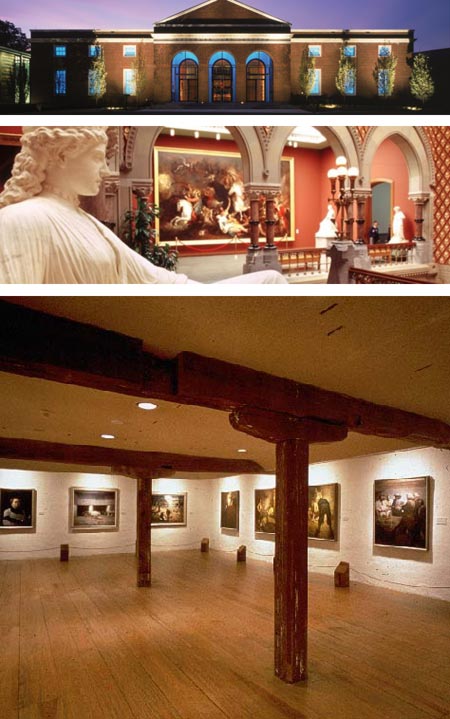
Museum admission, in case you hadn’t noticed, has kept pace with the rising cost of everything, if not outpacing it significantly in recent years.It can be daunting for some, and can discourage people from investigating museums they don’t already patronize.
Smithsonian magazine, an offshoot of the venerable group of cultural institutions in the U.S. capital that are always open free to the public, sponsors an annual Museum Day, in which participating museums waive their normal entry fee for visitors who arrange online for a free ticket.
This Saturday, September 25, 2010, is the sixth annual event.
Over 1,000 museums of various kinds are participating across the country. You may find some disappointing hold-outs, of course, but there are also some terrific museums participating that are normally not open for free.
There is a mini-site for the event with an interactive Google-style map that allows you to zoom in on a geographic area and look for museums of interest. You can also narrow the search with a state selection drop-down below the map.
You need to get your free ticket ahead of time. For this you have to cough up your physical and email address, and the ticket (admission for 2) is emailed to you. There is a limit of one two-person ticket per household.
The drop-down choice for “Which Museum Day location do you plan on visiting” in the ticket request form also serves as a quick list of participating museums, arranged by state.
The motto for the event is “Take your brain on a field trip.”
[Via the New York Times]
(Images above, some participating museums in my area: The Delaware Art Museum, The Museum of the Pennsylvania Academy of the Fine Arts, The Brandywine River Museum)
For those who wish for more free museum days, check the websites of your local museums in their “hours and admission” sections. You may be surprised at how many have sporadic or regular periods of free or reduced admission, sometimes courtesy of corporate sponsors. (If you’re a Bank of America customer, check out their “Museums on Us” program.)
Also, if you visit museums enough to make a membership a good investment, see my post on the North American Reciprocal Museum Program. This grants you membership privileges to over 350 museums for a higher than usual membership level at one of the participating museums (in places, as little as $100.00).
Categories:
-
Pyle’s Pirates

Avast ye swabs!Now how could I be lettin’ International Talk Like a Pirate Day pass without usin’ it proper to serve up some pirate pictures by Mister Howard Pyle, ARRRRRRguably the rootenest tootenest pirate illustrator of ’em all!
There’ be a book of ’em, y’know!
There be a good boatload of ’em on 100 Years of Illustration.
For more, be seein’ me previous posts on treasure from Howard Pyle (and here, matey).
Shiver me timbers!
Categories:
-
The Lost Thing animated short

The Lost Thing is a wonderful children’s book by Australian artist Shaun Tan, with an unusual story and a unique look.With the help of co-director Andrew Ruhemann and a small production team, Tan has been working for several years to bring the book to life as a 15 minute animated short. It was finally completed this summer.
Tan has been intimately involved as the storyboard artist, production designer and art director, with the happy result that his quirky vision as an illustrator has been wonderfully realized, something I would have thought essentially impossible for this particular book.
In particular, I’m impressed with the painterly and textural qualities of the final look.
You can see a trailer, stills and some production art on the film’s official website.
It Looks completely wonderful. I’m really looking forward to seeing the film.
Now if only there were a better distribution and marketing system for animated shorts.
[Via The Art Department]
[Addendum: Phil Willis was good enough to let us know that Leo Baker was the lead animator for the film. You can see additional scenes from The Lost Thing at the beginning and end of his showreel.]
Categories:




Charley’s Picks
Bookshop.org
(Bookshop.org affilliate links; sales benefit independent bookshop owners; I get a small percentage to help support my work on Lines and Colors)

John Singer Sargent: Watercolors


Urban Sketching: Understanding Perspective


Charley’s Picks
Amazon
(Amazon.com affiliate links; sales go to a larger yacht for Jeff Bezos; but I get a small percentage to help support my work on Lines and Colors)
John Singer Sargent: Watercolors
Urban Sketching: Understanding Perspective