


Categories
- 3d CGI
- Amusements
- Animation
- Anime & Manga
- Art Materials
- Art Videos
- Blogroll
- Cartoons
- Color
- Comics
- Concept & Visual Dev.
- Creativity
- Digital Art
- Digital Painting
- Displaying Art on the Web
- Drawing
- Eye Candy for Today
- Gallery and Museum Art
- High-res Art Images
- Illustration
- Motion Graphics & Flash
- Museums
- Online Museums
- Outsider Art
- Painting
- Painting a Day
- Paleo Art
- Pastel, Conté & Chalk
- Pen & Ink
- Prints and Printmaking
- Reviews
- Sc-fi and Fantasy
- Sculpture & Dimensional
- Site Comments
- Sketching
- Storyboards
- Tools and Techniques
- Uncategorized
- Vector Art
- Videos & Podcasts
- Vision and Optics
- Watercolor and Gouache
- Webcomics
Archives
- June 2026
- May 2026
- April 2026
- March 2026
- February 2026
- January 2026
- December 2025
- November 2025
- October 2025
- September 2025
- August 2025
- July 2025
- June 2025
- May 2025
- January 2025
- December 2024
- November 2024
- October 2024
- September 2024
- August 2024
- June 2024
- April 2024
- March 2024
- February 2024
- January 2024
- December 2023
- November 2023
- October 2023
- September 2023
- August 2023
- July 2023
- May 2023
- April 2023
- March 2023
- February 2023
- January 2023
- December 2022
- November 2022
- September 2022
- August 2022
- July 2022
- June 2022
- May 2022
- April 2022
- March 2022
- February 2022
- January 2022
- December 2021
- November 2021
- October 2021
- September 2021
- August 2021
- July 2021
- June 2021
- May 2021
- April 2021
- March 2021
- February 2021
- January 2021
- December 2020
- November 2020
- October 2020
- September 2020
- August 2020
- July 2020
- June 2020
- May 2020
- April 2020
- March 2020
- February 2020
- January 2020
- December 2019
- November 2019
- October 2019
- September 2019
- August 2019
- July 2019
- June 2019
- May 2019
- April 2019
- March 2019
- February 2019
- January 2019
- December 2018
- November 2018
- October 2018
- September 2018
- August 2018
- July 2018
- June 2018
- May 2018
- April 2018
- March 2018
- February 2018
- January 2018
- December 2017
- November 2017
- October 2017
- September 2017
- August 2017
- July 2017
- June 2017
- May 2017
- April 2017
- March 2017
- February 2017
- January 2017
- December 2016
- November 2016
- October 2016
- September 2016
- August 2016
- July 2016
- June 2016
- May 2016
- April 2016
- March 2016
- February 2016
- January 2016
- December 2015
- November 2015
- October 2015
- September 2015
- August 2015
- July 2015
- June 2015
- May 2015
- April 2015
- March 2015
- February 2015
- January 2015
- December 2014
- November 2014
- October 2014
- September 2014
- August 2014
- July 2014
- June 2014
- May 2014
- April 2014
- March 2014
- February 2014
- January 2014
- December 2013
- November 2013
- October 2013
- September 2013
- August 2013
- July 2013
- June 2013
- May 2013
- April 2013
- March 2013
- February 2013
- January 2013
- December 2012
- November 2012
- October 2012
- September 2012
- August 2012
- July 2012
- June 2012
- May 2012
- April 2012
- March 2012
- February 2012
- January 2012
- December 2011
- November 2011
- October 2011
- September 2011
- August 2011
- July 2011
- June 2011
- May 2011
- April 2011
- March 2011
- February 2011
- January 2011
- December 2010
- November 2010
- October 2010
- September 2010
- August 2010
- July 2010
- June 2010
- May 2010
- April 2010
- March 2010
- February 2010
- January 2010
- December 2009
- November 2009
- October 2009
- September 2009
- August 2009
- July 2009
- June 2009
- May 2009
- April 2009
- March 2009
- February 2009
- January 2009
- December 2008
- November 2008
- October 2008
- September 2008
- August 2008
- July 2008
- June 2008
- May 2008
- April 2008
- March 2008
- February 2008
- January 2008
- December 2007
- November 2007
- October 2007
- September 2007
- August 2007
- July 2007
- June 2007
- May 2007
- April 2007
- March 2007
- February 2007
- January 2007
- December 2006
- November 2006
- October 2006
- September 2006
- August 2006
- July 2006
- June 2006
- May 2006
- April 2006
- March 2006
- February 2006
- January 2006
- December 2005
- November 2005
- October 2005
- September 2005
- August 2005
Relevant Blogs
Art, Painting & Sketch
- Gurney Journey
- Underpaintings
- Art and Influence
- Painting Perceptions
- Oil Painters of America
- Vasari Paint POV
- Flying Fox
- Urban Sketchers
- Bento (Smithsonian)
- Art Inconnu
- The Hidden Place
- Still Life
- Making a Mark
- The Art of the Landscape
- Exploring Color & Creativity
- Art Contrarian
- Artist A Day
- beinArt Surreal Art Collective
- Eye Level
- David Dunlop
- p.i.g.m.e.n.t.i.u.m
- CultureGrrl
- Joaquín Sorolla blog
- Artists in Pastel
“Painting a Day”
- A Painting a Day (Keiser)
- On Painting (Keiser)
- Julian Merrow-Smith
- Karen Jurick
- Jeffrey Hayes
- Carol Marine
- Abbey Ryan
- Daily Paintworks
Other Painting Blogs
- Virtual Gouache Land
- Neil Hollingsworth
- Marc Hanson
- Kevin Menck
- Marc Dalessio
- Larry Seiler
- Stapleton Kearns
- Colin Page
- Roos Schuring
- Hans Versfelt
- Titus Meeuws
- Régis Pettinari
- René Plein Air
- Belinda Del Pesco
- Robin Weiss
- Nathan Fowkes (Land Sketch)
- William Wray
- Frank Serrano
- Stephen Magsig
- Michael Chesley Johnson
- Twice a Week
- Sarah Wimperis
- Rob Adams
- Michael Cole Manley
- The Dirty Palette Club
- Mike Manley’s Draw!
Gallery Art & Illustration mix
Illustration
- Howard Pyle
- 100 Years of Illustration
- BibliOdyssey
- Illustration Art
- Today’s Inspiration
- Illustration Mundo
- Little Chimp Society
- Danny Gregory
- R D (John Martz
- Illustration Friday blog
- Monster Brains
- Illustrators & Illustrations (RU)
- Elwood H. Smith
- DaniDraws.com
- Designers Who Blog
- iSpot Blog
Sci-Fi & Fantasy
Illustration & Comics
Comics & Cartoons
- Comics Beat
- Robot 6
- Newsarama Blog
- Comic Vine
- Comics Alliance
- Forbidden Planet Int.
- Paolo Rivera
- Bolt City
- Flight
- Scott McCloud
- The Comics Journal
- Comixpedia
- Funnybook Babylon
- James Baker
- Middleton’s Sketchbook
- Boneville
- The Hotel Fred
- Paul Rivoche
- Daily Cartoonist
- Mad About Cartoons (William Wray)
- Digital Strips
Illustration & Concept
Animation & Concept
- Cartoon Brew
- Animation Blog
- Cold Hard Flash
- Concept Art World
- The CAB
- FY Concept Art
- Concept Ships
- Concept Robots
- John Nevarez
- Armand Serrano
- Marcos Mateu-Mestre
- all kinds of stuff (Kricfalusi)
- Yacin the faun (Man Arenas)
- Kelsey Mann
- Cre8tivemarks Blog
- Ice-Cream Monster Toon Cafe
- AAU Character & Creature Design
- AAU Animation Notes
- Articles and Texticles
Paleo & Scientific
Tools & Techniques
Other
Lists of Art Blogs
Art Image Resource Links
Historic Art Images
- Wikimedia Commons: Paintings
- Wikimedia Commons: Drawings
- The Athenaeum
- WikiArt (WikiPaintings)
- Google Art Project: Artists
- Google Art Project: Collections (Museums)
- ArtCyclopedia
- Web Gallery of Art
- Art Renewal Center
- Web Gallery of Impressionism
Auction Consolidation sites
Auction sites
- Sotheby’s
- Bonham’s
- Christies
- Heritage Auctions: Fine Art
- Heritage Auctions: Illustration
- Freeman’s Auctions
- Bukowskis
- Shannon’s
Image Search
Reverse Image Search (search by image)
- Tin Eye
- RevImg
- Google Image Search (camera icon)
- Bing Image Search (camera icon)
Promoting some friends and some clients of my website design business
- Twin Willows T’ai Chi studio in Wilmington DE. Taiji classes with Bryan Davis.
- Ray Hayward, Inspired Teacher of T’ai Chi ( Taiji ) in Minneapolis, Founder of Mindful Motion Tai Chi Academy
- OldHead Tattoo studio and Art Gallery in Wilmington DE. Tattoos and paintings by Bruce Gulick
- Sharon Domenico Art, pet portrait oil paintings
- Platinum Paperhanging, wallpaper hanging, Main Line and Philadelphia, PA
- Lisa Stone Design, interior designer, Main Line and Philadelphia, PA
- Studio12KPT, original art, prints, calendars and other custom printed items by Van Sickle & Rolleri
-
David Jon Kassan paints from life on an iPad

David Jon Kassan, a Brooklyn based artist I wrote about in 2008, recently posted a short (7 minute) video to YouTube in which he is shown in time-lapse Finger Painting on the Apple iPad from the live model.The iPad, for those who have been living in a cave in Tierra del Fuego until this morning, is Apple’s new touch-screen device, so Kassan is painting with his finger, a pretty blunt instrument compared to a brush, pencil or stylus.
Kassan is painting in Brushes, a very capable digital painting app for the iPhone and iPad that allows for most of the basic tools of digital painting, including, of course, the ability to zoom in on the work.
Though it doesn’t allow for variations in pressure, a factor most of us who do digital drawing and painting have come to rely on, it does allow for changes in brush size and opacity, as you can see in the video.
(For another mention of the Brushes iPhone app, see my post on the New Yorker covers of Jorge Colombo.)
Most of us associate digital painting with work from the imagination, particularly given its popularity in concept art and science fiction and fantasy illustration, but a number of people use it to sketch or paint from life.
I’ve used a laptop, Painter software and a tablet and stylus to sketch and paint from the model, but it’s a bit of an awkward proposition. The lack of pressure sensitivity seems a fair trade-off for the easy portability and simplicity of the iPad (though you would want to make sure it was well-secured to your easel – grin).
Unlike the use of similar applications for the iPhone and Nintendo DS, the iPad is large enough to do more than small sketches. Kassan takes the painting pretty close to the state of a finished portrait.
Kassan has updated his website since I last wrote about him, including new work, a blog, and more videos.
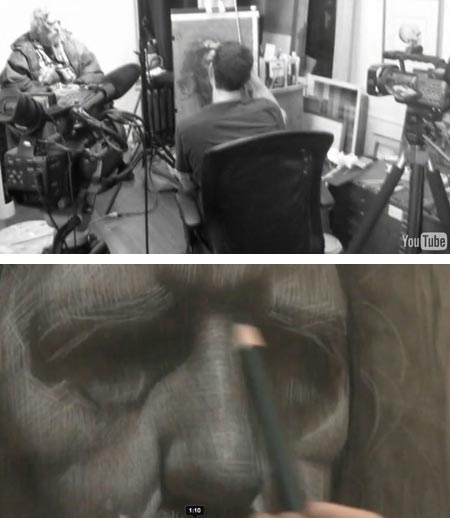
In particular he has released a new three-hour instructional DVD, Drawing Closer to Life (images above), that follows him through a day in the studio, documentary style, as he develops a fully realized charcoal drawing (using the same model as in the iPad painting, if I’m not mistaken). There is a trailer for the video here.
[Via Daring Fireball]
Categories:
-
Mitch Baird

Oregon painter Mitch Baird paints the landscape of the Pacific Northwest, both dramatic and more intimate, with a fresh palette, confident brushwork and clear vision.He also applies his skills and passion for plein air painting to scenes from travels in Europe; and paints lively still life compositions and occasional figurative works.
Baird received a BFA in Illustration from Brigham Young University, where he credits Ralph Barksdale with inspiring and energizing him in his pursuit of drawing and painting.
As a painter, Baird finds inspiration in artists of the late 19th Century, and follows their fascination with the effects of light and atmosphere, and the natural color that reveals itself when painting on location.
Categories:
-
Nuthin’ But Mech

Nothin’ But Mech is a group blog started by concept artist Lorin Wood and concept designer Scott Kester to indulge in their fascination with robots in all their wonderful widgety variety of shapes forms and functions.They invited a number of their colleagues in the film and gaming industry to participate, and the result is a fun range of all manner of robots, exoskeletons, and other devices that make their way into a loose category of “mech”.
There is an equally diverse variety of drawing and rendering styles: pencil drawing, traditional painting, markers, digital painting and 3-D modeling, along with various combinations of the above.
There is an impressive list of contributors, many of whom I’ve featured previously here on Lines and Colors, and the links on the sidebar provide access to their websites and blogs where you can find a great range of concept art.
(Images above: Christian Pearce, Peter Rubin, Jake Parker, Lorin Wood, Ben Mauro, Marc Gabbana and Alex Jaeger. Links are to their sites; here are my posts on Christian Pearce, Jake Parker, Marc Gabbana, Alex Jaeger.)
Categories:
-
Ni no Kuni – Studio Ghibli/Level-5 video game
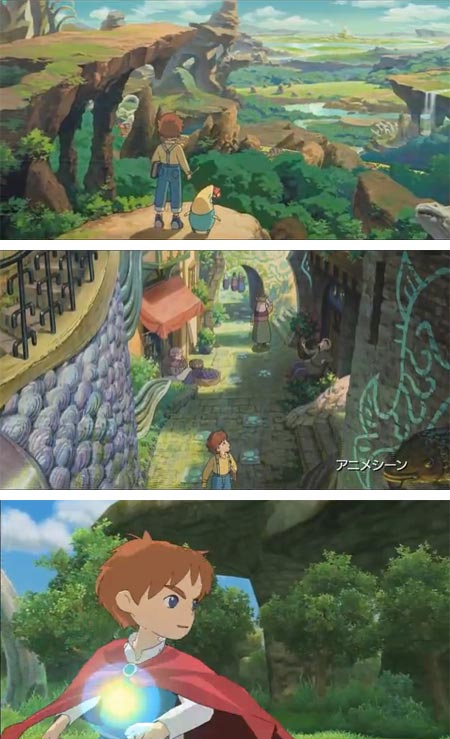 Studio Ghibli, the animation studio of Hayao Miyazaki, which is responsible for some of the best Japanese animated films (and a number of my personal favorites, like My Neighbor Totoro and Spirited Away), is entering the video game arena, partnering with Level-5 game developers to produce a game called Ni no Kuni: Black Mage.
There is a brief trailer on YouTube that shows that Studio Ghibli will be bringing some of the style and visual charm of their hand drawn animation, along with their talent for all-ages fantasy storytelling, to the world of CGI gaming environments.
Spirited Away is still the most popular movie of all time in Japan (animated or otherwise), and Miyazaki is revered there, so the game is expected to do well in Japan. It will be intresting to see how it does here. So far, Disney, which has the rights to distribute Studio Ghibli films in the U.S., has been unable (or unwilling) to market them well, so Miyazaki is not exactly a household word outside of Anime circles.
There is a brief article about the Studion Ghibli/ Level-5 collaboration in the New York Times.
[Via Cartoon Brew]
Categories:
-
Tony Ryder (update)

Tony Ryder is a noted contemporary draftsman and painter, author of the popular book The Artist’s Complete Guide to Figure Drawing and a well regarded teacher.He studied at the Rhode Island School of Design and the Art Student’s League in New York, and continued independent studies with Ted Seth Jacobs in New York and France.
Since then, Ryder has taught at the New York Academy, the Art Student’s League and independent workshops in the U.S. and France. Ryder is now the leader of the Ryder Studio School, a classical atelier in Santa Fe, new Mexico.
Ryder’s website includes selection of his drawings and paintings, primarily figure, portrait and still life. It also features a number of sequential images for a portrait demonstration. You can also find some brief instructional essays on the site of the Ryder Studio School.
There is also a blog for the Ryder Studio School that seems to largely chronicle activities at the school, but occasionally posts work and instructional sequences.
There is an additional selection of his work on the Art Renewal Center. For more, see my post on Anthony J. Ryder from 2006.
Categories:
-
Charles Burchfield

Charles Burchfield is probably one of the more important 20th Century American artists that most people have never encountered.Burchfield’s work went through several phases. His early watercolors can have a simple, almost naive feeling. He went through a time when he settled into rather straightforward representations of landscapes. But his mid-career paintings, after he appears to have experienced some kind of transformative event, and later ones in which he returned to some of the same themes, are strikingly visionary and have a sophisticated graphic power.
There can be something of a Van Gogh like quality to his visionary work, in the simplification and intensification of pictorial elements. In his more prosaic pieces, he conveys some of the direct, blunt observation of everyday scenes found in the work of his friend Edward Hopper.
The mystical, visionary quality to Burchfield’s most interesting work is sometimes ecstatic, sometimes haunted — an edge of transcendent meaning vibrating just under the surface of the commonplace, where he saw God’s expression in nature. In that respect, I see parallels to the landscapes of Caspar David Friedrich.
Burchfield mixes ink and gouache with his watercolor, also mixing painting and drawing conventions in the same image to wonderful effect. Objects dance, shimmer and vibrate, both with light and color and with linework and graphic effects.
He studied art for four years at the Cleveland Institute of Art, and then when on to the National Academy of Design in new York, but dropped out on the first day, apparently in embarrassment at being asked to draw from the nude model.
He returned to Ohio, secured a job designing wallpaper, and began to paint watercolors on his lunch hour. He then moved to Buffalo, New York, continued his work as a wallpaper designer and eventually quit to become a painter full time.
Burchfield suffered from some kind of emotional imbalance, prone to episodes of highs and lows, and at one point in his career experienced a dramatic episode that changed his work for many years after.
He was already inventive in many of his pieces, incorporating influences from botanical illustrations, Japanese prints, illustrators like Arthur Rackham and Romantic artists like William Blake and Samuel Palmer; but after the event he began to incorporate a system of graphic symbols into his work that he had invented to convey specific negative emotions.
He eventually came to grips with his emotional states, seeming to balance out his life, but he also subdued the mystical aspects of his art for many years. He later returned to his earlier subjects and styles with renewed confidence and control.
There is a nice essay on Burchfield by Bruce MacEvoy on Handprint (see my post on the color and watercolor resources on Handprint).
There is a Burchfield Penney Art Center affiliated with Buffalo State College, supposedly dedicated to the art of Charles Burchfield and other artists of Western New York; but the museum’s website is inexplicably bereft of images of any sort, and therefore useless in determining if the institution is worth a visit.
The Whitney Museum in New York is currently displaying an exhibition titled Heat Waves in a Swamp: The Paintings of Charles Burchfield, that runs from now until October 17, 2010. There is a selection of images from the exhibition online. There is a review of the show on the NYT.
Categories:




Charley’s Picks
Bookshop.org
(Bookshop.org affilliate links; sales benefit independent bookshop owners; I get a small percentage to help support my work on Lines and Colors)

John Singer Sargent: Watercolors


Urban Sketching: Understanding Perspective


Charley’s Picks
Amazon
(Amazon.com affiliate links; sales go to a larger yacht for Jeff Bezos; but I get a small percentage to help support my work on Lines and Colors)
John Singer Sargent: Watercolors
Urban Sketching: Understanding Perspective