


Categories
- 3d CGI
- Amusements
- Animation
- Anime & Manga
- Art Materials
- Art Videos
- Blogroll
- Cartoons
- Color
- Comics
- Concept & Visual Dev.
- Creativity
- Digital Art
- Digital Painting
- Displaying Art on the Web
- Drawing
- Eye Candy for Today
- Gallery and Museum Art
- High-res Art Images
- Illustration
- Motion Graphics & Flash
- Museums
- Online Museums
- Outsider Art
- Painting
- Painting a Day
- Paleo Art
- Pastel, Conté & Chalk
- Pen & Ink
- Prints and Printmaking
- Reviews
- Sc-fi and Fantasy
- Sculpture & Dimensional
- Site Comments
- Sketching
- Storyboards
- Tools and Techniques
- Uncategorized
- Vector Art
- Videos & Podcasts
- Vision and Optics
- Watercolor and Gouache
- Webcomics
Archives
- August 2026
- July 2026
- June 2026
- May 2026
- April 2026
- March 2026
- February 2026
- January 2026
- December 2025
- November 2025
- October 2025
- September 2025
- August 2025
- July 2025
- June 2025
- May 2025
- January 2025
- December 2024
- November 2024
- October 2024
- September 2024
- August 2024
- June 2024
- April 2024
- March 2024
- February 2024
- January 2024
- December 2023
- November 2023
- October 2023
- September 2023
- August 2023
- July 2023
- May 2023
- April 2023
- March 2023
- February 2023
- January 2023
- December 2022
- November 2022
- September 2022
- August 2022
- July 2022
- June 2022
- May 2022
- April 2022
- March 2022
- February 2022
- January 2022
- December 2021
- November 2021
- October 2021
- September 2021
- August 2021
- July 2021
- June 2021
- May 2021
- April 2021
- March 2021
- February 2021
- January 2021
- December 2020
- November 2020
- October 2020
- September 2020
- August 2020
- July 2020
- June 2020
- May 2020
- April 2020
- March 2020
- February 2020
- January 2020
- December 2019
- November 2019
- October 2019
- September 2019
- August 2019
- July 2019
- June 2019
- May 2019
- April 2019
- March 2019
- February 2019
- January 2019
- December 2018
- November 2018
- October 2018
- September 2018
- August 2018
- July 2018
- June 2018
- May 2018
- April 2018
- March 2018
- February 2018
- January 2018
- December 2017
- November 2017
- October 2017
- September 2017
- August 2017
- July 2017
- June 2017
- May 2017
- April 2017
- March 2017
- February 2017
- January 2017
- December 2016
- November 2016
- October 2016
- September 2016
- August 2016
- July 2016
- June 2016
- May 2016
- April 2016
- March 2016
- February 2016
- January 2016
- December 2015
- November 2015
- October 2015
- September 2015
- August 2015
- July 2015
- June 2015
- May 2015
- April 2015
- March 2015
- February 2015
- January 2015
- December 2014
- November 2014
- October 2014
- September 2014
- August 2014
- July 2014
- June 2014
- May 2014
- April 2014
- March 2014
- February 2014
- January 2014
- December 2013
- November 2013
- October 2013
- September 2013
- August 2013
- July 2013
- June 2013
- May 2013
- April 2013
- March 2013
- February 2013
- January 2013
- December 2012
- November 2012
- October 2012
- September 2012
- August 2012
- July 2012
- June 2012
- May 2012
- April 2012
- March 2012
- February 2012
- January 2012
- December 2011
- November 2011
- October 2011
- September 2011
- August 2011
- July 2011
- June 2011
- May 2011
- April 2011
- March 2011
- February 2011
- January 2011
- December 2010
- November 2010
- October 2010
- September 2010
- August 2010
- July 2010
- June 2010
- May 2010
- April 2010
- March 2010
- February 2010
- January 2010
- December 2009
- November 2009
- October 2009
- September 2009
- August 2009
- July 2009
- June 2009
- May 2009
- April 2009
- March 2009
- February 2009
- January 2009
- December 2008
- November 2008
- October 2008
- September 2008
- August 2008
- July 2008
- June 2008
- May 2008
- April 2008
- March 2008
- February 2008
- January 2008
- December 2007
- November 2007
- October 2007
- September 2007
- August 2007
- July 2007
- June 2007
- May 2007
- April 2007
- March 2007
- February 2007
- January 2007
- December 2006
- November 2006
- October 2006
- September 2006
- August 2006
- July 2006
- June 2006
- May 2006
- April 2006
- March 2006
- February 2006
- January 2006
- December 2005
- November 2005
- October 2005
- September 2005
- August 2005
Relevant Blogs
Art, Painting & Sketch
- Gurney Journey
- Underpaintings
- Art and Influence
- Painting Perceptions
- Oil Painters of America
- Vasari Paint POV
- Flying Fox
- Urban Sketchers
- Bento (Smithsonian)
- Art Inconnu
- The Hidden Place
- Still Life
- Making a Mark
- The Art of the Landscape
- Exploring Color & Creativity
- Art Contrarian
- Artist A Day
- beinArt Surreal Art Collective
- Eye Level
- David Dunlop
- p.i.g.m.e.n.t.i.u.m
- CultureGrrl
- Joaquín Sorolla blog
- Artists in Pastel
“Painting a Day”
- A Painting a Day (Keiser)
- On Painting (Keiser)
- Julian Merrow-Smith
- Karen Jurick
- Jeffrey Hayes
- Carol Marine
- Abbey Ryan
- Daily Paintworks
Other Painting Blogs
- Virtual Gouache Land
- Neil Hollingsworth
- Marc Hanson
- Kevin Menck
- Marc Dalessio
- Larry Seiler
- Stapleton Kearns
- Colin Page
- Roos Schuring
- Hans Versfelt
- Titus Meeuws
- Régis Pettinari
- René Plein Air
- Belinda Del Pesco
- Robin Weiss
- Nathan Fowkes (Land Sketch)
- William Wray
- Frank Serrano
- Stephen Magsig
- Michael Chesley Johnson
- Twice a Week
- Sarah Wimperis
- Rob Adams
- Michael Cole Manley
- The Dirty Palette Club
- Mike Manley’s Draw!
Gallery Art & Illustration mix
Illustration
- Howard Pyle
- 100 Years of Illustration
- BibliOdyssey
- Illustration Art
- Today’s Inspiration
- Illustration Mundo
- Little Chimp Society
- Danny Gregory
- R D (John Martz
- Illustration Friday blog
- Monster Brains
- Illustrators & Illustrations (RU)
- Elwood H. Smith
- DaniDraws.com
- Designers Who Blog
- iSpot Blog
Sci-Fi & Fantasy
Illustration & Comics
Comics & Cartoons
- Comics Beat
- Robot 6
- Newsarama Blog
- Comic Vine
- Comics Alliance
- Forbidden Planet Int.
- Paolo Rivera
- Bolt City
- Flight
- Scott McCloud
- The Comics Journal
- Comixpedia
- Funnybook Babylon
- James Baker
- Middleton’s Sketchbook
- Boneville
- The Hotel Fred
- Paul Rivoche
- Daily Cartoonist
- Mad About Cartoons (William Wray)
- Digital Strips
Illustration & Concept
Animation & Concept
- Cartoon Brew
- Animation Blog
- Cold Hard Flash
- Concept Art World
- The CAB
- FY Concept Art
- Concept Ships
- Concept Robots
- John Nevarez
- Armand Serrano
- Marcos Mateu-Mestre
- all kinds of stuff (Kricfalusi)
- Yacin the faun (Man Arenas)
- Kelsey Mann
- Cre8tivemarks Blog
- Ice-Cream Monster Toon Cafe
- AAU Character & Creature Design
- AAU Animation Notes
- Articles and Texticles
Paleo & Scientific
Tools & Techniques
Other
Lists of Art Blogs
Art Image Resource Links
Historic Art Images
- Wikimedia Commons: Paintings
- Wikimedia Commons: Drawings
- The Athenaeum
- WikiArt (WikiPaintings)
- Google Art Project: Artists
- Google Art Project: Collections (Museums)
- ArtCyclopedia
- Web Gallery of Art
- Art Renewal Center
- Web Gallery of Impressionism
Auction Consolidation sites
Auction sites
- Sotheby’s
- Bonham’s
- Christies
- Heritage Auctions: Fine Art
- Heritage Auctions: Illustration
- Freeman’s Auctions
- Bukowskis
- Shannon’s
Image Search
Reverse Image Search (search by image)
- Tin Eye
- RevImg
- Google Image Search (camera icon)
- Bing Image Search (camera icon)
Promoting some friends and some clients of my website design business
- Twin Willows T’ai Chi studio in Wilmington DE. Taiji classes with Bryan Davis.
- Ray Hayward, Inspired Teacher of T’ai Chi ( Taiji ) in Minneapolis, Founder of Mindful Motion Tai Chi Academy
- OldHead Tattoo studio and Art Gallery in Wilmington DE. Tattoos and paintings by Bruce Gulick
- Sharon Domenico Art, pet portrait oil paintings
- Platinum Paperhanging, wallpaper hanging, Main Line and Philadelphia, PA
- Lisa Stone Design, interior designer, Main Line and Philadelphia, PA
- Studio12KPT, original art, prints, calendars and other custom printed items by Van Sickle & Rolleri
-
How to Spot a Rembrandt
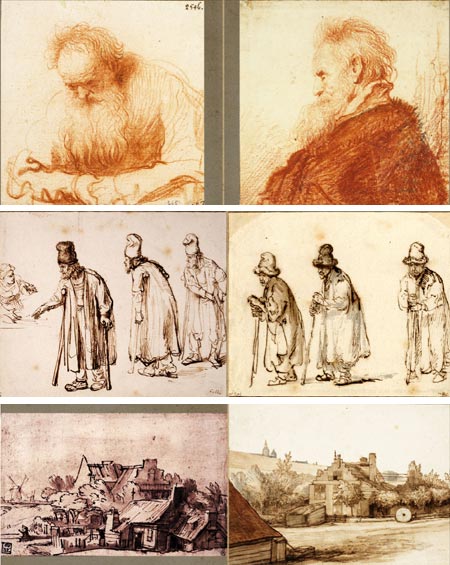
I’ve mentioned before (also here) that the attribution of works to artists from the past is often an inexact science, perhaps more of an art in itself.Attributions change, and works once identified with one artist are subsequently assigned to another, or often, to pupils of the artist. Sometimes the reverse happens, and works once assigned to another hand are recognized as coming from that of the master.
The Getty Museum is currently exploring this concept with an exhibit titled Drawings by Rembrandt & His Pupils: Telling the Difference.
In the web site material for the exhibit is an interactive that compares drawings by Rembrandt side by side with similar drawings by his students and contemporaries; many of the latter drawings having once been attributed to Rembrandt.
The Wall Street Journal has an article about the exhibit that also has an interactive. In this case they present the compared sets of drawings without initially identifying the artist, letting you play detective in determining which is by Rembrandt. (It’s hard to predict if this article may disappear behind a pay-wall at some point.)
The interactive on the Getty’s site allows you to zoom in on the images, affording a detailed view of the drawings.
Drawings by Rembrandt & His Pupils: Telling the Difference runs to February 28th at the Getty Center. There is a concurrent exhibit, Drawing Life: The Dutch Visual Tradition, that should provide a rich context for the Rembrandt show.
There is also a virtual exhibit called Rembrandt in Southern California, that features images of 14 Rembrandts on view in five Southern California Museums.
For more background, and lots more Rembrandt drawings, see Rembrandt’s Drawings on Jonathan Janson’s Rembrandt van Rijn: Life and Work, and my posts on that site (formerly called Rembrandt: life, paintings, etchings, drawings and self portraits), and Jonathan Janson.
There is a book published to accompany the exhibit: Drawings by Rembrandt and His Pupils: Telling the Difference; and there is also a nice book of Rembrandt drawings that came out in 2007: Rembrandt Drawings: 116 Masterpieces in Original Color.
Categories:
-
CBR’s 50 Best Comic Covers of 2009

As I pointed out in my 2007 article on Cover Browser, comic book covers have a singular focus: to make you notice the cover, pick up the printed pamphlet or booklet to which it is affixed, slap down your hard earned dollars, and run home clutching it to your chest, cackling maniacally with glee at the prospect of the brain tantalizing wonders that lie within.OK, well maybe you just put it in a bag, but the main part of that is the slapping down hard earned cash part; and covers have long been considered a crucial element in selling comics (as with any printed material), to the point where specialized artists are often called in to do the cover instead of the art team who created the actual story, and art directors often sweat and fuss over them and ask the artists for repeated revisions.
Comic book covers inherited their traditions in attention getting, sometimes lurid, imagery from the pulp magazines of the early 20th Century; but the art of making arresting comic book covers has become more subtle, and modern “grabbers” often utilize themes and styles that would have been unrecognizable to the sensibilities of the pulp artists and many of the comic cover artists of the late 20th Century.
Here is a list from Kevin Melrose, of the ROBOT 6 blog on Comic Book Resources, of his picks for The 50 best covers of 2009. As always with “best of” lists, it’s a jumping off point for discussion and conjecture, but serves as an interesting cross section of modern comic covers. The covers shown in the article can be clicked on for larger versions.
You also view his list of The 25 best comic covers of 2008.
For a dive into history, check out Cover Browser (see my article on Cover Browser).
(See the article for cover credits on the images above.)
Categories:
-
Billy George
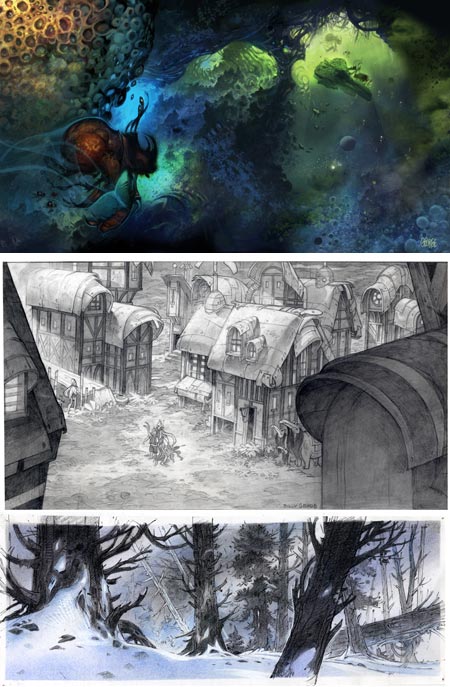
One of the things that appealed to me right away when I browsed through the (still in progress) portfolio site for concept artist and designer Billy George was the nicely otherworldly color schemes he worked with in his environment paintings for Spacetime’s Blackstar game project (image above, top).He used palettes of seemingly not-of-this-Earth colors, but made them nicely consistent within themselves.
I was then impressed with his subtle and restrained concept art for Disney’s Treasure Planet feature animation (above, middle), and, in particular, his beautiful workbook sketches for Brother bear (above, bottom).
You can find a number of these and more in the galleries on his site (note the sub-navigation at top to other sections, like Layouts, Characters, etc.).
You will find more work on his blog, including comics work, in particular an in progress graphic novel, Ruined Earth, storyboards and other goodies, like experimental vector drawings intended for Flash animation.
George was hired by Disney as a trainee when he graduated from Art Center College of Design. He worked with them for ten years and worked on seven feature animations. He left to pursue work in the gaming industry, but has recently returned to the Disney fold as Lead Concept Artist for the Disney owned Junction Point interactive studio in Austin Texas.
Categories:
-
Fred Tomaselli

American artist Fred Tomaselli creates intricately detailed and highly colorful works that are both representational and decorative.Tomaselli utilizes both painting and and collage techniques; the latter including unorthodox (and sometimes even illegal) materials like flowers, herbs, prescription pills and hallucinogenic plants. He will also use photographic elements and direct painting in gouache; and adheres the collage components to the panel with resin.
His subjects are often birds, plants and other natural themes, as well as less directly representational images. He states that his intention is to be hallucinatory and transportive.
Sometimes his themes carry over into the collage elements, as in an image of a woodpecker whose bill is composed of photographic collage of hundreds of other birds beaks.
His use of illegal substances, even though locked in resin, has caused exhibits to be confiscated and locked up at customs, leaving gallery walls for a scheduled exhibit in Paris blank.
Categories:
-
John Berkey (update)
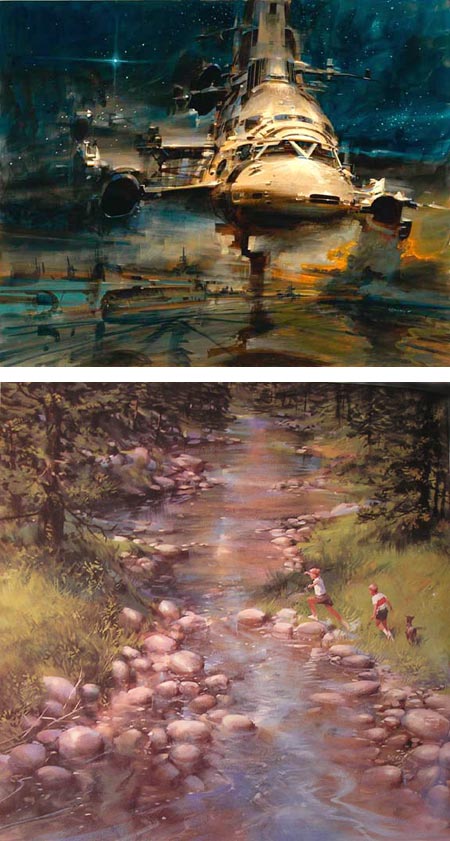
John Berkey, who died in 2008, was one of the premiere space artists. His distinctive style graced the covers and interiors of a wide variety of publications with visionary images of the future.Berkey had a wider range of style and subject matter than is widely known. Since my article about John Berkey in 2006, a number of additional places to view his images have cropped up on the web.
The online gallery at ArtOrg.info is still the best, but there have been interesting additions, like the posts on Pinkoski.com that show both familiar space art and rare or simply unfamiliar work by Berkey, like his cover for a 1989 Eddie Bauer Catalog, (image above, bottom).
I’ve listed some other resources below.
Categories:
-
Happy Leyendecker Baby New Year 2010!

In what is becoming something of a tradition, I’ll wrap up the year with four more Saturday Evening Post covers from the early 20th Century featuring New Year’s babies from J.C. Leyendecker, the illustrator who started the practice of representing the new year as a baby.For more on the history of Leyendecker’s New Year’s babies, see my post Happy Leyendecker Baby New Year from 2006. I’ve also listed below some of my previous posts about this amazing illustrator, one of the all time greats, who should be much better known than he is today.
The good news is that after many years without an in-print book of Leyendecker’s work, J.C. Leyendecker by Laurence S. Cutler and Judy Goffman Cutler was published last year and is still available.
I hope you all have a new year filled with great art, old and new!
-Charley
Categories:



Charley’s Picks
Bookshop.org
(Bookshop.org affilliate links; sales benefit independent bookshop owners; I get a small percentage to help support my work on Lines and Colors)
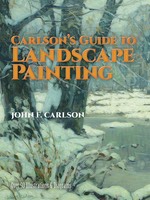
Carlson’s Guide to Landscape Painting
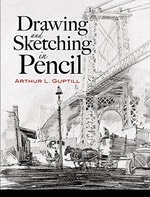
Drawing and Sketching in Pencil

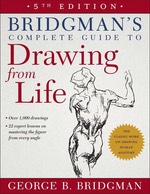
Bridgman’s Complete Guide to Drawing from Life
Charley’s Picks
Amazon
(Amazon.com affiliate links; sales go to a larger yacht for Jeff Bezos; but I get a small percentage to help support my work on Lines and Colors)
Carlson’s Guide to Landscape Painting
Drawing and Sketching in Pencil
Bridgman’s Complete Guide to Drawing from Life