


Categories
- 3d CGI
- Amusements
- Animation
- Anime & Manga
- Art Materials
- Art Videos
- Blogroll
- Cartoons
- Color
- Comics
- Concept & Visual Dev.
- Creativity
- Digital Art
- Digital Painting
- Displaying Art on the Web
- Drawing
- Eye Candy for Today
- Gallery and Museum Art
- High-res Art Images
- Illustration
- Motion Graphics & Flash
- Museums
- Online Museums
- Outsider Art
- Painting
- Painting a Day
- Paleo Art
- Pastel, Conté & Chalk
- Pen & Ink
- Prints and Printmaking
- Reviews
- Sc-fi and Fantasy
- Sculpture & Dimensional
- Site Comments
- Sketching
- Storyboards
- Tools and Techniques
- Uncategorized
- Vector Art
- Videos & Podcasts
- Vision and Optics
- Watercolor and Gouache
- Webcomics
Archives
- September 2026
- August 2026
- July 2026
- June 2026
- May 2026
- April 2026
- March 2026
- February 2026
- January 2026
- December 2025
- November 2025
- October 2025
- September 2025
- August 2025
- July 2025
- June 2025
- May 2025
- January 2025
- December 2024
- November 2024
- October 2024
- September 2024
- August 2024
- June 2024
- April 2024
- March 2024
- February 2024
- January 2024
- December 2023
- November 2023
- October 2023
- September 2023
- August 2023
- July 2023
- May 2023
- April 2023
- March 2023
- February 2023
- January 2023
- December 2022
- November 2022
- September 2022
- August 2022
- July 2022
- June 2022
- May 2022
- April 2022
- March 2022
- February 2022
- January 2022
- December 2021
- November 2021
- October 2021
- September 2021
- August 2021
- July 2021
- June 2021
- May 2021
- April 2021
- March 2021
- February 2021
- January 2021
- December 2020
- November 2020
- October 2020
- September 2020
- August 2020
- July 2020
- June 2020
- May 2020
- April 2020
- March 2020
- February 2020
- January 2020
- December 2019
- November 2019
- October 2019
- September 2019
- August 2019
- July 2019
- June 2019
- May 2019
- April 2019
- March 2019
- February 2019
- January 2019
- December 2018
- November 2018
- October 2018
- September 2018
- August 2018
- July 2018
- June 2018
- May 2018
- April 2018
- March 2018
- February 2018
- January 2018
- December 2017
- November 2017
- October 2017
- September 2017
- August 2017
- July 2017
- June 2017
- May 2017
- April 2017
- March 2017
- February 2017
- January 2017
- December 2016
- November 2016
- October 2016
- September 2016
- August 2016
- July 2016
- June 2016
- May 2016
- April 2016
- March 2016
- February 2016
- January 2016
- December 2015
- November 2015
- October 2015
- September 2015
- August 2015
- July 2015
- June 2015
- May 2015
- April 2015
- March 2015
- February 2015
- January 2015
- December 2014
- November 2014
- October 2014
- September 2014
- August 2014
- July 2014
- June 2014
- May 2014
- April 2014
- March 2014
- February 2014
- January 2014
- December 2013
- November 2013
- October 2013
- September 2013
- August 2013
- July 2013
- June 2013
- May 2013
- April 2013
- March 2013
- February 2013
- January 2013
- December 2012
- November 2012
- October 2012
- September 2012
- August 2012
- July 2012
- June 2012
- May 2012
- April 2012
- March 2012
- February 2012
- January 2012
- December 2011
- November 2011
- October 2011
- September 2011
- August 2011
- July 2011
- June 2011
- May 2011
- April 2011
- March 2011
- February 2011
- January 2011
- December 2010
- November 2010
- October 2010
- September 2010
- August 2010
- July 2010
- June 2010
- May 2010
- April 2010
- March 2010
- February 2010
- January 2010
- December 2009
- November 2009
- October 2009
- September 2009
- August 2009
- July 2009
- June 2009
- May 2009
- April 2009
- March 2009
- February 2009
- January 2009
- December 2008
- November 2008
- October 2008
- September 2008
- August 2008
- July 2008
- June 2008
- May 2008
- April 2008
- March 2008
- February 2008
- January 2008
- December 2007
- November 2007
- October 2007
- September 2007
- August 2007
- July 2007
- June 2007
- May 2007
- April 2007
- March 2007
- February 2007
- January 2007
- December 2006
- November 2006
- October 2006
- September 2006
- August 2006
- July 2006
- June 2006
- May 2006
- April 2006
- March 2006
- February 2006
- January 2006
- December 2005
- November 2005
- October 2005
- September 2005
- August 2005
Relevant Blogs
Art, Painting & Sketch
- Gurney Journey
- Underpaintings
- Art and Influence
- Painting Perceptions
- Oil Painters of America
- Vasari Paint POV
- Flying Fox
- Urban Sketchers
- Bento (Smithsonian)
- Art Inconnu
- The Hidden Place
- Still Life
- Making a Mark
- The Art of the Landscape
- Exploring Color & Creativity
- Art Contrarian
- Artist A Day
- beinArt Surreal Art Collective
- Eye Level
- David Dunlop
- p.i.g.m.e.n.t.i.u.m
- CultureGrrl
- Joaquín Sorolla blog
- Artists in Pastel
“Painting a Day”
- A Painting a Day (Keiser)
- On Painting (Keiser)
- Julian Merrow-Smith
- Karen Jurick
- Jeffrey Hayes
- Carol Marine
- Abbey Ryan
- Daily Paintworks
Other Painting Blogs
- Virtual Gouache Land
- Neil Hollingsworth
- Marc Hanson
- Kevin Menck
- Marc Dalessio
- Larry Seiler
- Stapleton Kearns
- Colin Page
- Roos Schuring
- Hans Versfelt
- Titus Meeuws
- Régis Pettinari
- René Plein Air
- Belinda Del Pesco
- Robin Weiss
- Nathan Fowkes (Land Sketch)
- William Wray
- Frank Serrano
- Stephen Magsig
- Michael Chesley Johnson
- Twice a Week
- Sarah Wimperis
- Rob Adams
- Michael Cole Manley
- The Dirty Palette Club
- Mike Manley’s Draw!
Gallery Art & Illustration mix
Illustration
- Howard Pyle
- 100 Years of Illustration
- BibliOdyssey
- Illustration Art
- Today’s Inspiration
- Illustration Mundo
- Little Chimp Society
- Danny Gregory
- R D (John Martz
- Illustration Friday blog
- Monster Brains
- Illustrators & Illustrations (RU)
- Elwood H. Smith
- DaniDraws.com
- Designers Who Blog
- iSpot Blog
Sci-Fi & Fantasy
Illustration & Comics
Comics & Cartoons
- Comics Beat
- Robot 6
- Newsarama Blog
- Comic Vine
- Comics Alliance
- Forbidden Planet Int.
- Paolo Rivera
- Bolt City
- Flight
- Scott McCloud
- The Comics Journal
- Comixpedia
- Funnybook Babylon
- James Baker
- Middleton’s Sketchbook
- Boneville
- The Hotel Fred
- Paul Rivoche
- Daily Cartoonist
- Mad About Cartoons (William Wray)
- Digital Strips
Illustration & Concept
Animation & Concept
- Cartoon Brew
- Animation Blog
- Cold Hard Flash
- Concept Art World
- The CAB
- FY Concept Art
- Concept Ships
- Concept Robots
- John Nevarez
- Armand Serrano
- Marcos Mateu-Mestre
- all kinds of stuff (Kricfalusi)
- Yacin the faun (Man Arenas)
- Kelsey Mann
- Cre8tivemarks Blog
- Ice-Cream Monster Toon Cafe
- AAU Character & Creature Design
- AAU Animation Notes
- Articles and Texticles
Paleo & Scientific
Tools & Techniques
Other
Lists of Art Blogs
Art Image Resource Links
Historic Art Images
- Wikimedia Commons: Paintings
- Wikimedia Commons: Drawings
- The Athenaeum
- WikiArt (WikiPaintings)
- Google Art Project: Artists
- Google Art Project: Collections (Museums)
- ArtCyclopedia
- Web Gallery of Art
- Art Renewal Center
- Web Gallery of Impressionism
Auction Consolidation sites
Auction sites
- Sotheby’s
- Bonham’s
- Christies
- Heritage Auctions: Fine Art
- Heritage Auctions: Illustration
- Freeman’s Auctions
- Bukowskis
- Shannon’s
Image Search
Reverse Image Search (search by image)
- Tin Eye
- RevImg
- Google Image Search (camera icon)
- Bing Image Search (camera icon)
Promoting some friends and some clients of my website design business
- Twin Willows T’ai Chi studio in Wilmington DE. Taiji classes with Bryan Davis.
- Ray Hayward, Inspired Teacher of T’ai Chi ( Taiji ) in Minneapolis, Founder of Mindful Motion Tai Chi Academy
- OldHead Tattoo studio and Art Gallery in Wilmington DE. Tattoos and paintings by Bruce Gulick
- Sharon Domenico Art, pet portrait oil paintings
- Platinum Paperhanging, wallpaper hanging, Main Line and Philadelphia, PA
- Lisa Stone Design, interior designer, Main Line and Philadelphia, PA
- Studio12KPT, original art, prints, calendars and other custom printed items by Van Sickle & Rolleri
-
Guido Daniele

Guido Daniele is an italian painter and illustrator based in Milan.In 2000, Daniele started creating his “Handimals”, in which he applies body painting techniques to hands, poses them in positions that, along with the painting, result in images that resemble animals, portrayed with a wonderful sense of dynamics.
He has extended this to painted hand images of monuments, flowers and other objects, and his images in this series have been in demand for advertising and commercial clients, including a series for the World Wildlife Federation.
Daniele’s current website features galleries of his hand painting as well as body painting. (Note that the pop-out links to the right of those categories are that appear to say “Advertising Art” are in fact links to two different sections, “Advertising” and “Art”.)
You can also find additional work on his previous website, including his trompe l’oeil murals and other series of advertising art.
You can also find selection of larger images in this article on Beautylish.
[Note: some images in the Body Art section are NSFW.]
[Via Aesthetica Studios]
Categories:
-
Eye Candy for Today: Tissot multiple portrait

En plein soleil by James Jacques Joseph Tissot.In the Metropolitan Museum of Art.
Use “Fullscreen” link under image and then zoom or Download arrow.
Categories:
-
Little Nemo in Google Land

Google is celebrating the 107th anniversary of the debut of Winsor McCay’s comics masterpiece, Little Nemo in Slumberland with a wonderfully done interactive tribute on the Google landing page at Google.com.(Click on the small downward pointing arrow below the image on the Google page to advance.)
This will, of course, be replaced tomorrow, but Google usually archives their Google Doodles, and I’ll try to link to the archived version when it’s up. I’m still looking for credits for who drew, animated and coded the Doodle.
[Addendum: Here is the archived version of the Little Nemo in Google Land Google Doodle. Unfortunately, it’s constrained in a frame because of the design of the archive, you can get a better view on this page, broken out of the frames.
Reader Ben was kind enough to let me know that the Doodle was drawn by illustrator and professional Google Doodler Jennifer Hom. There is a full size static image of the final and a preliminary sketch on her blog.]
See my previous posts on Winsor McCay and Google Doodles.
[Via Wired’s GeekMom]
Categories:
-
Thomas Kegler

Thomas Kegler is a painter from Western New York State.Largely self-taught, Kegler was drawn to the traditional techniques of realist painting, and in particular the approach of the Hudson River School and their reverence for the beauty of the natural world.
Kegler also follows the study-to-studio approach of the second generation Hudson River painters, who would work from life in small plein air sketches to collect all of the visual information necessary for their larger studio works.
Kegler is a Senior Fellow at the Hudson River Fellowship, an aptly named subset of the Grand Central Academy of Art in New York City, which grew out of Jacob Collins‘ Water Street Atelier. Kegler conducts workshops through the school, and I think also independently.
Kegler’s contemplative landscapes and still life subjects invite extended viewing. With muted palettes and subtle value transitions he evokes a sense of place, time and atmosphere in his landscapes and a textural presence in his still life subjects.
I particularly enjoy his landscape compositions in which he focuses on the small, intimate details of the forest floor; in a way, exploring landscape at the scale of still life.
The galleries on his website also include figurative subjects, notably portraits and portrait studies, as well as a selection of drawings. Several of these are tonal studies for paintings that are marked out with notes in much the way many 19th century artists annotated their location studies with information for later studio works.
Kegler’s site also includes a section on process, with videos and PDF files of information on the painting process, as well as a section of resources with much the same aim.
In addition to several short instructional videos, Kegler has released an instructional DVD which is based on the completion of a landscape painting. He has provided me with a review copy, which will be the topic of a separate post.
In addition to his website, Kegler also maintains a blog, in which you will find additional work, as well as notes on process and workshops. You can also find mentions of Kegler on the Grand Central Academy blog.
[Addendum: The Artist’s Network has published a small online gallery of Kegler’s work.]
Categories:
-
Heritage Illustration Auction Oct 13-14

Heritage Auctions, which showcases illustration more often than the high society auction houses, has an illustration auction in New York this weekend, October 13-14, 2012, that features some superb examples of Golden Age illustration.Here is the link for the online catalog, and the list of featured images (I’m not sure how long these links will remain active after the auction).
If you sign up for a free account on their site, you can view high resolution images of the works. [Addendum: I’m told you may no longer need to register for an account in order to see the high resolution images on the Heritage Auctions site. Try it and if it doesn’t give you access, you can always register.]
You can also search the Heritage site for artists by name, and choose the “Sold Items” tab to see past results. Their auctions include American and European art (basically a step below the society auction houses, but that can be good for particular artists), and even comics art, though they seem to have a hard time distinguishing between original comics art and comic books as collectables.
(Images above: Dean Cornwell, N.C. Wyeth, Norman Rockwell, Howard Pyle, J.C. Leyendecker, Jessie Wilcox Smith, Frank Schoonover, Edmund Dulac)
Categories:
-
Eye Candy for Today: Klimt

Death and Life, by Gistav Klimt.On Google Art Project, click on image for zoom controls.
Original is in the Leopold Museum, Vienna.
OK, not one of Klimt’s more lighthearted works, but beautiful nonetheless.
Categories:




Charley’s Picks
Bookshop.org
(Bookshop.org affilliate links; sales benefit independent bookshop owners; I get a small percentage to help support my work on Lines and Colors)
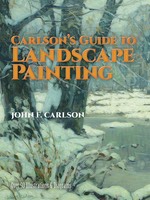
Carlson’s Guide to Landscape Painting
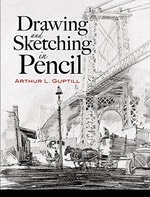
Drawing and Sketching in Pencil

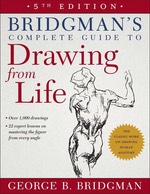
Bridgman’s Complete Guide to Drawing from Life
Charley’s Picks
Amazon
(Amazon.com affiliate links; sales go to a larger yacht for Jeff Bezos; but I get a small percentage to help support my work on Lines and Colors)
Carlson’s Guide to Landscape Painting
Drawing and Sketching in Pencil
Bridgman’s Complete Guide to Drawing from Life