


Categories
- 3d CGI
- Amusements
- Animation
- Anime & Manga
- Art Materials
- Art Videos
- Blogroll
- Cartoons
- Color
- Comics
- Concept & Visual Dev.
- Creativity
- Digital Art
- Digital Painting
- Displaying Art on the Web
- Drawing
- Eye Candy for Today
- Gallery and Museum Art
- High-res Art Images
- Illustration
- Motion Graphics & Flash
- Museums
- Online Museums
- Outsider Art
- Painting
- Painting a Day
- Paleo Art
- Pastel, Conté & Chalk
- Pen & Ink
- Prints and Printmaking
- Reviews
- Sc-fi and Fantasy
- Sculpture & Dimensional
- Site Comments
- Sketching
- Storyboards
- Tools and Techniques
- Uncategorized
- Vector Art
- Videos & Podcasts
- Vision and Optics
- Watercolor and Gouache
- Webcomics
Archives
- June 2026
- May 2026
- April 2026
- March 2026
- February 2026
- January 2026
- December 2025
- November 2025
- October 2025
- September 2025
- August 2025
- July 2025
- June 2025
- May 2025
- January 2025
- December 2024
- November 2024
- October 2024
- September 2024
- August 2024
- June 2024
- April 2024
- March 2024
- February 2024
- January 2024
- December 2023
- November 2023
- October 2023
- September 2023
- August 2023
- July 2023
- May 2023
- April 2023
- March 2023
- February 2023
- January 2023
- December 2022
- November 2022
- September 2022
- August 2022
- July 2022
- June 2022
- May 2022
- April 2022
- March 2022
- February 2022
- January 2022
- December 2021
- November 2021
- October 2021
- September 2021
- August 2021
- July 2021
- June 2021
- May 2021
- April 2021
- March 2021
- February 2021
- January 2021
- December 2020
- November 2020
- October 2020
- September 2020
- August 2020
- July 2020
- June 2020
- May 2020
- April 2020
- March 2020
- February 2020
- January 2020
- December 2019
- November 2019
- October 2019
- September 2019
- August 2019
- July 2019
- June 2019
- May 2019
- April 2019
- March 2019
- February 2019
- January 2019
- December 2018
- November 2018
- October 2018
- September 2018
- August 2018
- July 2018
- June 2018
- May 2018
- April 2018
- March 2018
- February 2018
- January 2018
- December 2017
- November 2017
- October 2017
- September 2017
- August 2017
- July 2017
- June 2017
- May 2017
- April 2017
- March 2017
- February 2017
- January 2017
- December 2016
- November 2016
- October 2016
- September 2016
- August 2016
- July 2016
- June 2016
- May 2016
- April 2016
- March 2016
- February 2016
- January 2016
- December 2015
- November 2015
- October 2015
- September 2015
- August 2015
- July 2015
- June 2015
- May 2015
- April 2015
- March 2015
- February 2015
- January 2015
- December 2014
- November 2014
- October 2014
- September 2014
- August 2014
- July 2014
- June 2014
- May 2014
- April 2014
- March 2014
- February 2014
- January 2014
- December 2013
- November 2013
- October 2013
- September 2013
- August 2013
- July 2013
- June 2013
- May 2013
- April 2013
- March 2013
- February 2013
- January 2013
- December 2012
- November 2012
- October 2012
- September 2012
- August 2012
- July 2012
- June 2012
- May 2012
- April 2012
- March 2012
- February 2012
- January 2012
- December 2011
- November 2011
- October 2011
- September 2011
- August 2011
- July 2011
- June 2011
- May 2011
- April 2011
- March 2011
- February 2011
- January 2011
- December 2010
- November 2010
- October 2010
- September 2010
- August 2010
- July 2010
- June 2010
- May 2010
- April 2010
- March 2010
- February 2010
- January 2010
- December 2009
- November 2009
- October 2009
- September 2009
- August 2009
- July 2009
- June 2009
- May 2009
- April 2009
- March 2009
- February 2009
- January 2009
- December 2008
- November 2008
- October 2008
- September 2008
- August 2008
- July 2008
- June 2008
- May 2008
- April 2008
- March 2008
- February 2008
- January 2008
- December 2007
- November 2007
- October 2007
- September 2007
- August 2007
- July 2007
- June 2007
- May 2007
- April 2007
- March 2007
- February 2007
- January 2007
- December 2006
- November 2006
- October 2006
- September 2006
- August 2006
- July 2006
- June 2006
- May 2006
- April 2006
- March 2006
- February 2006
- January 2006
- December 2005
- November 2005
- October 2005
- September 2005
- August 2005
Relevant Blogs
Art, Painting & Sketch
- Gurney Journey
- Underpaintings
- Art and Influence
- Painting Perceptions
- Oil Painters of America
- Vasari Paint POV
- Flying Fox
- Urban Sketchers
- Bento (Smithsonian)
- Art Inconnu
- The Hidden Place
- Still Life
- Making a Mark
- The Art of the Landscape
- Exploring Color & Creativity
- Art Contrarian
- Artist A Day
- beinArt Surreal Art Collective
- Eye Level
- David Dunlop
- p.i.g.m.e.n.t.i.u.m
- CultureGrrl
- Joaquín Sorolla blog
- Artists in Pastel
“Painting a Day”
- A Painting a Day (Keiser)
- On Painting (Keiser)
- Julian Merrow-Smith
- Karen Jurick
- Jeffrey Hayes
- Carol Marine
- Abbey Ryan
- Daily Paintworks
Other Painting Blogs
- Virtual Gouache Land
- Neil Hollingsworth
- Marc Hanson
- Kevin Menck
- Marc Dalessio
- Larry Seiler
- Stapleton Kearns
- Colin Page
- Roos Schuring
- Hans Versfelt
- Titus Meeuws
- Régis Pettinari
- René Plein Air
- Belinda Del Pesco
- Robin Weiss
- Nathan Fowkes (Land Sketch)
- William Wray
- Frank Serrano
- Stephen Magsig
- Michael Chesley Johnson
- Twice a Week
- Sarah Wimperis
- Rob Adams
- Michael Cole Manley
- The Dirty Palette Club
- Mike Manley’s Draw!
Gallery Art & Illustration mix
Illustration
- Howard Pyle
- 100 Years of Illustration
- BibliOdyssey
- Illustration Art
- Today’s Inspiration
- Illustration Mundo
- Little Chimp Society
- Danny Gregory
- R D (John Martz
- Illustration Friday blog
- Monster Brains
- Illustrators & Illustrations (RU)
- Elwood H. Smith
- DaniDraws.com
- Designers Who Blog
- iSpot Blog
Sci-Fi & Fantasy
Illustration & Comics
Comics & Cartoons
- Comics Beat
- Robot 6
- Newsarama Blog
- Comic Vine
- Comics Alliance
- Forbidden Planet Int.
- Paolo Rivera
- Bolt City
- Flight
- Scott McCloud
- The Comics Journal
- Comixpedia
- Funnybook Babylon
- James Baker
- Middleton’s Sketchbook
- Boneville
- The Hotel Fred
- Paul Rivoche
- Daily Cartoonist
- Mad About Cartoons (William Wray)
- Digital Strips
Illustration & Concept
Animation & Concept
- Cartoon Brew
- Animation Blog
- Cold Hard Flash
- Concept Art World
- The CAB
- FY Concept Art
- Concept Ships
- Concept Robots
- John Nevarez
- Armand Serrano
- Marcos Mateu-Mestre
- all kinds of stuff (Kricfalusi)
- Yacin the faun (Man Arenas)
- Kelsey Mann
- Cre8tivemarks Blog
- Ice-Cream Monster Toon Cafe
- AAU Character & Creature Design
- AAU Animation Notes
- Articles and Texticles
Paleo & Scientific
Tools & Techniques
Other
Lists of Art Blogs
Art Image Resource Links
Historic Art Images
- Wikimedia Commons: Paintings
- Wikimedia Commons: Drawings
- The Athenaeum
- WikiArt (WikiPaintings)
- Google Art Project: Artists
- Google Art Project: Collections (Museums)
- ArtCyclopedia
- Web Gallery of Art
- Art Renewal Center
- Web Gallery of Impressionism
Auction Consolidation sites
Auction sites
- Sotheby’s
- Bonham’s
- Christies
- Heritage Auctions: Fine Art
- Heritage Auctions: Illustration
- Freeman’s Auctions
- Bukowskis
- Shannon’s
Image Search
Reverse Image Search (search by image)
- Tin Eye
- RevImg
- Google Image Search (camera icon)
- Bing Image Search (camera icon)
Promoting some friends and some clients of my website design business
- Twin Willows T’ai Chi studio in Wilmington DE. Taiji classes with Bryan Davis.
- Ray Hayward, Inspired Teacher of T’ai Chi ( Taiji ) in Minneapolis, Founder of Mindful Motion Tai Chi Academy
- OldHead Tattoo studio and Art Gallery in Wilmington DE. Tattoos and paintings by Bruce Gulick
- Sharon Domenico Art, pet portrait oil paintings
- Platinum Paperhanging, wallpaper hanging, Main Line and Philadelphia, PA
- Lisa Stone Design, interior designer, Main Line and Philadelphia, PA
- Studio12KPT, original art, prints, calendars and other custom printed items by Van Sickle & Rolleri
-
Kieran Yanner

Kieran Yanner is a concept artist and illustrator working for a variety of clients in publishing and the gaming industry.Originally from Darwin, Australia, Yanner now lives and works in Seattle, Washington in the U.S.
His clients include Hasbro, NCSoft, THQ, DC Comics, Marvel, Upperdeck Entertainment, Decipher, Wizards of the Coast, Wizkids, White Wolf, Vivendi Universal Games, Disney and Sony Online Entertainment.
Yanner works digitally and has a nice flair for visual drama, from the sweeping motions of dragons or sea monsters to emotional characters to dazzling special effects. He also demonstrates a flair for humorous illustration, as in his character designs for Save Dr. Lucky (above, fourth down).
His portfolio is divided into sections by project and shows the range of visual approaches and rendering styles he brings to the different kinds of projects he undertakes.
There is an interview with Yanner on 3D Total.
Categories:
-
Google Art Project expanded

Google has recently expanded and improved their already amazing Google Art Project, in which they use their Google Maps “Street View” tech to offer virtual tours of museum spaces, and, more importantly, offer beautiful, zoomable high resolution images of great works of art from world class museums.Their recent expansion adds 150 museums and galleries to their list of participating institutions, including the National Gallery in London.
When I first reported about the Google Art Project in early 2011, they had roughly 1000 images available on the site, there are now over 30,000 (though not all in highest resolution).
They have also dramatically improved the interface, which was the weak point of the original implementation and sorely in need of revision.
Instead of dealing with that horrible little scrolling list (that never displayed right in browsers other than Chrome), you can now view actual list pages and look up Collections from museums and galleries, or browse by Artists or Artworks.
If you take the trouble to create a free account (you can probably sign in with a current Google account), you can keep personal galleries of favorites, not just bookmarked, but saved with a chosen zoom level and focus selection.
You can also browse a selection of User Galleries that have been made public (sort of like an art gallery specific Pinterest).
If you view the Details page for a given work there are often videos, audio commentary, maps and a range of text information about the work and the artist.
The interface can still be a bit slow and demanding of your computer and browser (and probably still works best in Chrome), but you may just need to be patient.
The Google Art Project was already an amazing resource and is now even better and more extensive by an order of magnitude.
It also gets my highest Major Timesink Warning.
Enjoy!
(Images above: In the Conservatory, Edouard Manet from collection of Nationalgalerie, Staatliche Museen zu Berlin)
[Via The Guardian]
Categories:
-
How Do Artists Protect Their Work Online? on Symbiartic

Writing for Symbiartic, a blog devoted to scientific art on Scientific American that he co-authors with Kalliopi Monoyios, Glendon Mellow recently asked several science related artists to comment on the question How Do Artists Protect Their Work Online?Mellow asked me to participate, which I did in my role as the author/artist of Dinosaur Cartoons (also here).
I chose to talk about the issue of preventing people from downloading or otherwise accessing your images online (you can’t).
Read the entire article here.
Categories:
-
Henry Ossawa Tanner

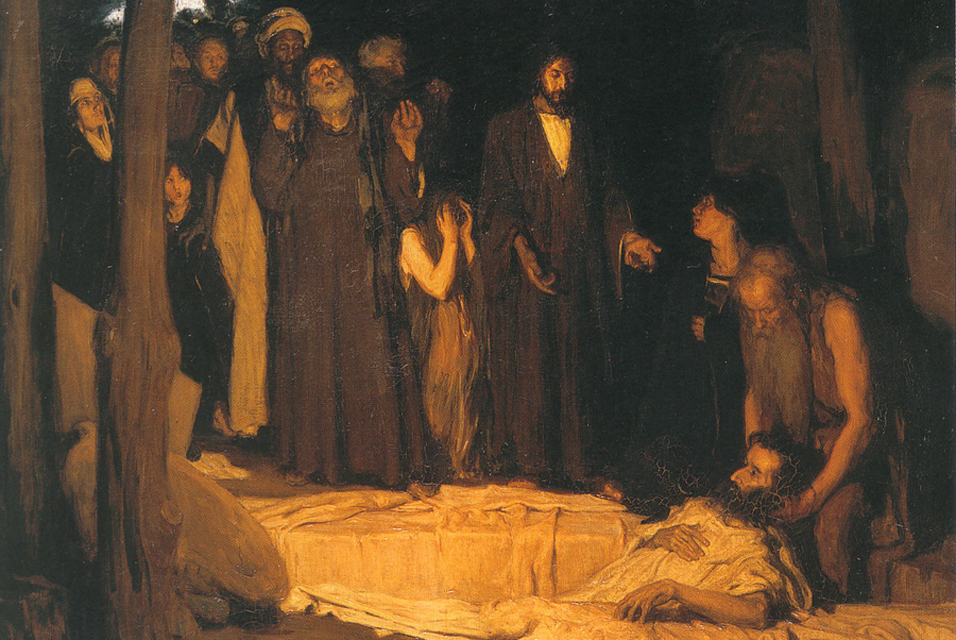
Though American painter Henry Ossawa Tanner, who was active in the late 19th and early 20th centuries, is frequently thought of as a realist and as an orientalist — for the Biblically themed works based on his trips to Palestine and other locations in the middle east, I came away from the current superb show of his work at the Pennsylvania Academy of the Fine Arts, Henry Ossawa Tanner: Modern Spirit, with a different feeling — essentially that he was a painter of light.That phrase can be applied to many painters, like J.M.W. Turner, the Luminists and the Impressionists, but in Tanner’s case, I’m using the phrase in a slightly different sense.
I was passingly familiar with Tanner’s work, from books and the few pieces in the collection of the Academy, the Philadelphia Museum of Art and the Metropolitan Museum of Art, but it wasn’t until I saw the array of his work collected in this exhibition that I was struck with his thematic use of light and dark.
In composition after composition in many of his later works, in ways both subtle and dramatic, Tanner uses value contrasts to create pools of light, at times like spotlights, to focus your attention and move your eye into his canvasses.
In many cases, particularly in his portrayal of keyhole shaped doorways and arches in the middle east, he works light within dark and dark within light, even to several levels, forming visual targets, and drawing you deep into his scenes.
Tanner was noted as a pioneering African American artist, one of the most influential and the earliest to receive worldwide recognition, though he downplayed his role in that capacity and concentrated on his efforts simply as a painter.
Tanner studied for a time at the Pennsylvania Academy of the Fine Arts, where he was a student of Thomas Eakins, and of Eakins’s student Thomas Hovenden, but he left before graduating, seeking to establish himself as a painter, photographer and teacher in Atlanta, Georgia.
His efforts met with less success than he had hoped, and though he found favor among key patrons, his general treatment as a black artist in late 19th century America was not conducive to the kind of life as a painter he envisioned.
It was with the support of patrons that he left the U.S. to study in Europe, enrolling in the Academie Julian in Paris. His reception and treatment in Europe was so much better than in the U.S. that he would spend the rest of his career there, punctuated with occasional trips back.
His paintings were well received at the Paris Salon, and his painting The Resurrection of Lazarus, now considered his masterpiece (image above, second down), was awarded a medal and immediately purchased by the French Government.
I have always been fond of his painting of The Annunciation in the Philadelphia Museum of Art, with its wonderfully eerie depiction of the Angel Gabriel as column of vibrating golden light, but it wasn’t until I saw the range of paintings in this exhibition in which he played with light effects, from moons in cloudy skies to light cast against buildings to sunlight in doorways, that I really appreciated the depth of his exploration of that direction.
I also came away with a much greater appreciation of Tanner as a painter. Over the course of his career, he experimented with styles that ranged from academically polished to painterly to roughly textured topographies of paint across canvasses that played out the “paint as paint” sensibilities and color experimentation of expressionism and early modernism.
The current exhibition is notable for the number, quality and range of his works assembled, and the presence of The Resurrection of Lazarus, which is in the collection of the Musée d’Orsay and has not been exhibited in the U.S. before.
Henry Ossawa Tanner: Modern Spirit is on view at the Pennsylvania Academy of the Fine Arts in Philadelphia until April 15, 2912. It then travels to the Cincinnati Art Museum where it will be on display from May 26 to September 9, 2012, and to the Houston Museum of Fine Arts, from October 21, 2012 to January 13, 2013.
There is a catalog accompanying the exhibition.
In his experimentation with light, value, paint surface and visual texture, Tanner is extraordinary in his ability to be at once subtle and striking. Though I’m fascinated by those qualities of his paintings, I would think that Tanner always saw them as simply tools in his portrayal of human emotion, spiritual devotion and a celebration of the world as it revealed itself to him.
Categories:
-
Michael Cole Manley

Michael Cole Manley is well known as “Mike Manley” in his role as a comic book artist and animation artist and as the editor of Draw! magazine, a how-to magazine popular in the comics art community (see my previous post on Draw!).As a comics artist, he has worked for Marvel, DC, Dark Horse, and on major characters like Batman. He is currently the artist on the Judge Parker newspaper strip. He has done work for television animation for Warner Brothers, MTV and the Cartoon Network.
Manley also teaches animation, cartooning and drawing, and has in the last few years returned to the role of student himself; he is in his fourth year as a painting major at the Pennsylvania Academy of the Fine Arts.
Outside of his formal studies as a painter, Manley works plein air as well as in the studio, and he and a group of likeminded painters have formed the Dirty Palette Club, getting together for plein air excursions and group studio work outside of the school environment.
Manley’s progress as a painter is evidenced in his current one-man show at the Roger La Pelle galleries here in Philadelphia – Commuterscapes and Expectations. I was glad I had the chance to stop in for the opening and see both the show and Manley, who I have known for many years but hadn’t caught up with recently.
The show features a nice cross section of his painting subjects, landscapes, figures, interiors and more conceptual work, as well as what seems to be one of his major fascinations, cityscapes, and in particular, nocturnal cityscapes. The latter highlight his fascination with direct light sources and dramatic value contrasts.
Manley is an active blogger and maintains a blog in which he chronicles his progress as a painter and art student, as well as the Draw! blog, that focuses more on his comics and animation work, along with the official Draw! magazine blog and the Dirty Palette Club blog. He also has a dedicated website that showcases his painting.
Commuterscapes and Expectations is on view at the Roger La Pelle Galleries to April 1, 2012.
Categories:
-
Bruce Jensen

Presumably starting from sketchbook in which he playfully doodled out freeform alien creatures, Alien Menagerie is a blog in which illustrator Bruce Jensen is, in his words, “painting groovy things from another planet”.Jensen’s wonderfully loopy creatures are usually painted in acrylic on watercolor paper, though at times on post-it notes, and are supplemented in the blog with pencil sketchbook drawings.
On his website, Jensen showcases some of his aliens in a section called “extracts”, as well as some more fully developed paintings of similar themes in acrylic on panel. Some of his 8×10″ acrylic on paper originals are for sale in his “shop” section.
In addition, Jensen’s website has a section of his professional illustration, with his art for the covers of many well-known science fiction novels, including his cover for Neal Stephenson’s Snow Crash, which is where I first encountered his work.
Jensen’s clients include Berkley Publishing, Bantam Spectra, Ballantine Del Rey, Penguin/Roc, Tor Books, Marvel Comics and DC Comics, among others. Jensen was for several years an art director and illustrator for the CBS newsmagazine 60 Minutes II, and continues to work for CBS as a designer and animator.
[Via Glendon Mellow @flyingtrilobite]
Categories:




Charley’s Picks
Bookshop.org
(Bookshop.org affilliate links; sales benefit independent bookshop owners; I get a small percentage to help support my work on Lines and Colors)

John Singer Sargent: Watercolors


Urban Sketching: Understanding Perspective


Charley’s Picks
Amazon
(Amazon.com affiliate links; sales go to a larger yacht for Jeff Bezos; but I get a small percentage to help support my work on Lines and Colors)
John Singer Sargent: Watercolors
Urban Sketching: Understanding Perspective