


Categories
- 3d CGI
- Amusements
- Animation
- Anime & Manga
- Art Materials
- Art Videos
- Blogroll
- Cartoons
- Color
- Comics
- Concept & Visual Dev.
- Creativity
- Digital Art
- Digital Painting
- Displaying Art on the Web
- Drawing
- Eye Candy for Today
- Gallery and Museum Art
- High-res Art Images
- Illustration
- Motion Graphics & Flash
- Museums
- Online Museums
- Outsider Art
- Painting
- Painting a Day
- Paleo Art
- Pastel, Conté & Chalk
- Pen & Ink
- Prints and Printmaking
- Reviews
- Sc-fi and Fantasy
- Sculpture & Dimensional
- Site Comments
- Sketching
- Storyboards
- Tools and Techniques
- Uncategorized
- Vector Art
- Videos & Podcasts
- Vision and Optics
- Watercolor and Gouache
- Webcomics
Archives
- April 2026
- March 2026
- February 2026
- January 2026
- December 2025
- November 2025
- October 2025
- September 2025
- August 2025
- July 2025
- June 2025
- May 2025
- January 2025
- December 2024
- November 2024
- October 2024
- September 2024
- August 2024
- June 2024
- April 2024
- March 2024
- February 2024
- January 2024
- December 2023
- November 2023
- October 2023
- September 2023
- August 2023
- July 2023
- May 2023
- April 2023
- March 2023
- February 2023
- January 2023
- December 2022
- November 2022
- September 2022
- August 2022
- July 2022
- June 2022
- May 2022
- April 2022
- March 2022
- February 2022
- January 2022
- December 2021
- November 2021
- October 2021
- September 2021
- August 2021
- July 2021
- June 2021
- May 2021
- April 2021
- March 2021
- February 2021
- January 2021
- December 2020
- November 2020
- October 2020
- September 2020
- August 2020
- July 2020
- June 2020
- May 2020
- April 2020
- March 2020
- February 2020
- January 2020
- December 2019
- November 2019
- October 2019
- September 2019
- August 2019
- July 2019
- June 2019
- May 2019
- April 2019
- March 2019
- February 2019
- January 2019
- December 2018
- November 2018
- October 2018
- September 2018
- August 2018
- July 2018
- June 2018
- May 2018
- April 2018
- March 2018
- February 2018
- January 2018
- December 2017
- November 2017
- October 2017
- September 2017
- August 2017
- July 2017
- June 2017
- May 2017
- April 2017
- March 2017
- February 2017
- January 2017
- December 2016
- November 2016
- October 2016
- September 2016
- August 2016
- July 2016
- June 2016
- May 2016
- April 2016
- March 2016
- February 2016
- January 2016
- December 2015
- November 2015
- October 2015
- September 2015
- August 2015
- July 2015
- June 2015
- May 2015
- April 2015
- March 2015
- February 2015
- January 2015
- December 2014
- November 2014
- October 2014
- September 2014
- August 2014
- July 2014
- June 2014
- May 2014
- April 2014
- March 2014
- February 2014
- January 2014
- December 2013
- November 2013
- October 2013
- September 2013
- August 2013
- July 2013
- June 2013
- May 2013
- April 2013
- March 2013
- February 2013
- January 2013
- December 2012
- November 2012
- October 2012
- September 2012
- August 2012
- July 2012
- June 2012
- May 2012
- April 2012
- March 2012
- February 2012
- January 2012
- December 2011
- November 2011
- October 2011
- September 2011
- August 2011
- July 2011
- June 2011
- May 2011
- April 2011
- March 2011
- February 2011
- January 2011
- December 2010
- November 2010
- October 2010
- September 2010
- August 2010
- July 2010
- June 2010
- May 2010
- April 2010
- March 2010
- February 2010
- January 2010
- December 2009
- November 2009
- October 2009
- September 2009
- August 2009
- July 2009
- June 2009
- May 2009
- April 2009
- March 2009
- February 2009
- January 2009
- December 2008
- November 2008
- October 2008
- September 2008
- August 2008
- July 2008
- June 2008
- May 2008
- April 2008
- March 2008
- February 2008
- January 2008
- December 2007
- November 2007
- October 2007
- September 2007
- August 2007
- July 2007
- June 2007
- May 2007
- April 2007
- March 2007
- February 2007
- January 2007
- December 2006
- November 2006
- October 2006
- September 2006
- August 2006
- July 2006
- June 2006
- May 2006
- April 2006
- March 2006
- February 2006
- January 2006
- December 2005
- November 2005
- October 2005
- September 2005
- August 2005
Relevant Blogs
Art, Painting & Sketch
- Gurney Journey
- Underpaintings
- Art and Influence
- Painting Perceptions
- Oil Painters of America
- Vasari Paint POV
- Flying Fox
- Urban Sketchers
- Bento (Smithsonian)
- Art Inconnu
- The Hidden Place
- Still Life
- Making a Mark
- The Art of the Landscape
- Exploring Color & Creativity
- Art Contrarian
- Artist A Day
- beinArt Surreal Art Collective
- Eye Level
- David Dunlop
- p.i.g.m.e.n.t.i.u.m
- CultureGrrl
- Joaquín Sorolla blog
- Artists in Pastel
“Painting a Day”
- A Painting a Day (Keiser)
- On Painting (Keiser)
- Julian Merrow-Smith
- Karen Jurick
- Jeffrey Hayes
- Carol Marine
- Abbey Ryan
- Daily Paintworks
Other Painting Blogs
- Virtual Gouache Land
- Neil Hollingsworth
- Marc Hanson
- Kevin Menck
- Marc Dalessio
- Larry Seiler
- Stapleton Kearns
- Colin Page
- Roos Schuring
- Hans Versfelt
- Titus Meeuws
- Régis Pettinari
- René Plein Air
- Belinda Del Pesco
- Robin Weiss
- Nathan Fowkes (Land Sketch)
- William Wray
- Frank Serrano
- Stephen Magsig
- Michael Chesley Johnson
- Twice a Week
- Sarah Wimperis
- Rob Adams
- Michael Cole Manley
- The Dirty Palette Club
- Mike Manley’s Draw!
Gallery Art & Illustration mix
Illustration
- Howard Pyle
- 100 Years of Illustration
- BibliOdyssey
- Illustration Art
- Today’s Inspiration
- Illustration Mundo
- Little Chimp Society
- Danny Gregory
- R D (John Martz
- Illustration Friday blog
- Monster Brains
- Illustrators & Illustrations (RU)
- Elwood H. Smith
- DaniDraws.com
- Designers Who Blog
- iSpot Blog
Sci-Fi & Fantasy
Illustration & Comics
Comics & Cartoons
- Comics Beat
- Robot 6
- Newsarama Blog
- Comic Vine
- Comics Alliance
- Forbidden Planet Int.
- Paolo Rivera
- Bolt City
- Flight
- Scott McCloud
- The Comics Journal
- Comixpedia
- Funnybook Babylon
- James Baker
- Middleton’s Sketchbook
- Boneville
- The Hotel Fred
- Paul Rivoche
- Daily Cartoonist
- Mad About Cartoons (William Wray)
- Digital Strips
Illustration & Concept
Animation & Concept
- Cartoon Brew
- Animation Blog
- Cold Hard Flash
- Concept Art World
- The CAB
- FY Concept Art
- Concept Ships
- Concept Robots
- John Nevarez
- Armand Serrano
- Marcos Mateu-Mestre
- all kinds of stuff (Kricfalusi)
- Yacin the faun (Man Arenas)
- Kelsey Mann
- Cre8tivemarks Blog
- Ice-Cream Monster Toon Cafe
- AAU Character & Creature Design
- AAU Animation Notes
- Articles and Texticles
Paleo & Scientific
Tools & Techniques
Other
Lists of Art Blogs
Art Image Resource Links
Historic Art Images
- Wikimedia Commons: Paintings
- Wikimedia Commons: Drawings
- The Athenaeum
- WikiArt (WikiPaintings)
- Google Art Project: Artists
- Google Art Project: Collections (Museums)
- ArtCyclopedia
- Web Gallery of Art
- Art Renewal Center
- Web Gallery of Impressionism
Auction Consolidation sites
Auction sites
- Sotheby’s
- Bonham’s
- Christies
- Heritage Auctions: Fine Art
- Heritage Auctions: Illustration
- Freeman’s Auctions
- Bukowskis
- Shannon’s
Image Search
Reverse Image Search (search by image)
- Tin Eye
- RevImg
- Google Image Search (camera icon)
- Bing Image Search (camera icon)
Promoting some friends and some clients of my website design business
- Twin Willows T’ai Chi studio in Wilmington DE. Taiji classes with Bryan Davis.
- Ray Hayward, Inspired Teacher of T’ai Chi ( Taiji ) in Minneapolis, Founder of Mindful Motion Tai Chi Academy
- OldHead Tattoo studio and Art Gallery in Wilmington DE. Tattoos and paintings by Bruce Gulick
- Sharon Domenico Art, pet portrait oil paintings
- Platinum Paperhanging, wallpaper hanging, Main Line and Philadelphia, PA
- Lisa Stone Design, interior designer, Main Line and Philadelphia, PA
- Studio12KPT, original art, prints, calendars and other custom printed items by Van Sickle & Rolleri
-
Elizabeth Traynor
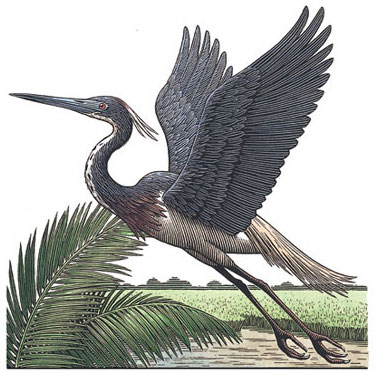
I’m particularly fond of pen and ink illustration, and its less common variant, scratchboard.Scratchboard is the inverse, or “dark side” (I couldn’t resist) of pen and ink drawing, in which a specially prepared board, coated with a thin layer of white clay, is used as the foundation for the drawing. Large areas of (usually) black ink are then painted onto the board, allowing the artist to scratch crisp white lines out of the black ink. There are special scratchboard tools, multi-pronged scratchboard “rakes” and so on, but any sharp instrument can be used.
Scratchboard is often combined with traditional pen and ink drawing on the same surface, as in the work of illustrator Virgil Finlay, and sometimes combined with color, particularly in some modern illustration. There are also artists, like Chet Phillips who mimic the effect with “digital scratchboard” in Corel Painter.
It’s not often that you see true scratchboard these days, and less frequent still that you see as exceptionally well handled as it is in the scratchboard illustrations of Elizabeth Traynor.
Traynor is an illustrator, formerly based in Delaware and now in Massachussets, who has done editorial work for companies like Simon & Schuster and Random House, publications like The Wall Street Journal, Fortune and Esquire and advertising illustration and logo design for companies ranging from American Express to Coca-Cola.
Her colored scratchboard illustrations have a wonderful feeling of being simultaneously modern and traditional. She also does rich, detailed watercolor illustrations and her site includes examples of her logo design as well. The image above, in fact, was extracted from one of her logo designs.
Link suggestion courtesy of Jack Harris.
Categories:
-
Vyle (David Levy)
 Vyle is the professional pseudonym for concept artist, art director and designer David Levy. He works primarily in the gaming industry and is perhaps most noted for his work on Prince of Persia. He has also done work in the film industry.
Vyle seems to work primarily digitally, usually in Photoshop and sometimes back and forth between Photoshop and 3-D graphics. His site includes “tutorials” in the form of short movies that fade through a progression of images from various stages of the work. (Some of them require the latest version of DIVX, others are in AVI.) Among them is a short movie of the process for creating the image at left, bottom.
His simultaneously loose and detailed style reminds me a bit of artists like Craig Mullins and Feng Zhu (also here).
The galleries on Vyle’s site feature corporate work, notably gaming concept and environment designs, but as I often do, I find the most interesting work in the images done for his own amusement to personal projects in the “Homework”, Speedpaintings” and “Archives” sections.
“Speedpainting” is a fun idea and is common among concept artists who work in digital painting. The flexibility, plasticity and quick color mixing available in digital painting allows very rapid application of color, and artists often create “timed” paintings as a challenge to themselves, and occasionally as friendly rivalry amongst their colleagues (see my post on Barontieri).
In Vyle’s case, his practice of speedpainting pays off in the freedom and spontaneous feeling carried into his more fully realized work. I think it also helps artists in his profession to stay limber and creative when they are very often called on to have “imagination on tap”.
Categories:
-
Bruce Timm (update)

I wrote about Bruce Timm in this post last October. It’s been almost a year and, although he still doesn’t have a personal website, there is a significant amount of additional Timm material on the web, mostly on unofficial galleries.Timm is an animator, producer and comics artist. He is most widely recognized for his work on the DC Comics TV animated series like Batman, Superman, The Animated Series, Batman Beyond, Justice League Unlimited and Teen Titans, through which he has had a substantial impact on the look and feel of modern TV cartoon animation.
His drawing style, whether for character sheets, convention sketches or comics pages, has a lively, energetic feeling and a wonderful sense of stylization. He gives his figures and faces a cartoon-like exaggeration, drawing from classic animation, cartoon-style comics, such as the Archie comics of the 50’s and 60’s, and the so-called “good girl art” of the “cheesecake” calendars and book covers from the same era. He has also been very influenced by Jack, “King” Kirby (more about him in a future post) and other comic art greats.
The page shown here is from the story “An Epic Battle”, written by Darko Macan and drawn by Timm, and is from the hardbound anthology Captain America: Red, White & Blue from marvel Comics (more details here). It evidences Timm’s admiration for Kirby as well as giving a delightful nod to the Captain America and Agent of S.H.I.E.L.D. stories of Jim Steranko, another comics artist who was very influenced by Kirby. You can see more of these pages on PopCultureShock.
Most of the sites linked below are unofficial galleries or collections of convention sketches. There are also some interviews.
There is a collection of Timm’s work, Modern Masters Volume 3: Bruce Timm available from TwoMorrows Publishing.
Note: Some of the sites linked here contain teasing nudity and sexually suggestive material (i.e. NSFW). Avoid them if you’re likely to be offended.
Categories:
-
Marie Spartali Stillman
 I sometimes wonder how many potentially great women artists have been lost to art history, simply because the training and opportunity to enter into a career as an artist was denied to them by a culture that considered it an “unsuitable” role for women.
Some managed to make their way through the gauntlet and make their mark, however, particularly as society became more affluent towards the end of the 19th Century.
Marie Spartali, later Stillman, was one of the outstanding women artists to come out of the Victorian era, and was a notable painter in the Pre-Raphaelite circle.
Stillman studied with Ford Madox Brown and her work shows his influence as well as that of John Everett Millais, Edward Byrne Jones (particularly in the latter part of her career) and Renaissance painters like Sandro Botticelli.
In addition to being a talented artist, Stillman was physically beautiful in a way particularly in favor with the Pre-Raphaelites (a “stunner”, in their words) and she served as a model for paintings by Brown, Dante Gabriel Rosetti and Byrne Jones., and was the model for Byrne-Jones’ famous painting The Begiuling of Merlin. Stillman also posed for pioneering photographer Julia Margaret Cemeron.
I’ve picked out two of Stillman’s paintings to show you here. The image at left, bottom is The Rose From Armida’s Garden; I don’t know where it currently resides.
The image shown at top is Love’s Messenger, perhaps Stillman’s best known work. It is part of the Delaware Art Museum’s wonderful Bancroft Collection of Pre-Raphaelite works and, like the rest of that collection, is on an extended tour of other museums (currently at the Frick Art and Historical Center in Pittsburgh). I’m spoiled, having grown up with easy access to the museum, and I really miss having the Pre-Raphaelites here.
Even among the jewels in the museum’s collection, Love’s Messenger is striking, grabbing your attention from across the room and rewarding you when you approach with wonderful details and a beautiful handling of the paint.
Stillman painted in watercolor, a medium considered “more suitable” for women than oil, and often used opaque watercolor in a detailed manner, imbuing her images with a lustrous texture that makes their surface a visual treat, above and beyond the overall character of the painting. Her subject matter was in keeping with that of the other Pre-Raphaelites and she had a tendency toward a flattened “naive” perspective, as in early Renaissance painting.
I, for one, am glad an artist like Marie Stillman made it through the barriers society put in the way of young women of her time, and was able to train and flower as an artist.
Categories:
-
Hilary Brace

Somewhere between earth and sky, landscape and seascape, mountains and clouds, natural forms and imagined shapes, float the drawings of Hilary Brace.Her richly toned, detailed charcoal drawings (she calls them “landscapes”) carry suggestions of twisted cloud towers, intimations of tornados and watersopouts, visions of waves and mountains and hints of mysterious tubes and tunnels.
Dark cloud-like forms collide with each other above textured ridges that could be mountains, waves or another layer of clouds. Light breaks through walls and layers, reflects off of some forms and shines translucently through others with angelic luminance.
Arches and domes, caves and breakers, rain, smoke or wisps of mist roil and tumble through her images, always blurring the lines between imagination and reality, natural forms and flights of fancy.
Brace consistently walks that line and refuses to give you solid ground to stand on, forcing your imagination to flap its own wings and make its own choices. The result is almost hypnotic.
Brace works in charcoal, that most plastic of drawing mediums, exploring and composing as the drawing is created. She draws on polyester film, starting with a completely darkened surface and pulling the forms out by subtraction rather than addition.
The drawings are small in scale, more or less postcard size, but their imaginative scope is as large as the sky. (Or is it the land, or the sea?)
Suggestion courtesy of Andrea O. Kaspryk.
Categories:
-
Tim O’Brien
 I’ve had this post about illustrator Tim O’Brien on the back burner for a while, ever since it was suggested by illustrator Jack Harris.
Now seems a particularly good time to finish and post it, though, because Erik Olsen has just posted 2 parts of a fascinating 3 part Iconic Audio interview (Podcast) with O’Brien on the IllustrationMundo portal site. (The first installment of which features a nice nod to lines and colors. Thanks, Erik!)
Tim O’Brien is an outstanding American illustrator. He practices a precise realism, softened by the careful use of lost edges that pulls his images together in an atmospheric whole.
His palette is often muted, and his paintings are rich with with highly finessed tonal contrasts and occasionally punctuated with strong lighting. He seems to work frequently with a color range leaning to earth tones, at times transforming modern portraits into replicas of old sepia-toned photographs, complete with scratches and torn edges.
He lists some of his influences as Paul Cadmus, George Tooker, Gottfried Helnwein, Ingres, Lord Leighton and Ivan Shishkin.
O’Brien’s refined, elegant compositions have a classical feel, while remaining edge-on modern. His notable strength is portraiture and his numerous Time covers have featured incisive portraits of a number of the movers and shakers of our time.
He has also done work for periodicals like Newsweek, The Atlantic Monthly, National Geographic, Playboy and The New York Times, as well as publishers like Ballentine, Avon Books, Harper Collins, Scholastic, Simon & Schuster and others. He has been the recipient of numerous awards from artist and illustrators’ organizatioins and was featured in The Illustrator in America, 1860-2000.
O’Brien helped found the Illustrator’s Partnership of America, is Chairman of the Education Committee and a member of the Executive Committee of the Society of Illustrators in New York and teaches Illustration at the University of the Arts here in Philadelphia.
You might enjoy, as I did, listening to the Iconic Audio Podcasts while looking through the galleries of his work.
Categories:




Charley’s Picks
Bookshop.org
(Bookshop.org affilliate links; sales benefit independent bookshop owners; I get a small percentage to help support my work on Lines and Colors)

John Singer Sargent: Watercolors


Urban Sketching: Understanding Perspective


Charley’s Picks
Amazon
(Amazon.com affiliate links; sales go to a larger yacht for Jeff Bezos; but I get a small percentage to help support my work on Lines and Colors)
John Singer Sargent: Watercolors
Urban Sketching: Understanding Perspective