


Categories
- 3d CGI
- Amusements
- Animation
- Anime & Manga
- Art Materials
- Art Videos
- Blogroll
- Cartoons
- Color
- Comics
- Concept & Visual Dev.
- Creativity
- Digital Art
- Digital Painting
- Displaying Art on the Web
- Drawing
- Eye Candy for Today
- Gallery and Museum Art
- High-res Art Images
- Illustration
- Motion Graphics & Flash
- Museums
- Online Museums
- Outsider Art
- Painting
- Painting a Day
- Paleo Art
- Pastel, Conté & Chalk
- Pen & Ink
- Prints and Printmaking
- Reviews
- Sc-fi and Fantasy
- Sculpture & Dimensional
- Site Comments
- Sketching
- Storyboards
- Tools and Techniques
- Uncategorized
- Vector Art
- Videos & Podcasts
- Vision and Optics
- Watercolor and Gouache
- Webcomics
Archives
- May 2026
- April 2026
- March 2026
- February 2026
- January 2026
- December 2025
- November 2025
- October 2025
- September 2025
- August 2025
- July 2025
- June 2025
- May 2025
- January 2025
- December 2024
- November 2024
- October 2024
- September 2024
- August 2024
- June 2024
- April 2024
- March 2024
- February 2024
- January 2024
- December 2023
- November 2023
- October 2023
- September 2023
- August 2023
- July 2023
- May 2023
- April 2023
- March 2023
- February 2023
- January 2023
- December 2022
- November 2022
- September 2022
- August 2022
- July 2022
- June 2022
- May 2022
- April 2022
- March 2022
- February 2022
- January 2022
- December 2021
- November 2021
- October 2021
- September 2021
- August 2021
- July 2021
- June 2021
- May 2021
- April 2021
- March 2021
- February 2021
- January 2021
- December 2020
- November 2020
- October 2020
- September 2020
- August 2020
- July 2020
- June 2020
- May 2020
- April 2020
- March 2020
- February 2020
- January 2020
- December 2019
- November 2019
- October 2019
- September 2019
- August 2019
- July 2019
- June 2019
- May 2019
- April 2019
- March 2019
- February 2019
- January 2019
- December 2018
- November 2018
- October 2018
- September 2018
- August 2018
- July 2018
- June 2018
- May 2018
- April 2018
- March 2018
- February 2018
- January 2018
- December 2017
- November 2017
- October 2017
- September 2017
- August 2017
- July 2017
- June 2017
- May 2017
- April 2017
- March 2017
- February 2017
- January 2017
- December 2016
- November 2016
- October 2016
- September 2016
- August 2016
- July 2016
- June 2016
- May 2016
- April 2016
- March 2016
- February 2016
- January 2016
- December 2015
- November 2015
- October 2015
- September 2015
- August 2015
- July 2015
- June 2015
- May 2015
- April 2015
- March 2015
- February 2015
- January 2015
- December 2014
- November 2014
- October 2014
- September 2014
- August 2014
- July 2014
- June 2014
- May 2014
- April 2014
- March 2014
- February 2014
- January 2014
- December 2013
- November 2013
- October 2013
- September 2013
- August 2013
- July 2013
- June 2013
- May 2013
- April 2013
- March 2013
- February 2013
- January 2013
- December 2012
- November 2012
- October 2012
- September 2012
- August 2012
- July 2012
- June 2012
- May 2012
- April 2012
- March 2012
- February 2012
- January 2012
- December 2011
- November 2011
- October 2011
- September 2011
- August 2011
- July 2011
- June 2011
- May 2011
- April 2011
- March 2011
- February 2011
- January 2011
- December 2010
- November 2010
- October 2010
- September 2010
- August 2010
- July 2010
- June 2010
- May 2010
- April 2010
- March 2010
- February 2010
- January 2010
- December 2009
- November 2009
- October 2009
- September 2009
- August 2009
- July 2009
- June 2009
- May 2009
- April 2009
- March 2009
- February 2009
- January 2009
- December 2008
- November 2008
- October 2008
- September 2008
- August 2008
- July 2008
- June 2008
- May 2008
- April 2008
- March 2008
- February 2008
- January 2008
- December 2007
- November 2007
- October 2007
- September 2007
- August 2007
- July 2007
- June 2007
- May 2007
- April 2007
- March 2007
- February 2007
- January 2007
- December 2006
- November 2006
- October 2006
- September 2006
- August 2006
- July 2006
- June 2006
- May 2006
- April 2006
- March 2006
- February 2006
- January 2006
- December 2005
- November 2005
- October 2005
- September 2005
- August 2005
Relevant Blogs
Art, Painting & Sketch
- Gurney Journey
- Underpaintings
- Art and Influence
- Painting Perceptions
- Oil Painters of America
- Vasari Paint POV
- Flying Fox
- Urban Sketchers
- Bento (Smithsonian)
- Art Inconnu
- The Hidden Place
- Still Life
- Making a Mark
- The Art of the Landscape
- Exploring Color & Creativity
- Art Contrarian
- Artist A Day
- beinArt Surreal Art Collective
- Eye Level
- David Dunlop
- p.i.g.m.e.n.t.i.u.m
- CultureGrrl
- Joaquín Sorolla blog
- Artists in Pastel
“Painting a Day”
- A Painting a Day (Keiser)
- On Painting (Keiser)
- Julian Merrow-Smith
- Karen Jurick
- Jeffrey Hayes
- Carol Marine
- Abbey Ryan
- Daily Paintworks
Other Painting Blogs
- Virtual Gouache Land
- Neil Hollingsworth
- Marc Hanson
- Kevin Menck
- Marc Dalessio
- Larry Seiler
- Stapleton Kearns
- Colin Page
- Roos Schuring
- Hans Versfelt
- Titus Meeuws
- Régis Pettinari
- René Plein Air
- Belinda Del Pesco
- Robin Weiss
- Nathan Fowkes (Land Sketch)
- William Wray
- Frank Serrano
- Stephen Magsig
- Michael Chesley Johnson
- Twice a Week
- Sarah Wimperis
- Rob Adams
- Michael Cole Manley
- The Dirty Palette Club
- Mike Manley’s Draw!
Gallery Art & Illustration mix
Illustration
- Howard Pyle
- 100 Years of Illustration
- BibliOdyssey
- Illustration Art
- Today’s Inspiration
- Illustration Mundo
- Little Chimp Society
- Danny Gregory
- R D (John Martz
- Illustration Friday blog
- Monster Brains
- Illustrators & Illustrations (RU)
- Elwood H. Smith
- DaniDraws.com
- Designers Who Blog
- iSpot Blog
Sci-Fi & Fantasy
Illustration & Comics
Comics & Cartoons
- Comics Beat
- Robot 6
- Newsarama Blog
- Comic Vine
- Comics Alliance
- Forbidden Planet Int.
- Paolo Rivera
- Bolt City
- Flight
- Scott McCloud
- The Comics Journal
- Comixpedia
- Funnybook Babylon
- James Baker
- Middleton’s Sketchbook
- Boneville
- The Hotel Fred
- Paul Rivoche
- Daily Cartoonist
- Mad About Cartoons (William Wray)
- Digital Strips
Illustration & Concept
Animation & Concept
- Cartoon Brew
- Animation Blog
- Cold Hard Flash
- Concept Art World
- The CAB
- FY Concept Art
- Concept Ships
- Concept Robots
- John Nevarez
- Armand Serrano
- Marcos Mateu-Mestre
- all kinds of stuff (Kricfalusi)
- Yacin the faun (Man Arenas)
- Kelsey Mann
- Cre8tivemarks Blog
- Ice-Cream Monster Toon Cafe
- AAU Character & Creature Design
- AAU Animation Notes
- Articles and Texticles
Paleo & Scientific
Tools & Techniques
Other
Lists of Art Blogs
Art Image Resource Links
Historic Art Images
- Wikimedia Commons: Paintings
- Wikimedia Commons: Drawings
- The Athenaeum
- WikiArt (WikiPaintings)
- Google Art Project: Artists
- Google Art Project: Collections (Museums)
- ArtCyclopedia
- Web Gallery of Art
- Art Renewal Center
- Web Gallery of Impressionism
Auction Consolidation sites
Auction sites
- Sotheby’s
- Bonham’s
- Christies
- Heritage Auctions: Fine Art
- Heritage Auctions: Illustration
- Freeman’s Auctions
- Bukowskis
- Shannon’s
Image Search
Reverse Image Search (search by image)
- Tin Eye
- RevImg
- Google Image Search (camera icon)
- Bing Image Search (camera icon)
Promoting some friends and some clients of my website design business
- Twin Willows T’ai Chi studio in Wilmington DE. Taiji classes with Bryan Davis.
- Ray Hayward, Inspired Teacher of T’ai Chi ( Taiji ) in Minneapolis, Founder of Mindful Motion Tai Chi Academy
- OldHead Tattoo studio and Art Gallery in Wilmington DE. Tattoos and paintings by Bruce Gulick
- Sharon Domenico Art, pet portrait oil paintings
- Platinum Paperhanging, wallpaper hanging, Main Line and Philadelphia, PA
- Lisa Stone Design, interior designer, Main Line and Philadelphia, PA
- Studio12KPT, original art, prints, calendars and other custom printed items by Van Sickle & Rolleri
-
James Gurney's How I Paint Dinosaurs

Long time readers of Lines and Colors will know that I’m an admirer of the work of illustrator and painter James Gurney. I also love dinosaurs and paleontological art, an area in which Gurney is one of the foremost artists working today, so I was delighted to receive a review copy of Gurney’s instructional DVD How I paint Dinosaurs.In the hour long DVD, Gurney goes through his process of creating two dinosaur illustrations for Scientific American magazine, from initial concept and composition thumbnails through to the finished paintings.
He discusses and demonstrates the process of working out compositional variations, developing them from thumbnails to initial sketches to be submitted to the art director for approval. From there, he details the process he uses to create a maquette, or clay model, of his subjects for determining lighting. He moves on to the initial block in of the painting, refinement and development of various stages, and the eventual finish. He goes through this process, emphasizing different points along the way, for two different paintings.
As is sometimes the case with good art instruction videos, the techniques he presents go beyond the specific subject, and would be of value to nature and natural history artists (of which paleo art is a subset), as well as concept artists who base their work on realism, and illustrators in general.
If you’re familiar with Gurney’s other instructional material, particularly his books Imaginative Realism: How to Paint What doesn’t Exist (Amazon link, my review here) and Color and Light: A Guide for the Realist Painter (Amazon link, my review here), you will find examples of the same kind of fundamental principles here of methods he has found successful. For example, the use of a limited gamut (color range) to achieve a certain kind of color harmony, and the advantages of pre-mixing piles of some colors in ranges of variation in value and chroma, to allow less distracted focus during the painting process.
Illustrators who have never worked from three dimensional models may wonder at the time devoted to constructing and painting the maquettes used as reference for the paintings here, but when you see Gurney searching for the best value arrangement in his composition by turning the models in the light, you’ll easily see why he and others at his level of expertise often find it worth the effort.
There were places I wanted to ask for more detail — to run the video back and say “Wait! Wait! How did you make the wrinkles on the dinosaur’s neck look so convincing?” or “Let’s hear more about that brush-pen you’re using to block out the thumbnail sketches!”; but there is plenty of detail to be had.
Like many of the best instructional art videos, on a second viewing, you’ll find little nuggets that you may have cruised over on initial viewing (like doing a pencil drawing on illustration board with the pencil held horizontally, so the point doesn’t indent the board, making it easier to erase and move lines). Much of the detail is visual, beyond the verbal instruction, in good close-ups of brush work and paint application.
Depending on your inclinations, you may also find some helpful examples in Gurney’s studio practices.
The video includes a short mini-feature on brushwork (that I would like to see expanded on in the future), and the DVD version includes a beautiful little print of one of the finished paintings.
There is a video trailer on YouTube, and additional information about the video (and a treasure trove of fascinating material in general) on Gurney’s blog Gurney Journey.
James Gurney’s How I Paint Dinosaurs is $32 for the DVD, available from Kunaki or Amazon, and $15 for a digital download through Gumroad.
Categories:
-
Self-portraits #5

How wonderful and strange these all are!
(Images above: Joaquin Sorolla y Bastida, Lucian Freud, Judith Leyster, Thomas Eakins, Howard Chandler Christy, Ila Schütz, Jan Lievens, Paul Cézanne)
Categories:
-
Tezh Modarressi

The usual litany of painting genres goes: “portraits, figurative, landscape and still life”, and brushes over the unfairly neglected subject of room interiors.Tezh Modarressi, originally from Baltimore and now based in Philadelphia, is an artist who takes room interiors as her primary subject. She seeks out old buildings and portrays their weathered, textural surfaces bathed in shafts of light from windows, working both in layers of oil glazes on prepared paper, and more recently, in encaustic.
To my eye, she evidences a sense of admiration for the sun-streaked Dutch interiors of Pieter de Hooch, and the richly textural interior paintings of Edmund Charles Tarbell.
Modarressi’s work will be on display in a solo show at the F.A.N. Gallery here in Philadelphia from December 6, 2013 to January 25, 2014, with an opening this Friday, December 6 from 5-9pm.
The images on Modarressi’s own website are frustratingly small, those on the F.A.N. Gallery and the Chase Young Gallery give a better feeling for her work and its textural characteristics.
Categories:
-
Digital portrait time-lapse by Kyle Lambert
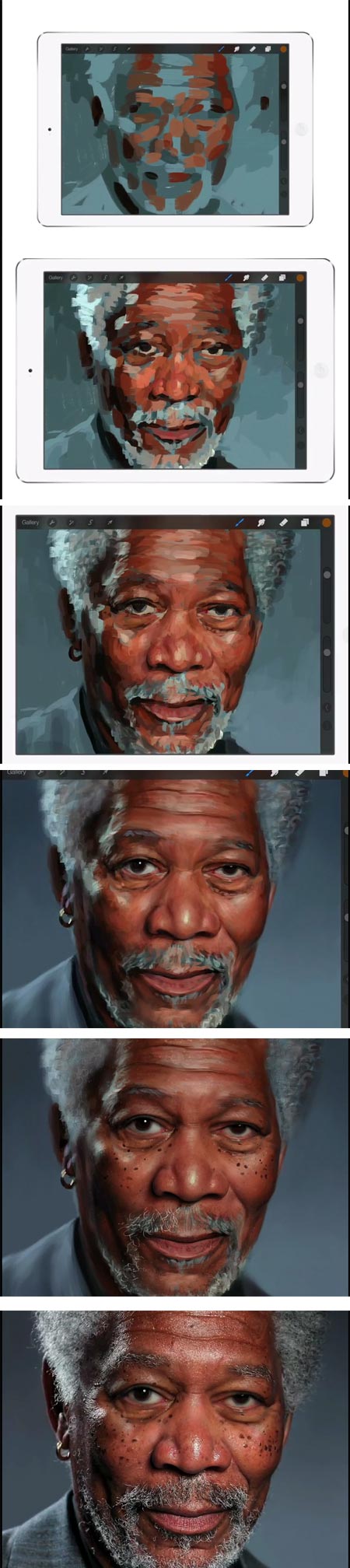
Illustrator, visual development artist and digital painter Kyle Lambert has posted a nice time-lapse video of his process in painting a digital portrait of actor Morgan Freeman, using an iPad and the Procreate painting app.[Via Daring Fireball]
Categories:
-
Eye Candy for Today: Cole's Youth

The Voyage of Life: Youth, Thomas ColeOn Wikimedia Commons, with link to a higher-resolution image and images of the other three paintings in Cole’s The Voyage of Life series.
Original is in the National Gallery of Art, D.C., which has a description of the work as well as the others in the series.
Categories:
-
"Selfies" Self-portraits #4

OK, OK — I’ll stop calling them “selfies” (grin), but I’m having way too much fun with these self-portrait posts to stop now. More to come.(Images above, w/links to my posts: Antonio Mancini, Adélaïde Labille-Guiard , Ferdinand Hodler, Rene Magritte, Frédéric Bazille, Raphael, Ivan Kramskoy, Charles Wilson Peale)
Categories:




Charley’s Picks
Bookshop.org
(Bookshop.org affilliate links; sales benefit independent bookshop owners; I get a small percentage to help support my work on Lines and Colors)

John Singer Sargent: Watercolors


Urban Sketching: Understanding Perspective


Charley’s Picks
Amazon
(Amazon.com affiliate links; sales go to a larger yacht for Jeff Bezos; but I get a small percentage to help support my work on Lines and Colors)
John Singer Sargent: Watercolors
Urban Sketching: Understanding Perspective