


Categories
- 3d CGI
- Amusements
- Animation
- Anime & Manga
- Art Materials
- Art Videos
- Blogroll
- Cartoons
- Color
- Comics
- Concept & Visual Dev.
- Creativity
- Digital Art
- Digital Painting
- Displaying Art on the Web
- Drawing
- Eye Candy for Today
- Gallery and Museum Art
- High-res Art Images
- Illustration
- Motion Graphics & Flash
- Museums
- Online Museums
- Outsider Art
- Painting
- Painting a Day
- Paleo Art
- Pastel, Conté & Chalk
- Pen & Ink
- Prints and Printmaking
- Reviews
- Sc-fi and Fantasy
- Sculpture & Dimensional
- Site Comments
- Sketching
- Storyboards
- Tools and Techniques
- Uncategorized
- Vector Art
- Videos & Podcasts
- Vision and Optics
- Watercolor and Gouache
- Webcomics
Archives
- April 2026
- March 2026
- February 2026
- January 2026
- December 2025
- November 2025
- October 2025
- September 2025
- August 2025
- July 2025
- June 2025
- May 2025
- January 2025
- December 2024
- November 2024
- October 2024
- September 2024
- August 2024
- June 2024
- April 2024
- March 2024
- February 2024
- January 2024
- December 2023
- November 2023
- October 2023
- September 2023
- August 2023
- July 2023
- May 2023
- April 2023
- March 2023
- February 2023
- January 2023
- December 2022
- November 2022
- September 2022
- August 2022
- July 2022
- June 2022
- May 2022
- April 2022
- March 2022
- February 2022
- January 2022
- December 2021
- November 2021
- October 2021
- September 2021
- August 2021
- July 2021
- June 2021
- May 2021
- April 2021
- March 2021
- February 2021
- January 2021
- December 2020
- November 2020
- October 2020
- September 2020
- August 2020
- July 2020
- June 2020
- May 2020
- April 2020
- March 2020
- February 2020
- January 2020
- December 2019
- November 2019
- October 2019
- September 2019
- August 2019
- July 2019
- June 2019
- May 2019
- April 2019
- March 2019
- February 2019
- January 2019
- December 2018
- November 2018
- October 2018
- September 2018
- August 2018
- July 2018
- June 2018
- May 2018
- April 2018
- March 2018
- February 2018
- January 2018
- December 2017
- November 2017
- October 2017
- September 2017
- August 2017
- July 2017
- June 2017
- May 2017
- April 2017
- March 2017
- February 2017
- January 2017
- December 2016
- November 2016
- October 2016
- September 2016
- August 2016
- July 2016
- June 2016
- May 2016
- April 2016
- March 2016
- February 2016
- January 2016
- December 2015
- November 2015
- October 2015
- September 2015
- August 2015
- July 2015
- June 2015
- May 2015
- April 2015
- March 2015
- February 2015
- January 2015
- December 2014
- November 2014
- October 2014
- September 2014
- August 2014
- July 2014
- June 2014
- May 2014
- April 2014
- March 2014
- February 2014
- January 2014
- December 2013
- November 2013
- October 2013
- September 2013
- August 2013
- July 2013
- June 2013
- May 2013
- April 2013
- March 2013
- February 2013
- January 2013
- December 2012
- November 2012
- October 2012
- September 2012
- August 2012
- July 2012
- June 2012
- May 2012
- April 2012
- March 2012
- February 2012
- January 2012
- December 2011
- November 2011
- October 2011
- September 2011
- August 2011
- July 2011
- June 2011
- May 2011
- April 2011
- March 2011
- February 2011
- January 2011
- December 2010
- November 2010
- October 2010
- September 2010
- August 2010
- July 2010
- June 2010
- May 2010
- April 2010
- March 2010
- February 2010
- January 2010
- December 2009
- November 2009
- October 2009
- September 2009
- August 2009
- July 2009
- June 2009
- May 2009
- April 2009
- March 2009
- February 2009
- January 2009
- December 2008
- November 2008
- October 2008
- September 2008
- August 2008
- July 2008
- June 2008
- May 2008
- April 2008
- March 2008
- February 2008
- January 2008
- December 2007
- November 2007
- October 2007
- September 2007
- August 2007
- July 2007
- June 2007
- May 2007
- April 2007
- March 2007
- February 2007
- January 2007
- December 2006
- November 2006
- October 2006
- September 2006
- August 2006
- July 2006
- June 2006
- May 2006
- April 2006
- March 2006
- February 2006
- January 2006
- December 2005
- November 2005
- October 2005
- September 2005
- August 2005
Relevant Blogs
Art, Painting & Sketch
- Gurney Journey
- Underpaintings
- Art and Influence
- Painting Perceptions
- Oil Painters of America
- Vasari Paint POV
- Flying Fox
- Urban Sketchers
- Bento (Smithsonian)
- Art Inconnu
- The Hidden Place
- Still Life
- Making a Mark
- The Art of the Landscape
- Exploring Color & Creativity
- Art Contrarian
- Artist A Day
- beinArt Surreal Art Collective
- Eye Level
- David Dunlop
- p.i.g.m.e.n.t.i.u.m
- CultureGrrl
- Joaquín Sorolla blog
- Artists in Pastel
“Painting a Day”
- A Painting a Day (Keiser)
- On Painting (Keiser)
- Julian Merrow-Smith
- Karen Jurick
- Jeffrey Hayes
- Carol Marine
- Abbey Ryan
- Daily Paintworks
Other Painting Blogs
- Virtual Gouache Land
- Neil Hollingsworth
- Marc Hanson
- Kevin Menck
- Marc Dalessio
- Larry Seiler
- Stapleton Kearns
- Colin Page
- Roos Schuring
- Hans Versfelt
- Titus Meeuws
- Régis Pettinari
- René Plein Air
- Belinda Del Pesco
- Robin Weiss
- Nathan Fowkes (Land Sketch)
- William Wray
- Frank Serrano
- Stephen Magsig
- Michael Chesley Johnson
- Twice a Week
- Sarah Wimperis
- Rob Adams
- Michael Cole Manley
- The Dirty Palette Club
- Mike Manley’s Draw!
Gallery Art & Illustration mix
Illustration
- Howard Pyle
- 100 Years of Illustration
- BibliOdyssey
- Illustration Art
- Today’s Inspiration
- Illustration Mundo
- Little Chimp Society
- Danny Gregory
- R D (John Martz
- Illustration Friday blog
- Monster Brains
- Illustrators & Illustrations (RU)
- Elwood H. Smith
- DaniDraws.com
- Designers Who Blog
- iSpot Blog
Sci-Fi & Fantasy
Illustration & Comics
Comics & Cartoons
- Comics Beat
- Robot 6
- Newsarama Blog
- Comic Vine
- Comics Alliance
- Forbidden Planet Int.
- Paolo Rivera
- Bolt City
- Flight
- Scott McCloud
- The Comics Journal
- Comixpedia
- Funnybook Babylon
- James Baker
- Middleton’s Sketchbook
- Boneville
- The Hotel Fred
- Paul Rivoche
- Daily Cartoonist
- Mad About Cartoons (William Wray)
- Digital Strips
Illustration & Concept
Animation & Concept
- Cartoon Brew
- Animation Blog
- Cold Hard Flash
- Concept Art World
- The CAB
- FY Concept Art
- Concept Ships
- Concept Robots
- John Nevarez
- Armand Serrano
- Marcos Mateu-Mestre
- all kinds of stuff (Kricfalusi)
- Yacin the faun (Man Arenas)
- Kelsey Mann
- Cre8tivemarks Blog
- Ice-Cream Monster Toon Cafe
- AAU Character & Creature Design
- AAU Animation Notes
- Articles and Texticles
Paleo & Scientific
Tools & Techniques
Other
Lists of Art Blogs
Art Image Resource Links
Historic Art Images
- Wikimedia Commons: Paintings
- Wikimedia Commons: Drawings
- The Athenaeum
- WikiArt (WikiPaintings)
- Google Art Project: Artists
- Google Art Project: Collections (Museums)
- ArtCyclopedia
- Web Gallery of Art
- Art Renewal Center
- Web Gallery of Impressionism
Auction Consolidation sites
Auction sites
- Sotheby’s
- Bonham’s
- Christies
- Heritage Auctions: Fine Art
- Heritage Auctions: Illustration
- Freeman’s Auctions
- Bukowskis
- Shannon’s
Image Search
Reverse Image Search (search by image)
- Tin Eye
- RevImg
- Google Image Search (camera icon)
- Bing Image Search (camera icon)
Promoting some friends and some clients of my website design business
- Twin Willows T’ai Chi studio in Wilmington DE. Taiji classes with Bryan Davis.
- Ray Hayward, Inspired Teacher of T’ai Chi ( Taiji ) in Minneapolis, Founder of Mindful Motion Tai Chi Academy
- OldHead Tattoo studio and Art Gallery in Wilmington DE. Tattoos and paintings by Bruce Gulick
- Sharon Domenico Art, pet portrait oil paintings
- Platinum Paperhanging, wallpaper hanging, Main Line and Philadelphia, PA
- Lisa Stone Design, interior designer, Main Line and Philadelphia, PA
- Studio12KPT, original art, prints, calendars and other custom printed items by Van Sickle & Rolleri
-
The Animator’s Survival Kit (Richard Williams)

In the 1990’s, Richard Williams, the Canadian animator responsible for the brilliant animation in Who Framed Roger Rabbit, began teaching an Animation Masterclass in various locations around the world. It was attended by members of major studios like Disney, Pixar, ILM, Dreamworks/PDI and Warner Brothers; who knew a Good Thing when they saw it.Williams’ Masterclasses became somewhat legendary, with participants often claiming that the course changed their lives, or at least the way in which they saw, understood and created animation. The courses, and Williams’ approach, are founded on an understanding and keen observation of motion, particularly human motion.
His influential lectures were later codified in a book called The Animator’s Survival Kit, considered a must-have standard by knowledgeable animators and animation students.
Williams also created a series of videos for which he gave his Masterclass lectures in front of the camera; and additionally created over 400 special animations illustrating various points and techniques.
A newly revised version of the series has been released as a 16-DVD boxed set, The Animator’s Survival Kit – Animated.
At over $1,000.00 USD, the set is not inexpensive; but neither would be a classroom course of this quality and depth, if you could find one.
Even the short clips on the web site, meant give you a taste of the video set’s major sections, are instructive and fascinating in themselves (4 bottom images above); though many aspiring animators may not like the first one (grin).
Just look at his brilliant description of how to make a character correctly mouth the word “Hello” (#13 Dialog 1, top left of this page). All of the others are worth watching as well.
I absolutely love the group walk cycle animation on the home page (still image at top), and the animated intro from which it is taken.
This review from Daniel Briney may give you some additional perspective on the course.
[Via Articles & Texticles, which has a 10 minute audio interview with Williams on the post]
Categories:
-
Norman Rockwell: Behind the Camera
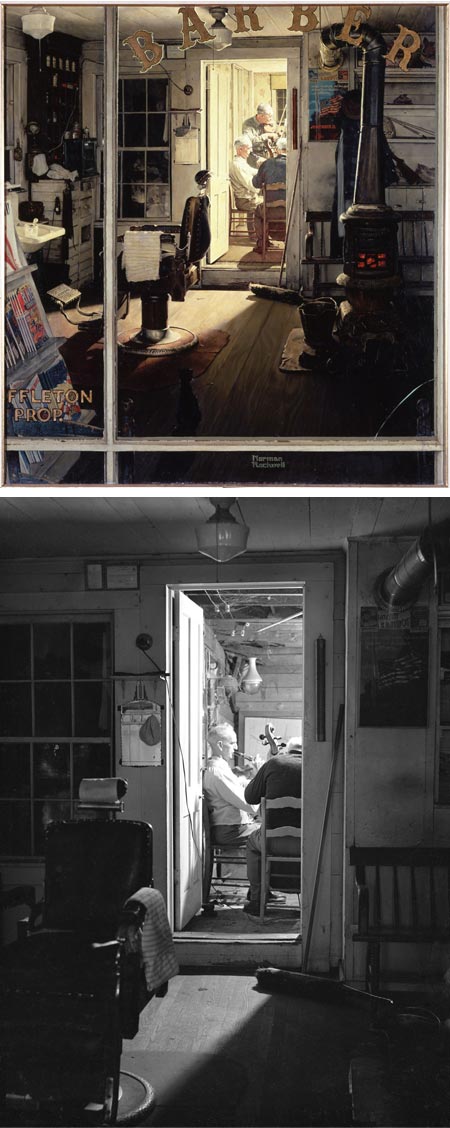
I’m not one of those who thinks that the use of optical devices like a camera obscura (Wikipedia) or photographic reference is in some way “cheating” or diminishes the value of an artist’s work.Artists have always used whatever visual aids were available to them, from grids of string across viewing frames to the old “thumb on the pencil” sighting trick. Thomas Eakins and Degas experimented with photographic reference when photography was in its infancy.
Noted American illustrator Norman Rockwell never made a secret of the fact that he used extensive photographic reference for his illustrations. Unlike Eakins and many other artists who used photography, Rockwell did not take his own photographs, preferring to leave the technical aspects in the hands of various professionals.
He did, however, compose the photographs, and every aspect of them, from composition to lighting to poses of the models (who were Rockwell’s friends and neighbors).
In effect he composed the photograph as a preliminary version of the composition of the painting, in much the same way as a preparatory drawing or study. The finished works often closely follow the layout Rockwell has established in the photographs.
There is a new book titled Norman Rockwell: Behind the Camera that explores Rockwell’s process and makes many of the photographs available.
The Norman Rockwell Museum in Stockbridge Massachusetts (which incidentally has a newly redesigned web site) has mounted an exhibition, also called Norman Rockwell: Behind the Camera, in keeping with the release of the book. The exhibit is open now and runs until May 31, 2010
There are several examples on the site of the reference photographs compared with the finished paintings, a comparison I always find fascinating. You can find some more on the PDN Photo of the Day column.
There is also an article on NPR.org that gives additional background and includes audio of the Weekend Sunday Edition radio story.
[Via Gurney Journey]
Categories:
-
Laurel Daniel
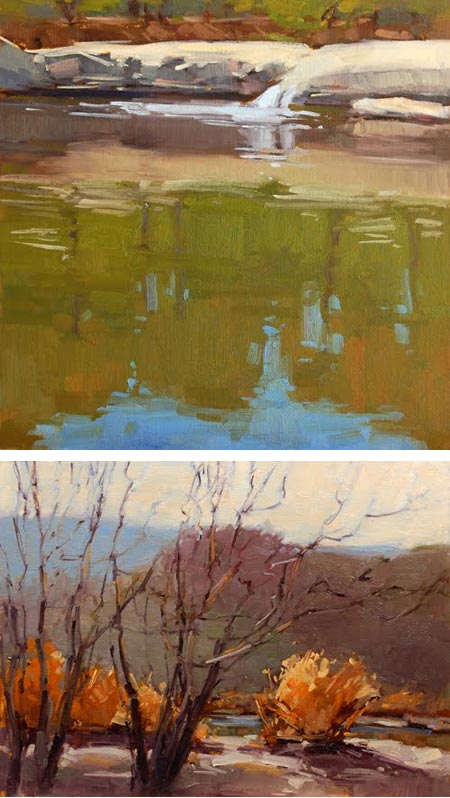
Laurel Daniel is a painter from Austin, Texas, whose fondness for the practice of plein air painting gives her larger studio works a similar freshness and immediacy.She studied at Wheaton College with additional coursework at San Francisco Academy of Art and Austin Museum Art School. In addition to painting full time she also teaches at the Austin Museum of Art.
Daniel has a web site on which you can see her plein air work, as well as studio pieces, divided into landscapes and waterscapes. Unfortunately, the images are small.
You will find larger images on her blog, on which she posts recent works and offers them for sale. She also has a second painting blog devoted specifically to small works; it’s an interesting and I think nice idea to sort them out that way.
Her former career in graphic design serves her well, in that it undoubtedly informs her strong compositions and clear, forceful use of color. Another aspect of her work, both in the studio and out, is a well developed sense of when to stop; avoiding the temptation to overwork a piece whose strength often comes from the crisp clarity of an immediate statement.
Don’t let my nit-picking about the web site dissuade you from visiting it as well as the blogs, there are delightful works to be found in all three locations.
Categories:
-
Ivan Aivazovsky
 Ukrainian/Russian painter Ivan Constantinovich Aivazovsky (Hovhannes Aivazian) was born in Crimea, an island-like peninsula that extends the southern part of Ukraine into the Black Sea. In a career that spanned a good deal of the 19th Century, he painted nearly 6,000 canvases, over half of which were seascapes.
He painted the sea at rest and roiled with storms, studded with ships and clear of human presence, in day and night, Winter and Summer, through war and peace and from shore to open ocean. He is known as one of the great sea painters of the era.
Born into an Armenian family of few means, he earned a sponsorship to the St. Petersburg Academy of Arts, from which he graduated with the Gold Medal at the age of 20. He was sent to Italy for further study and developed into a master painter who would earn the respect of greats like Delacroix and Turner, the latter referring to him as a genius.
His work is in the collections of numerous museums, including the Hermitage in St. Petersburg and the Metropolitan Museum of Art in New York, and his increasingly valuable work (at times fetching millions at auction) is reportedly a frequent subject of forgeries, perhaps because of the confusion of provenance created by his prolific output and the political instability of the region.
If Aivazovsky had a second fascination, it was with light. In his landscapes, light is an actor, moody, capricious and mercurial. In his seascapes, light and water are dancing partners, sweeping through a dizzying array of movement and theatrics. Illuminated clouds form a second seascape, an inverse of the subject in many of his works, and are portrayed in a dazzling variety of colors.
Fortunately there are several good resources for Aivazovsky’s work.
Addendum: Someone from All Art News was kind enough to remind me that Aivazovsky is also well represented on AllPaintings.org (see my post on AllPaintings.org). I’ve also added it to the list below.
Categories:
-
Travisty’s Beard
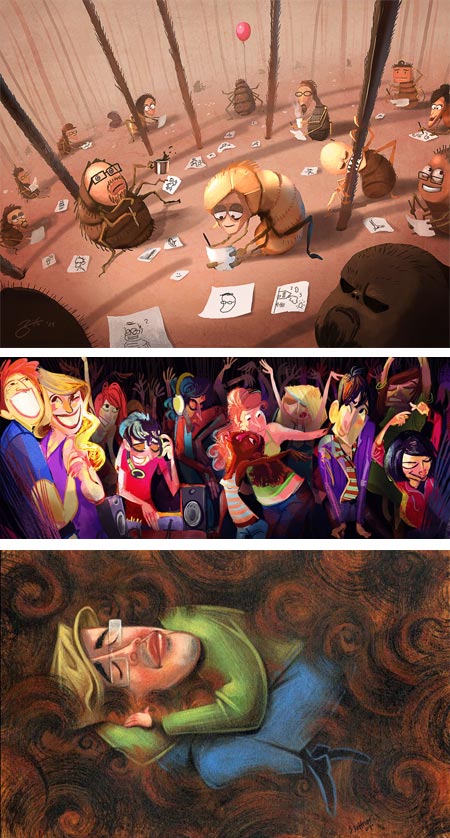
Goro Fujita, who I wrote about in 2008, was kind enough to write and let me know about a new blog called Travisty’s Beard.This is a collaborative art blog whose members are concept, production, character, and design artists from the art department of PDI/DreamWorks. The blog has no official relation to PDI/DreamWorks, it’s just the group of artists getting together to have fun.
The intention is to give themselves a challenge topic each month, and have the individual members respond by posting their interpretation of the topic. The blog takes its name from the initial topic, “What’s in Travesty’s Beard?”. The new topic for December is “New Year’s Resolution”.
This is a closed group, and the challenge is only among the members, but it should be fun to watch.
Though there isn’t a great deal of work posted yet, one of the most interesting parts of the blog at this point is the list of links in the right sidebar to the blogs and web sites of the participating artists, lots of work to see there.
(Images above: Goro Fujita, Lindsay Olivares, Shannon Jeffries)
Categories:
-
Frank Brangwyn, R. A.: The Way of the Cross

When I first wrote in 2006 about Frank Brangwyn, the superbly accomplished painter, muralist, watercolorist, illustrator and printmaker, there were only a few scattered resources on the web, and very little in the way of available books or other printed material.Since then, more resources have become available on the web, and I’ve listed some of them below. Though no new books have become available there is a wonderful new portfolio of some of his best graphic work.
Auad Publishing, a small imprint that specializes in beautifully produced books of the work of classic illustrators and comics artists (see my post on Franklin Booth), has created a faithful reproduction of a 1935 portfolio of lithographs, Frank Brangwyn, R. A.: The Way of the Cross.
This is a lovingly produced set of 20 plates, printed in letterpress (rare these days except for high end art reproductions) on 11″x14″ 80lb textured stock, in a deluxe fourfold portfolio.
The beautiful production values are quickly overshadowed by the power of Brangwyn’s drawings; powerful both in the sense of the emotional drama of their depiction of the Stations of the Cross, an in Brangwyn’s masterful drawing style and striking compositions.
In his work as an illustrator, Brangwyn acquired a great sense of design, and his classical training gave him the solid, finely honed draftsmanship that is the foundation of his influential style, but it is his own emotional investment in the subject, and his remarkable mastery of chiaroscuro, that bring the drawings to life.
The portfolio has an essay by Dr. Libby Horner, who is probably the world’s foremost authority on Brangwyn and his work. Dr. Horner created the frankbrangwyn.org web site (which is not heavy on images, but has lots of useful information about the artist, including a list of books he illustrated and links to other Brangwyn resources).
In Brangwyn’s drawings you can see the influence of Rembrandt and other great printmakers, and the drama of his own style that so heavily influenced the great illustrator Dean Cornwell (also here) and many others.
There is a small preview of the Way of the Cross portfolio on the Auad Publishing site, from which I’ve borrowed the images above (click on the image in the page for a pop-up gallery).
The small images here and on the Auad website don’t do the portfolio justice, but those who are already aware of Brangwyn’s accomplishments will want to be aware that the portfolio is limited to 700 numbered copies.
Categories:




Charley’s Picks
Bookshop.org
(Bookshop.org affilliate links; sales benefit independent bookshop owners; I get a small percentage to help support my work on Lines and Colors)

John Singer Sargent: Watercolors


Urban Sketching: Understanding Perspective


Charley’s Picks
Amazon
(Amazon.com affiliate links; sales go to a larger yacht for Jeff Bezos; but I get a small percentage to help support my work on Lines and Colors)
John Singer Sargent: Watercolors
Urban Sketching: Understanding Perspective