


Categories
- 3d CGI
- Amusements
- Animation
- Anime & Manga
- Art Materials
- Art Videos
- Blogroll
- Cartoons
- Color
- Comics
- Concept & Visual Dev.
- Creativity
- Digital Art
- Digital Painting
- Displaying Art on the Web
- Drawing
- Eye Candy for Today
- Gallery and Museum Art
- High-res Art Images
- Illustration
- Motion Graphics & Flash
- Museums
- Online Museums
- Outsider Art
- Painting
- Painting a Day
- Paleo Art
- Pastel, Conté & Chalk
- Pen & Ink
- Prints and Printmaking
- Reviews
- Sc-fi and Fantasy
- Sculpture & Dimensional
- Site Comments
- Sketching
- Storyboards
- Tools and Techniques
- Uncategorized
- Vector Art
- Videos & Podcasts
- Vision and Optics
- Watercolor and Gouache
- Webcomics
Archives
- June 2026
- May 2026
- April 2026
- March 2026
- February 2026
- January 2026
- December 2025
- November 2025
- October 2025
- September 2025
- August 2025
- July 2025
- June 2025
- May 2025
- January 2025
- December 2024
- November 2024
- October 2024
- September 2024
- August 2024
- June 2024
- April 2024
- March 2024
- February 2024
- January 2024
- December 2023
- November 2023
- October 2023
- September 2023
- August 2023
- July 2023
- May 2023
- April 2023
- March 2023
- February 2023
- January 2023
- December 2022
- November 2022
- September 2022
- August 2022
- July 2022
- June 2022
- May 2022
- April 2022
- March 2022
- February 2022
- January 2022
- December 2021
- November 2021
- October 2021
- September 2021
- August 2021
- July 2021
- June 2021
- May 2021
- April 2021
- March 2021
- February 2021
- January 2021
- December 2020
- November 2020
- October 2020
- September 2020
- August 2020
- July 2020
- June 2020
- May 2020
- April 2020
- March 2020
- February 2020
- January 2020
- December 2019
- November 2019
- October 2019
- September 2019
- August 2019
- July 2019
- June 2019
- May 2019
- April 2019
- March 2019
- February 2019
- January 2019
- December 2018
- November 2018
- October 2018
- September 2018
- August 2018
- July 2018
- June 2018
- May 2018
- April 2018
- March 2018
- February 2018
- January 2018
- December 2017
- November 2017
- October 2017
- September 2017
- August 2017
- July 2017
- June 2017
- May 2017
- April 2017
- March 2017
- February 2017
- January 2017
- December 2016
- November 2016
- October 2016
- September 2016
- August 2016
- July 2016
- June 2016
- May 2016
- April 2016
- March 2016
- February 2016
- January 2016
- December 2015
- November 2015
- October 2015
- September 2015
- August 2015
- July 2015
- June 2015
- May 2015
- April 2015
- March 2015
- February 2015
- January 2015
- December 2014
- November 2014
- October 2014
- September 2014
- August 2014
- July 2014
- June 2014
- May 2014
- April 2014
- March 2014
- February 2014
- January 2014
- December 2013
- November 2013
- October 2013
- September 2013
- August 2013
- July 2013
- June 2013
- May 2013
- April 2013
- March 2013
- February 2013
- January 2013
- December 2012
- November 2012
- October 2012
- September 2012
- August 2012
- July 2012
- June 2012
- May 2012
- April 2012
- March 2012
- February 2012
- January 2012
- December 2011
- November 2011
- October 2011
- September 2011
- August 2011
- July 2011
- June 2011
- May 2011
- April 2011
- March 2011
- February 2011
- January 2011
- December 2010
- November 2010
- October 2010
- September 2010
- August 2010
- July 2010
- June 2010
- May 2010
- April 2010
- March 2010
- February 2010
- January 2010
- December 2009
- November 2009
- October 2009
- September 2009
- August 2009
- July 2009
- June 2009
- May 2009
- April 2009
- March 2009
- February 2009
- January 2009
- December 2008
- November 2008
- October 2008
- September 2008
- August 2008
- July 2008
- June 2008
- May 2008
- April 2008
- March 2008
- February 2008
- January 2008
- December 2007
- November 2007
- October 2007
- September 2007
- August 2007
- July 2007
- June 2007
- May 2007
- April 2007
- March 2007
- February 2007
- January 2007
- December 2006
- November 2006
- October 2006
- September 2006
- August 2006
- July 2006
- June 2006
- May 2006
- April 2006
- March 2006
- February 2006
- January 2006
- December 2005
- November 2005
- October 2005
- September 2005
- August 2005
Relevant Blogs
Art, Painting & Sketch
- Gurney Journey
- Underpaintings
- Art and Influence
- Painting Perceptions
- Oil Painters of America
- Vasari Paint POV
- Flying Fox
- Urban Sketchers
- Bento (Smithsonian)
- Art Inconnu
- The Hidden Place
- Still Life
- Making a Mark
- The Art of the Landscape
- Exploring Color & Creativity
- Art Contrarian
- Artist A Day
- beinArt Surreal Art Collective
- Eye Level
- David Dunlop
- p.i.g.m.e.n.t.i.u.m
- CultureGrrl
- Joaquín Sorolla blog
- Artists in Pastel
“Painting a Day”
- A Painting a Day (Keiser)
- On Painting (Keiser)
- Julian Merrow-Smith
- Karen Jurick
- Jeffrey Hayes
- Carol Marine
- Abbey Ryan
- Daily Paintworks
Other Painting Blogs
- Virtual Gouache Land
- Neil Hollingsworth
- Marc Hanson
- Kevin Menck
- Marc Dalessio
- Larry Seiler
- Stapleton Kearns
- Colin Page
- Roos Schuring
- Hans Versfelt
- Titus Meeuws
- Régis Pettinari
- René Plein Air
- Belinda Del Pesco
- Robin Weiss
- Nathan Fowkes (Land Sketch)
- William Wray
- Frank Serrano
- Stephen Magsig
- Michael Chesley Johnson
- Twice a Week
- Sarah Wimperis
- Rob Adams
- Michael Cole Manley
- The Dirty Palette Club
- Mike Manley’s Draw!
Gallery Art & Illustration mix
Illustration
- Howard Pyle
- 100 Years of Illustration
- BibliOdyssey
- Illustration Art
- Today’s Inspiration
- Illustration Mundo
- Little Chimp Society
- Danny Gregory
- R D (John Martz
- Illustration Friday blog
- Monster Brains
- Illustrators & Illustrations (RU)
- Elwood H. Smith
- DaniDraws.com
- Designers Who Blog
- iSpot Blog
Sci-Fi & Fantasy
Illustration & Comics
Comics & Cartoons
- Comics Beat
- Robot 6
- Newsarama Blog
- Comic Vine
- Comics Alliance
- Forbidden Planet Int.
- Paolo Rivera
- Bolt City
- Flight
- Scott McCloud
- The Comics Journal
- Comixpedia
- Funnybook Babylon
- James Baker
- Middleton’s Sketchbook
- Boneville
- The Hotel Fred
- Paul Rivoche
- Daily Cartoonist
- Mad About Cartoons (William Wray)
- Digital Strips
Illustration & Concept
Animation & Concept
- Cartoon Brew
- Animation Blog
- Cold Hard Flash
- Concept Art World
- The CAB
- FY Concept Art
- Concept Ships
- Concept Robots
- John Nevarez
- Armand Serrano
- Marcos Mateu-Mestre
- all kinds of stuff (Kricfalusi)
- Yacin the faun (Man Arenas)
- Kelsey Mann
- Cre8tivemarks Blog
- Ice-Cream Monster Toon Cafe
- AAU Character & Creature Design
- AAU Animation Notes
- Articles and Texticles
Paleo & Scientific
Tools & Techniques
Other
Lists of Art Blogs
Art Image Resource Links
Historic Art Images
- Wikimedia Commons: Paintings
- Wikimedia Commons: Drawings
- The Athenaeum
- WikiArt (WikiPaintings)
- Google Art Project: Artists
- Google Art Project: Collections (Museums)
- ArtCyclopedia
- Web Gallery of Art
- Art Renewal Center
- Web Gallery of Impressionism
Auction Consolidation sites
Auction sites
- Sotheby’s
- Bonham’s
- Christies
- Heritage Auctions: Fine Art
- Heritage Auctions: Illustration
- Freeman’s Auctions
- Bukowskis
- Shannon’s
Image Search
Reverse Image Search (search by image)
- Tin Eye
- RevImg
- Google Image Search (camera icon)
- Bing Image Search (camera icon)
Promoting some friends and some clients of my website design business
- Twin Willows T’ai Chi studio in Wilmington DE. Taiji classes with Bryan Davis.
- Ray Hayward, Inspired Teacher of T’ai Chi ( Taiji ) in Minneapolis, Founder of Mindful Motion Tai Chi Academy
- OldHead Tattoo studio and Art Gallery in Wilmington DE. Tattoos and paintings by Bruce Gulick
- Sharon Domenico Art, pet portrait oil paintings
- Platinum Paperhanging, wallpaper hanging, Main Line and Philadelphia, PA
- Lisa Stone Design, interior designer, Main Line and Philadelphia, PA
- Studio12KPT, original art, prints, calendars and other custom printed items by Van Sickle & Rolleri
-
Sarah Paxton Ball Dodson
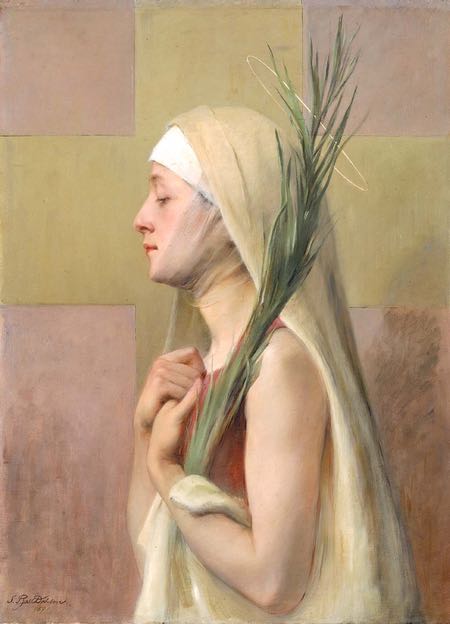

Sarah Paxton Ball Dodson was an American painter, active in the late 19th century, who was born in Philadelphia and studied there at the Pennsylvania Academy of the Fine Arts, as well as in Paris where she spent a notable portion of her career.
Her style and subject matter ranged from influences of French neo-classical painting to the Frency Symbolism and the Paris Salon to plein air landscape and Pre-Raphaelite painting.
Categories:
-
Eye Candy for Today: Early Autumn, Montclair by George Inness


Early Autumn, Montclair, George InnessThe link is to a zoomable version on the Google Art Project; there is a high-resolution downloadable version on Wikimedia Commons; the original is in the Delaware Art Museum (which unfortunately doesn’t have its collection online, though there is more on the Google Art Project).
This is one of my favorite paintings in the world.
I grew up in Wilmington, Delaware, and still live nearby in Pennsylvania, and I’ve had the pleasure of visiting this painting at the Delaware Art Museum on a frequent basis since I was a teenager.
I still find it striking and enlightening every time I see it, and as my understanding of painting grows, so does my appreciation for George Inness and what he accomplished.
This painting — a somewhat idealized representation of Montclair, New Jersey, where Inness lived at the end of his career — is a tour-de-force of value relationships, color temperature, brush handling, and especially edges.
Inness was a master of soft edges and suggestion in painting, allowing your mind to participate and fill in what he has only suggested, but he was equally adept at bringing hard edges to the fore when it suited his composition.
Here, he uses both hard and soft edges with dramatic effect. The sapling on the left barely seems to exist; the dark tree toward the center has a more forceful presence, and main branch of the central tree — where Inness wants your eye to go — has an almost three-dimensional extension into the space in front of the canvas. (Actually, that branch really is three-dimensional in the physical thickness of the paint.)
Look at the difference in the brush handling across the composition; everything outside of the primary focal area is diffuse — almost a textural variation on Da Vinci’s sfumato — while the main tree is so painterly and tactile it’s a joy to follow the brush marks with your eye. The paint looks to have been applied by natural forces in layers of mist and strikes of lightning.
Inness has broken compositional “rules” here with casual aplomb; the main subject is smack in the center of the painting and the horizon divides the canvas in half vertically — almost as if he was taking a dare to break those assumed norms of things you “don’t do” in composition.
The colors are equally remarkable. There are a few relatively high-chroma oranges, but in general the colors are muted and the palette reserved, yet the color relationships make the entire painting feel rich and vibrant.
The painting is a delight, and I think a fulfillment of the goal Inness had of conveying the Swedeborgian doctrine that the spiritually divine could be found in the contemplation of the natural world.
The season is deliberately transitional, and the painting as a whole suggests that the weather could be either sunny or cloudy; the landscape contains both natural and man-made elements and the central tree is in both light and shadow. Everything is binary — Summer and Autumn, dark and light, hard and soft, muted and colorful, suggested and represented, traditional and modern.
I’ll also point out that the painting’s subject is Autumn, and that today is the Autumnal Equinox, which — like the Vernal Equinox at the start of Spring — is a point in the Earth’s yearly journey around the sun at which the sun’s rays strike the tilted Earth directly on the equator, rather than above or below it.
Everything in balance.
Categories:
-
Yuko Shimizu (update)
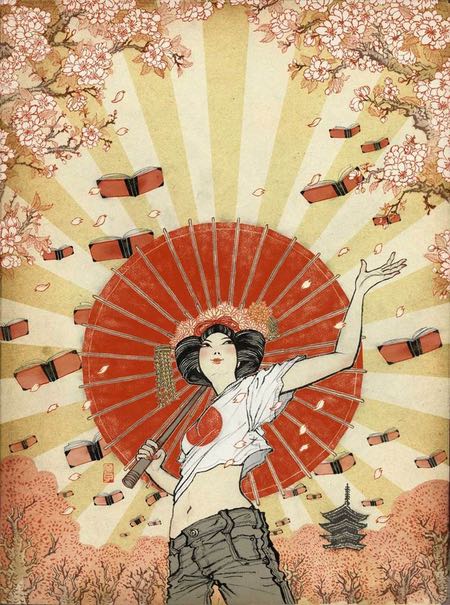

Yuko Shimizu is an illustrator who I first profiled in 2007, mentioned again in 2010, and featured prominently in the article I wrote on contemporary illustrators for the Summer 2013 issue of Drawing Magazine.
Shimizu (not to be confused with the Japanese designer with the same name who created “Hello Kitty”) is orignally from Japan and now based in New York City. Her illustration style is a fascinating blend of influences from Japanese traditional and pop culture, American pop culture, comics, classic illustration, woodblock prints, and probably a myriad of other sources I haven’t picked up on.
She works in both traditional and digital media, often drawing/painting with ink and traditional Japanese calligraphy brushes, and then taking the drawing into Photoshop to apply digital color.
She also frequently will take her brush and ink line and translate it into color, producing a distinct and fascinating contrast with the more traditional ink line and color fill common to woodblock prints and other illustration techniques.
Shimizu’s line work is full of energy and verve and her color choices are frequently unexpected, particularly in the way certain colors are juxtaposed against one another. I very much enjoy the way she plays with floral and animal forms in her images — sometimes as subjects, and sometimes as design elements in the composition.
The gallery on her website can be filtered by genre to a degree, but I find it fascinating to simply leaf through, enjoying the contrast between subjects.
You can also find her work on Behance, Instagram, Tumblr and her Online Store.
Categories:
-
Francis Seymour Hayden
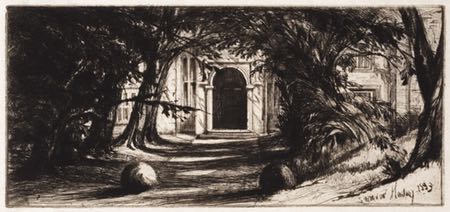

Francis Seymour Hayden was a successful surgeon, and also a dedicated and influential etcher. Active in the late 19th and early 20th centuries, Hayden was already an etcher when James McNeill Whistler became his brother-in-law.
Hayden was enthusiastic in his studies of past paster of printmaking, so much so that created an noted catalogue of Rembrandt’s etchings and wrote an important monograph, The Etched Work of Rembrandt critically reconsidered.
Among the examples of his work on the web, you will also find some accomplished pencil drawings and watercolors.
Categories:
-
Eye Candy for Today: Andrew Wyeth drybrush & watercolor


Flat Boat, Andrew Wyeth
Watercolor and drybrush, roughly 22 x 29 inches (56 x 74 cm). Image and link is from a 2013 Christie’s auction sale.
While I don’t always respond as strongly to his more formal and conceptual works, I very much like Andrew Wyeth’s watercolors and drybrush watercolors, in which he is just directly observing from nature and interpreting what he sees in simple, often spare compositions.
This is a combination of both traditional fluid transparent watercolor, and drybrush, in which passages — particularly those involving texture — are built up with short multiple strokes applied with most of the paint wiped from the brush before application.
Categories:
-
Self-portraits #14


Another in my series of posts of artists’ self-portraits.
The series started when I got tired of hearing about “selfies”, and came out with an attitude of “You want selfies? I show you some selfies!”, but gradually relaxed into an ongoing series based on variety.
(Images above, links to my posts: Ivan Shishkin, Laura Johnson Knight, Antonio Mancini, Asher B. Durand, Egon Schiele, Joshua Reynolds, Jose Manuel Capuletti, Gustave Courbet, Lovis Corinth, Marie Bracquemond)
Categories:




Charley’s Picks
Bookshop.org
(Bookshop.org affilliate links; sales benefit independent bookshop owners; I get a small percentage to help support my work on Lines and Colors)

John Singer Sargent: Watercolors


Urban Sketching: Understanding Perspective


.jpg)
Charley’s Picks
Amazon
(Amazon.com affiliate links; sales go to a larger yacht for Jeff Bezos; but I get a small percentage to help support my work on Lines and Colors)
John Singer Sargent: Watercolors
Urban Sketching: Understanding Perspective